Glassing a Clear-Cut for a Bull Moose
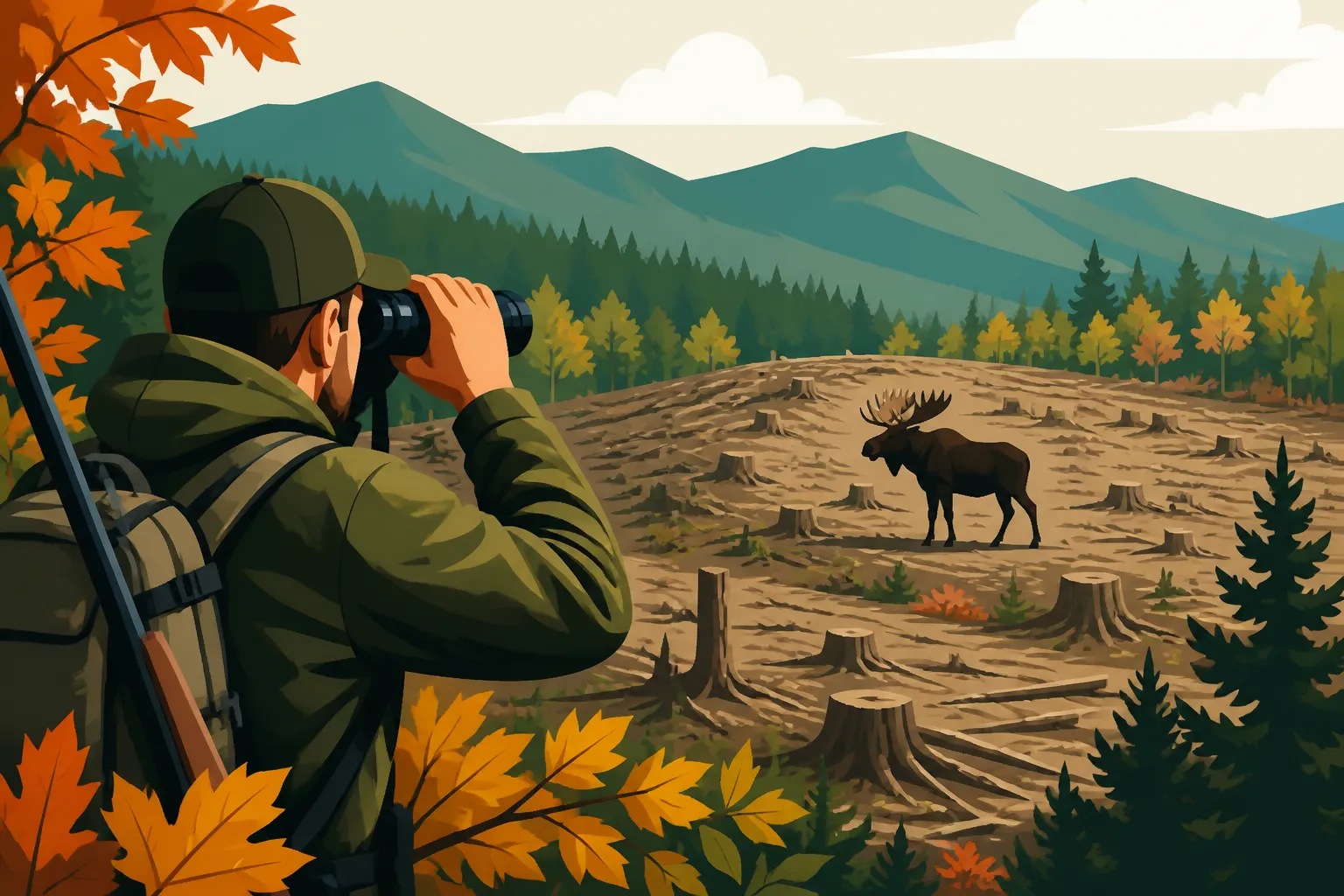
Finding a bull moose in the vast, dense regrowth of a Vermont clear-cut can feel like searching for a needle in a hayfield, especially when those regenerating areas are so often steep and sprawling. This guide aims to demystify the art of glassing these challenging landscapes, providing you with actionable strategies and essential gear considerations to significantly improve your chances of locating a trophy bull in Vermont's prime moose habitat.
Understanding Vermont Clear-Cuts and Moose Behavior
Clear-cuts, for all their initial starkness, quickly transform into vibrant, life-sustaining ecosystems, and for Vermont moose, they are often a preferred haven. These areas, particularly in the sprawling Northeast Kingdom, provide a buffet of browse and excellent cover, making them irresistible to hungry moose. Understanding why moose frequent these areas and how their behavior changes throughout the season is the first step in successful glassing.
Why Moose Favor These Areas
After a timber harvest, the forest floor is exposed to sunlight, triggering an explosion of new growth. Young saplings like aspen, birch, and maple, along with shrubs such as willow and dogwood, quickly sprout up. This regenerating vegetation provides an incredibly rich source of high-quality browse, packed with the nutrients moose need, especially for antler growth in bulls and milk production in cows. Unlike mature forests where browse is often limited to the forest understory, clear-cuts offer a continuous supply of easily accessible food. Beyond food, the dense tangle of young trees and brush offers exceptional security cover, allowing moose to feed, rest, and escape predators without being easily detected. These cuts also often feature numerous small pockets of residual timber or unharvested riparian zones, offering additional thermal cover and refuge from the elements.
Seasonal Movement Patterns in Clear-Cuts
Moose movement patterns within clear-cuts can vary significantly depending on the time of year and specific habitat features. During the early fall, leading up to the rut, bulls are actively building their energy reserves, and these browse-rich zones are primary feeding grounds. As the rut approaches in late September and early October, you'll see increased activity as bulls begin to travel more, searching for cows. They might utilize the edges of clear-cuts for staging and scent-checking, or even enter the cuts to challenge rival bulls. Later in the season, after the peak of the rut, moose may return to focusing on food, but as snow depths increase, they might also seek out denser softwood stands on the fringes of the clear-cut for winter shelter, only venturing back into the cuts for quick feeding forays. Understanding these seasonal shifts is crucial for knowing when and where to concentrate your glassing efforts. For more on the wider picture, consider reading about the broader topic of Moose Hunting Vermont's Northeast Kingdom.
Identifying Key Moose Hotspots Within the Cut
Not all parts of a clear-cut are created equal when it comes to moose habitat. Look for variations in topography, such as saddles, benches, or small draws that funnel game. Areas with a mix of young hardwoods and patches of softwoods are particularly attractive, offering both food and cover. Pay close attention to transition zones—where the clear-cut meets a mature timber stand, a stream bed, or a swampy area. These edges are natural travel corridors and often where moose feel most secure. Identifying old skidder trails or logging roads that crisscross the clear-cut can also reveal common travel routes. Fresh tracks, droppings, and rubbed saplings are obvious indicators of recent moose activity, guiding your eyes to the most promising sections for glassing. When you're scouting, it's essential to understand where moose are likely to be, especially if you've been lucky enough to be successful in the annual Vermont's Moose Permit Lottery.
Essential Gear for Glassing Success
Effective glassing isn't just about having a sharp eye; it's about having the right tools to maximize your vision and comfort over long periods. The challenging terrain of Vermont's clear-cuts demands optics that can cut through distance and atmospheric haze, along with gear that allows you to sit patiently, sometimes for hours on end, without being deterred by the elements.
Optics: Binoculars, Spotting Scopes, Tripods
Your primary tools will be high-quality binoculars and a spotting scope. For scanning broad expanses of a clear-cut, a pair of 10x or 12x binoculars are your workhorses. They offer a wide field of view and sufficient magnification to pick out moose moving through the brush. Brands like Vortex, Leupold, and Zeiss offer excellent options that are rugged enough for Vermont conditions. For zeroing in on distant targets or confirming details on a potential bull, a spotting scope is indispensable. A 20-60x or 25-75x scope mounted on a sturdy tripod will allow you to resolve antler points, assess body size, and verify if what you're seeing is indeed a moose, and a legal one at that. Don't skimp on the tripod; a flimsy tripod renders even the best optics useless. Consider carbon fiber models for lighter weight during long hikes. For more specific recommendations, you might find insight in articles discussing Best Binoculars for a Northeast Kingdom Bog or Best Spotting Scope for Long Timber Shots.
Clothing and Comfort for Long Sits
Sitting for extended periods in varying Vermont weather requires a smart layering system. Start with moisture-wicking base layers to manage sweat. Add insulating mid-layers like fleece or puffy jackets for warmth, and top it off with waterproof and windproof outer layers. Even on a clear day, temperatures can drop quickly, especially when you're stationary. A comfortable, lightweight ground pad or a small folding stool can make hours of sitting far more bearable, reducing fatigue and allowing you to remain focused. Don't forget a warm hat, gloves, and quality socks, as extremities are often the first to get cold. Consider packing a small insulated thermos with a hot drink to keep your core temperature up.
Mapping and Navigation Tools
Knowing exactly where you are and what you're looking at is critical, especially when glassing vast, featureless clear-cuts. A reliable GPS unit or a smartphone with robust hunting apps is essential. Tools like GoHunt offer detailed topographical maps, satellite imagery, and public/private land boundaries that are invaluable for pre-scouting and in-field navigation. These apps allow you to mark potential observation points, track your movement, and precisely pinpoint the location of any moose you spot. Before heading into remote areas of the Northeast Kingdom where cell service can be spotty, ensure you've downloaded offline maps. Always carry a compass and a physical map as a backup, just in case technology fails.
Strategic Approaches to Scanning Clear-Cuts
Glassing a clear-cut isn't about aimlessly sweeping your optics back and forth. It's a methodical process that requires patience, discipline, and an understanding of how to effectively break down large areas of terrain. Your goal is to systematically search every square foot of the clear-cut, minimizing blind spots and maximizing your chances of spotting a moose.
Breaking Down the Terrain for Efficient Scanning
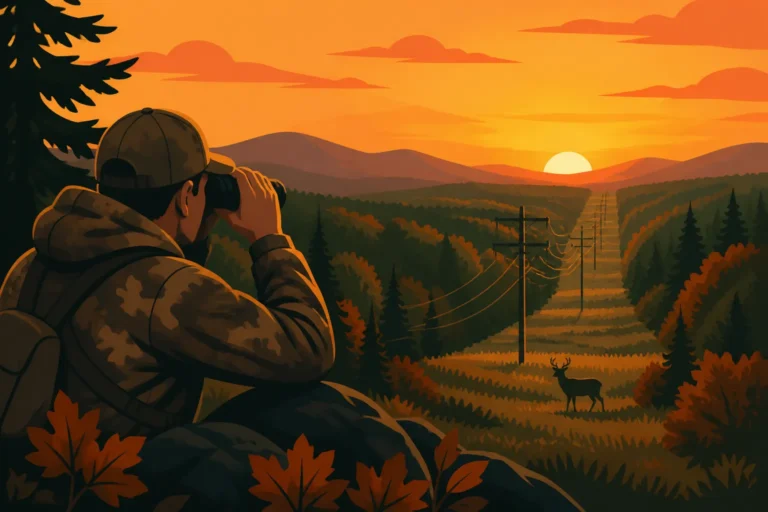
When you arrive at an overlook, resist the urge to immediately throw up your binoculars and randomly scan. Instead, take a few minutes to visually dissect the clear-cut with your naked eye. Identify natural grid lines—old logging roads, ridgelines, stream beds, or distinct patches of timber. Mentally divide the area into smaller, manageable sections. Start by scanning the closest section, working left to right, slowly moving your binoculars across the landscape in a methodical grid pattern. Once you complete one horizontal pass, drop your binoculars slightly and make another pass, this time right to left. Continue this slow, deliberate process until you've covered the entire section. Then move to the next section. This systematic approach ensures you don't miss anything. For those Scouting Vermont Public Land Before Season, this method is incredibly beneficial.
Using Light and Wind to Your Advantage
The position of the sun and the direction of the wind are critical factors in successful glassing. Early morning and late evening typically offer the best light conditions, as the low angle of the sun creates shadows that highlight contours and can silhouette animals. Avoid glassing directly into the sun, which can cause glare and eye strain. Position yourself so the sun is at your back or to your side. Wind direction is equally important. Moose have an incredible sense of smell, so always try to approach your glassing point, and plan your potential stalk, with the wind in your face or across your body. This minimizes the chance of your scent blowing into the clear-cut and alerting any moose present.
The Art of Patience and Repetitive Scanning
Moose in a clear-cut can be incredibly difficult to spot, often blending seamlessly with the tangled vegetation. They might be bedded down, or simply standing perfectly still. This is where patience becomes your greatest asset. Don't just scan an area once and assume it's clear. Re-scan sections repeatedly, especially those areas that offer good food or cover. A moose that was hidden moments ago might shift its position, flick an ear, or lift its head to browse, revealing itself on a subsequent pass. Look for subtle movements, a horizontal line in a vertical world, a patch of dark hide against the lighter foliage, or the distinct paddle of an antler. Sometimes, you'll pick up on a leg, an ear, or even just a black silhouette that appears out of place. This often requires you to settle in for a long sit, so having the right gear, like that for Cold-Weather Sitting Strategy in the Northeast Kingdom, is vital.
Interpreting Moose Sign and Movement
Once you spot something that might be a moose, the real work of interpretation begins. In the often-dense clear-cuts, distinguishing a bull from a cow, or even discerning if it's a legal animal, can be a significant challenge. This phase requires careful observation through your optics and a keen understanding of moose characteristics.
Identifying Body Language and Behavior
A moose's body language can tell you a lot about its current state and intentions. A moose that is calmly browsing or bedded down is likely relaxed, offering you time to evaluate the situation. If a moose suddenly becomes alert, raises its head, or stares intently in a particular direction, it might have sensed your presence or something else in the environment. During the rut, observe if the moose is sparring with saplings, raking its antlers, or displaying territorial behavior—these are strong indicators of a bull. A bull that is actively calling or grunting might be seeking out cows, giving you a chance to listen and pinpoint its location more precisely. Conversely, a moose that appears agitated, stomps its feet, or lays its ears back might be feeling threatened, signaling that you need to be cautious and re-evaluate your approach.
Distinguishing Bulls from Cows and Calves
The crucial moment often comes down to distinguishing a bull from a cow, and especially from a cow with a calf, which is generally off-limits for hunters unless specific permits allow. Look closely for antlers. While young bulls might only have small spikes or paddles, they are still distinct from the antlerless head of a cow. Pay attention to the pedicles, the bony growths on a bull's skull where antlers grow, which are visible even after antler-shedding or on young bulls. Cows have a distinct "bell" or dewlap under their chin, though some bulls also possess one. Calves are significantly smaller than adult moose and will almost always be with their mother. If you spot what appears to be a cow, scan the surrounding area carefully with your optics for any smaller moose hiding in the brush. Taking the time to observe these subtle differences is paramount to making an ethical and legal harvest, especially when considering Vermont's Moose Permits as a Density Management Tool.
When to Make Your Move
Deciding when to leave your glassing point and initiate a stalk is a critical decision, heavily influenced by wind, terrain, and the moose's behavior. Never rush this phase. If you've identified a legal bull, meticulously plan your route to get within shooting range, always keeping the wind in your favor and using available cover to conceal your approach. Consider how you'll manage the shot angle and what potential escape routes the moose might use. Sometimes, the best move is to wait for the moose to move into a more advantageous position or to allow for better light. If the conditions aren't right, or if there's any doubt about the animal's identity or legality, it's always better to hold back and re-evaluate. Remember, patience at this stage can be the difference between a successful hunt and an unfortunate mistake. If you do get lucky, you'll need to know all about Packing Out a Vermont Moose.
Here's a quick guide to common observations while glassing:
| Observation | Potential Interpretation | Actionable Step |
|---|---|---|
| Patch of dark hide | Possible moose, could be bedded or still | Focus optics, look for outline, head, legs, ears. |
| Horizontal line in brush | Often a moose's back or belly | Scan above and below slowly for more details. |
| Ear flick/head movement | Moose is active, feeding or alert | Continue glassing the area intently, note direction of gaze. |
| Antler silhouette | Confirmed bull moose | Initiate closer inspection for size, legality, plan stalk. |
| Small moose near large one | Calf with cow | Do not stalk if only cow/calf permit is not held. |
| Moose browsing calmly | Relaxed animal | Use this time to assess, plan approach, check surroundings. |
| Moose suddenly alert/staring | Sensed something, possibly you | Freeze, observe for extended periods, re-evaluate wind/cover. |
| Rubbed saplings | Recent bull activity | Focus glassing in immediate vicinity of sign. |
| Distinct bell under chin | Likely a cow, but some bulls have them | Check for antlers, other identifying bull characteristics. |
Disclaimer
Hunting is an inherently dangerous activity. This guide provides general information and recommendations. Always consult the latest Vermont Fish and Wildlife Department regulations and obtain appropriate licenses before hunting. Your safety and adherence to all laws are your sole responsibility.