Hunting a Standing Corn Field for Deer
Vermont standing corn fields offer deer security and food, presenting hunters challenges with limited visibility and noise.
Close the distance.
Archery, muzzleloader, and firearm techniques — calling, stand placement, still-hunting, spot-and-stalk, and the weapon rules that change at the state line.
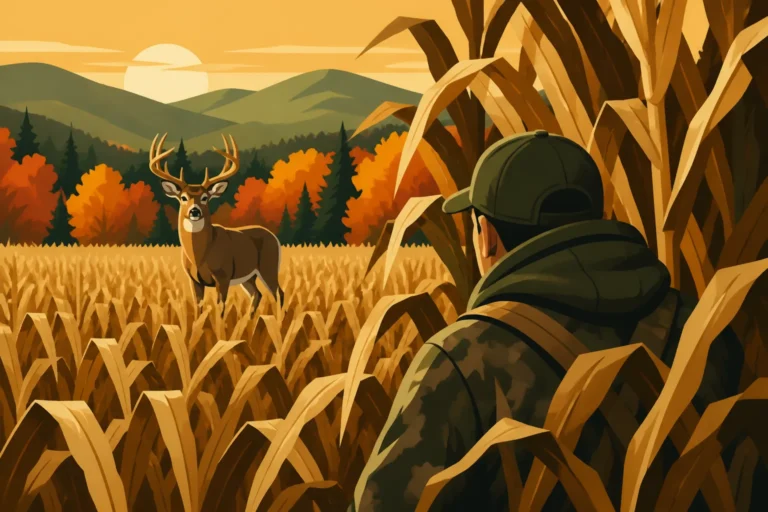
Vermont standing corn fields offer deer security and food, presenting hunters challenges with limited visibility and noise.
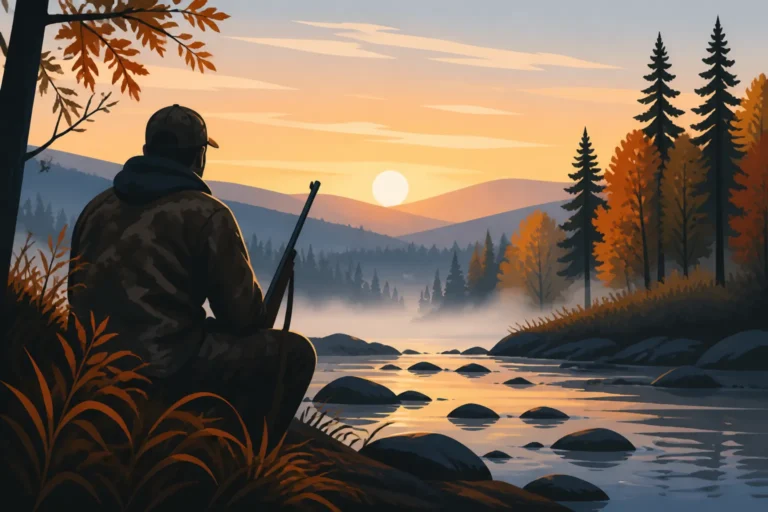
Vermont creek crossings act as natural deer travel routes and provide hunters with productive early-morning shooting locations.
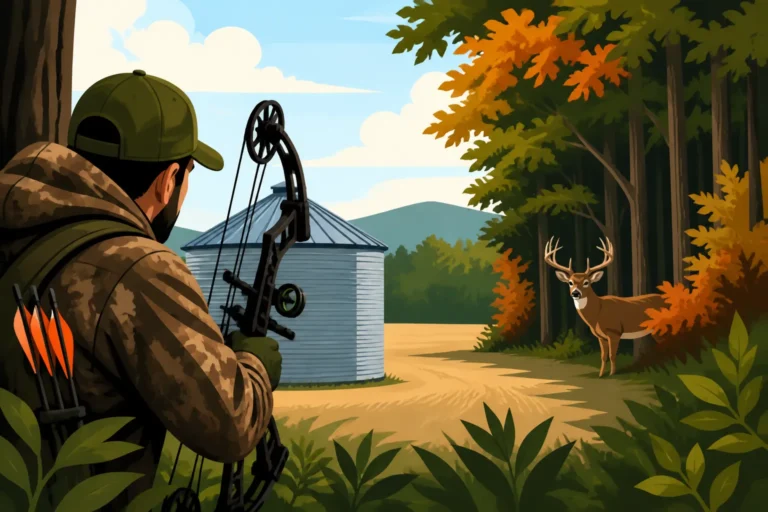
Vermont deer hunting near grain bins in agricultural woodlots during late fall and winter provides reliable food sources.
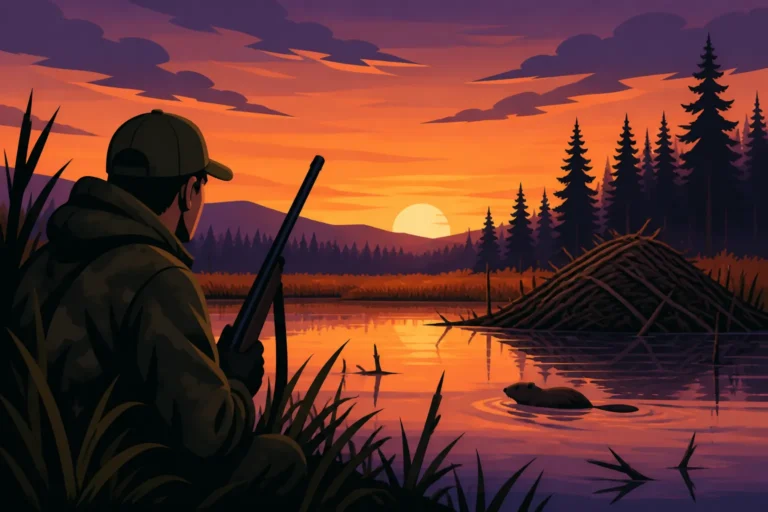
Vermont beaver flowage edges provide deer food, water, and cover, improving evening hunting success during the last hour of light.
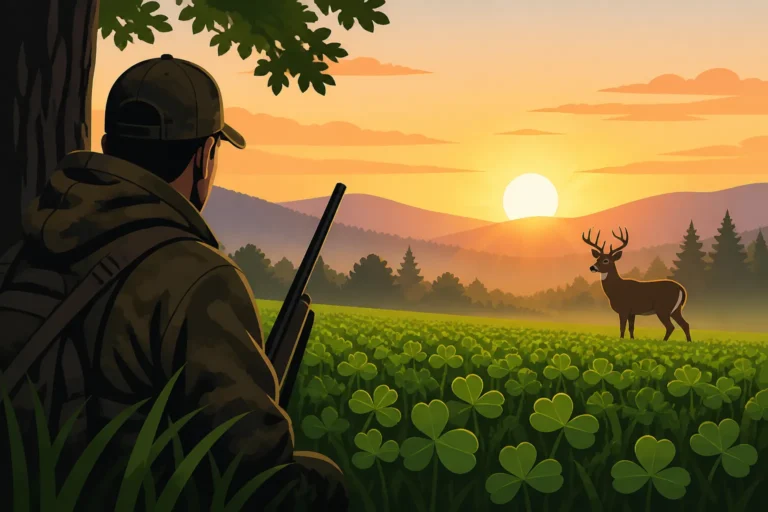
Early morning clover plot hunts in Vermont require strategic treestand placement, scent management, and understanding deer movement patterns.
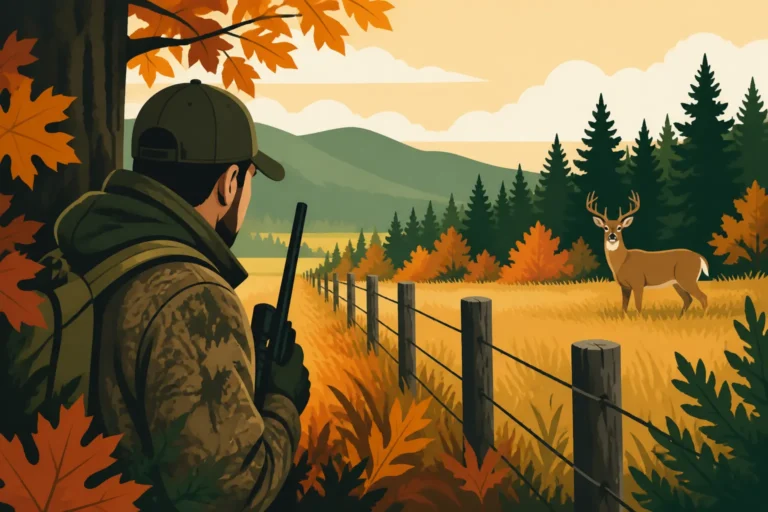
Timbered fence lines in Vermont provide deer security, natural travel corridors, and food sources for hunters scouting public land.
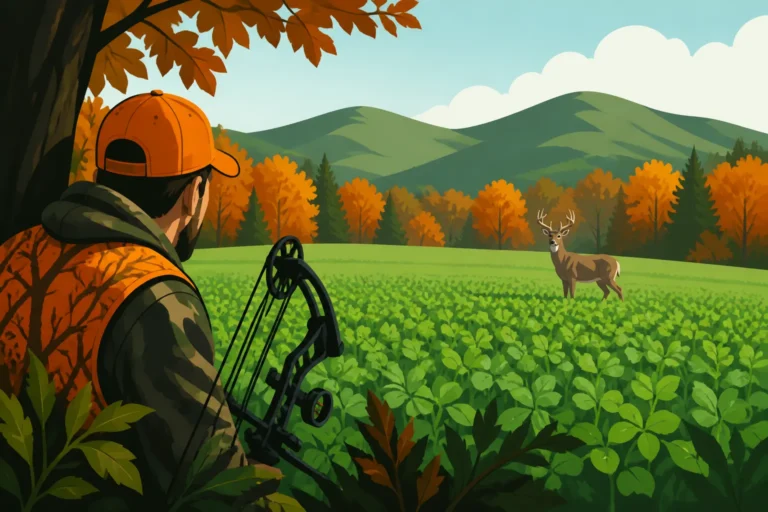
Green fields and food plots provide Vermont deer hunters a concentrated food source for successful late season harvests.
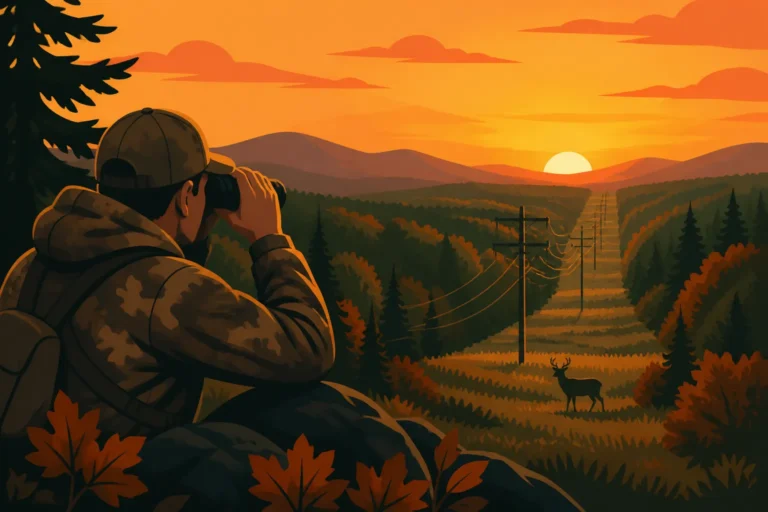
Glassing Vermont powerline cuts at last light helps hunters spot hidden deer using edge habitats and evening food sources.
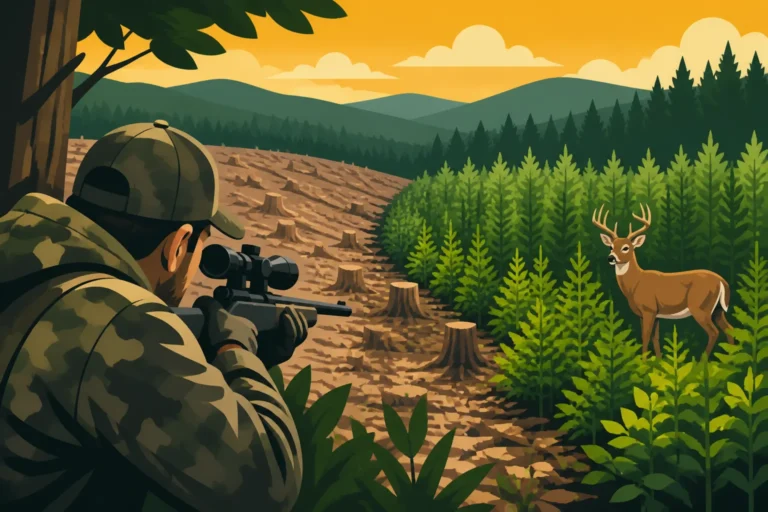
Vermont clear-cut regrowth edges provide deer with food and cover, offering hunters opportunities to track whitetails effectively.
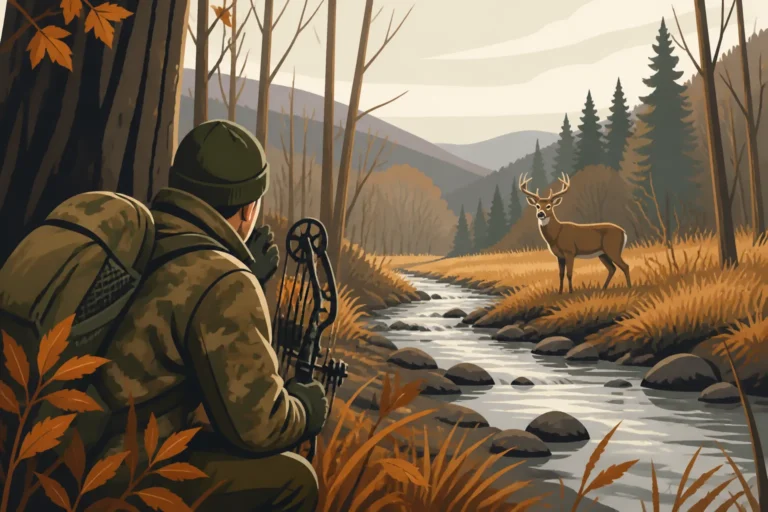
Vermont creek bottoms provide late-season deer with thermal cover, wind protection, food, and water to survive harsh winter conditions.