Hunting Standing Cover Left After Harvest
Vermont deer hunting strategies for finding white-tails in standing corn, brushy fencerows, and small woodlots after harvest.
Close the distance.
Archery, muzzleloader, and firearm techniques — calling, stand placement, still-hunting, spot-and-stalk, and the weapon rules that change at the state line.
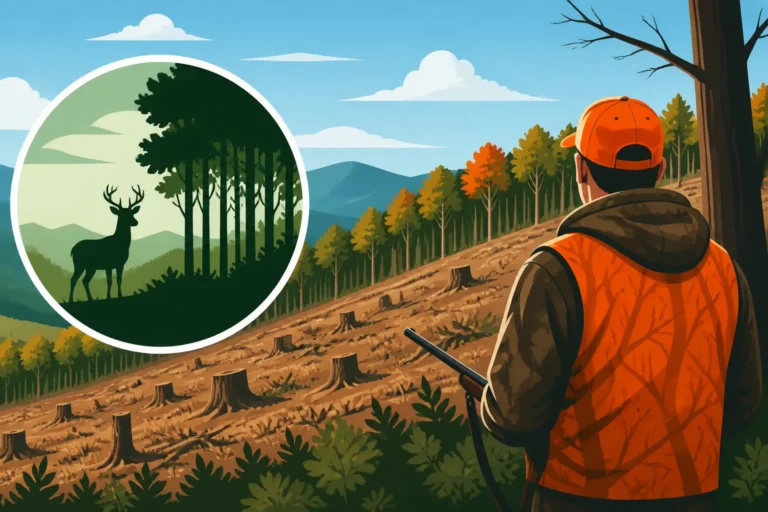
Vermont deer hunting strategies for finding white-tails in standing corn, brushy fencerows, and small woodlots after harvest.
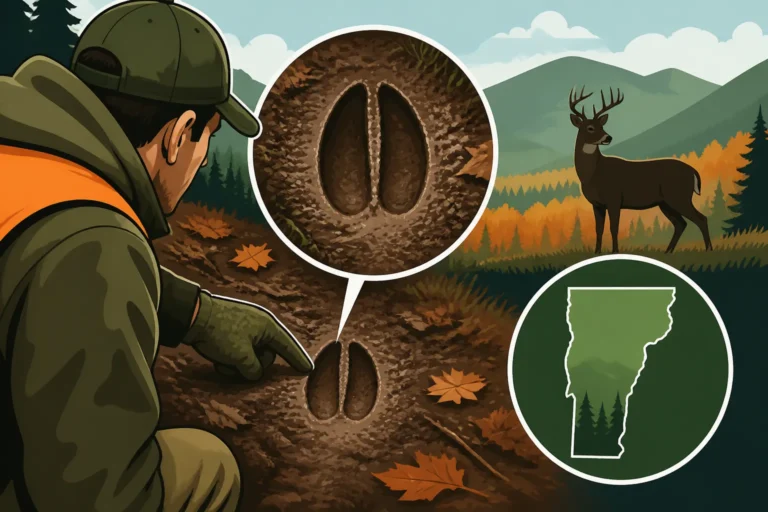
Vermont mud gives hunters clear hoof prints, revealing fresh deer movement and animal activity across diverse state landscapes.
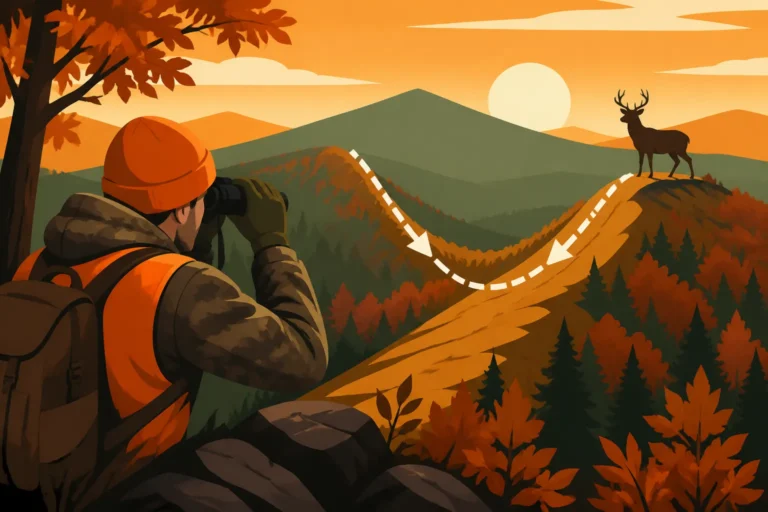
Vermont ridge-top saddles act as natural travel corridors and pinch points, offering hunters strategic intercept locations for cruising rutting bucks.
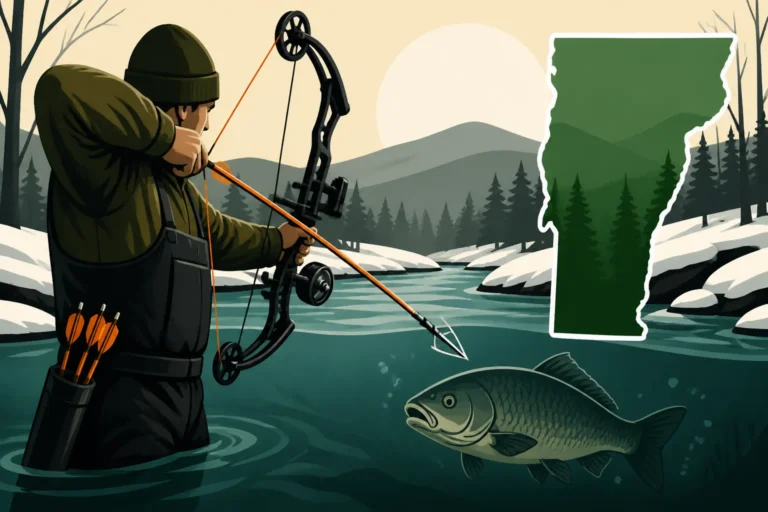
Bowfishing Vermont rivers during the off-season lets hunters target rough fish like carp and suckers to maintain archery skills.
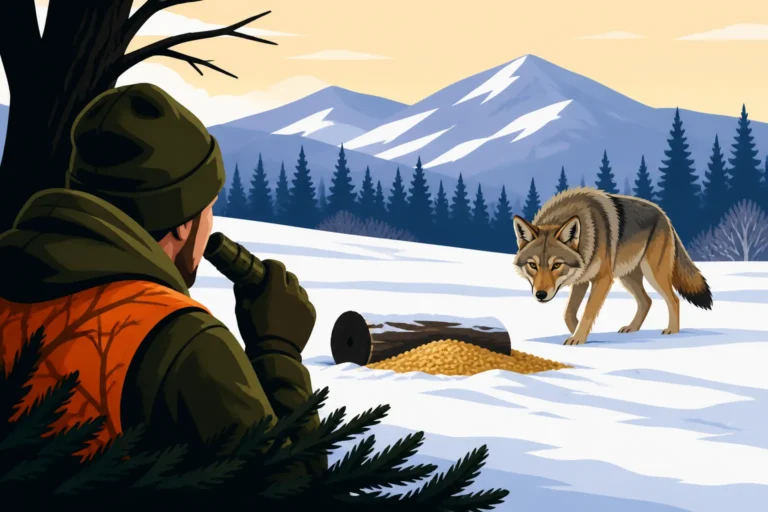
Coyote hunting in Vermont winters requires strategic calling near seasonal food sources like dairy farms and deer yards.
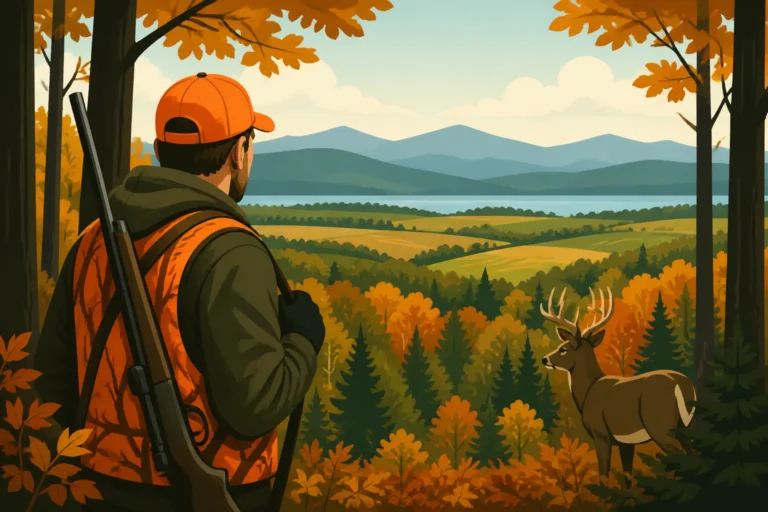
Hunting small woodlots near Burlington provides actionable strategies for navigating property lines, human presence, and local deer behavior.
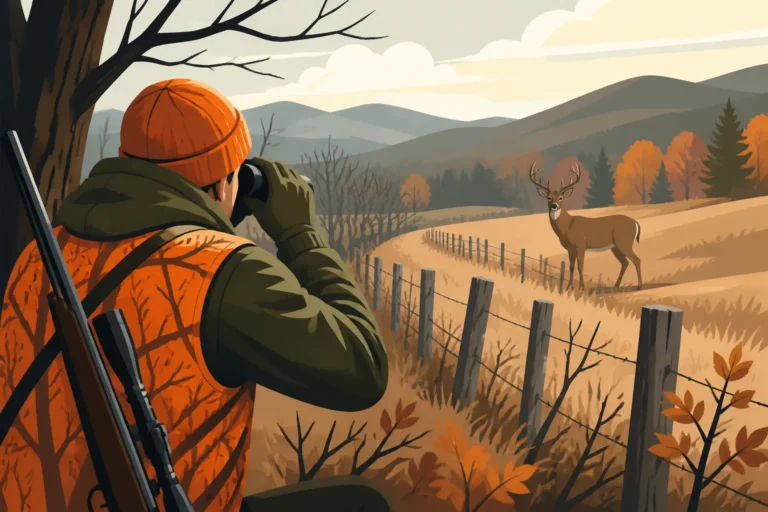
Vermont fencerows provide winter deer with thermal cover, food sources, and secure travel corridors during late hunting seasons.
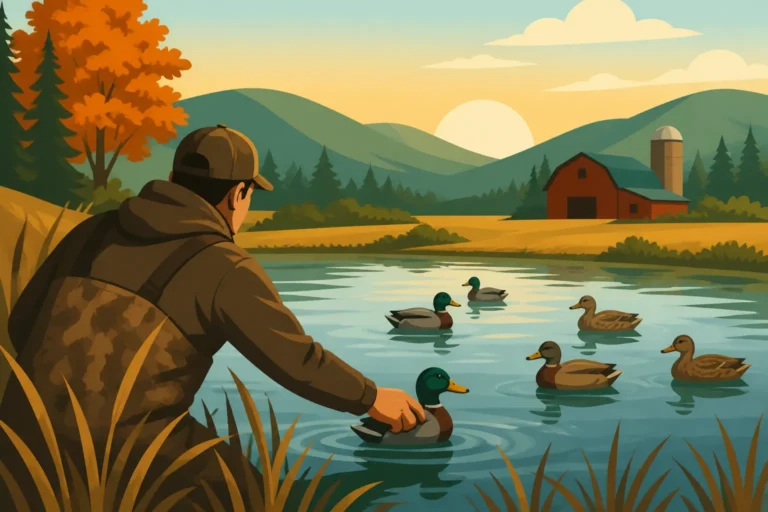
Setting decoy spreads on Vermont farm ponds helps hunters attract wary mallards, wood ducks, and green-winged teal successfully.
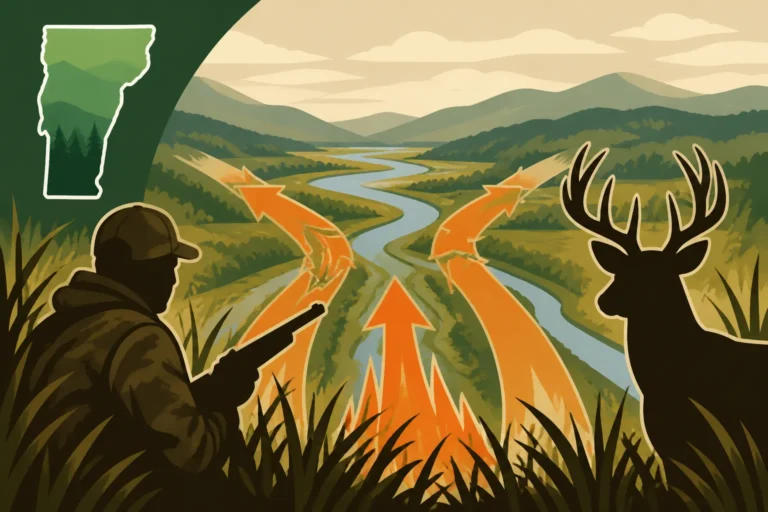
Connecticut River bottomland funnels in Vermont concentrate deer movement through natural corridors near agricultural fields and waterways.
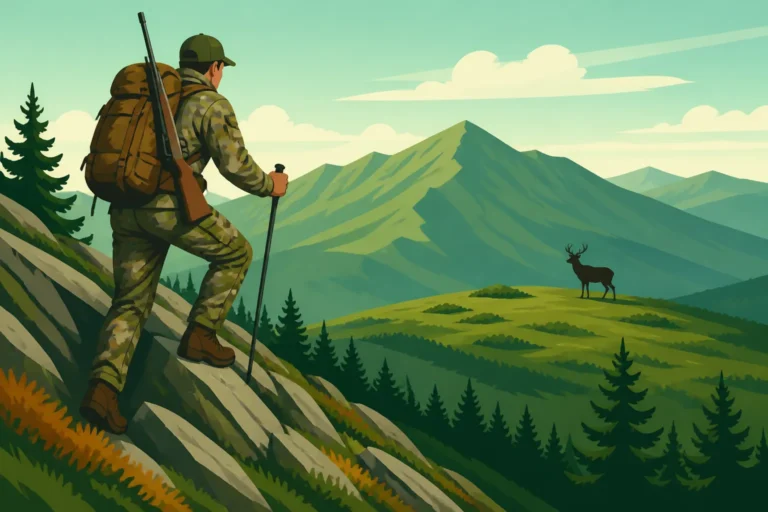
Green Mountains high-elevation benches offer deer security, thermal regulation, and food sources, providing effective hunting locations.