Hunting a Ridge-Top Saddle for Rutting Bucks
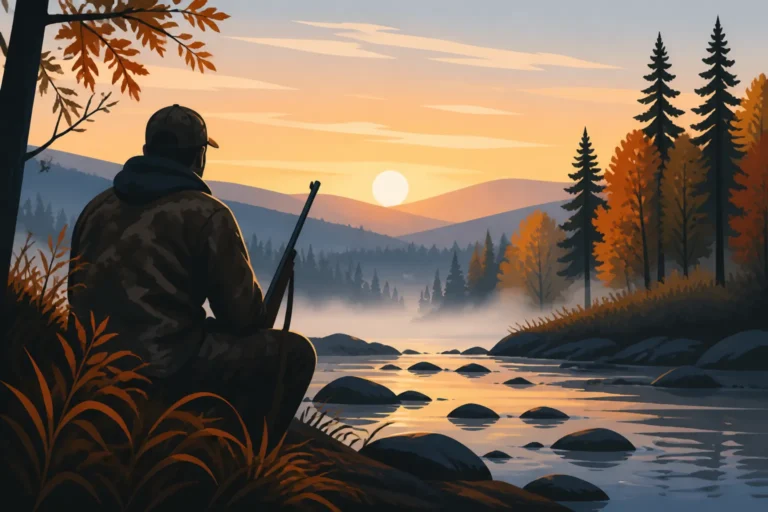
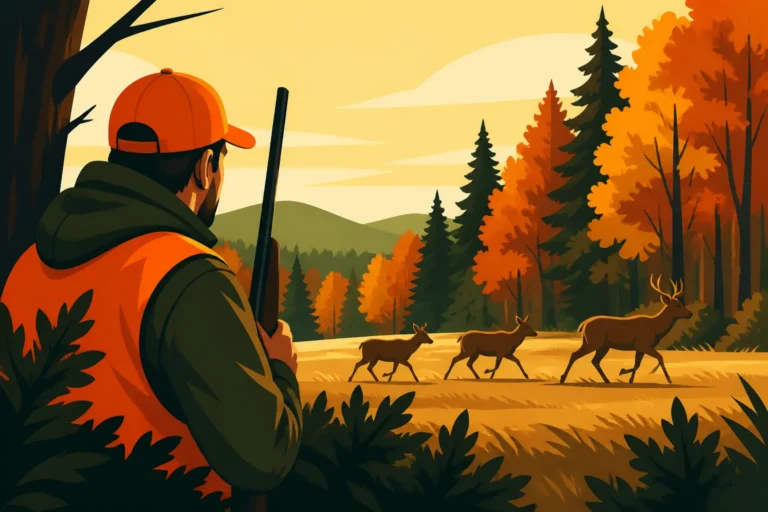
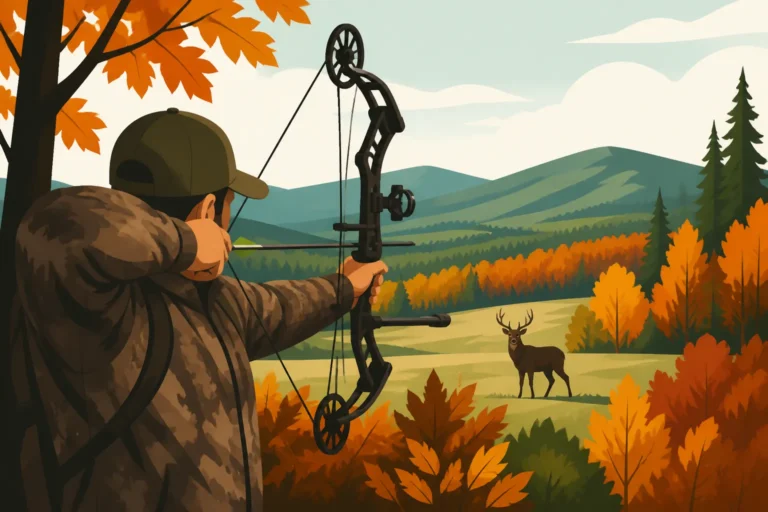
Hunting rutting bucks in Vermont can feel like trying to catch smoke. They're on the move, unpredictable, and often appear out of nowhere. One minute you’re scanning a quiet hardwood ridge, and the next, a mature buck is ghosting through the timber. It’s frustrating when you spend hours still-hunting or sitting on a prime food plot only to find the action has shifted to parts unknown. But seasoned Vermont hunters know that ridge-top saddles are consistent hotbeds of activity during the rut, offering a strategic advantage to intercept those cruising monarchs. This guide will walk you through understanding, scouting, and effectively hunting these critical terrain features to put you in the best position for success.
Understanding Ridge-Top Saddles and Why Bucks Use Them
The Green Mountains are a labyrinth of hills, valleys, and timbered ridges. While beautiful, this varied topography can make patterning deer feel impossible. However, certain landscape features act as natural magnets for deer movement, especially when bucks are actively seeking does during the rut. Ridge-top saddles are among the most important of these features.
What Exactly is a Ridge-Top Saddle?
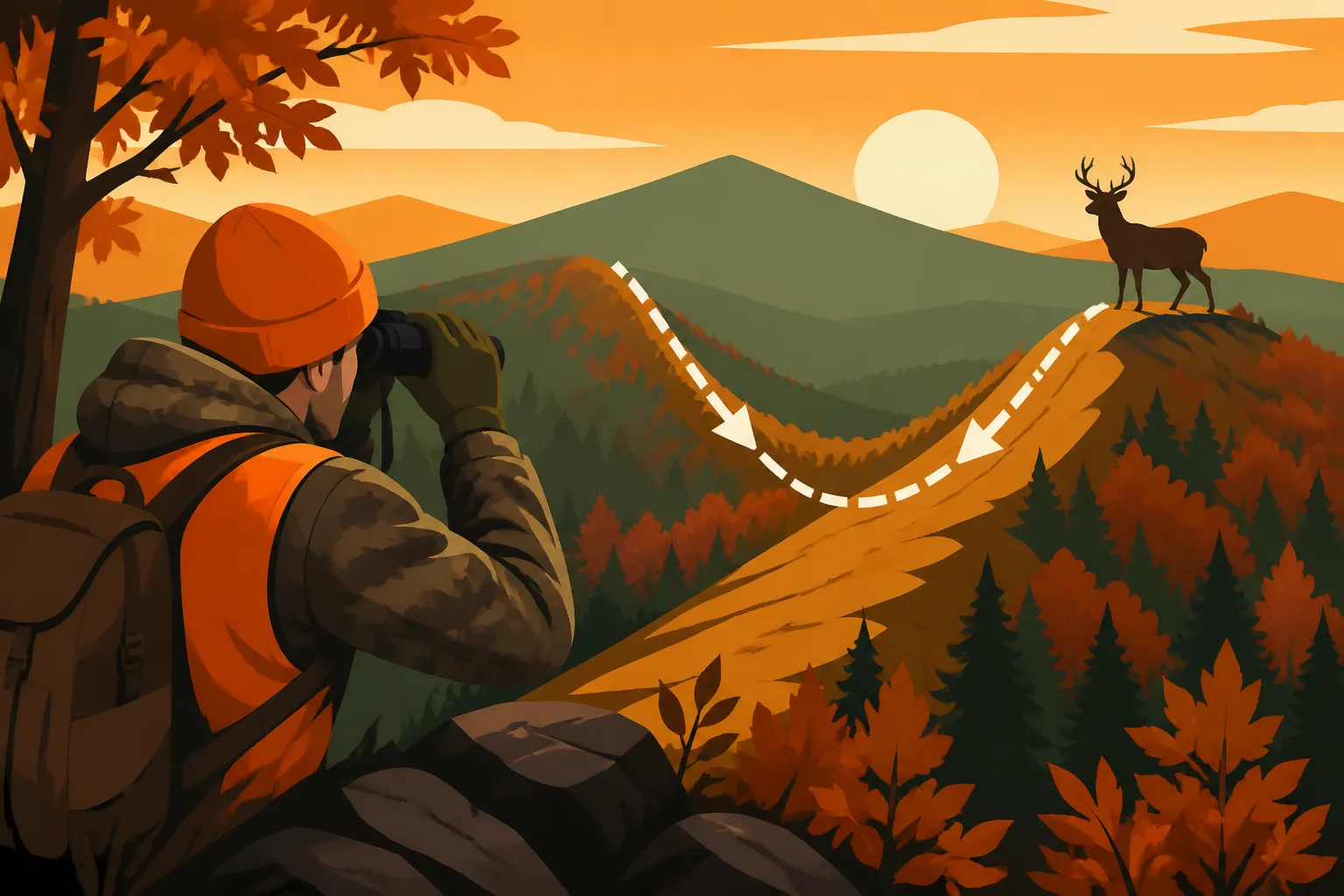
Think of a ridge-top saddle as a low point, or a "dip," in a continuous ridge line. Imagine walking along a ridge; at some point, the elevation drops a bit before rising again to the next peak. This lower section, often flanked by higher ground on either side, is the saddle. In Vermont's rugged terrain, these aren't always dramatic, sweeping depressions. They can be subtle swales, narrow benches, or slight depressions that simply offer the path of least resistance for deer traversing elevation.
These topographical features often connect two distinct high points or ridge systems. They can also serve as a crossroads for deer traveling from different directions – for example, deer moving up from a valley on one side of the ridge might meet deer moving up from another valley on the opposite side, all funneling through that central low point. The ground in a saddle might be relatively flat, or it might still have a gentle slope, but critically, it’s always lower than the ground immediately adjacent on the ridge.
Why Rutting Bucks Prioritize These Areas
Rutting bucks, while driven by an instinct to breed, are still creatures of efficiency. They want to cover ground, check for does, and leave their scent, all while expending the least amount of energy possible and remaining as safe as they can. Ridge-top saddles perfectly serve these needs.
Firstly, saddles offer the easiest travel route along a ridge. Instead of climbing over the highest points, a buck will naturally follow the path of least resistance through the lower saddle. This makes them natural travel corridors, almost like highways for deer moving across the landscape. During the rut, bucks are constantly cruising, often making long circuits from one bedding area to another, or from one feeding area to another, all in search of receptive does. These saddles become critical intercept points along those travel routes.
Secondly, saddles often serve as natural pinch points. As deer navigate the landscape, various features – thick cover, steep drops, open fields – can restrict their movement to narrower lanes. Saddles, by their very nature, constrict travel. A buck might have a wide swath of ridge to traverse on either side of the saddle, but when he hits that low point, his options for movement are often narrowed, making him more predictable for a short distance. This funneling effect makes them prime locations for setting up a stand.
Finally, bucks are intensely scent-checking during the rut. A saddle, particularly if it's open enough for swirling winds, can act like an air current highway, carrying the scent of does from various directions. Bucks will often pause, scent-check, and even lay down rubs and scrapes in these areas, knowing that does are likely to pass through. Understanding these behaviors is key to truly Hunting a Ridge-Top Saddle for Rutting Bucks.
Scouting and Locating Productive Saddles
Finding a saddle on a map is one thing; determining if it's a productive saddle that bucks use regularly is another. Effective scouting, both from your armchair and with boots on the ground, is paramount.
Leveraging Topographic Maps and Aerial Imagery
Before you even step foot in the woods, modern mapping tools can give you a massive head start. I always recommend spending time with detailed topographic maps and aerial imagery. Digital platforms like GoHunt or other popular mapping apps are invaluable for this.
On a topographic map, look for contour lines that spread out and then come closer together in a "U" or "V" shape along a ridge. The wider spacing indicates a gentler slope, and the dip in the contour lines signifies the saddle. What you're really looking for are saddles that connect larger ridge systems or those that seem to link obvious bedding areas (thick, dark evergreen patches or dense regrowth) with potential feeding areas (hardwood stands, old orchards, or agricultural fields). Pay attention to any converging deer trails visible on aerial imagery – faint lines crisscrossing through the woods often become obvious deer highways during the rut. Identifying these potential hotspots remotely helps you prioritize your in-person scouting efforts and prevents wasted time.
Don't just look for a saddle, look for saddles with features. Are there old logging roads crossing through them? Is there a patch of thicker cover nearby that could offer bedding? Does it appear to be a high point between two drainage systems? These details, gleaned from aerial photos, can tell you a lot about how deer might use the area. A great resource for digging into land features and boundaries is leveraging onX Layers for Vermont Land Status.
Boots-on-the-Ground Verification and Sign Reading
Once you’ve identified a few promising saddles on your maps, it's time to hit the woods. This is where you confirm your theories and find the real honey holes. Your goal during this phase is to find fresh, consistent sign that indicates regular buck activity.
Look for prominent deer trails cutting through the saddle. During the rut, these trails will be well-worn, almost like miniature highways. Pay close attention to rub lines – a series of trees rubbed by a buck along a travel corridor. Fresh rubs, especially on larger saplings, are a clear indication that a buck is actively using that route. You might even find massive rubs from prior years, signaling this saddle is a perennial hotspot. Scrape lines, too, can be found in saddles, particularly along the edges or where a dominant travel route intersects. A fresh scrape, with pawed-out earth and an overhead licking branch, is like a buck’s calling card.
Beyond obvious sign, look for the subtle details. Are there tracks in the mud? Are there beds nearby in the thicker cover, suggesting deer are bedding down near their travel routes? Is there scat indicating recent activity? Also, observe the wind patterns directly in the saddle. What happens to leaves, or a small piece of string you tie to a branch? Does the wind swirl, or does it blow consistently? This information is vital for planning your setup. For more detailed information on scouting, check out Scouting Vermont Public Land Before Season.
Effective Hunting Strategies for Vermont Saddles
Once you’ve found a saddle that screams "rutting buck," the next step is to strategize your hunt. It's not enough to simply set up anywhere; precise execution based on conditions will make all the difference.
Playing the Wind and Thermals in Mountain Terrain
This is arguably the most critical aspect of hunting ridge-top saddles in Vermont. Deer, especially mature bucks, rely heavily on their sense of smell. Getting winded means your hunt is likely over before it even begins. In mountainous terrain, wind behavior is complex due to thermals.
In the mornings, as the sun warms the earth, thermals rise, carrying your scent uphill. In the evenings, as the air cools, thermals fall, carrying your scent downhill. During the mid-day, when the rut is often most active, thermals can be less predictable or even stagnant, but prevailing winds can still carry your scent across the ridge.
When setting up on a saddle, you need to anticipate both the prevailing wind and the thermal currents. Ideally, you want to position yourself so that your scent is blowing away from where you expect deer to approach or travel. This often means setting up on the leeward side of the saddle, or slightly below the crest, so your scent flows down and away from the primary travel paths. It’s a constant chess match with the air currents. Learning to predict and utilize Wind and Thermals in Steep Green Mountain Terrain will drastically improve your success rates.
Stand Placement and Concealment
Your stand placement within the saddle needs to be strategic. You're looking for a setup that gives you good shooting lanes into the primary travel corridor without silhouetting yourself or being easily spotted.
Consider your approach and exit routes first. Can you get to and from your stand without disturbing deer or leaving a strong scent trail in the saddle itself? Ideally, approach from a direction that puts the wind in your favor, or use a natural barrier like a creek or a steep bank to mask your entry.
Next, identify the specific trees that offer the best concealment and shooting angles. You want to be high enough to see over obstructions and get a clear shot, but not so high that you feel exposed. Look for trees that break up your outline, like a cluster of pines or a large, branchy hardwood. Often, setting up 20-25 yards off the main trail, slightly downwind, provides the perfect balance. If tree stands aren't an option, or if the cover is dense, a well-brushed-in ground blind can also be highly effective, especially for still-hunting. Just make sure it’s in place long enough for deer to get used to it.
Patience and Calling Strategies
Saddles are travel corridors, meaning deer are often passing through, not necessarily lingering. This makes patience a virtue. Be prepared for long sits, especially during the peak of Hunting the Rut in Early-to-Mid November, when bucks can be active throughout the day.
While patience is key, sometimes a little persuasion can seal the deal. Grunt calls, especially a tending grunt or a contact grunt, can pique a buck's curiosity as he passes through a saddle. A short, subtle rattle sequence might also grab his attention, mimicking a distant spar between two bucks. Remember, you're not trying to call a buck in from a mile away; you're trying to stop one that's already in the vicinity or subtly alter his path to bring him into shooting range. Overdoing it can spook a wary Vermont buck. For more on this, check out Rattling and Grunting Vermont Bucks.
However, remember the primary goal is to be in position when a buck naturally uses the saddle. Don't rely solely on calling. Just being undetected in a prime travel corridor is often enough.
| Feature | Description | Buck Behavior During Rut | Optimal Hunting Strategy |
|---|---|---|---|
| Topography | Low point in a ridge, connecting higher ground. Gentle slopes. | Easiest travel route, natural funnel for crossing terrain. | Position to cover narrowest travel points. |
| Cover | Varies from open hardwoods to thick softwoods. | Utilizes thickets for security cover while traveling. | Set up within effective shooting range of primary trails. |
| Wind/Thermals | Can swirl or have predictable uphill/downhill flow. | Relies heavily on scent detection; avoids areas with human scent. | Hunt with wind in your favor, anticipating thermal shifts. |
| Deer Sign | Rubs, scrapes, fresh tracks, worn trails. | Actively scent-marking, seeking does, cruising travel routes. | Set up on fresh sign; use calls sparingly to intercept. |
| Accessibility | Varies based on terrain, often requires a hike. | Seeks paths of least resistance, especially when cruising. | Plan quiet entry/exit to avoid spooking deer. |
Common Challenges and Troubleshooting
Even with the best scouting and planning, hunting Vermont's ridge-top saddles isn't always straightforward. You'll encounter challenges, and knowing how to adapt is part of the game.
Dealing with Hunting Pressure in Popular Areas
One of the biggest frustrations, especially on public land during Hunting Vermont's November Rifle Opener, is dealing with other hunters. Productive saddles, once discovered, can become popular spots, and too much pressure will quickly push deer out.
If you find a saddle that's already getting hammered by other hunters, you have a few options. Firstly, consider going deeper or higher. Many hunters stick close to roads or easily accessible trails. The further you're willing to walk, often the less pressure you'll find. Use your mapping app like GoHunt to identify saddles that are a mile or more from the nearest road or trailhead. Look for saddles that require navigating particularly steep or difficult terrain – most hunters will avoid these.
Secondly, consider hunting mid-week. If you're able to take a day off, a Tuesday or Wednesday hunt can see significantly less pressure than a weekend. You might also try hunting during less conventional times, such as mid-day, when many hunters are taking a break. A buck that has been bumped early in the morning might decide to use a saddle to relocate during the quiet mid-day hours. Understanding Hunting Pressure on Vermont Public Land is crucial for adapting your strategy.
Adapting to Changing Weather and Deer Movement
Vermont weather is notoriously fickle, and changes can dramatically impact deer behavior. A sudden cold front, heavy rain, or even just a shift in barometric pressure can alter how and when bucks use saddles.
For instance, after a severe cold front, deer movement might initially be suppressed as they hunker down. But once the cold stabilizes, movement can increase dramatically as deer need to feed more to generate energy. A heavy rain might temporarily reduce movement, but once it stops, deer are often up and moving, feeding, and cruising with renewed vigor. Pay attention to the forecasts, but also trust your instincts and observations from the field. If you're not seeing movement in a saddle, consider if nearby food sources or bedding areas might be more active given the conditions. Sometimes, it’s not the saddle that’s "dead," but simply that the deer's timing has shifted. Being aware of how Hunting Deer After a Cold Front affects behavior can give you an edge.
Maximizing Your Chances During Vermont's Rut
Hunting ridge-top saddles is a highly effective tactic, but it truly shines when integrated into a broader understanding of rutting behavior and combined with other proven strategies.
Timing Your Hunts for Peak Rut Activity
While bucks can utilize saddles throughout the season, they are most productive during the peak of the rut. This typically falls in early to mid-November in Vermont, though it can vary slightly each year based on factors like weather and deer herd health. During this intense period, bucks are covering vast amounts of territory, sometimes traveling several miles a day, actively seeking does. This increased movement directly correlates with increased activity through natural funnels like saddles.
Focus your efforts during the middle hours of the day. While many hunters pack up around 9 AM, rutting bucks are often most active from 10 AM to 2 PM, cruising through saddles looking for does that might be bedding nearby or moving between feeding areas. These mid-day hours are often overlooked by other hunters, giving you a better chance at encountering an unpressured buck. Being in your stand for these crucial hours, even if it means an all-day sit, can significantly boost your odds.
Integrating Other Hunting Methods
Saddle hunting shouldn't be your only tactic; it works best as part of a comprehensive strategy. Consider combining it with other methods to increase your overall success.
For example, if a saddle is connecting a known bedding area to a prime feeding location (like an apple orchard or a stand of oaks), you might start your morning hunt by still-hunting slowly towards the saddle, or by setting up on the feeding area at dawn. As daylight progresses and deer move, you can transition to sitting the saddle. Conversely, if the saddle connects two large timber blocks, a careful Still-Hunting Green Mountain National Forest Timber approach through those timber blocks might push deer towards the saddle, or you might intercept a buck cruising elsewhere before he reaches it. The key is to adapt your approach based on what the deer are telling you with their movement and sign. Knowing Where Vermont Bucks Bed in Thick Cover can help inform your decision on how to integrate these methods.
Ultimately, hunting ridge-top saddles for rutting bucks in Vermont requires patience, meticulous scouting, and a keen understanding of deer behavior and mountain winds. By focusing on these natural funnels, you can turn the unpredictable chaos of the rut into a strategic advantage, putting yourself in the path of a cruising Green Mountain giant.
Disclaimer
Hunting is an inherently dangerous activity. Always prioritize safety, follow all Vermont Fish and Wildlife Department regulations, and obtain appropriate licenses and landowner permissions. Be aware of your surroundings and the presence of other hunters. The information provided in this guide is for informational purposes only and should not replace proper hunter education and adherence to all applicable laws.