Squirrel Hunting Green Mountain Hardwoods
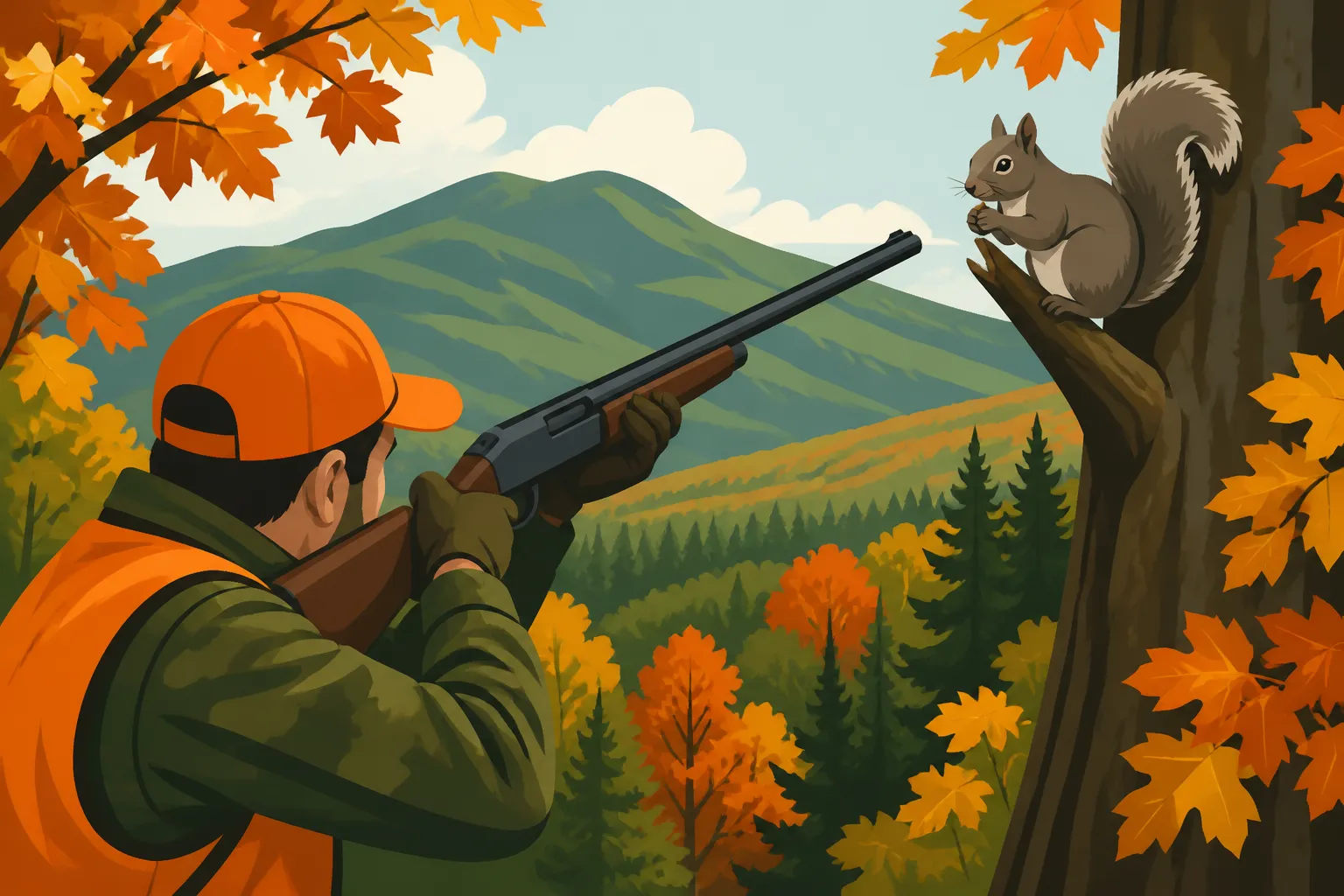
Hunting gray squirrels in Vermont's Green Mountain hardwoods can feel like a relentless game of hide-and-seek, especially when those nimble critters seem to vanish into thin air just as you get close. Their incredible agility and knack for blending seamlessly into the canopy make them a frustratingly elusive target for many hunters. This guide is designed to transform your Green Mountain squirrel hunts from a test of patience into a productive and genuinely enjoyable pursuit, arming you with the strategies and insights needed to consistently put squirrels in the game bag.
Understanding the Green Mountain Hardwoods Ecosystem
Before you can effectively hunt squirrels, you need to understand the world they inhabit – the sprawling, often rugged, hardwood forests of Vermont's Green Mountains. These forests aren't just trees; they're dynamic ecosystems with distinct food sources, cover, and terrain that dictate squirrel behavior. Knowing these elements is your first step toward consistent success.
Key Food Sources for Squirrels in Vermont
Gray squirrels, particularly, are incredibly reliant on hard mast crops, which are abundant in the Green Mountain hardwoods. When we talk about "hardwoods," we're primarily looking at oaks, beeches, and hickories. These trees are the grocery store for squirrels, especially as autumn progresses.
Oak trees, both red and white varieties, are perennial favorites. Red oaks tend to hold their acorns longer into the winter, providing a crucial late-season food source. White oaks, on the other hand, drop their acorns earlier, and squirrels will be quick to gather and bury these. You'll often find squirrels frantically burying white oak acorns in early fall, a sign of their importance. Beech trees are another goldmine; their small, triangular nuts are highly prized. A good beech crop will concentrate squirrels like nothing else, often leading to visible activity high in the branches. Don't overlook sugar maples, either. While not a primary hard mast producer, the seeds from maples can provide supplemental food, and squirrels will sometimes gnaw on buds or even the bark, especially during lean mast years. Learning to identify these trees and their current mast production is paramount.
Identifying Ideal Squirrel Habitat and Cover
Squirrels aren't just looking for food; they need secure places to live, nest, and escape predators. In the Green Mountain hardwoods, this often means mature timber with a mix of tree ages and canopy layers. Large, old-growth trees with plenty of cavities are prime real estate for dens. These natural tree hollows offer protection from the elements and predators, serving as safe havens.
Beyond den trees, look for areas with dense undergrowth or thick softwood pockets mixed within the hardwoods. While squirrels prefer hardwoods for food, they'll use conifers like hemlock or pine for thermal cover, especially on cold, windy days. These thickets provide excellent escape routes and a break from the wind, making them prime spots for squirrels to congregate. Ravines, rocky outcrops, and areas with fallen logs also offer valuable cover and travel corridors. Often, if you're Reading a Green Mountain Deer Yard, you'll notice that the very habitat deer prefer for winter shelter often harbors squirrels as well, as both species seek refuge and food sources in similar zones.
Essential Scouting and Locating Squirrels
You can’t hit what you can’t find, and that's especially true for squirrels. Scouting isn't just for deer; it's a critical component of successful squirrel hunting. Knowing how to read the landscape for squirrel sign will drastically increase your odds.
Pre-Season Reconnaissance and Sign Reading
Long before opening day, you should be out in the woods, even if it's just a quick hike. What you're looking for is evidence of squirrel activity, which can tell you where they're feeding, traveling, and nesting. The most obvious sign is chewed nuts. Look under oak, beech, and hickory trees for discarded shells and nut fragments. The fresher the chews, the more recent the activity. A pile of fresh shells under a specific tree is like a neon sign for a squirrel dining area.
Beyond nuts, keep an eye out for active leaf nests high in the canopy. These look like messy balls of leaves and twigs and serve as temporary shelters or nurseries. While not as permanent as a tree cavity, an abundance of leaf nests indicates a healthy local squirrel population. Also, look for squirrel tracks in soft ground or mud near water sources, or claw marks on the bark of favored trees. A powerful tool for this kind of reconnaissance is a mapping application, and services like GoHunt offer invaluable aerial imagery and topographical maps. You can use these to identify potential hardwood ridges, dense canopy cover, and even potential travel corridors from the comfort of your home, saving you valuable boot-leather during hunting season.
Using Technology and Terrain Features
Modern hunting tools aren't just for big game. Applications like GoHunt provide detailed satellite imagery, topo maps, and public land boundaries that can be incredibly useful for squirrel hunters. You can pinpoint promising hardwood ridges, identify mature timber stands, and even mark potential den trees or feeding areas. By layering this information, you can formulate a strategic plan before even stepping foot in the woods. Pay attention to contour lines on your topo maps; benches, saddles, and drainages can act as natural funnels for squirrel movement, just as they do for deer.
Beyond the digital tools, understanding the physical terrain is key. Squirrels love to travel along ridge lines, especially if those ridges are crowned with nut-bearing trees. They'll also use logging roads and old skid trails as easy travel routes, allowing them to quickly move between different feeding grounds. Look for south-facing slopes, which warm up faster in the morning and can be preferred sunning spots on colder days, often leading to increased early-morning activity. Understanding Wind and Thermals in Steep Green Mountain Terrain is also crucial, as squirrels, much like deer, often use wind to detect predators, so positioning yourself downwind is always a good strategy.
Effective Hunting Tactics for Hardwoods
Once you've done your scouting and understand the terrain, it's time to put those insights into action. Hunting squirrels in the Green Mountain hardwoods requires a blend of stealth, patience, and a bit of cunning.
Still-Hunting and Stalking Techniques
Still-hunting is arguably the most effective method for squirrels in dense hardwoods. It involves moving slowly, taking a few steps, then pausing and scanning for several minutes before moving again. This deliberate pace allows you to observe, listen, and detect movement that you'd otherwise miss if rushing. When you do move, tread lightly, picking your footsteps carefully to avoid snapping twigs or rustling leaves.
Focus your eyes not just on the ground, but up into the canopy and along tree trunks. Squirrels often cling to the far side of a tree trunk, peeking around to observe their surroundings. Look for any subtle movement, a flick of a tail, or the slight twitch of an ear. Use your binoculars to scan dense patches of leaves or distant tree limbs. When you spot a squirrel, don't immediately move. Observe its behavior. Is it feeding, burying nuts, or just resting? Plan your approach, using trees and natural contours for cover. If the squirrel sees you and "goes tight" to a tree, try walking in a semi-circle around the tree; often, the squirrel will shift, giving you a shot. This slow, methodical approach is also a fantastic way to develop your overall woodsman skills, beneficial for pursuits like Still-Hunting Green Mountain National Forest Timber.
Sitting and Ambush Strategies
Sometimes, the best move is no move at all. If you've identified a prime feeding area – a cluster of mature oak or beech trees heavy with mast – setting up an ambush can be incredibly productive. Find a comfortable spot with good visibility and a solid backstop, preferably downwind of the feeding activity. A fallen log, a large tree trunk, or even a small ground blind can provide excellent concealment. When Using a Ground Blind on Public Land, remember to brush it in naturally to break up its outline.
Patience is key here. Sit quietly for extended periods, perhaps an hour or more, and let the woods come alive around you. Squirrels that have been spooked or are naturally cautious will eventually resume their activities once they feel the coast is clear. This method is especially effective on calm, clear mornings when squirrels are most active in their feeding routines. Bring a good book or just enjoy the quietude; the squirrels will often appear as if by magic. Pay close attention to the sounds of the forest, as the rustle of leaves or the faint chatter can often give away their presence before you see them.
Calling and Decoys for Squirrels
While not as common as for turkeys or predators, some hunters find success using squirrel calls. A simple bark or distress call can sometimes pique a squirrel's curiosity, causing it to reveal itself. Small, squeaky calls that imitate a squirrel's chatter or distress can be surprisingly effective, especially on pressured animals that have become wary of still-hunters.
Decoys are less common for squirrels, but some creative hunters use realistic squirrel taxidermy or even small, stuffed animal squirrels placed in a feeding area to draw in curious real squirrels. This is a niche tactic but can be fun to experiment with, especially if you're looking to add another layer of challenge and ingenuity to your hunt. Remember, the goal is to make the environment seem safe and inviting, rather than alarming, so subtle calls are generally more effective than aggressive ones.
Gear and Setup for Success
Having the right equipment won't guarantee a squirrel, but it will certainly make your hunt more comfortable, efficient, and ultimately, more successful. From your chosen firearm to what's on your feet, every piece of gear plays a role.
Firearms and Ammunition Choices
For squirrel hunting, the .22 caliber rimfire rifle is the undisputed king. Its accuracy, low recoil, and affordability make it ideal. A bolt-action or semi-automatic .22 with a good scope (a fixed 4x or variable 3-9x is perfect) will allow for precise headshots, which are crucial for minimizing meat damage. Subsonic ammunition is a great choice as it's quieter and often just as accurate at typical squirrel ranges, disturbing the woods less. Shotguns, typically in .410, 20-gauge, or 12-gauge, are also effective, especially for running shots in dense cover or for beginners. Use small shot sizes like #6 or #7.5 to avoid excessive damage to the small game. Air rifles, especially high-powered PCP models, are gaining popularity for their quiet operation and accuracy, offering another excellent option for a clean harvest. Always be mindful of ethical shot placement, regardless of your chosen firearm.
Clothing and Footwear for Hardwood Terrain
Comfort and stealth are paramount when hunting squirrels. Layering is essential in Vermont, where morning temperatures can be brisk even in early fall, but warm up quickly as the sun climbs. Start with a good moisture-wicking base layer, add an insulating mid-layer, and top it with a quiet, durable outer layer in an appropriate camouflage pattern. Forget the stiff, noisy fabrics; opt for soft fleece, wool, or brushed cotton blends that won't rustle against branches. Your clothing should break up your outline effectively in the deciduous woods; patterns with greens, grays, and browns are ideal for Camo Patterns for Vermont Hardwood Cover.
Footwear is equally critical. You'll be doing a lot of walking, often on uneven, leaf-covered ground. A comfortable, waterproof boot with good ankle support and aggressive tread is a must. Whether it's the steep inclines or the rocky terrain, a pair of boots like those you'd wear for Best Boots for Green Mountain Ridge Trails will serve you well. Make sure they're broken in to prevent blisters. Gaiters can be a nice addition to keep leaves, twigs, and moisture out of your boots, especially when moving through thicker brush or wet conditions.
Essential Accessories for the Squirrel Hunter
Beyond the basics, a few accessories will significantly improve your experience. A good pair of binoculars (8x or 10x magnification) is invaluable for spotting squirrels high in the canopy or detecting subtle movement. A comfortable game vest or small backpack is necessary to carry your squirrels, extra ammo, snacks, water, and perhaps a small first-aid kit. A sharp knife for field dressing, if you choose to do so in the field, is also a good idea. Don't forget a compass or a GPS device/app on your phone (like GoHunt's offline maps) to navigate the woods, especially if you're exploring new territory on Scouting Vermont Public Land Before Season. Finally, consider a small, portable seat or cushion for those long sits while ambushing.
| Squirrel Species | Typical Habitat Preference | Primary Food Sources | Hunting Strategy | Key Identification |
|---|---|---|---|---|
| Gray Squirrel | Mature hardwoods, mixed forests, suburban areas | Acorns, hickory nuts, beech nuts, seeds, fungi | Still-hunting, sitting, calling | Gray fur, white belly, bushy tail, often large |
| Red Squirrel | Coniferous and mixed forests | Pine cones, spruce cones, berries, fungi | Still-hunting, calling | Smaller, reddish-brown fur, distinct white eye ring, very vocal |
| Flying Squirrel (Nocturnal, Not Hunted) | Mature forests with cavities | Nuts, seeds, fruits, fungi, insects | N/A | Large eyes, loose skin folds between limbs for gliding |
Post-Harvest and Conservation
Bringing home a limit of squirrels is a rewarding experience, but the hunt isn't truly over until the game is processed and you've considered your role in conservation.
Field Dressing and Processing Your Harvest
Squirrels are delicious table fare, but proper field care is essential. Once harvested, you'll want to field dress your squirrels as soon as possible, especially on warmer days, to ensure the meat stays fresh. There are several methods for skinning, but a common technique involves making an incision across the back, then stepping on the tail and pulling up on the hind legs to strip the hide off. Another popular method involves making incisions around the neck and hind legs, then peeling the hide down.
After skinning, eviscerate the squirrel carefully, removing all internal organs. Keep the carcass clean and cool. Once home, you can butcher the squirrel into smaller pieces for various recipes. Many hunters enjoy frying, stewing, or slow-cooking squirrel meat. It's lean and flavorful, a true taste of the Vermont woods.
Ethical Hunting and Conservation Practices
As hunters, we are the original conservationists. Ethical hunting means making clean, quick kills, respecting game laws, and ensuring a sustainable harvest. Always be sure of your target and what's beyond it before taking a shot. Practice at the range to ensure your accuracy, and know the effective range of your chosen firearm. Understanding regulations like those governing Squirrel Hunting Vermont Hardwoods ensures you're hunting legally and responsibly.
Beyond the hunt itself, think about habitat. Participating in local conservation efforts, supporting organizations like the Vermont Fish and Wildlife Department, and promoting responsible land stewardship all contribute to healthy wildlife populations. By focusing on sustainable practices, we ensure that the Green Mountain hardwoods will continue to provide excellent squirrel hunting opportunities for generations to come.
Disclaimer
Please ensure you are familiar with and adhere to all current Vermont Fish and Wildlife Department regulations and licensing requirements before engaging in any hunting activities. Hunting regulations can change, so always check the latest guidelines.