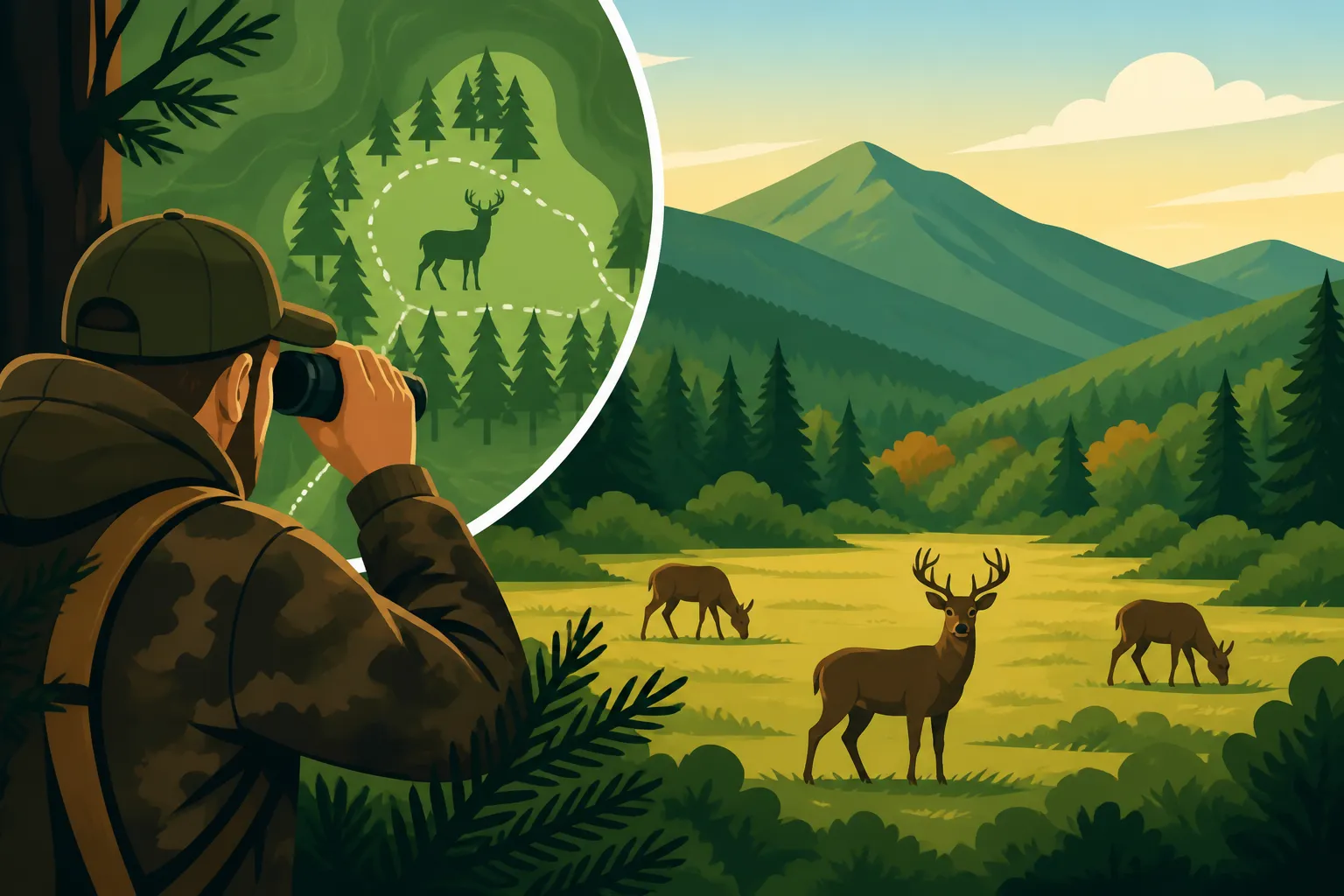
Reading a Green Mountain Deer Yard
Finding deer in Vermont, especially when the snow starts to pile up and the temperatures plummet, can feel like searching for a needle in a vast, white haystack. It's a common frustration for many hunters, feeling like the woods have simply emptied out. But the truth is, deer are still there; they've just changed their behavior dramatically, concentrating into specific areas to survive the harsh winter. This guide will walk you through exactly how to "read" the signs of a Green Mountain deer yard, helping you understand where these elusive animals seek refuge and how to approach these critical areas ethically and effectively.
What Exactly Is a Deer Yard?
Imagine a deer's perfect winter retreat in the Green Mountains. It's a place where the snow isn't quite as deep, the wind isn't quite as brutal, and a little bit of food is still within reach. That's essentially what a deer yard is – a sheltered area, typically dominated by dense conifer stands, where white-tailed deer congregate during the colder months to conserve energy and increase their chances of survival. These aren't just random spots; they're vital winter survival zones.
Deer aren't just seeking comfort; they're battling for their lives against the elements. Deep snow can make travel incredibly difficult, forcing them to expend precious calories, while biting winds and sub-zero temperatures can lead to hypothermia. By gathering in these sheltered locations, often south-facing slopes or valley bottoms, they can minimize energy loss, create a network of packed trails, and find what limited browse is available. For a deeper dive into these crucial areas, check out our piece on Vermont Deer Wintering Yards Explained.
The Survival Instinct Behind Yarding
The onset of winter in Vermont triggers an ancient survival mechanism in white-tailed deer. When snow depths consistently exceed 18-20 inches, traveling through it becomes a massive energy drain. Instead of battling deep drifts and exposed winds, deer gravitate towards areas that offer natural protection. These are often dense stands of evergreen trees like hemlock, spruce, and fir. The thick canopy of these conifers acts like a natural umbrella, intercepting snowfall and creating shallower snowpack underneath. Even more critically, these dense stands offer thermal cover, blocking the frigid winds that can strip away a deer's body heat.
By concentrating in these "yards," deer create a complex network of trails through the snow. This shared labor means that instead of each deer breaking its own path, they all use a common thoroughfare, further conserving energy. These trails connect bedding areas, often under the thickest cover, with small pockets of available browse. It's a finely tuned strategy honed over millennia to endure the unforgiving Vermont winter.
Ideal Habitat Characteristics for a Green Mountain Deer Yard
So, what makes a particular patch of woods a prime deer yard? It's a combination of specific tree species, topography, and proximity to food sources. For tree species, you'll be looking for mature stands of Eastern Hemlock, White Pine, Balsam Fir, and Red Spruce. These trees are excellent at retaining their needles year-round, forming a dense, insulating canopy. Think of it as a natural roof that keeps the worst of winter at bay.
Topography plays a huge role as well. South-facing slopes are often preferred because they catch more sunlight, which can slightly raise ambient temperatures and melt snow faster. Sheltered valleys and benches on hillsides also offer protection from prevailing winds. While dense conifers are key, a good deer yard often has some accessible food sources nearby. This could be young hardwoods, striped maple, hobblebush, or even balsam fir that they can browse. Sometimes, nearby logging cuts or natural clearings can provide crucial, if limited, forage. Knowing these subtle environmental cues can give you a significant advantage when you're Scouting Vermont Public Land Before Season.
Telltale Signs You've Found a Deer Yard
Once you understand what a deer yard is, the next step is learning to identify one on the ground. This isn't always easy, especially if you're not used to looking for these subtle indicators. But with practice, you'll start to recognize the distinct patterns that scream "deer country" in the dead of winter. The key is concentration – deer signs that are far more numerous and intense than what you'd typically find outside of a yarding area.
Interpreting Tracks and Trails
The most obvious and undeniable sign of a deer yard is the sheer volume of tracks and trails. Forget finding an occasional track; in a yard, the ground, or more accurately, the snow, will be crisscrossed with deer paths. These aren't just single-file routes; they're often wide, packed down thoroughfares, almost like miniature highways created by hundreds of hooves. You'll see tracks of various sizes, indicating does, fawns, and sometimes a few bucks coexisting. The key is to look for freshness. Are the tracks crisp, with sharp edges, indicating recent use? Or are they rounded and softened by melt-freeze cycles, suggesting older activity? Pay attention to where these trails lead. Do they connect thick bedding cover to a nearby feeding area? Are there clear escape routes leading out of the dense cover? Understanding these patterns can be as informative as Reading Vermont Mud for Fresh Deer Movement or even Tracking a Deer in Fresh Green Mountain Snow.
Browsing and Other Visible Deer Sign
Beyond tracks, browsing pressure is a critical indicator. Deer in a yard are constantly seeking food, and their feeding habits leave distinct marks. Look for twigs and branches that have been nipped clean, usually at a height reachable by deer, typically from ground level up to about four or five feet, depending on snow depth. You'll notice a distinct ragged appearance on the ends of browsed twigs, unlike the clean cut of a rabbit or hare. Pay close attention to species like striped maple, hobblebush, and even the needles of balsam fir or cedar, which can be important Late-Season Food Sources for Vermont Whitetails.
Another unmistakable sign is concentrated pellet groups (deer droppings). While you'll find pellets throughout the woods, in a deer yard, they will be far more numerous and clustered, indicating that deer are spending extended periods in these specific locations. You'll also find numerous beds – oval depressions in the snow, often sheltered under low-hanging conifer branches or on slightly elevated knolls that provide a vantage point. These beds will often contain melted snow from the deer's body heat, confirming recent occupancy.
When and How to Hunt a Green Mountain Deer Yard
Hunting a deer yard requires a sensitive and strategic approach. The primary purpose of these areas is deer survival, and putting undue pressure on them during the harshest parts of winter can be detrimental to the herd. The goal isn't to blast into the core of the yard, but rather to understand how deer use its fringes and transition zones.
Timing Your Approach to a Deer Yard
The ideal time to focus on deer yards is during the late fall and early winter seasons, particularly during Vermont's December Muzzleloader Season, or when archery season extends into deep snow periods. This is when deer are truly committed to these areas. However, it’s crucial to minimize disturbance. Deer are already under immense stress from winter conditions, and repeatedly flushing them from their yards forces them to expend critical energy reserves they can't afford to lose.
Instead of directly busting into the densest part of the yard, think about when deer are moving to and from these safe havens. Early morning and late afternoon, when they might be traveling between bedding cover and outlying food sources, are prime times. A good snowfall can also temporarily increase deer activity as they seek new browse before the snow gets too deep again. Understanding these nuances is key to effectively Hunting Into the December Muzzleloader Close.
Strategic Hunting Tactics Near Yarding Areas
When hunting near a deer yard, patience and stealth are your greatest assets. Still-hunting the edges of a yard, slowly creeping through the transition areas between dense conifers and more open hardwoods, can be incredibly effective. Focus on those subtle shifts in habitat, like fingers of dense cover extending out from the main yard, or small clearings within the conifers. This is often where deer will browse during daylight hours before retreating to the deepest cover. You can learn a lot from our guide on Still-Hunting Green Mountain National Forest Timber.
Stand placement should be focused on these travel corridors, pinch points, or saddles that connect the yard to potential feeding areas. Identify natural funnels where deer movement will be concentrated. Always pay critical attention to wind direction and thermals, especially in the undulating terrain of the Green Mountains. Deer will use these air currents to their advantage, and you need to do the same to remain undetected. Learning how to master Wind and Thermals in Steep Green Mountain Terrain is indispensable for this type of hunting. Remember, the goal is to intercept deer as they move naturally, not to push them out of their vital winter sanctuary.
Tools and Technology for Locating and Understanding Deer Yards
While traditional woodsman skills are invaluable, modern technology has given us some incredible tools to aid in locating and understanding deer yards before we even set foot in the woods. These resources can save you countless hours of scouting and help you pinpoint high-probability areas.
Leveraging Mapping Technology and Aerial Imagery
Digital mapping applications, such as onX Hunt or GoHunt (which offers fantastic mapping overlays), are revolutionary for scouting deer yards. From the comfort of your home, you can pore over aerial imagery, looking for those telltale dark green patches that indicate dense conifer stands. These apps allow you to identify south-facing slopes, sheltered valleys, and subtle terrain features that might concentrate deer. You can mark potential yarding areas, trace internal trails, and identify possible access points or stand locations.
By utilizing different map layers, like topographic maps alongside aerial views, you can get a comprehensive understanding of the landscape. For instance, you can use the contour lines to confirm south-facing slopes or locate benches and draws that provide natural travel routes. Knowing how to interpret onX Layers for Vermont Land Status or truly understanding Reading Aerial Photos for Green Mountain Deer can be a game-changer, revealing potential yards that might be otherwise hidden. These tools are fantastic for narrowing down your search before you invest time on the ground.
Field Scouting and Verifying Potential Yards
Even with the best mapping technology, there's no substitute for boots on the ground. Once you've identified potential deer yards on a map, the next step is to get out there and verify them, especially after the first significant snowfall. This is when the signs become most evident. Walk the fringes of the conifer stands, look for those dense trail networks, examine browsing pressure, and search for beds and concentrated droppings.
A good pair of binoculars can be incredibly useful for glassing distant slopes or dense thickets, allowing you to spot deer movement or even the subtle texture of a deer trail from afar without disturbing the area. Remember, the goal of field scouting is to confirm your suspicions and gather more detailed information about deer movement patterns, entry and exit routes, and preferred bedding or feeding spots. It's about building a complete picture beyond what a satellite image can provide, blending technology with traditional woodcraft.
| Characteristic | Ideal Deer Yard Attributes | Less Preferred Attributes |
|---|---|---|
| Vegetation | Dense conifers (Hemlock, Spruce, Fir, White Pine) | Open hardwoods, sparse timber, recent clearcuts |
| Topography | South-facing slopes, sheltered valleys, benches | Exposed ridgetops, north-facing slopes, wide open flats |
| Snow Depth | Shallower snowpack due to canopy interception | Deep, unbroken snow drifts |
| Thermal Cover | Excellent, blocks wind and retains heat | Poor, exposed to wind and cold |
| Food Proximity | Accessible browse species (striped maple, fir, hobblebush) | Distant or buried food sources |
| Human Pressure | Relatively low disturbance, remote access | High foot traffic, active logging, snowmobile trails |
Disclaimer
Hunting is an inherently dangerous activity. This guide provides information for educational purposes only and should not be taken as a substitute for professional instruction, adherence to all local, state, and federal laws and regulations, and personal responsibility. Always prioritize safety, respect wildlife, and obtain all necessary licenses and permits before engaging in any hunting activities. Conditions in the field can change rapidly, and personal judgment is always paramount.