Tracking a Deer in Fresh Green Mountain Snow
Losing a blood trail, especially when fresh snow suddenly covers the ground, can be one of the most disheartening experiences for any deer hunter in Vermont. That feeling of uncertainty, knowing your quarry is out there but the obvious signs have vanished, is a common frustration. This comprehensive guide will walk you through the nuanced art of tracking a deer specifically in fresh Green Mountain snow, helping you maximize your chances of recovery and truly understand the story the snow tells.
The Immediate Aftermath: Assessing the Shot and Initial Sign
When you take a shot at a deer, whether it's with a bow during Vermont's archery season or a rifle in November, the first few moments are critical, especially with snow on the ground. Your immediate reaction, or lack thereof, can dramatically influence your recovery efforts. Resist the urge to rush in. Give the deer time, especially if the shot wasn't absolutely perfect. A deer hit well can still run a surprising distance, but if undisturbed, it often beds down nearby, giving you a much easier track.
Interpreting the Initial Shot Reaction
Every deer reacts differently to a shot, but snow can offer a clear, immediate picture of what happened. Did the deer mule kick, suggesting a gut shot? Did it drop in its tracks, indicating a spine or high shoulder hit? Or did it bolt, tail tucked, showing a more questionable impact? Observe these reactions carefully. A deer that drops immediately, then scrambles to its feet, often indicates a high shoulder or spine hit that momentarily stunned it. Conversely, a deer that simply jumps and runs can be hit anywhere, or even missed. Look for tracks that show a sudden burst of speed, or perhaps an unusual gait, like favoring a leg. This initial intel, combined with what the snow immediately reveals, forms the bedrock of your tracking strategy.
Locating the Impact Site
Once you’ve given the deer some time – typically 30 minutes for a suspected heart/lung shot, or several hours for a gut shot, depending on conditions – it's time to find the impact site. This is where the snow really shines as your best friend. Start by walking slowly to where you believe the deer was standing when you shot. Look for disturbed snow, a divot where a hoof dug in, or perhaps a patch where hair was knocked loose. On fresh snow, even a tiny speck of hair or bone fragment will stand out. This is your baseline. Without confirming the impact site, you’re just guessing where the track truly begins, and that’s a recipe for getting lost and frustrated in the vast Green Mountain woods. This is also where you might find the first real blood.
Deciphering the Story in the Snow
Snow isn't just a blanket; it's a blank canvas recording every detail of the deer's journey. Learning to read this canvas is the essence of successful snow tracking. It's not just about following tracks; it's about understanding the nuances of the deer's behavior, its injuries, and its direction.
Reading Tracks and Gait
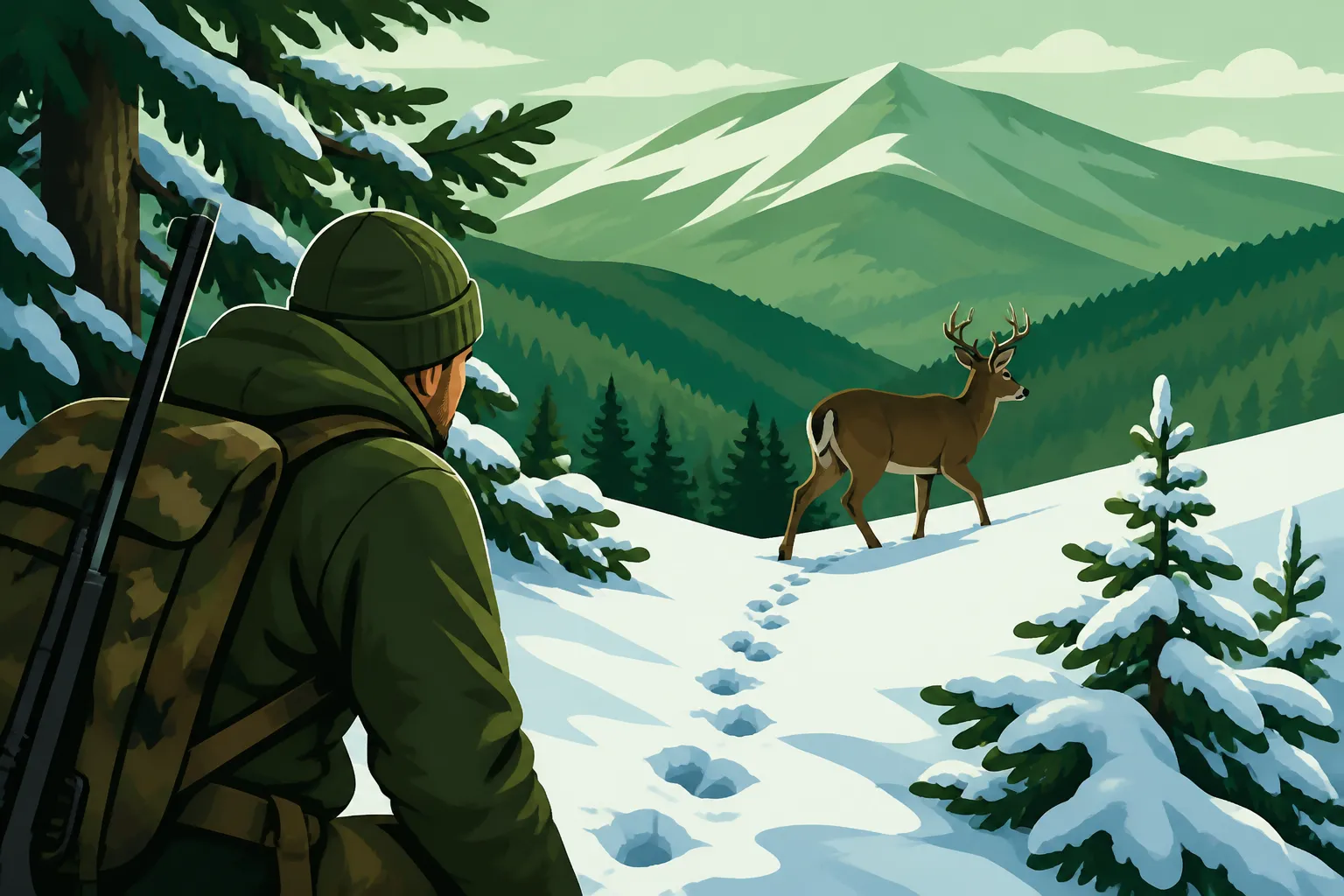
Fresh snow provides an incredible advantage for reading a deer's tracks. Not only can you clearly see the hoof prints, but you can often discern the depth, the pattern, and any irregularities. A healthy deer will have a fairly consistent stride and track pattern. An injured deer, however, will show deviations. Is one track deeper than the others, indicating it's favoring a leg? Is the stride length shortening? Are the tracks erratic, or is the deer maintaining a consistent, deliberate pace? These details speak volumes. For instance, a deer that is trotting will often have hind feet landing in front of the front feet impressions, while a deer walking slowly will have hind feet landing exactly in or slightly behind the front prints. A wounded deer may drag a leg, leaving a distinct furrow in the snow, or its tracks might appear more splayed out as it struggles for balance. This type of careful observation is key to "Tracking a Deer in Fresh Green Mountain Snow".
Following the Blood Trail
While tracks tell a story of movement, blood tells a story of injury. On fresh snow, blood is typically very visible, but its appearance can vary significantly depending on the type of wound. Bright red, frothy blood usually indicates a lung shot, which is generally a good sign. Dark red blood with stomach contents often points to a gut shot, meaning a longer wait time and a more cautious approach. Smaller specks of blood or a very light, pinkish hue might suggest a muscle hit or a less severe injury. The pattern of the blood is also crucial:
- Consistent, steady drips: Often indicates a good hit, perhaps a through-and-through, or a major artery.
- Sporadic, light flecks: Could mean a superficial wound, or the blood is clotting.
- Large puddles where the deer stopped: This is a strong indicator that the deer is weakening, possibly bedding down.
Pay close attention to where the blood is located relative to the tracks. Is it on both sides of the trail, suggesting a through-and-through wound? Is it only on one side? This information can help determine which side of the deer the exit wound might be on, or if the arrow or bullet is still lodged within the animal. If you're struggling to find more blood, consider expanding your search from the last known sign, as a deer might stop bleeding for a short stretch before opening up again.
Table: Interpreting Blood Sign in Fresh Snow
| Blood Characteristics | Likely Wound Type | Tracking Implications |
|---|---|---|
| Bright Red, Frothy | Lung/Heart Shot | Good sign, deer likely down quickly. Track after 30-60 min. |
| Dark Red, Clotting | Muscle/Artery Hit | Moderate injury, deer may go further. Track cautiously after 1-2 hrs. |
| Dark Red, Stomach Matter | Gut Shot | Serious wound, long wait (6-12+ hrs) crucial to prevent pushing. |
| Pinkish/Watery | Superficial/Exit Wound | Less severe, may be difficult trail. Track cautiously. |
| Absent for Stretches | Clotting/Low Exit | Requires reliance on tracks, expansion of search area. |
The Art of the Track: Step-by-Step Recovery Strategy
Once you’ve found the initial sign, the real work of tracking begins. This isn't a race; it's a careful, deliberate investigation. Patience and methodical effort are your greatest allies. The Green Mountains present unique challenges with their varied terrain, thick cover, and often steep slopes, making careful strategy paramount.
"The Grid" and Leapfrogging Method
When the blood trail becomes sparse or disappears entirely, the "grid" or "leapfrogging" method becomes invaluable. Instead of blindly following a faint trail, assign roles. One person (or you, if alone) stays on the last confirmed sign. The other person (or you, by marking your spot) then moves forward in a zig-zag or arc pattern, looking for the next sign – be it a track, a blood drop, or a disturbed bush. The key is not to move too far from the last sign. A good rule of thumb in thick cover is to stay within sight or shouting distance. As soon as new sign is found, mark it, and the process repeats. This method prevents you from overshooting the trail and losing hours backtracking. In steep Green Mountain terrain, a wounded deer often heads downhill or finds thick cover, so concentrate your searches in those areas. Understanding how to find "Finding Sign in Green Mountain Timber" is crucial here.
Using Topography to Your Advantage
Deer, especially when wounded, are creatures of habit and efficiency. They'll often follow the path of least resistance or seek out familiar escape routes. In the Green Mountains, this means often utilizing terrain features like benches, saddles, and creek bottoms.
- Benches: Flat spots along a hillside provide easier travel than steep ascents or descents. A wounded deer will often traverse these.
- Saddles: Low points between two ridges are natural travel corridors. Even a wounded deer might cross a saddle to get to a different drainage or escape route.
- Creek Bottoms/Swamps: These areas provide water and thick cover. A deer might head here to bed down or to try and throw off a pursuer.
- Logging Roads/Trails: While usually avoided during daylight, a wounded deer might utilize an old logging road for easier travel, especially if it's struggling.
Thinking like the deer and anticipating its movements based on the topography, especially if you've done your pre-season scouting, can save you immense time. Tools like GoHunt's mapping features or the Vermont Fish and Wildlife App can be incredibly helpful for visualizing the terrain and potential escape routes, even without cell service. You can overlay aerial photos and topography maps to predict where a deer might go after being shot. Knowing how to interpret "Reading Aerial Photos for Green Mountain Deer" can be a game-changer in these situations.
When to Call for Help (and when to wait)
Knowing when to call in reinforcements or when to back out and return later is a critical judgment call. If the trail is completely lost after a diligent search, and you suspect a marginal hit (e.g., gut shot), the best course of action is often to back out quietly. Mark your last known sign, take note of the time and weather, and leave the deer to bed down. Returning after 6-12 hours, especially in cold weather, greatly increases your chances of finding the deer bedded and expired. If you press a gut-shot deer too hard, it will often jump and continue running, making recovery much harder.
However, if you're confident of a solid hit (lung/heart), but the trail is simply challenging due to terrain or light snow, bringing in experienced trackers can be a huge asset. Fresh eyes can spot sign you've overlooked. Just remember to maintain discipline and communicate clearly, using the leapfrogging method to avoid contaminating the trail.
Navigating the Challenges of Green Mountain Snow
Vermont's Green Mountains throw particular curveballs at trackers. The snow itself is a variable, and the landscape is anything but flat. Adapting your technique to these conditions is essential.
Varying Snow Conditions and Their Impact
Not all snow is created equal for tracking.
- Light, Fluffy Snow: This is often the best for clear tracks and blood visibility. However, strong winds can quickly fill in tracks, erasing your trail.
- Crusty Snow: This can be challenging. Deer tracks might break through the crust, leaving clear impressions, but older tracks might be indistinguishable from fresh ones. Blood might also be harder to see if it soaks into the crust.
- Wet, Heavy Snow: This type of snow can make tracks muddled and less distinct, especially if it’s actively falling. However, it’s excellent for preserving body impressions if a deer beds down.
- Icy Conditions: This is arguably the worst for tracking. Tracks are minimal or non-existent, and blood can be difficult to discern or might be instantly washed away by freezing rain. In these conditions, you'll need to rely heavily on other signs, like disturbed vegetation or even listening for sounds.
Always be aware of how the snow is changing. If fresh snow begins to fall heavily while you're tracking, mark your last sign meticulously and consider if continuing is prudent, or if waiting for the snowfall to stop might improve your chances later.
Steep Terrain and Thick Cover
The Green Mountains are renowned for their steep, rugged terrain and dense conifer thickets. These features make tracking inherently more difficult.
- Steep Ravines and Cliffs: A wounded deer might fall or seek refuge in these areas. Be extremely cautious when pursuing a deer into such dangerous spots. Your safety is paramount. Learning how to safely recover a deer from a steep ravine is a separate skill in itself.
- Thick Softwood Cover: Cedar swamps, spruce thickets, and pine plantations offer dense refuge for deer. Visibility can be less than 10 feet. In these areas, slow down even further. Look for broken twigs, displaced moss, or rub marks on trees where the deer pushed through. The deer's body heat might even melt a slight depression in the snow where it squeezed through tight cover. This is where a focused search, inch by inch, is needed, as you won't be able to track from a distance. Tools like GoHunt's map features, showing different timber types, can help anticipate where a deer might hide.
When tracking in thick cover, keep your head up more than you might think. While following tracks is important, constantly scan ahead, especially for a brown patch that might be the deer bedded down. Many deer are recovered by spotting them visually before even reaching the end of their tracks.
The Recovery and Beyond: What to Do Once the Deer is Down
Finding your deer is a moment of immense relief and satisfaction, but the work isn't over. Proper field care, especially in snowy, cold conditions, ensures your venison is top quality and your responsibilities as a hunter are fulfilled.
Field Dressing in Cold and Snow
Once you confirm the deer is expired, the first step is to tag it immediately according to Vermont regulations. Then, it's time for field dressing. In cold weather, especially with snow on the ground, some aspects become easier, and some more challenging.
- Cooling: Cold temperatures are your friend for cooling the meat quickly, which is crucial for preventing spoilage.
- Cleanliness: Snow can be used as a natural "scrubber" for your hands and knife, but be mindful of keeping the internal cavity clean of snow and debris. A clean, sharp knife is essential.
- Blood Removal: Inverting the deer slightly after gutting allows gravity to help drain blood from the body cavity. This is particularly easy in snowy conditions if you can find a slight incline or prop the deer up.
- Transport: While dragging a deer out of a steep ravine or dense thicket in the Green Mountains is always a chore, fresh snow can sometimes make it easier if the snow is slick enough to reduce friction. Using a deer sled or a sturdy rope can significantly help with the arduous task of getting your deer out. If you're hunting in a remote area of the Northeast Kingdom, having a plan for "Packing Meat Out of a Steep Ravine" is critical.
Marking and Hauling Out Your Game
Before you start hauling, take a moment to mark your trail, especially if you had to venture far off a known path. Brightly colored ribbon tied to branches every 50-100 yards can be a lifesaver in dense woods, ensuring you don't get lost on the way back to your vehicle. If you're on public land, remember to remove these markers when you're done.
Hauling a deer out, particularly a large Green Mountain buck, is a demanding physical task. If you're alone, dragging can be exhausting. Consider quartering the deer if you're in truly rugged terrain and have a backpack frame designed for packing out game. This distributes the weight more evenly and makes navigating steep, snowy slopes much safer. Always prioritize your safety and physical limits. If you're hunting with a partner, taking turns dragging or using a game cart designed for rough terrain can make the process more manageable.
Finally, remember to report your deer to the Vermont Fish and Wildlife Department. With the advent of the Vermont Fish and Wildlife App, reporting is easier than ever, often done right from the field. This critical step ensures the state has accurate harvest data, which helps manage Vermont's deer herd for future generations of hunters.
Disclaimer
Hunting involves inherent risks, and conditions in Vermont's Green Mountains can be challenging. Always prioritize safety, understand and follow all Vermont Fish and Wildlife regulations, and be prepared for rapidly changing weather. The information provided here is for educational purposes and should not replace proper hunter education or personal experience and judgment.