Blood Trailing After Dark in Vermont
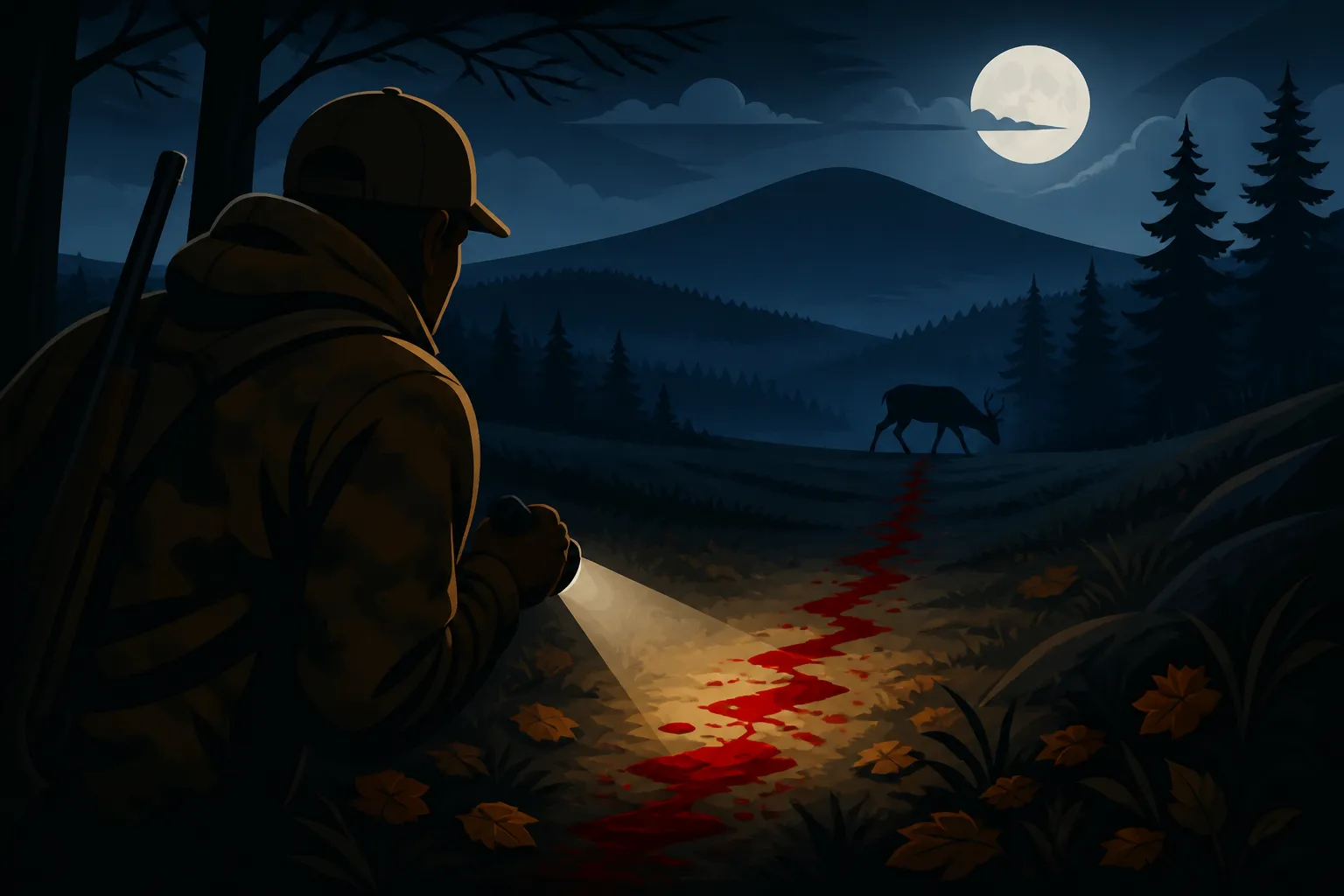
The moment you make a shot on a deer, especially as daylight fades, a unique blend of adrenaline and anxiety rushes through you. The excitement of a successful hunt quickly turns to dread if the animal doesn't drop within sight, leaving you facing the daunting task of blood trailing as darkness descends over the rugged Vermont landscape. This guide is here to walk you through the realities, challenges, and best practices for tracking wounded game after sunset in the Green Mountain State, aiming to equip you with the knowledge to make the most ethical and successful recovery possible.
The Unique Challenges of Blood Trailing at Night in Vermont
Blood trailing during daylight hours can be tough enough, but when you add Vermont's notoriously thick cover, variable terrain, and the sheer blackness of a moonless night, the task becomes significantly more complex. It's not just about finding a speck of red; it's about piecing together a story in an environment that actively works against you. The stress can be immense, but understanding these specific challenges is the first step toward overcoming them.
Vermont's Varied Terrain and Vegetation
Vermont's landscape is a beautiful but unforgiving place for a blood trail. You might be hunting the relatively open agricultural fields of the Champlain Valley one day and the dense, dark conifer stands of the Northeast Kingdom the next. Imagine trying to follow a faint blood trail through a regenerating clear-cut, where fallen limbs and thorny briars create an almost impenetrable maze. In the Green Mountains, steep ravines and rocky ledges can make every step treacherous, and a deer that seeks refuge in a deep hollow can be incredibly difficult to access, let alone locate in the dark. Furthermore, wet conditions are common, and a heavy rain can quickly wash away even the most promising sign. It’s a constant battle against the elements and the natural world, which always seems to conspire to hide a wounded animal.
Understanding Light and Its Limitations After Sundown
When the sun dips below the horizon in Vermont, it gets dark. Not just city-dark with ambient light, but truly dark, especially deep in the timber. While a good headlamp or powerful flashlight is indispensable, even the best artificial light sources have limitations. They create harsh shadows that can obscure subtle sign, flatten the perception of depth, and make distinguishing dried blood from a wet leaf or a patch of red dirt incredibly difficult. Your peripheral vision is severely hampered, forcing you to focus intensely on a small illuminated circle. Some hunters swear by UV lights, claiming they make blood glow, but their effectiveness can vary greatly depending on the type of blood, the surface it's on, and even the specific light itself. Often, the human eye, even with its color vision diminished in low light, might pick up fresh, wet blood better than a specialized light that casts a strange hue on everything.
Navigating Legalities and Ethical Considerations
Beyond the physical difficulties, Vermont has specific rules and ethical expectations that hunters must adhere to when pursuing game after dark. While it is legal to pursue wounded game at night, it’s critical to understand the nuances. You can't just go charging into someone's posted land. It's paramount to know Vermont's trespass and permission law, especially if the animal crosses property lines. The Vermont Fish and Wildlife Department website or your handy Scouting With the Vermont Fish and Wildlife App can provide the most up-to-date information on regulations. Ethically, the goal is always a swift and humane recovery. If you've made a questionable shot or lost the trail completely, sometimes the most ethical choice is to back out, give the animal time, and return at first light with fresh eyes, especially if the conditions are against you. This isn't giving up; it's respecting the animal and maximizing your chances of a clean recovery.
Essential Gear for a Successful Night Blood Trail
Going into a night trail unprepared is a recipe for frustration and potentially losing your game. Think of it like going on a backcountry hike; you wouldn't head out without the right pack and supplies. For blood trailing after dark, your gear is your lifeline, helping you find that elusive sign and navigate safely back to your vehicle. Having the right tools, and knowing how to use them, can make all the difference in a successful recovery.
Lighting the Way: Headlamps, Flashlights, and UV Options
This is where you absolutely cannot skimp. You need multiple light sources, and they need to be reliable.
- Headlamps: A good headlamp is non-negotiable. It keeps your hands free for marking, pushing brush aside, or holding your rifle. Look for one with adjustable brightness settings, a red light option (to preserve night vision if you need to look at a map or your phone), and a long battery life. Brands like Petzl, Black Diamond, or Fenix offer excellent options. Make sure to have fresh batteries or a fully charged unit, plus spares.
- Powerful Flashlights: A handheld flashlight with a strong, focused beam complements your headlamp. It allows you to sweep a wider area or punch through thicker cover. A tactical flashlight from Streamlight or SureFire can be incredibly effective for spotting subtle blood splatter from a distance.
- UV Lights: As mentioned, UV lights are a mixed bag. Some hunters swear by them, while others find them less useful than a good white light. If you opt for one, test it beforehand with actual animal blood to see its effectiveness. Not all UV lights are created equal, and cheaper ones might offer little benefit.
When using lights, resist the urge to shine them directly down the trail all the time. Often, blood will reflect better when illuminated at a shallow angle. Sweep the light from side to side, and from different heights, to catch those tiny specks that might otherwise be missed. This systematic approach is key, as is taking your time. For more tips on navigating the wilderness in low light, check out Best Headlamp for a Pre-Dawn Ridge Climb.
Marking the Trail: Tape, Reflectors, and GPS
Losing your last blood spot is a common and infuriating problem, especially at night. You walk a few steps, look back, and can’t find your previous mark. This is where marking your trail meticulously comes in.
- Fluorescent Marking Tape: This bright orange or pink tape is visible under flashlight beam and is crucial for marking every confirmed speck of blood. Tie it high enough to be seen easily, but not so high that you risk spooking the animal if it's still alive and bedded nearby.
- Reflective Tacks or Markers: These are fantastic for marking the actual blood spots directly. They are small, easy to deploy, and glow brightly when hit by your flashlight beam, creating a clear path to follow. They’re invaluable for keeping you oriented.
- GPS or Mapping App: A reliable GPS unit or a mapping app like the one offered by GoHunt (or onX Hunt) on your smartphone is absolutely critical. Use it to mark your vehicle's location, the last known blood, and any significant changes in the trail. This is your safety net, ensuring you don't get turned around in the dark, especially if you're deep in the Green Mountain National Forest's Two Districts. A handheld GPS from Garmin or a robust smartphone with a strong battery and downloaded offline maps are highly recommended. Learning how to use your Best GPS App for Vermont Public Land effectively before you're in a stressful situation is a must.
Navigation and Communication Tools
Beyond the immediate trail, you need to think about your overall safety and ability to get out of the woods and potentially call for help.
- Compass and Map: Even with GPS, a physical compass and a topographic map are essential backups, especially in areas with poor cell service like parts of the Northeast Kingdom. Knowing how to use them can literally save your life.
- Satellite Communicator: For truly remote hunts, a device like a Garmin inReach or a Zoleo satellite communicator allows you to send text messages and, more importantly, an SOS signal even without cell service. This is invaluable if you get injured or lost. For more on preparing for emergencies, read Best First Aid Kit for a Remote Hunt.
- Charged Cell Phone: While service can be spotty, your phone is a powerful tool for its flashlight, mapping apps, and emergency calls if you do find service. Keep it in an insulated pocket to preserve battery life in cold weather.
- Whistle: Simple, but effective for signaling a partner if you're trailing with someone else.
Step-by-Step Strategy for Blood Trailing After Dark
Okay, you've made the shot, and you're now standing in the fading light, heart pounding. This isn't the time for panic or rushing. A methodical, disciplined approach is your greatest asset. Every step you take, every decision you make, influences the outcome. Slow down, breathe, and trust the process.
Initial Assessment and Waiting Period
The most critical step often involves doing nothing at all. Immediately after the shot, observe the animal's reaction. Did it mule kick, hunch up, or run off with its tail tucked? These are clues. Listen for crashing sounds, a final death moan, or a distinct silence. Note the direction it ran and identify a landmark.
Now, here's the hard part: wait. The exact duration depends heavily on the shot placement.
- Obvious Kill Shot (Heart/Lungs): If you saw the deer drop or heard it crash within 50 yards and believe it was a perfect shot, you might approach cautiously after 30 minutes to an hour. But even then, waiting longer rarely hurts.
- Questionable Shot (Gut/Liver): This is where patience is absolutely paramount. A gut-shot deer needs a minimum of 6-8 hours, preferably longer, to expire. If you push it too soon, you'll likely jump the animal, and it will often travel a great distance, making recovery nearly impossible. In Vermont, this often means backing out entirely and returning at first light. Hunting Into the December Muzzleloader Close can often involve these tough choices, as cold temperatures can help preserve meat while you wait.
- Leg/Muscle Shot: If you suspect a non-lethal leg or muscle hit, it's a tougher call. The deer might recover, or it might be a prolonged suffering. Often, these still require significant waiting, and often a very slow, quiet approach at first light.
During the waiting period, mentally replay the shot. What was the distance? Angle? Did the animal flinch? This helps you anticipate the type of blood trail you might find.
Methodical Grid Search and Marking
Once you decide to begin the trail, slow down. Seriously, slow down. Most deer are lost because hunters move too fast, walk past sign, and then can't find the trail again.
- Locate First Blood: Go to the spot where you last saw the deer and where you believe it was standing when hit. Start an intensive search for the very first sign of blood, hair, or bone fragments. Mark this spot immediately with flagging tape or a reflective tack. Note the color and consistency of the blood—bright red and frothy often indicates a lung hit, while dark red or watery blood can suggest a liver or muscle hit. Green or brown material might indicate a gut shot.
- Establish a Line: Once you find the first blood, look in the direction the deer ran for more sign. Don't immediately follow. Instead, sweep your light in an arc ahead of the last known blood. When you find the next speck, mark it. Now you have two marks establishing a direction.
- The Grid Approach: Instead of simply following the line, try a grid or spiral search around the last known blood. Walk in progressively wider circles or zig-zags. This is especially useful when the blood trail becomes sparse or disappears.
- Mark Every Sign: This cannot be stressed enough. Every drop of blood, every piece of hair, every disturbed leaf or broken twig that confirms the deer’s path must be marked. This creates a visual breadcrumb trail that allows you to look back and confirm your path, or quickly re-establish your location if you lose the trail for a moment.
- Look Up, Down, and All Around: Blood can splatter on brush, be wiped on tree trunks, or even be carried on the underside of leaves. Don’t just look at the ground directly in front of you. Scan bushes, low branches, and even the underside of leaves. Pay attention to scuff marks, overturned leaves, or fresh tracks in soft soil or mud. Reading Vermont Mud for Fresh Deer Movement can provide valuable insights here.
- Use Your GPS/Mapping App: Every time you confirm a significant piece of sign, or if the trail becomes particularly sparse, drop a waypoint on your GPS. This builds a digital record of the deer’s path, which can be invaluable if you need to return later or share information with other trackers. The GoHunt app, for example, allows for quick and easy waypoint dropping.
Interpreting Sparse Sign and Anticipating Movement
Eventually, the clear, easy-to-follow blood trail might dwindle to almost nothing. This is where your tracking skills and understanding of deer behavior truly come into play.
- Scat and Urine: Check for fresh scat or urine. If it’s bloody, that’s a clear sign you’re still on the right path.
- Broken Branches and Scrapes: A wounded deer often becomes less careful about its movements, sometimes bumping into branches that it would normally avoid. Look for freshly broken twigs or disturbed leaves, especially at deer height.
- Track Patterns: Even in sparse conditions, you might be able to discern a change in the deer’s gait. Is it dragging a leg? Are its tracks uneven?
- Water and Thick Cover: Wounded deer often head for the path of least resistance, which can be a dry creek bed, or they might seek out water to lie in to cool themselves and cover their scent. They will almost always head for the thickest, nastiest cover they can find – a dense spruce stand, a cedar swamp, or a thorny patch of multi-flora rose. These spots provide a sense of security and often make trailing incredibly difficult. Knowing Where Vermont Bucks Bed in Thick Cover is a huge advantage.
- Wind and Thermals: Consider the prevailing wind and thermals, especially in the steep terrain of the Green Mountains. A deer will often try to bed with the wind at its back, so it can smell anything approaching from behind, while also having a visual advantage downwind. Understanding Wind and Thermals in Steep Green Mountain Terrain can help you predict where a deer might have gone to bed.
By meticulously marking your trail and constantly interpreting the subtle clues, you give yourself the best chance of staying on course, even when the blood seems to vanish.
When to Call for Help or Postpone the Search
There comes a point in every difficult blood trail where you have to make a tough decision: do you keep pushing, or do you call for help/postpone? The instinct to recover your game is strong, but sometimes, the conditions, the lack of sign, or the sheer exhaustion make continued pursuit counterproductive or even dangerous.
Recognizing a Cold Trail and Difficult Conditions
A "cold trail" doesn't just mean the blood has dried; it means the sign has become so sparse or intermittent that you're no longer confident you're on the animal's path. This might look like:
- No new blood for an extended period: You've searched diligently for an hour or more and haven't found a single drop.
- Conflicting sign: You start finding tracks that lead in different directions, or blood spots that seem inconsistent with the original trail.
- Loss of confidence: You feel utterly lost, disoriented, or unsure of your next move.
- Worsening weather: Heavy rain, snow, or a sudden drop in temperature can quickly obscure a trail. If the forecast is bad, it's often better to back out and return when conditions improve.
When any of these factors arise, it’s a strong indication that it might be time to pause. Pushing blindly through the night can lead to getting lost yourself, or completely destroying any remaining sign that might be visible in daylight. It's frustrating, but it's often the smartest decision.
Utilizing Tracking Dogs or Experienced Volunteers
Vermont allows the use of leashed tracking dogs for wounded game recovery, and they can be an absolute game-changer, especially on a cold or sparse trail. These dogs are specially trained to follow the scent of wounded deer, and their noses are far superior to human eyes, particularly in low light or thick cover.
- Finding a Tracker: Several organizations and individuals in Vermont offer trained tracking dog services. A quick online search or a call to the Vermont Fish and Wildlife Department often provides a list of certified trackers. Don't wait until morning to contact them if you think you might need one; call as soon as you've decided to back out, so they can plan to be there at first light.
- Preparing for the Dog: If you do call a dog handler, make sure you mark the exact spot of the last confirmed blood. This is where your diligent flagging and GPS waypoints become invaluable. Avoid contaminating the area with your scent if possible, and clearly communicate all the details of the shot and what you’ve found so far.
- Gathering Volunteers: If a dog isn't available, reaching out to experienced hunting friends or local hunting club members can also be beneficial. A fresh set of eyes, especially at first light, can often pick up subtle signs that you overlooked in your fatigued state. More people can also safely cover more ground in a Deer Drives With Three or Four Hunters scenario if the deer is still alive and moving.
Prioritizing Hunter Safety and Ethical Recovery
Ultimately, your safety and the ethical recovery of the animal are the highest priorities.
- Don't Get Lost: Vermont's wilderness can be disorienting, especially at night. If you're feeling turned around, stop, consult your map and GPS, and prioritize getting back to a known landmark or your vehicle. No deer is worth risking your own well-being.
- Stay Hydrated and Warm: Blood trailing is physically and mentally demanding. Bring water, snacks, and extra layers of clothing. Vermont nights can get very cold, even in early fall. Staying warm is crucial for clear thinking.
- Respect Private Land: If the trail leads onto posted private land, you must obtain permission before continuing. Do not trespass. This is where a clear head and a fully charged phone for calling landowners can prevent legal issues or Vermont Wildlife Violation Penalties.
- Proper Field Dressing: Once the animal is recovered, process it quickly and ethically. For tips on how to handle the carcass, especially in cool temperatures, check out Field Dressing a Deer in Cold Weather.
By understanding the challenges, preparing with the right gear, adopting a methodical approach, and knowing when to seek assistance, you significantly increase your chances of a successful and ethical recovery when blood trailing after dark in Vermont.
| Lighting Option | Best Use Case | Pros | Cons |
|---|---|---|---|
| Headlamp | Hands-free, general illumination | Keeps hands free, essential for marking/moving through brush | Beam can be limited, battery life varies, creates shadows directly ahead |
| Powerful Flashlight | Spotting distant blood, sweeping wide areas | Strong, focused beam, can cut through fog/thicker cover | Requires a free hand, can be cumbersome, heavy |
| UV (Blacklight) | Highlighting certain blood types | May make some blood glow brightly on specific surfaces | Inconsistent effectiveness, can make everything look weird, short range |
| Lantern (Area Light) | Base camp, initial search at kill site | Illuminates a wider area, good for assessing a general vicinity | Not practical for trailing, too much ambient light can wash out sign |
Disclaimer
The information provided in this guide is for informational purposes only and is not a substitute for professional advice or hands-on training. Always prioritize safety, adhere to all local, state, and federal hunting regulations, and consider taking a certified hunter education course, such as those that cover Vermont Hunter Education Requirements. Hunting involves inherent risks, and individual judgment should always be exercised.