Finding Ground Others Walk Past
It's a frustrating reality for many Vermont hunters: you put in the time, scout hard, and still feel like you're bumping into other hunters or seeing deer that are already wise to human presence. The truth is, most hunters gravitate towards the easiest access and familiar spots, leaving vast tracts of overlooked ground. This guide is all about equipping you with the mindset and practical strategies to discover and effectively hunt those hidden gems, where deer feel safe and unmolested, even on heavily hunted public land.
The Reality of Hunting Pressure in Vermont
Let's be honest, hunting in Vermont, especially for deer, can feel like a competition at times. Whether you're on a popular Wildlife Management Area (WMA) or a seemingly secluded parcel of state forest, the likelihood of encountering other hunters is a constant consideration. This isn't a criticism of fellow sportsmen; it's simply a fact of life in a state with a passionate hunting culture and finite accessible land. Understanding how this pressure shapes deer behavior is the first critical step in finding success where others fail.
Why Hunters Stick to the Obvious Spots
Human nature often dictates the path of least resistance. When it comes to hunting, this means hunters naturally gravitate towards areas that are easily accessible, have well-defined trails, or are close to parking areas. Think about those logging roads and clear-cuts that are just a stone's throw from the pavement – they see a lot of foot traffic. Similarly, familiar fields edges or prominent ridge lines that offer clear lines of sight become magnets for hunters, particularly during popular seasons like the November rifle opener. These spots might produce early in the season, but as pressure mounts, deer quickly learn to avoid them during daylight hours.
Many hunters simply don't have the time, physical conditioning, or desire to venture far off the beaten path. They might prefer quick, convenient hunts, or perhaps they haven't yet developed the skills to navigate dense, unforgiving terrain. This creates a predictable pattern of hunter distribution, where the vast majority of effort is concentrated within a relatively small radius of known access points. If you can push past this common comfort zone, you instantly increase your odds of finding deer that haven't been relentlessly pursued.
The Behavioral Changes in Pressured Deer
Deer aren't stupid. In fact, they are incredibly adaptable and learn quickly when their survival is on the line. As soon as hunting season opens, especially during Vermont's November Rifle Season, you'll see a noticeable shift in their patterns. They become more nocturnal, moving primarily under the cover of darkness. They will often abandon their traditional feeding and bedding areas if those spots are too exposed or experience frequent human intrusion.
Instead, pressured deer seek out sanctuaries – dense, nasty thickets, steep ravines, expansive swamps, or any piece of cover that offers maximum security and minimal human contact. These are often the places that are hardest for hunters to get into, either due to physical difficulty or simply a lack of obvious trails. A buck that might tolerate occasional human presence in September will become incredibly skittish by November, utilizing every available piece of topography and cover to remain unseen. Recognizing these behavioral changes is key to adapting your strategy and learning to hunt where deer actually feel safe. This understanding also ties into scouting strategies, as discussed in Scouting Vermont Public Land Before Season.
Unlocking Hidden Sanctuaries with Advanced Scouting
The secret to finding ground others walk past isn't necessarily about discovering brand new, uncharted territory. More often, it's about looking at familiar landscapes with a fresh perspective and utilizing modern tools to identify those overlooked pockets of cover that hide pressured deer. Effective scouting, both virtual and boots-on-the-ground, is paramount.
Navigating Difficult-to-Access Areas
When you're trying to find spots that don't see much pressure, you need to think like a deer and a lazy hunter simultaneously. What kind of terrain would most people avoid? Steep, broken ground, tangled blowdowns, deep swamps, beaver flows, and dense softwood thickets are prime candidates. These areas might be physically demanding to navigate, but that's precisely why deer use them as daytime bedding cover. Look for natural barriers that deter human access, such as wide creeks, marshy sections, or extremely steep slopes. A slight change in elevation or an unexpected water feature can be enough to create a natural bottleneck that funnels hunters away from a particular area.
Consider areas just beyond where most hunters typically stop. If there's a well-used trail that eventually peters out, that "end of the trail" might be the starting point for your exploration into unpressured territory. Often, the best spots are just a quarter or half-mile further than most people are willing to push. It requires a commitment to physical exertion and a willingness to get a little uncomfortable, but the reward of finding undisturbed deer sign can be immense.
Utilizing Mapping Tools and Satellite Imagery
In today's hunting world, digital mapping tools are indispensable for identifying overlooked ground. Services like GoHunt allow you to overlay various layers, including public/private land boundaries, topo lines, satellite imagery, and even historical aerial photos. Start by studying satellite imagery to identify areas of dense, unbroken cover that are not directly adjacent to roads or trails. Look for changes in vegetation types – a transition from mature hardwoods to a thick conifer stand can be a magnet for deer seeking security.
Pay close attention to topographical maps. Steep slopes, narrow ravines, and sharp elevation changes often create natural funnels or pockets of cover that are difficult for hunters to access but ideal for deer. The Green Mountain National Forest, for instance, is full of such features. Use the contour lines to visualize the terrain in 3D, noting saddles, benches, and hidden draws that might not be obvious from the ground. Identifying potential travel corridors between these security cover areas and food sources is also crucial. For more in-depth map reading, check out Reading Aerial Photos for Green Mountain Deer.
| Feature Type | Hunter Pressure Tendency | Deer Preference (Pressured) | Scouting Challenge |
|---|---|---|---|
| Easy Access Roads | High | Low | Minimal |
| Logging Roads | Moderate-High | Low-Moderate | Minimal |
| Open Hardwoods | Moderate | Low | Moderate |
| Steep Ravines | Low | High | High |
| Dense Softwood Thickets | Low | High | High |
| Expansive Swamps | Low | High | Very High |
| Deep Beaver Flows | Very Low | Very High | Extreme |
| Isolated Ridges | Low-Moderate | Moderate-High | Moderate-High |
Tactical Approaches for Hunting Overlooked Terrain
Finding these hidden gems is only half the battle; the other half is knowing how to hunt them effectively without giving away your presence. These unpressured deer are not necessarily less intelligent than their road-weary counterparts, but they haven't been as educated by human intrusion, meaning your careful approach can pay dividends.
Mastering Entry and Exit Routes
When hunting ground others walk past, your entry and exit routes become critically important. The goal is to get into your stand or blind undetected and leave the same way, minimizing your disturbance to the area. This often means taking longer, more circuitous routes, utilizing natural cover, and moving slowly and quietly. Avoid walking through bedding areas or known travel corridors unless absolutely necessary, and if you do, ensure you're doing so in the middle of the day when deer activity is minimal, or as part of a strategic still-hunt.
Always consider the wind and thermals. In steep Vermont terrain, thermals will typically rise in the morning and fall in the evening. Understanding these air currents is vital to avoid having your scent broadcast into the area you plan to hunt. For more on this, see Wind and Thermals in Steep Green Mountain Terrain. Your entry might involve navigating a thicket on your hands and knees, or taking a wide loop to come in from an unexpected direction. The idea is to make your presence as subtle as possible, ensuring the deer in that sanctuary remain unaware of your presence until it's too late. Remember, the less you disturb these areas, the longer they will remain productive.
Reading Subtle Sign in Remote Cover
In these overlooked areas, deer sign might not be as obvious as heavily-used trails near food plots. You're often looking for more subtle clues. Scrapes might be smaller, rubs might be less numerous, but they will be fresh. Look for droppings in bedding areas, faint trails winding through dense cover, and disturbed leaves where a deer has bedded down. When you find these signs deep in thick cover, particularly away from obvious human trails, you know you're in the right place.
Another key is understanding what deer are eating in these remote areas. While obvious food plots or agricultural fields draw attention, deer in unpressured sanctuaries might be relying on mast crops like acorns or beech nuts, various forbs, or browse in clear-cuts. Identifying these natural food sources and how they connect to bedding cover will help you pinpoint precise ambush locations. Utilize your GoHunt app or other mapping tools to pinpoint historical clear-cuts or areas of dense natural regeneration that would provide both food and cover. Once you're finding fresh sign, consider setting up a ground blind, as detailed in Using a Ground Blind on Public Land, to conceal your presence.
Real-World Scenarios and Case Studies
Let's dive into some specific Vermont scenarios where finding ground others walk past can really pay off. These aren't just theoretical ideas; these are the kinds of places where big bucks often live out their lives, evading all but the most dedicated hunters.
The Steep Ravine Advantage
Imagine a deep, shadowy ravine in the Green Mountains, perhaps one carved out by a small stream or an ancient glacier. The slopes are impossibly steep, covered in slippery leaves or jagged rocks, and choked with thick, gnarly hemlocks and blowdowns. Most hunters will skirt the edges, peering down from above, or simply avoid it altogether due to the effort involved. This is precisely where a mature buck will spend his daylight hours. These ravines offer a thermal advantage, keeping deer cool in early season and sheltered from wind in late season. They also provide natural escape routes and excellent concealment.
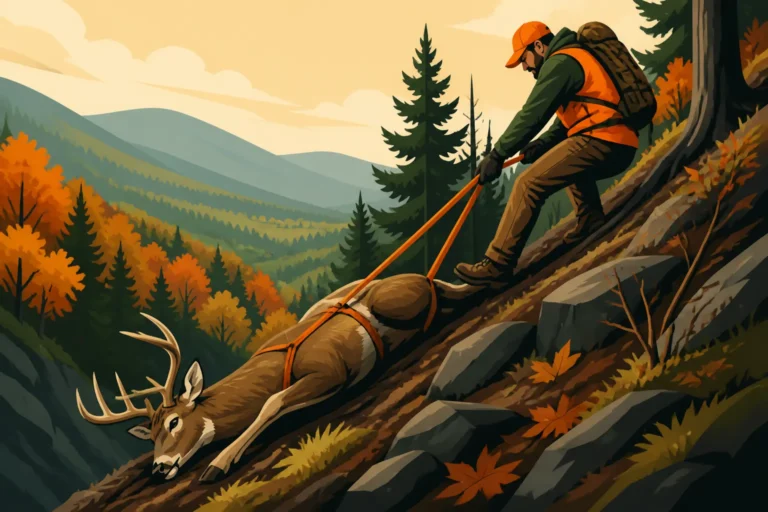
To hunt such a spot, you'll need to commit to the descent and ascent. This might mean lowering yourself carefully, using roots and saplings for handholds. Once inside, focus on benches, subtle shelves, or breaks in the canopy where deer might move. Look for rub lines running along these contours. Your entry and exit will need to be meticulously planned, likely along a perpendicular ridge line or a subtle finger ridge that allows you to drop in undetected. Finding a deer in such a place, then having to contend with Recovering a Deer From a Steep Ravine, is a challenge, but often where the biggest rewards lie.
The Swamps and Beaver Flows Nobody Enters
Vermont's landscape is dotted with countless swamps, bogs, and beaver flows. These are often regarded as impenetrable, mosquito-infested nightmares, and for most hunters, they are. Yet, these watery, tangled havens are goldmines for unpressured deer, especially during the colder months when solid ground might be limited, or they simply offer the densest cover. A large beaver flowage, particularly in the Northeast Kingdom or the Champlain Valley, can be a virtually untouched sanctuary.
Hunting these areas requires specialized gear – good rubber boots or waders are a must – and a willingness to push through truly unpleasant terrain. Look for "islands" of higher ground within the swamp, or narrow strips of dry land that act as travel corridors. Deer will often utilize the edges of these wetlands, particularly at dusk, as they transition to drier feeding areas. Pay attention to changes in elevation, no matter how subtle, as these can be crucial bedding spots. Learning how to move silently through such a waterlogged, noisy environment is an art form. Hunting a Beaver Flowage Edge at Dusk can be incredibly productive, but it demands patience and persistence.
Beyond the Obvious: Small, Isolated Pockets of Cover
It's not always about vast, untamed wilderness. Sometimes, the most overlooked ground is right under people's noses, in smaller, isolated pockets of cover. Think about that tiny, forgotten woodlot surrounded by open fields, or a dense thicket nestled between residential areas and busy roads. These seemingly insignificant patches of cover can hold surprisingly large numbers of deer, precisely because most hunters dismiss them as too small or too close to human activity.
Deer quickly learn that these small, dense pockets offer security, especially if they are difficult to access or have no obvious entry points for hunters. They'll use them as daytime bedding areas, slipping out under the cover of darkness to feed in nearby fields or browse in more open timber. Often, these spots are just beyond a landowner's posted property, or perhaps part of a town forest that sees minimal hunting pressure due to its size or proximity to a village. A detailed map on GoHunt can reveal these little "islands" of green amidst agricultural or developed areas.
The key to hunting these micro-sanctuaries is ultra-stealthy access and a keen understanding of wind direction. Because the deer have limited space, any intrusion will quickly spook them out. Consider using a climbing stand or a ground blind brushed into natural cover, and be absolutely meticulous about your scent control. These spots often require quick, surgical strikes rather than all-day sits. By paying attention to these small, unassuming bits of cover, you can often find fantastic opportunities that others literally walk right past, focusing on larger, but more pressured, tracts of land. Remember to always confirm local regulations and obtain any necessary permissions, as outlined in Do You Need Written Permission in Vermont?.
Conclusion: Embracing the Challenge for Greater Reward
Finding ground others walk past isn't a magical trick; it's a commitment to harder work, more detailed scouting, and a willingness to step outside your comfort zone. It means trading easy access for quality encounters, and understanding that the best hunting often happens where the hunting is hardest. In Vermont's beautiful, rugged landscape, these overlooked corners exist in abundance, waiting for the hunter who is willing to put in the effort. By thinking like a pressured deer and using modern tools like GoHunt, you can unlock incredible opportunities and experience a type of hunting that feels truly wild and rewarding. Good luck out there, and remember to always prioritize safety and ethical hunting practices.
Disclaimer
Hunting is an inherently dangerous activity. Always adhere to all local, state, and federal hunting regulations. Ensure you have proper licenses, permits, and hunter education certification. Familiarize yourself with the area you intend to hunt, and always prioritize safety, including wearing appropriate blaze orange during rifle seasons. The information provided in this guide is for informational purposes only and should not replace professional guidance or personal judgment.