Do You Need Written Permission in Vermont?
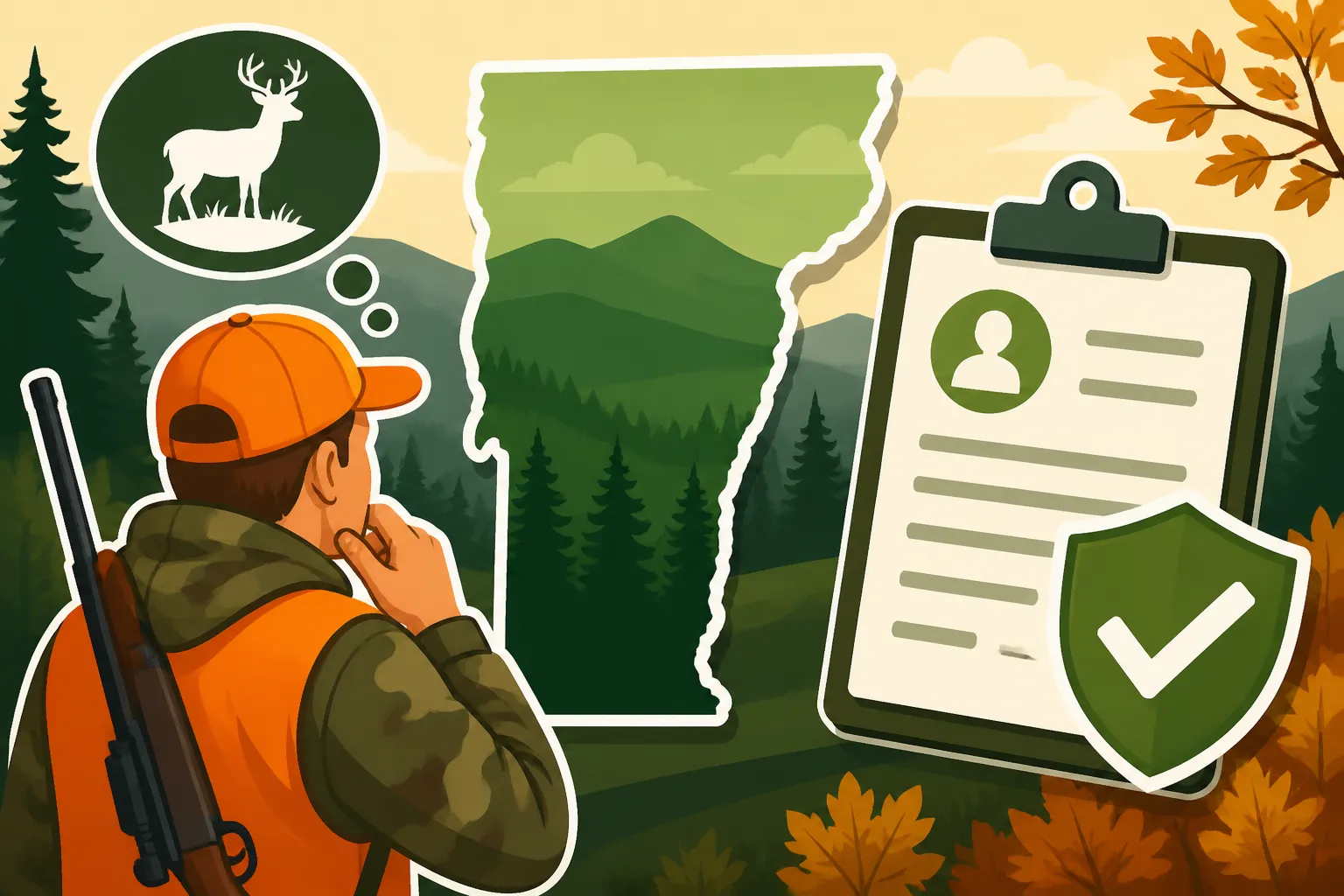
One of the most common anxieties for any hunter, especially those new to a state like Vermont, is navigating private land. The vast majority of huntable land here isn't public, and knowing the rules around access can feel like a minefield. You might find yourself wondering, "Is a simple handshake enough, or do I need something official, written down, and signed?" It's a valid concern because trespassing can quickly turn a great day afield into a serious legal headache. This guide will clarify Vermont's requirements for hunting private land and offer practical advice to ensure you're always on the right side of the law and good landowner relations.
Vermont's General Rules on Private Land Access for Hunting
Hunting on private land in Vermont relies heavily on respect, communication, and understanding the nuances of the state's trespass laws. It’s not always as straightforward as a "yes" or "no" answer, and knowing the specifics can save you a lot of grief.
Understanding Vermont's Trespass Law
In Vermont, generally speaking, verbal permission is often sufficient for accessing private land that is not posted. This means if you have a conversation with a landowner, and they give you their express consent to hunt on their property, you are legally good to go. This informal approach is deeply rooted in Vermont's rural culture, where a neighborly chat can open up hunting opportunities. Many seasoned hunters have built decades-long relationships with landowners based purely on verbal agreements and mutual trust. It’s the kind of arrangement that feels organic and connected to the land itself.
However, the game changes entirely when land is "posted." Vermont law allows landowners to "post" their property to clearly indicate that entry is prohibited without permission. This can be done in a few ways, most commonly with signs or by marking boundaries with red paint. If you encounter land clearly marked with "No Trespassing" signs, or with prominent red paint blazes on trees or posts at regular intervals, you absolutely must have permission to enter, and that permission needs to be explicit. The burden is entirely on the hunter to know if the land is posted. Ignorance of posting is not considered a valid excuse. This is a crucial distinction: unposted land often implies an "ask first" courtesy, but posted land demands permission. For more detailed insights, you might find Vermont Trespass and Permission Law helpful.
The Importance of Clear Communication
While verbal permission is legally sound for unposted land, clear communication is paramount. Think about it: you've had a quick chat with old Farmer John back in August, and he said, "Sure, go ahead and hunt the back forty." You show up in November, and his son, who wasn't privy to the conversation, sees you on the property. Suddenly, you're explaining yourself to someone who might be less amiable or even suspicious. This is where even a verbal agreement needs to be as unambiguous as possible.
When you ask for permission, make it a point to:
- Be specific: Ask to hunt for specific game (deer, turkey, etc.) and for particular dates or seasons.
- Define the area: Clearly understand the boundaries of where you're allowed to hunt. A quick look at mapping apps like
onX Huntwith the landowner can really help clarify boundaries right there on the spot. - Clarify access points: Where can you park? Which paths can you use? Are there areas off-limits (e.g., near residences, livestock pastures)?
- Discuss expectations: Will you close gates? Avoid certain fields? Inform them when you're coming or leaving?
Being polite, respectful, and clear from the outset fosters a positive relationship. Landowners are often more willing to grant access to hunters who demonstrate a high level of responsibility and consideration. Sometimes, simply offering to share some of your harvested game, or even offering to help with a small chore, can go a long way in securing continued access. Understanding how to Asking a Vermont Landowner for Permission can really set the stage for success.
When Written Permission Becomes Essential
While the verbal handshake often carries weight in Vermont, there are definitely scenarios where getting permission in writing is not just a good idea, but a truly essential one. It's about protecting both you and the landowner, and it elevates the agreement from a friendly chat to a clear, documented understanding.
Large Parcels, Absentee Landowners, or Lease Agreements
Imagine trying to hunt a thousand-acre tract owned by a trust in another state. A quick phone call and a verbal "yes" might technically count, but how will you prove it if questioned by a game warden or another party? For large parcels of land, especially those with absentee landowners, written permission provides an undeniable record. It clarifies who has access, when, and where, removing any ambiguity. This is particularly true if multiple hunters or a hunting club are involved. A written agreement ensures everyone is on the same page and that responsibilities are clearly defined.
Furthermore, if you're entering into any kind of hunting lease agreement, written permission isn't just essential; it's the very foundation of the arrangement. A lease is a formal contract, and without it in writing, it simply doesn't exist legally. These agreements often involve monetary compensation or specific services rendered, and both parties need the details explicitly laid out. For those exploring longer-term access, understanding Vermont Hunting Lease Costs can provide context on what might be involved.
Mitigating Risk and Misunderstandings
The legal landscape surrounding private land can be complex, and a written permission form serves as a vital safeguard for everyone involved. Let's break down the advantages:
| Feature | Verbal Permission (Typically) | Written Permission (Often) |
|---|---|---|
| Legal Standing | Valid for unposted land, hard to prove if disputed | Clear, tangible evidence, stronger legal standing |
| Clarity | Subject to interpretation, memory | Explicit terms, dates, and boundaries |
| Hunter Protection | Reliant on landowner's word, vulnerable to challenge | Proof of right to be there, reduces trespass risk |
| Landowner Protection | Limited; hard to enforce conditions or revoke | Defines scope, liability, and conditions |
| Transferability | Generally not transferable | Can specify who else is covered (e.g., spouse, child) |
| Duration | Often implied season-by-season | Clearly defined start and end dates |
| Dispute Resolution | Difficult without external witnesses | Provides a basis for discussion and resolution |
As a hunter, carrying written permission when on private land, especially posted land, offers peace of mind. If you're ever stopped by a game warden or approached by another individual, you can simply present the signed document, immediately resolving any potential issue. This protects you from accusations of trespassing and ensures your hunt isn't interrupted by unnecessary investigations.
For landowners, a written agreement allows them to dictate specific conditions for entry, such as weapon types allowed, areas to avoid, or even vehicle restrictions. It also provides a clear means of revoking permission if the terms are violated. This formalizes the relationship and helps maintain the integrity of their property. Knowing Vermont Posted Land Rules makes it even clearer why written permission adds an extra layer of security.
Specific Scenarios Requiring Written Permission
Beyond general access, there are a few very specific instances where written permission becomes paramount. One of the most critical is when you need to retrieve game that has crossed onto posted private land. You've made a great shot on a buck, but it runs across a property line onto posted land you don't have permission for. In Vermont, you absolutely cannot enter that posted land without permission, even to recover your animal. This is a common and agonizing situation for hunters. Having a pre-existing written agreement with neighboring landowners, or at the very least, obtaining immediate explicit permission (ideally in writing, or witnessed verbal) from them, is vital for Retrieving Game From Private Land in Vermont.
Another scenario might involve special permits. While not always directly about your access, landowners applying for specific Vermont Deer Damage Permits for Farmers might have particular requirements for hunters they allow onto their property to help manage deer numbers. In these cases, documentation from the landowner might be part of the process, ensuring all hunting activities align with the permit's objectives. When dealing with private land, whether a large farm in the Champlain Valley or a small woodlot, written permission often clears up any gray areas, especially when Hunting Small Private Tracts in Vermont where property lines can be less obvious.
Crafting a Simple Written Permission Agreement
Alright, so you've decided that getting something in writing is the smartest play. That's a great call! You don't need a fancy legal document, but a simple, clear agreement can make all the difference. Think of it as a handshake on paper, detailing exactly what both parties agree to.
Key Elements to Include
When you're putting together a written permission form, whether you type it up or simply handwrite it on a piece of paper, certain elements are crucial to make it effective and unambiguous.
Here's a breakdown of what to include:
- Date of Agreement: When was the permission granted?
- Landowner Information: Full name, address, and contact number of the property owner(s).
- Hunter Information: Full name, address, and contact number of the hunter(s) being granted permission. If a hunting party is involved, list all members or specify that the named hunter may bring a certain number of guests.
- Property Description: Be as specific as possible. Include the physical address of the property, tax map parcel numbers if known, and approximate acreage. Even better, you can draw a simple map or attach a printout from a mapping app like
onX Huntthat clearly outlines the boundaries you've been given access to. This helps immensely with Finding Vermont Property Lines. - Dates of Permission: Clearly state the start and end dates for which permission is valid. Is it for a single day? The entire deer season? A specific month?
- Game Species Allowed: Specify exactly what you are permitted to hunt (e.g., "white-tailed deer," "turkey," "coyote").
- Hunting Methods/Weapons Allowed: Clarify if archery, rifle, muzzleloader, or shotgun hunting is permitted. This is especially important during overlap seasons like Bowhunting During Vermont's Rifle Season.
- Specific Conditions or Restrictions: This is where you address any unique requests from the landowner. Examples include:
- No ATVs or motorized vehicles.
- Stay clear of residential buildings, livestock, or sensitive areas.
- Only hunt from certain stands or blinds.
- Must close all gates.
- Contact landowner upon arrival and departure.
- Respect existing fences or stone walls.
- Only hunt during daylight hours.
- Landowner Signature: This is the most critical part. The landowner must sign and ideally date the document.
- Hunter Signature: Your signature acknowledges that you understand and agree to the terms.
Using tools like onX Hunt can be incredibly useful here. You can literally sit with the landowner, pull up their property boundaries, and mark out the areas you're allowed to hunt, even noting specific parking spots or no-go zones. Then, you can print that map and attach it to your written permission. It leaves no room for doubt. For more details on understanding property boundaries through such tools, check out onX Layers for Vermont Land Status.
Best Practices for Hunters
Securing written permission is just the first step. Being a responsible, ethical hunter who respects the landowner and their property ensures that you (and other hunters) might get permission again in the future. It's about building a reputation, not just securing a single hunt.
- Always Carry It: Keep your written permission with you at all times while on the property. A laminated copy in your pack or a clear digital version on your phone (backed up, of course) can save you a lot of hassle.
- Be a Good Steward: Leave the property better than you found it. Pick up any trash (even if it's not yours), avoid damaging crops or fences, and close all gates. If you use a stand, remove it at the end of the season unless explicitly told otherwise.
- Communicate: If you said you'd call when you're going out, then do it. If you harvest an animal, let the landowner know. This builds trust and shows respect.
- Respect Boundaries: Stick only to the areas you were granted permission for. Even if a monster buck runs just over the line onto neighboring land, you cannot pursue it without separate permission for that adjacent parcel. This is why mapping apps like
GoHuntoronX Huntare invaluable for staying precisely within your approved hunting zone, especially when working a property like Hunting a Champlain Valley Dairy Farm Edge where fields and woodlots meet. - Follow Through on Promises: If you offered to share venison or help with a chore, make sure you follow up. These small gestures solidify the relationship and often lead to long-term hunting opportunities. Many hunters have gained lifelong access to incredible properties by simply being courteous, respectful, and reliable. This professionalism can make all the difference, especially when you're Knocking on Doors in Champlain Valley Farm Country for access. Whether you're hunting a fencerow or setting up near a specific feature, knowing you have clear, written permission gives you the confidence to focus on the hunt itself.
Disclaimer
This article is for general informational purposes only and does not constitute professional advice. Laws, prices and regulations vary by location and change over time. Consult a qualified professional for guidance on your specific situation.