Hunting Pressure on Vermont Public Land
It's a familiar scenario for many of us: you've put in the time scouting, located what looks like a promising deer sign, only to arrive on opening morning and find another truck already parked at your preferred spot, or worse, hear the unmistakable sound of multiple hunters moving through the woods. This guide is here to help you understand what hunting pressure really means on Vermont's public lands and, more importantly, equip you with strategies and tools to find those pockets of solitude and unpressured game, even in areas that seem crowded.
Understanding Hunting Pressure on Vermont Public Lands
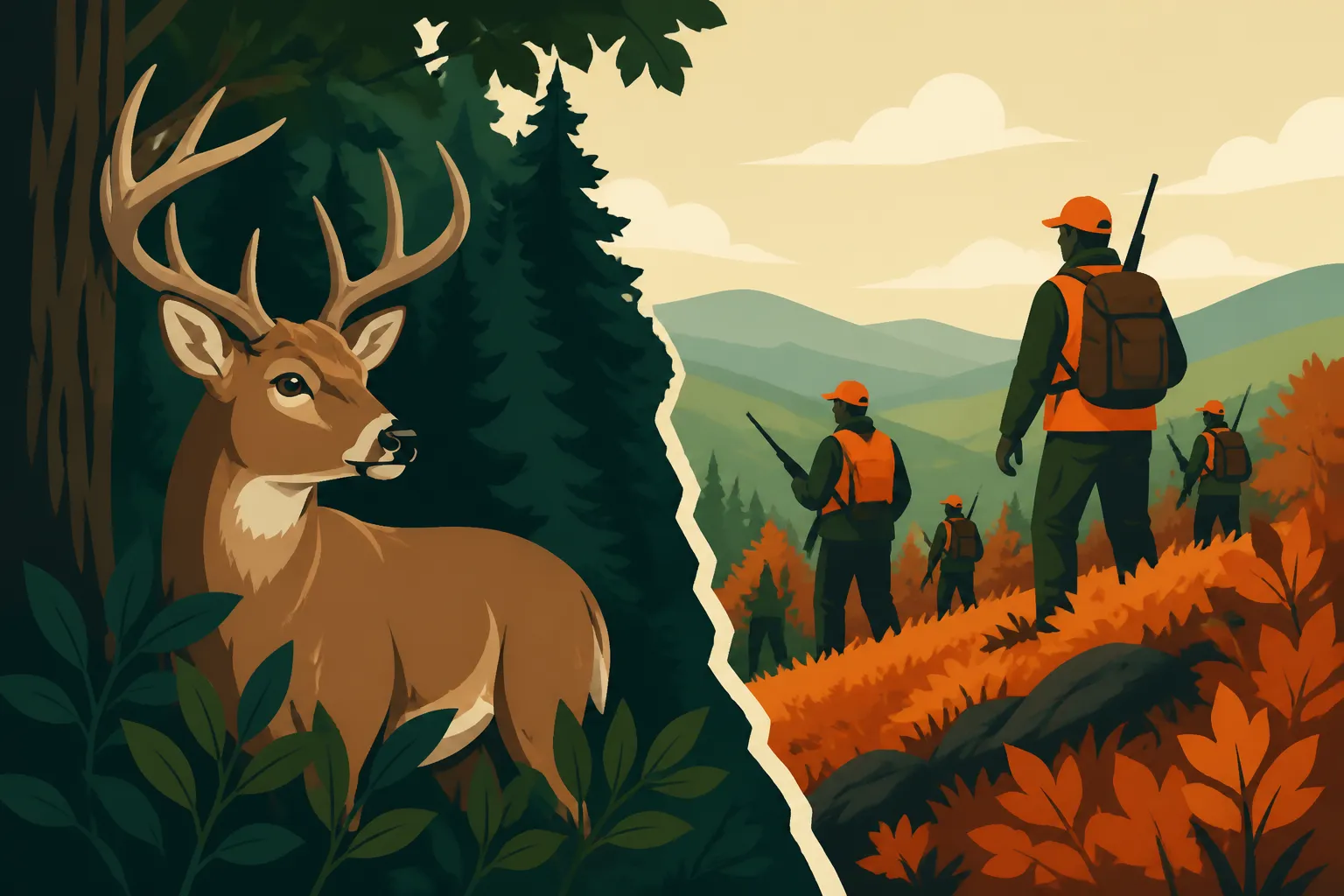
Hunting pressure isn't just about seeing another hunter in the woods; it's a dynamic force that shapes animal behavior, dictating where deer bed, feed, and move, especially during daylight hours. On Vermont's public lands, where access is generally open to all licensed hunters, understanding this pressure is crucial for success. It's not just about avoiding other people, but about understanding how the collective presence of hunters influences the very game you're pursuing.
What Constitutes "High Pressure" in Vermont?
When we talk about high hunting pressure in Vermont, we're often looking at a combination of factors. First, consider proximity to easy access points like paved roads or popular parking areas. If a spot is a short, easy walk from the truck, it's likely to see a lot of foot traffic. Secondly, highly visible features like powerline cuts, easily navigable logging roads, or distinct funnels between larger woodlots also draw attention. Think of those classic bottlenecks or prime feeding areas that "everyone knows about."
Deer, especially older, wiser bucks, are incredibly adept at recognizing and reacting to this human intrusion. They'll shift their patterns, becoming more nocturnal, seeking out the thickest cover, and avoiding areas where they consistently encounter human scent or disturbance. What might have been a prime daylight bedding area during scouting can become a ghost town once the season opens and hunters start moving through. It’s a frustrating cycle, but one that savvy hunters can learn to predict and overcome by understanding the nuances of how and where this pressure manifests.
The Impact of Hunter Density on Game Movement
The more hunters there are in a given area, the more impact it has on the game. Imagine a typical WMA (Wildlife Management Area) in Vermont; if several hunters are still-hunting or driving through a section, deer will be pushed and displaced. They don't just disappear; they move to areas of less perceived threat. This often means heading for thick, nasty cover that hunters tend to avoid, or going nocturnal altogether. This is particularly noticeable during Vermont's November Rifle Season, when more hunters are in the woods.
This displacement isn't always a bad thing. Sometimes, a well-placed hunter can capitalize on deer being pushed by others. However, without a clear understanding of where deer are likely to be pushed to, you're often just hoping to intercept a confused animal. True success comes from anticipating these movements and positioning yourself in those overlooked sanctuaries where deer retreat. It's a game of chess, not checkers, and the deer are surprisingly good at anticipating our moves.
Identifying Pressured Hunting Zones
Knowing where the pressure is most likely to be is half the battle. Vermont's diverse landscape, from the steep ridges of the Green Mountains to the agricultural edges of the Champlain Valley, presents different challenges and pressure points. Learning to read the landscape for these clues can save you a lot of wasted effort.
Reading Topographic Maps and Aerial Imagery for Access Points
Before you even set foot in the woods, your map and aerial photos are your best friends. Look for roads, especially those that dead-end into public land, or any significant trail systems. These are natural entry points, and the further you can get from them, generally, the less pressure you'll encounter. Pay close attention to parking areas, gates, and even ATV trails that might provide easier access for others. A quick glance at a satellite image, perhaps through a tool like GoHunt, can reveal how many obvious routes lead into a given parcel of public land.
Identify areas where topography might naturally funnel hunters, such as wide, open valleys or gentle slopes. Conversely, seek out those steep, gnarly sections, dense blowdowns, or swampy bottoms that appear less inviting. These are often the hidden gems that deer utilize when the easy-to-access areas get blown out. This initial map recon is crucial for Scouting Vermont Public Land Before Season and should be a non-negotiable part of your pre-hunt routine.
Interpreting Ground Sign: Tracks, Scrapes, and Human Activity
Once you're on the ground, the signs of hunting pressure become more evident. Fresh boot tracks, especially multiple sets leading in various directions, are a dead giveaway. You might also spot old flagging tape from a previous season, discarded water bottles, or even remnants of old treestands – all indications that others have spent time here. If you're finding perfectly preserved, fresh deer sign (tracks, rubs, scrapes) right near a popular trail, but there's no deer activity during daylight, that's often a sign that the deer are moving through after dark due to human activity.
Deer sign itself can tell a story about pressure. If you're seeing lots of older, less intense rubs and scrapes, but no fresh activity, it could mean deer have been driven out. Conversely, if you stumble into an area deep in the woods with fresh, intense sign, and very few human tracks, you've likely found a low-pressure sanctuary. This kind of meticulous observation is key when you're trying to figure out Where Vermont Bucks Bed in Thick Cover in response to pressure.
Leveraging Technology: Mapping Apps and Data
Modern mapping applications are invaluable for identifying and navigating low-pressure areas. Services like GoHunt or onX Hunt allow you to see property boundaries, topo lines, and aerial imagery, letting you visualize the terrain and potential hunter access points. They can even show public land boundaries, helping you understand onX Layers for Vermont Land Status at a glance.
By studying these maps, you can identify hidden ravines, remote ridges, or dense thickets that might be overlooked. You can mark potential parking spots, track your own movements to see how deep you've penetrated, and even use features to measure the distance from known access points, helping you to determine How Far to Walk From a Forest Road to find less-pressured areas. This technology lets you scout from your couch, pinpointing potential sanctuaries before you even tie your boots.
Strategies for Avoiding Hunter Congestion
The good news is that even on public land, there are always ways to find less-pressured ground. It often requires more effort, a different mindset, and sometimes, specialized gear, but the reward of an unpressured hunt is well worth it.
Go Deeper, Go Nastier, Go Smarter
This is the golden rule for public land hunting in Vermont: most hunters stick to the path of least resistance. To escape them, you need to do the opposite.
- Go Deeper: Don't just walk 100 yards off the road. Aim for a mile, two miles, or even more, if the terrain allows. The further you get from easy access, the fewer hunters you'll likely encounter. This could mean Hunting a Gated Logging Road Beyond the Public Lot on foot, where vehicles are prohibited.
- Go Nastier: Look for the thickest, most tangled, steepest, or swampiest cover. Areas with dense blowdowns, thorny briar patches, or knee-deep muck deter most hunters, and these are precisely where pressured deer will seek refuge. Don't be afraid to get a little uncomfortable; deer thrive in places hunters hate.
- Go Smarter: This involves using your head. Instead of heading for obvious food sources that might be crowded, look for less obvious, secondary food plots, or overlooked mast crops. Consider the wind and thermals in steep Green Mountain terrain to pick your approach carefully, minimizing your scent footprint. Hunting the edges of dense cover, especially between bedding and feeding areas, can be incredibly effective when deer are pressured.
Hunting Mid-Week or During Inclement Weather
Weekends, especially opening weekend of rifle season or youth hunting weekends, are notoriously busy on public lands. If your schedule allows, consider hunting mid-week. You'll often find far fewer hunters, and the woods will feel much quieter, allowing deer to resume more natural patterns. Similarly, don't shy away from hunting in less-than-ideal weather. A steady rain, light snow, or even just a cold, blustery day will send many fair-weather hunters packing. These conditions often get deer on their feet, moving more freely, as the human element has temporarily subsided. Just make sure you're geared up appropriately with good rain gear and warm layers.
Utilizing Overlooked Habitat and Terrain Features
Every piece of public land has its secrets. You might find small, isolated pockets of cover surrounded by more open woods. Perhaps there's a steep ravine or a series of benches on a hillside that most hunters walk past. Water features like beaver flowages, creek bottoms, or small, isolated ponds can create natural barriers to human traffic and provide excellent travel corridors or bedding areas for deer.
Even seemingly "open" areas can hold unpressured deer. Consider hunting the transition zones – the edges where different types of habitat meet, like a mature hardwood forest bordering a clear-cut or an old apple orchard. Deer often use these edges for travel and feeding, especially when feeling pressured in more open areas. The key is to think like a deer and anticipate where they would go to escape detection. Sometimes, finding ground others walk past simply means looking for the spots that don't immediately jump out as "perfect."
Table: Signs of High vs. Low Hunting Pressure on Vermont Public Land
| Feature/Sign | High Pressure Area | Low Pressure Area |
|---|---|---|
| Location | Near main roads, popular parking lots, easy trails | Deep in, steep terrain, swamps, thick brush, remote |
| Human Tracks | Abundant, fresh boot prints, ATV tracks, dog prints | Minimal or no human tracks, old or faded |
| Deer Activity | Primarily nocturnal, old sign, sparse fresh sign | Frequent fresh tracks, rubs, scrapes, daylight movement |
| Topography | Gently rolling, open woods, clear sightlines | Steep slopes, dense timber, tight funnels, broken terrain |
| Vegetation | Open understory, easy walking | Thick briars, blowdowns, dense conifer stands |
| Vocalizations | Fewer deer vocalizations, quiet woods | More natural deer vocalizations (grunts, snorts) |
| Evidence of Others | Old flagging, spent casings, discarded items, stands | Pristine, untouched natural environment |
Tools and Resources to Aid Your Hunt
You don't have to go it alone. There are numerous tools and resources available to help you navigate Vermont's public lands and increase your chances of finding unpressured game.
Mapping Applications and GPS Units
As mentioned, mapping apps are game-changers. Beyond identifying boundaries, they can help you navigate in low-light conditions, track your movements, and mark points of interest like fresh sign, potential bedding areas, or escape routes. A reliable GPS unit, or a smartphone with a robust mapping app like GoHunt, is essential, especially when venturing deep into the Green Mountain National Forest or one of Vermont's extensive Wildlife Management Areas where cell service might be spotty. Make sure you download offline maps before you head out, as losing signal is a real possibility in remote areas. Knowing how to use these tools effectively can lead you to prime spots for Hunting Vermont's New Archery-Rifle Overlap or even Muzzleloader Deer Hunting in Vermont during the later seasons.
Trail Cameras and Scouting Techniques
Trail cameras can be invaluable allies in understanding deer movement patterns, especially in relation to pressure. By deploying cameras strategically in areas you suspect might be holding deer, you can gather intelligence without adding human pressure yourself. Look for game trails leading into dense cover, or along natural funnels. Monitor these areas to see if deer are moving during daylight hours, or primarily at night. If you're seeing mostly nocturnal activity, that's a good indicator of pressure.
Consider using a few cameras in a suspected low-pressure area and comparing the data to a more accessible spot. This can help confirm your hypotheses about where deer are seeking refuge. Just remember to adhere to all Trail Camera Rules on Vermont Public Land and be mindful of other hunters. Your pre-season scouting should also involve more than just cameras; actively walking areas, looking for sheds, and identifying food sources will help you connect the dots on deer movement.
Developing Local Knowledge and Asking Questions
While technology is powerful, nothing beats good old-fashioned local knowledge. Talking to experienced local hunters, game wardens, or even folks who live near public land can provide invaluable insights. They might know about an old logging trail that nobody uses anymore, or a specific block of timber that consistently holds deer despite nearby pressure. Join local hunting forums or clubs – Vermonters are generally a friendly bunch and often willing to share general advice, even if they won't give away their secret spots. However, be respectful; never demand information, and always offer to share your own general observations too. The more you learn about the specific nuances of your chosen hunting grounds, the better equipped you'll be to predict and navigate hunting pressure.
Conclusion
Hunting pressure on Vermont's public lands is a reality, but it's not an insurmountable obstacle. By understanding how it impacts deer, learning to identify pressured areas, and implementing smart strategies, you can absolutely find success. It often means working a little harder, walking a little further, and thinking a little differently than the average hunter. Embrace the challenge, utilize the tools at your disposal, and remember that the satisfaction of finding that unpressured deer, earned through effort and careful planning, is one of the most rewarding aspects of hunting the Green Mountain State.
Disclaimer
Please note that hunting regulations and conditions can change. Always consult the most current Vermont Fish & Wildlife Department regulations before planning your hunt. Safety is paramount, and responsible hunting practices benefit everyone.