How Far to Walk From a Forest Road
One of the most common frustrations I hear from fellow hunters in Vermont is feeling like all the "good spots" are already taken, especially near easy-access points like forest roads. It's true that convenience often leads to crowding, and that can make finding unpressured game feel like an impossible task. This guide is all about helping you push past those perceived limits, understand the dynamics of hunting pressure near roads, and equip you with the knowledge to venture further and find those elusive, unpressured animals that often hold deeper in the timber.
The Magnetic Pull of the Pavement: Why Roads Are Over-Hunted
It’s an undeniable truth: most hunters don’t stray far from their vehicle. The ease of pulling off a forest road, hopping out, and being "in the woods" within minutes is a powerful draw. We're all busy, and the idea of a quick hunt before or after work, or just not having to undertake an epic hike, is appealing. But this collective desire for convenience creates a predictable pattern of hunting pressure that astute hunters can learn to exploit.
The "Road Warrior" Phenomenon: Why Most Hunters Don't Go Far
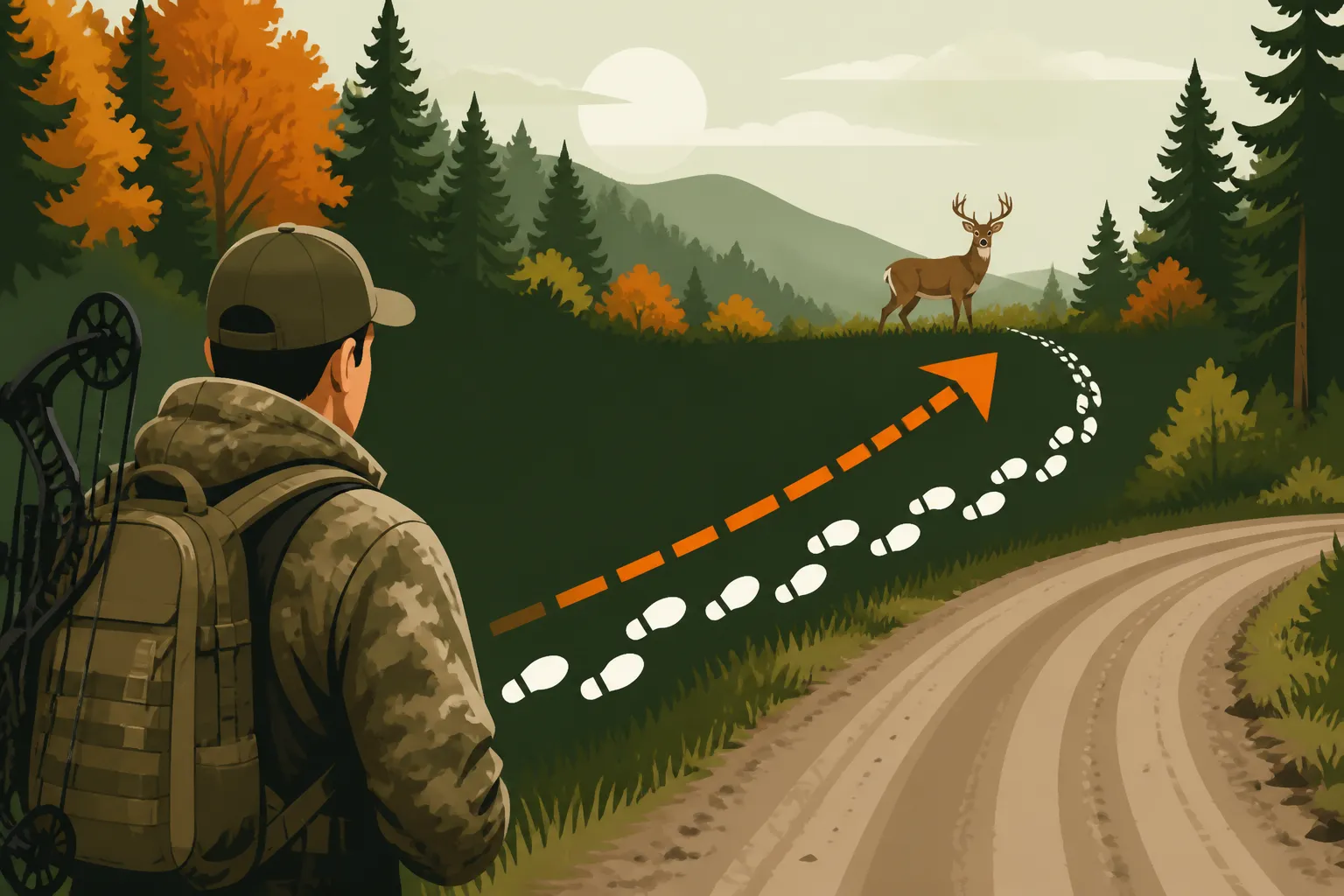
Think about it: how often have you seen trucks parked along a logging road, and then noticed how relatively few boot tracks actually lead more than a quarter-mile into the woods? This isn't a judgment; it's simply human nature. Carrying heavy gear, anticipating a long drag if you're successful, or just the sheer physical effort of climbing Vermont's steep terrain, all contribute to most hunters sticking to what's comfortable and accessible. The first few hundred yards from any public access point, be it a forest road, a parking lot, or a trailhead, often sees the heaviest hunting pressure. Deer, bears, and even turkeys quickly learn this pattern. They become more nocturnal, more skittish, and will often bed in areas that offer sanctuary from this constant human intrusion. You might find some sign close to the road – tracks crossing, a rub line, maybe even a heavily used deer trail – but the animals using those areas are often doing so under the cover of darkness or are incredibly wary.
Visible Sign vs. Productive Ground: The Trap of Easy Access
It's easy to get fooled by what you see right off the road. You might find a fresh scrape line just 50 yards in, or notice a well-worn game trail paralleling the road. Our natural instinct is to think, "Aha! I've found them!" And while these signs indicate animals are present, they don't necessarily mean those animals are comfortable enough to be there during hunting hours. Often, these visible signs are made by animals moving through quickly, or under the veil of night. The real productive ground, where mature animals feel safe to browse, bed, and move during daylight, is usually further away from that persistent human scent and sound. It's a classic trap: the easy-to-find sign lures you in, but the consistent success often lies beyond the visible, well-trodden paths. This is especially true for elusive species like mature bucks. You'll likely encounter more success if you adopt strategies like those discussed in Reading a Green Mountain Deer Yard or Where Vermont Bucks Bed in Thick Cover.
Factors Influencing Your Walking Distance: It's Not a One-Size-Fits-All Answer
There's no magic number for how far you "should" walk from a forest road. What works in one area of Vermont on a crisp October morning might be completely ineffective in another come December. Your ideal walking distance is a dynamic equation influenced by several key variables.
Terrain and Cover Considerations: Steep Hills vs. Flat Woods
Vermont's landscape is incredibly diverse, and the terrain alone can dictate how far you're willing or able to go.
- Steep, Rugged Green Mountains: If you're hunting the true Green Mountains, even a quarter-mile can feel like a marathon. Here, vertical feet often trump horizontal distance in terms of effort. Hunters might not push as far in these areas due to the sheer physical toll. If you're climbing 800 feet in elevation, you've likely left most other hunters behind. Areas with thick, nasty softwood cover or blowdowns also act as natural deterrents, effectively creating sanctuaries much closer to roads than in more open hardwood forests. Your boots will certainly play a role here; make sure you're geared up with Boots for Vermont's Steep Terrain.
- Rolling Champlain Valley Farmlands: In contrast, areas of the Champlain Valley might offer flatter, more open woodlots adjacent to farm fields. Here, hunters might be willing to walk further simply because the going is easier. However, the lack of dense cover might mean animals still feel pressure, pushing them into the densest pockets, regardless of distance from the road. In these areas, thinking about Hunting a Champlain Valley Dairy Farm Edge might give you an advantage.
- Swamps and Bogs in the Northeast Kingdom: The Northeast Kingdom presents its own challenges with extensive swamps, bogs, and dense coniferous forests. These natural barriers can offer fantastic sanctuary, but they can also be incredibly difficult to navigate. A hundred yards into a cedar swamp might be equivalent to a half-mile walk in open woods in terms of effort and deterrent value. Animals will often bed in these areas because they know most hunters won't bother to penetrate them.
Time of Day and Season: Early Morning vs. Midday, Early Season vs. Late Season
The clock and the calendar are huge factors in how far you need to walk.
- Early Morning: Just before legal shooting light, animals might still be transitioning from feeding to bedding areas, or might even be feeding very close to roads if they haven't been pressured yet. A shorter walk might suffice for an ambush, especially on private land where pressure is lower.
- Midday: This is when walking further really pays off. Most casual hunters are back at the truck for lunch, or simply don't have the stamina to stay out. Animals feel safer moving during midday in deeper cover. This is a prime time to penetrate further and Still-Hunting Green Mountain National Forest Timber.
- Early Season (Archery/Early Bear): Animals are often less pressured early in the season, and food sources might be more widespread. You might find them closer to roads if that's where the acorns or apples are dropping. However, as the season progresses, they'll become warier. Consider the dynamics of Hunting Vermont's Expanded Archery Zones in September.
- Late Season (Muzzleloader/December Archery): By late season, animals have been hunted hard. They're more nocturnal and much more prone to seeking deep, thick cover. This is when extending your walking distance becomes almost mandatory to find unpressured deer. They'll be looking for sanctuary in wintering yards or dense thermal cover, often well away from roads. Hunting Into the December Muzzleloader Close will necessitate a different approach.
Target Species and Behavior: Deer vs. Bears vs. Turkeys
Different game animals respond to pressure in unique ways, influencing your strategy.
- Deer: Whitetails are incredibly adaptable and learn quickly. Mature bucks, in particular, will quickly vacate high-pressure areas and seek out remote bedding cover. To find them, you generally need to put in the miles. Hunting a Ridge-Top Saddle for Rutting Bucks or Hunting a Funnel Between Two Woodlots might be key, and these often exist beyond the immediate roadside.
- Black Bears: While bears can be surprisingly tolerant of human presence, especially if a good food source is nearby, heavily hunted bears will also retreat to dense, inaccessible areas. If you're spot-and-stalk hunting, covering ground and glassing remote clear-cuts or beech ridges might be necessary. This might mean pushing further than typical deer hunters. You'll want to study Spot-and-Stalk Bear Hunting Vermont Ridges.
- Wild Turkeys: Turkeys are often found near roads, especially in agricultural areas. However, once pressured, they can become incredibly wary and will quickly move into thicker woods or private land where they feel safe. For fall turkeys, breaking up a flock might require a significant walk, while spring gobblers can often be called in closer if you play your cards right.
| Proximity to Forest Road | Potential Hunting Pressure | Likelihood of Success (Mature Animals) | Effort Required |
|---|---|---|---|
| 0-0.25 Miles | High | Low (unless nocturnal/unpressured) | Low |
| 0.25-0.75 Miles | Medium | Medium (with smart hunting) | Medium |
| 0.75-1.5 Miles | Low to Very Low | Medium to High | High |
| 1.5+ Miles | Extremely Low | High | Very High |
Strategies for Venturing Further (and Smarter): Don't Just Walk, Hunt
The goal isn't just to walk further, but to hunt effectively as you do so. Blindly hiking miles deep isn't productive if you're making a ton of noise or not paying attention to sign. The best hunters walk with purpose.
Leveraging Mapping Tools: Using Digital Aids Like onX Hunt
In today's hunting world, digital mapping tools are absolutely essential for extending your range safely and efficiently. Services like onX Hunt or GoHunt can literally change how you approach forest roads.
- Identify Access Points: These apps allow you to scout from your couch, identifying forest roads, logging trails (including gated ones!), and potential parking spots. You can see property boundaries, which is crucial for public land hunting.
- Pinpoint Key Features: Look for benches, saddles, thickets, clear-cuts, water sources, and changes in timber type that are a significant distance from any road. These are often overlooked by other hunters. You can mark these potential hotspots and plan your routes.
- Measure Distance and Elevation: Before you even leave the house, you can use these apps to measure the distance and elevation gain of your intended route. This helps you mentally and physically prepare for the trek. You can literally see how far a half-mile walk will take you, and what kind of contour lines you'll be crossing. This pre-scouting is invaluable for Reading Aerial Photos for Green Mountain Deer.
- Real-Time Navigation: Once in the woods, the GPS capabilities of onX Hunt (even without cell service if you download maps beforehand) are a game-changer. You can track your progress, know exactly where property lines are, and confidently push deeper knowing you can navigate back to your vehicle, especially if you're in the vastness of Hunting Vermont's Green Mountain National Forest.
Breaking Down the Hike: Segmenting Your Approach
Thinking about a multi-mile hike into the backcountry can be daunting, but breaking it down into smaller segments makes it manageable.
- The Initial Push: The first 200-400 yards from the road is typically the "noise zone." Focus on moving quietly but efficiently through this area. Don't expect to see much, but keep an eye out for fresh sign that might indicate nocturnal activity.
- The Transition Zone: As you move further, the pressure will likely lessen. This is where you start to slow down, becoming more of a hunter. Look for transitional cover, small drainages, or benches where animals might pause after leaving the immediate roadside.
- The Sanctuary Zone: This is your target. This is the area you've identified on your map as having lower pressure, better cover, or prime food sources that are well off the beaten path. Once you reach this zone, slow way down and start hunting very deliberately, still-hunting, glassing, or setting up for a long sit. This deep penetration often leads to finding ground others walk past.
Packing Smart for Deeper Penetration: Gear Considerations
Walking further means carrying everything you need and nothing you don't. Every ounce counts when you're a mile or more in.
- Lightweight Essentials: Focus on lightweight, high-performance gear. Your pack should be comfortable and designed to carry meat if you're successful. This is especially true for moose hunting; Packing for a Northeast Kingdom Moose Hunt requires very specific gear.
- Water and Snacks: Dehydration and bonking are real threats. Carry enough water for your planned outing, plus a little extra. High-energy snacks are crucial for sustaining your effort.
- Navigation and Communication: Besides your mapping app, always have a compass and a physical map as a backup. A satellite communicator is a wise investment for truly remote areas where cell service is non-existent.
- First Aid Kit: A well-stocked first aid kit is non-negotiable when you're far from help.
- Game Processing Tools: Lightweight knives, game bags, and a drag rope are essential. If you anticipate a long haul, consider lightweight quartering tools.
Knowing When to Turn Back: Safety and Ethics
While pushing further is often the key to success, knowing your limits is paramount.
- Physical Stamina: Don't overdo it. It's better to hunt effectively for a shorter time than to exhaust yourself and make mistakes, or worse, get injured. Plan your route with an understanding of your own fitness level.
- Time Constraints: Always factor in enough time to get back to your vehicle, especially if you're successful and have to drag an animal. Darkness falls quickly in Vermont, and blood trailing after dark can be dangerous and inefficient. Blood Trailing After Dark in Vermont is a situation best avoided if possible.
- Weather Changes: Vermont weather can be unpredictable. A clear morning can quickly turn into a snowy or rainy afternoon. Be prepared for sudden changes and know when to call it a day if conditions become unsafe.
- Ethical Retrieval: If you shoot an animal deep in the woods, you are ethically obligated to retrieve it. Don't take a shot you're not confident you can follow up on, especially if it means a multi-hour drag in difficult terrain. This often means carefully considering your shot angles and weapon choice.
The Payoff: Finding Unpressured Game
So, you've put in the miles. You've climbed the ridges, navigated the thickets, and are now deep in the woods, far from the sound of passing cars. What's the reward?
Increased Opportunities for Mature Animals: The Elusive Bucks
Mature deer, particularly the bigger bucks, are survivors. They've learned to avoid humans. They inherently understand that areas close to roads mean higher risk. By venturing deeper, you're entering their comfort zone. You're more likely to encounter these older, wiser animals during daylight hours, exhibiting more natural behavior. You might find untouched rub lines, unpressured bedding areas, and deer that are simply less skittish. This dramatically increases your chances of tagging a trophy animal. When you're further in, you can often find better Scrape Lines Along a Logging Road or feel the solitude that can really make a hunt special.
A More Rewarding Experience: Solitude and Connection
Beyond the increased hunting success, there's an intangible benefit to putting distance between yourself and the road: solitude. Being deep in the Vermont woods, truly immersed in nature, is an experience that many hunters cherish above all else. You're not just hunting for an animal; you're connecting with the wild, observing the intricate details of the forest, and challenging yourself physically and mentally. This sense of accomplishment, of earning your spot, makes the entire hunting experience richer and more profound. It's about Finding Ground Others Walk Past and making it your own.
In the end, how far you walk from a forest road in Vermont is a personal decision, but it's one that should be informed and strategic. By understanding hunter behavior, leveraging modern tools, and pushing your own limits responsibly, you can unlock a whole new world of hunting opportunities and make your time in the Green Mountain State truly unforgettable.
Disclaimer
This article is for general informational purposes only and does not constitute professional advice. Laws, prices and regulations vary by location and change over time. Consult a qualified professional for guidance on your specific situation.