Spot-and-Stalk Bear Hunting Vermont Ridges
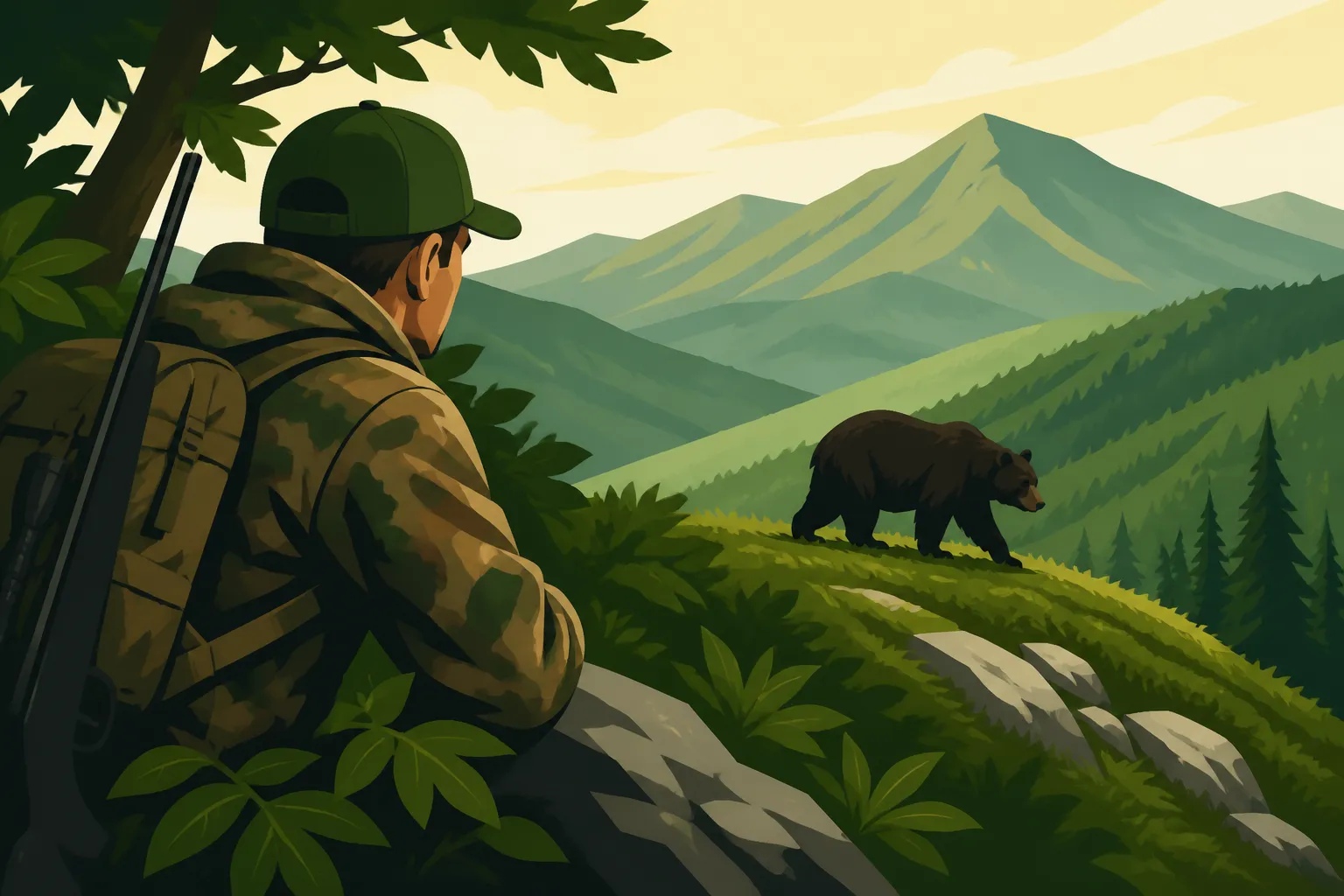
There's a unique thrill, and a good bit of challenge, that comes with pursuing black bears in Vermont's rugged terrain, especially when you're relying on your boots and your eyes for a true spot-and-stalk hunt. Forget the bait piles and the dogs; this is about understanding the landscape, reading the subtle signs, and moving through the woods like a ghost. Many hunters get frustrated with the sheer scale of the Green Mountain National Forest or the vastness of the Northeast Kingdom, feeling like they're just wandering aimlessly. This guide is here to walk you through the precise methods and mindset needed to successfully spot-and-stalk bears on Vermont's many ridges, transforming those frustrating treks into strategic hunts.
Understanding Vermont's Bear Behavior on Ridges
If you want to find a bear, you first have to think like a bear, and in Vermont, that often means understanding how they utilize ridges. These elevated pathways aren't just convenient travel routes; they're vital feeding grounds, observation points, and bedding areas. Knowing why a bear is on a ridge at a particular time is half the battle.
Seasonal Food Sources on Ridges
Vermont's black bears are opportunistic omnivores, and their diet changes dramatically with the seasons. When you're focusing on ridges, you're often targeting areas where natural food sources are abundant. In late summer and early fall, which aligns perfectly with much of Vermont's bear season, ridges become veritable buffets. Think about the high-elevation berry patches—blueberries, raspberries, and blackberries are absolute magnets for bears. They'll spend hours, even days, gorging themselves to put on critical fat for the coming winter. As fall progresses, the focus shifts to mast crops. Beech ridges, laden with beechnuts, become prime real estate. Oak ridges, though less common in some parts of Vermont, also draw bears when acorns start dropping. Sugar maple ridges, while not a direct food source like nuts, often host insects and grubs that bears root out. Identifying these food sources, and knowing which ones are producing in a given year, is paramount. You might find a ridge absolutely torn up with bear sign from a bumper crop of berries, but if those berries are gone, the bears will be too. It’s all about being tuned into the local bounty.
Bear Travel Corridors and Bedding Areas
Ridges serve as natural highways for bears. They often travel along the spine of a ridge, especially if it offers dense cover or connects to different feeding areas. These are often the easiest routes for them to navigate, providing good visibility into valleys below and escape routes if disturbed. Look for subtle trails, sometimes just faint deer paths, that bears have widened with their heavier step. These are key travel corridors. Beyond travel, bears use specific spots on ridges for bedding. This is usually in thick, impenetrable cover—dense stands of spruce or fir, heavy blowdowns, or even thick laurel patches on a south-facing slope that catches the sun. They'll bed down to digest, escape the midday heat, or simply rest. Finding these bedding areas means you're close to where they'll be spending a significant portion of their day, often between morning and evening feeding excursions. Understanding how bears use ridges for both transit and rest will help you predict their movements and pinpoint potential ambush spots for a stalk. For a broader understanding of their habits, check out our guide on Black Bears in Vermont.
The Impact of Weather and Time of Day
Bear activity, like much of wildlife, is heavily influenced by weather and the time of day. On warmer days, especially early in the season, bears might be more active in the cooler hours of early morning and late evening, seeking shade in dense cover during the midday sun. You might find them feeding on a shaded side of a ridge. As temperatures drop in late fall, they might extend their feeding hours, especially on sunny, south-facing slopes, trying to soak up warmth and maximize calorie intake before denning. Rainy or foggy days can also impact their movement. While some animals hunker down, bears can be surprisingly active in light rain, as it dampens sound, potentially making them less cautious. However, heavy downpours will usually send them to thick cover. Wind is another critical factor, which we'll delve into later. Knowing these patterns helps you decide when and where to concentrate your efforts on a given ridge. A clear, calm morning after a cold night might see bears moving to sun-drenched berry patches, while a warm afternoon might find them in shaded conifer stands higher up the ridge.
Scouting Vermont Ridges for Bear Sign
Spot-and-stalk hunting isn't about luck; it's built on diligent scouting. Before you can successfully stalk a bear on a Vermont ridge, you need to know where they've been, and more importantly, where they're likely to be. This means getting boots on the ground long before you carry a weapon.
Identifying Key Bear Sign
When you're walking those ridges, you're not just enjoying the scenery; you're looking for clues. Bear scat is probably the most obvious sign. Its content will tell you exactly what they're eating – often a purple mass of berry seeds or a chunky mix of nuts and insect fragments. Fresh scat indicates recent activity. Tracks in soft dirt, mud, or even moss can give you a clear picture of their size and direction of travel. Claw marks on trees, particularly softer-barked species like beech or even older maples, indicate where bears have climbed to feed or mark their territory. You might find trees with vertical scratch marks from climbing, or even large areas of bark stripped off where they've been feeding on cambium. Look for overturned rocks and torn-up logs where they've rooted for grubs and insects. Lastly, keep an eye out for "bear beds" – flattened areas of grass or leaves in thickets, indicating where a bear has rested. The more fresh sign you find, the higher your chances of encountering a bear. These small details are your roadmap to success on a Spot-and-Stalk Bear Hunting a Beech Ridge.
Utilizing Topographical Maps and Digital Tools
Modern technology has revolutionized scouting, and it's a huge asset for ridge hunting. Topographical maps are your best friend for understanding the lay of the land without leaving your couch. They show elevation changes, steepness, and water sources. Look for saddles, benches, and convergences of drainages—these are natural funnels where animals often travel. Digital mapping apps, like GoHunt or onX Hunt, take this to another level. With these tools, you can identify prime habitat, mark areas of interest (berry patches, mast trees, dense cover), and even analyze historical animal movement data in some regions. They allow you to virtually scout vast areas, identify likely travel corridors along ridges, and pinpoint potential glassing knobs. You can use satellite imagery to spot clearings or specific timber types that might hold food. These apps also display public and private land boundaries, which is crucial for staying legal in Vermont. Before you even step foot in the woods, spend hours poring over these maps, plotting your routes, and marking every potential bear hotspot. It's like having an aerial view of the Green Mountain State right at your fingertips. For understanding how mapping can help with other species, consider our guide on Reading Aerial Photos for Green Mountain Deer.
Pre-Season Reconnaissance and Glassing Locations
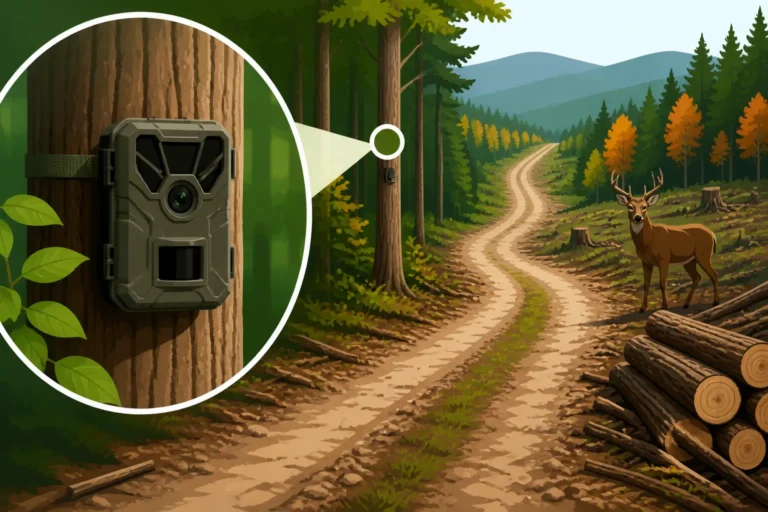
Beyond digital scouting, nothing beats real-world reconnaissance. Before the season opens, dedicate days to walking the ridges you've identified as promising. This helps you confirm food sources, find fresh sign, and get a feel for the terrain. While you’re doing this, scout for good glassing locations. A successful spot-and-stalk begins with the "spot." This means finding elevated vantage points on a ridge or an opposing hillside that allow you to overlook large areas of prime bear habitat. Look for natural clearings, open timber stands, or south-facing slopes. These spots should offer good visibility but also provide cover for you to remain undetected. Consider wind direction when selecting these spots – you want the wind in your face or across you, not blowing your scent into the area you’re observing. Setting up a trail camera in key areas can also provide invaluable intelligence on bear movement patterns and times of activity, especially near prominent food sources or travel corridors.
Essential Gear for Spot-and-Stalk Bear Hunting
Vermont's terrain can be unforgiving, from steep climbs to thick, boggy lowlands. When you’re committing to a spot-and-stalk bear hunt, your gear isn't just a convenience; it's a necessity for comfort, safety, and success. Cutting corners here isn't an option.
Optics for Long-Range Observation
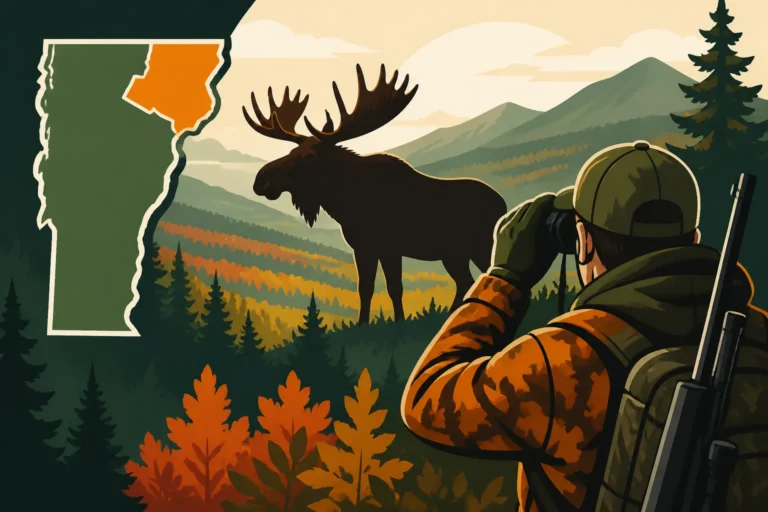
The "spot" in spot-and-stalk hunting is heavily reliant on quality optics. You need the ability to pick apart distant hillsides, dense timber edges, and vast berry patches from your vantage point. A good pair of binoculars, usually 10×42 or 12×50, is non-negotiable. They should be clear, bright, and durable enough to withstand the elements. Beyond binoculars, a spotting scope (15-45x or 20-60x) is an incredible asset, especially if you're glassing large, open areas like clear-cuts or distant hard mast ridges. This allows you to differentiate between a stump and a bear, and more importantly, to judge the size and legality of a bear before committing to a lengthy stalk. Carry them in a comfortable harness that keeps them accessible but protected. When you're trying to determine if that dark blob is indeed a bear, and whether it's a legal one, that extra magnification can save you hours of wasted effort. Our guide on Binoculars for Glassing a Northeast Kingdom Bog offers more detailed advice on choosing the right optics for Vermont's varied landscapes.
Footwear and Clothing for Rugged Terrain
Your feet are your primary mode of transportation, so investing in high-quality, comfortable, and waterproof boots is paramount. Look for boots with excellent ankle support to navigate uneven ground, aggressive tread for traction on steep slopes and wet leaves, and a waterproof membrane like Gore-Tex. Breaking them in before the hunt is critical; blisters can ruin a trip faster than anything. For clothing, layering is key in Vermont's unpredictable weather. You'll be exerting yourself climbing ridges, then sitting still for long periods glassing. Start with a moisture-wicking base layer, add an insulating mid-layer (fleece or synthetic puffy), and top it with a quiet, durable, and waterproof outer shell. Choose subdued earth tones or camouflage patterns that blend with Vermont's hardwoods and conifers. Remember to pack blaze orange, even for archery season, if you're hunting during the overlap with rifle season, as outlined in Blaze Orange Requirements for Bowhunting the Overlap. Quiet fabrics are essential for stalking; avoid anything that rustles loudly against branches.
Carrying the Essentials
A reliable backpack is crucial for carrying all your gear for a full day (or even multiple days) in the backcountry. Choose one that's comfortable, has sufficient capacity (25-45 liters is a good starting point), and can securely hold your rifle or bow. Inside, you'll need:
- Navigation: A GPS device or a robust mapping app like GoHunt on your phone, loaded with offline maps. Always carry a physical map and compass as backup.
- First Aid Kit: For cuts, scrapes, blisters, and more serious emergencies.
- Water and Food: Enough for your entire outing, plus extra. Water filters are a great idea for longer hunts.
- Headlamp: Even if you plan to be out before dark, things can go wrong.
- Knives: A sharp fixed-blade knife for field dressing.
- Bear Spray: A non-lethal deterrent is a wise safety measure, especially when you're actively moving through bear habitat.
- Fire Starting Kit: Waterproof matches or a lighter.
- Game Bags: For packing out meat.
- Communication Device: A satellite communicator (like a Garmin InReach) is highly recommended for remote areas without cell service.
Packing for a rigorous hunt, like what we discuss for Packing for a Northeast Kingdom Moose Hunt, shares many similarities, emphasizing self-sufficiency and preparedness for challenging environments.
The Art of the Spot-and-Stalk
This is where the rubber meets the road. Spotting a bear is one thing; successfully closing the distance for a shot without being detected is an entirely different skill set. It requires patience, keen observation, and an intimate understanding of the environment.
Reading Wind and Thermals in Mountainous Terrain
In Vermont's Green Mountains, wind is rarely consistent, and thermals play a massive role. The general rule is that cold air sinks and warm air rises. In the morning, as the sun begins to warm the slopes, thermals will tend to rise, carrying your scent uphill. In the evening, as the air cools, thermals will often drop, carrying your scent downhill into the valleys. However, this isn't a hard and fast rule, especially on ridges. Eddies and swirling winds around saddles and drainages can be incredibly tricky. Always have a wind checker (a small bottle of powder or thread) and use it constantly. Before every step, every time you pause, check the wind. Your approach must always be into the wind or with the wind quartering to your side, ensuring your scent isn't carried to the bear. If the wind changes, you need to adjust your approach or back out and try another angle. This precise art of predicting and reacting to air currents is crucial, as detailed in our discussion on Wind and Thermals in Steep Green Mountain Terrain.
Stealthy Movement and Approaching Bears
Once you've spotted a bear and planned your approach, the stalk begins. This is not the time for speed. Slow, deliberate movement is your mantra. Imagine you're a predator, moving through the woods without breaking a twig.
- Use available cover: Stay in the shadows, use trees, rocks, and changes in terrain to break up your silhouette.
- Foot placement: Test each step before putting your full weight down. Look for soft ground, moss, or flat rocks. Avoid crunchy leaves or dry branches.
- Pause and observe: Take frequent pauses to scan ahead, listen, and check the wind again. Bears often take short naps or change positions. Make sure the bear hasn't moved or become aware of you.
- Anticipate the bear's movement: Is it feeding? Moving towards dense cover? Try to predict its next action and position yourself accordingly. If the bear is moving, can you intercept it?
- Mind your outline: Never skyline yourself on a ridge. Stay below the crest, using the topography to your advantage.
- Silence is golden: Every rustle, every snap, can give you away. This takes immense practice and patience. Sometimes, a stalk can take hours, covering only a few hundred yards.
Shot Placement and Follow-Up Strategies
When you finally get within range, ethical shot placement is paramount. For bears, the vital organs (lungs and heart) are typically located slightly further forward and lower than on a deer. A broadside shot aiming for the crease behind the shoulder, slightly lower than mid-body, is ideal. If the bear is quartering away, aim to exit through the opposite shoulder. Avoid head-on or extreme quartering shots. Wait for the bear to be calm and offer a clean, unobstructed shot.
After the shot, watch the bear's reaction intently. Note its direction of travel and mark the last spot you saw it. Even if it goes down immediately, approach with caution and from a safe distance, making sure it’s expired. If it runs, do not immediately pursue. Give the bear at least 30 minutes to an hour (or longer if the shot was questionable or conditions are poor) to lie down and bleed out. Mark your shot location and the bear's last known location. Then, begin your blood trail slowly and meticulously, looking for every drop of blood, disturbed leaves, or broken branches. A well-placed shot and patient follow-up are critical for recovery.
Safety and Ethics in Vermont Bear Hunting
Hunting black bears, especially in a spot-and-stalk scenario on rugged terrain, carries specific responsibilities and safety considerations. Vermont's hunting culture emphasizes respect for the animal and the land.
Identifying Legal Bears
One of the biggest ethical and legal challenges in bear hunting is distinguishing between a legal bear and a sow with cubs. Vermont regulations prohibit taking a cub or a sow with cubs. From a distance, especially if you haven't seen them for a while, it can be very difficult to tell if a smaller bear is a cub, or if a large sow has cubs hidden nearby. Always assume a bear is a sow with cubs until you can definitively prove otherwise. Look for multiple bears, even small ones following a larger one. Listen for cub vocalizations. If you see a medium-sized bear, consider its gait, its behavior. Often, a sow will be more wary and protective. If there is any doubt whatsoever, let the bear walk. No bear is worth risking a violation or an unethical harvest. Taking the time to observe and confirm is a mark of a responsible hunter, a practice also relevant when Judging a Legal Bear From a Sow With Cubs.
Hunting on Public vs. Private Land
Vermont offers vast tracts of public land, including the Green Mountain National Forest and numerous Wildlife Management Areas, where spot-and-stalk bear hunting is an incredible opportunity. However, understanding the specific rules for each area is crucial. Some WMAs might have restricted access or specific regulations. If you're hunting private land, always secure explicit permission from the landowner beforehand. Verbal permission is often acceptable in Vermont, but written permission is always better and clearer, leaving no room for misunderstanding. Respect landowner wishes regarding parking, access points, and where you can or cannot hunt. Knowing the difference between Vermont Posted Land Rules and what requires permission is vital. Using mapping apps like GoHunt can help you clearly identify property boundaries and ensure you're hunting legally. Good relationships with landowners are the backbone of hunting access in many parts of Vermont.
Staying Safe in Bear Country
While black bears are generally shy and avoid humans, encountering one at close quarters, especially if it's surprised or feels threatened, can be dangerous.
- Carry bear spray: This is your most effective deterrent in an aggressive encounter. Know how to use it, and keep it accessible, not buried in your pack.
- Make noise when approaching thick cover: Clap your hands, talk loudly. This often prevents surprising a bear at close range.
- Be aware of your surroundings: Look for fresh sign, listen for sounds, and scan ahead constantly.
- Don't hike alone: If possible, hunt with a partner, especially in remote areas.
- Field dress away from camp: If you're camping, ensure you hang food and dispose of gut piles far from your sleeping area.
- Know what to do in an encounter: If a bear charges, stand your ground, make yourself look big, yell, and be prepared to use your bear spray. Most charges are bluffs. If a bear makes contact, fight back aggressively.
Post-Harvest Considerations and Reporting
Successfully taking a bear is an incredible accomplishment, but the work isn't over. Proper handling of the animal and adherence to Vermont's regulations are the final steps of a responsible hunt.
Field Dressing and Meat Care in Remote Locations
Bears are large animals, and if you've harvested one deep in the backcountry of a Vermont ridge, you'll have a significant task ahead. Field dressing immediately is crucial to cool the carcass and preserve the meat. Roll the bear onto its back, carefully open the cavity, and remove all internal organs. Skinning the bear in the field can also help cool the meat faster and lighten the load significantly. If you plan to quarter the bear and pack it out, sturdy game bags are essential to keep the meat clean and protect it from flies. In warm weather, getting the meat cooled quickly is paramount. Consider bringing a lightweight tarp to lay the meat on while it cools, or hang quarters in a shady, airy spot. Remember, bear meat must be thoroughly cooked to an internal temperature of 160°F to kill any potential parasites like trichinella. Our advice on Field Dressing a Deer in Cold Weather offers some parallel tips for efficient processing.
Recovering a Bear from Steep Terrain
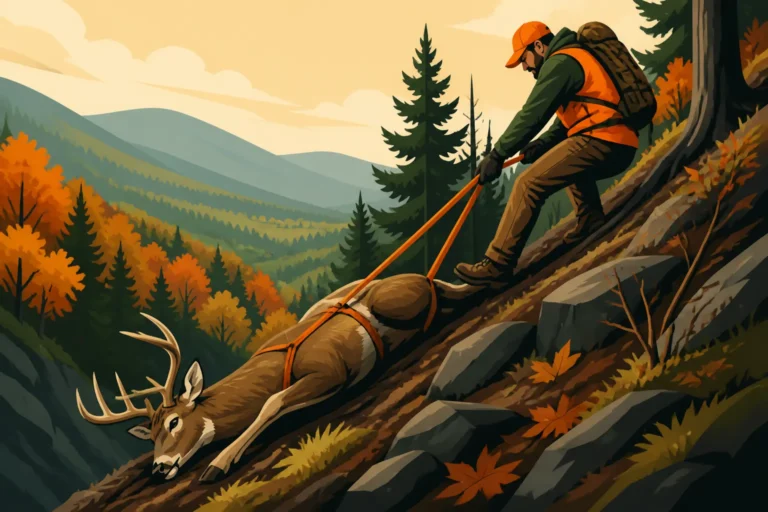
Dragging a full-sized bear off a steep Vermont ridge can be an incredibly arduous, if not impossible, task for one person. This is where pre-planning or a strong hunting partner comes in. If the terrain is too rugged, quartering the bear and packing it out is often the only viable option. A good frame backpack is invaluable for this. If you have a long, gradual slope, a heavy-duty game cart can be a lifesaver, though they are often impractical in truly steep, rocky, or thick terrain. Consider the path of least resistance – sometimes going a bit further out of your way to find a less steep path is worth it. Make sure you have plenty of water and snacks for this strenuous work. Don't push yourself too hard; take breaks. This challenge is similar to Recovering a Deer From a Steep Ravine but on a much larger scale.
Vermont's Bear Reporting Requirements
Vermont takes its wildlife management seriously, and prompt reporting of your harvest is a legal and ethical obligation. After you've recovered your bear, you must report it to the Vermont Fish & Wildlife Department. This can often be done online through their official portal or their mobile app, but sometimes a physical check station is required depending on the season and location. Be prepared to provide specific details about your harvest, including the date, time, location (WMU), and often the sex of the bear. This data is vital for wildlife biologists to monitor the bear population, assess harvest trends, and make informed management decisions for future seasons. Always confirm the exact reporting procedures for the current year, as they can sometimes change.
Disclaimer
Please note: Hunting regulations and seasons can change. Always consult the most current Vermont Fish & Wildlife Department regulations before planning any hunt. This guide is for informational purposes only and does not supersede official state regulations.