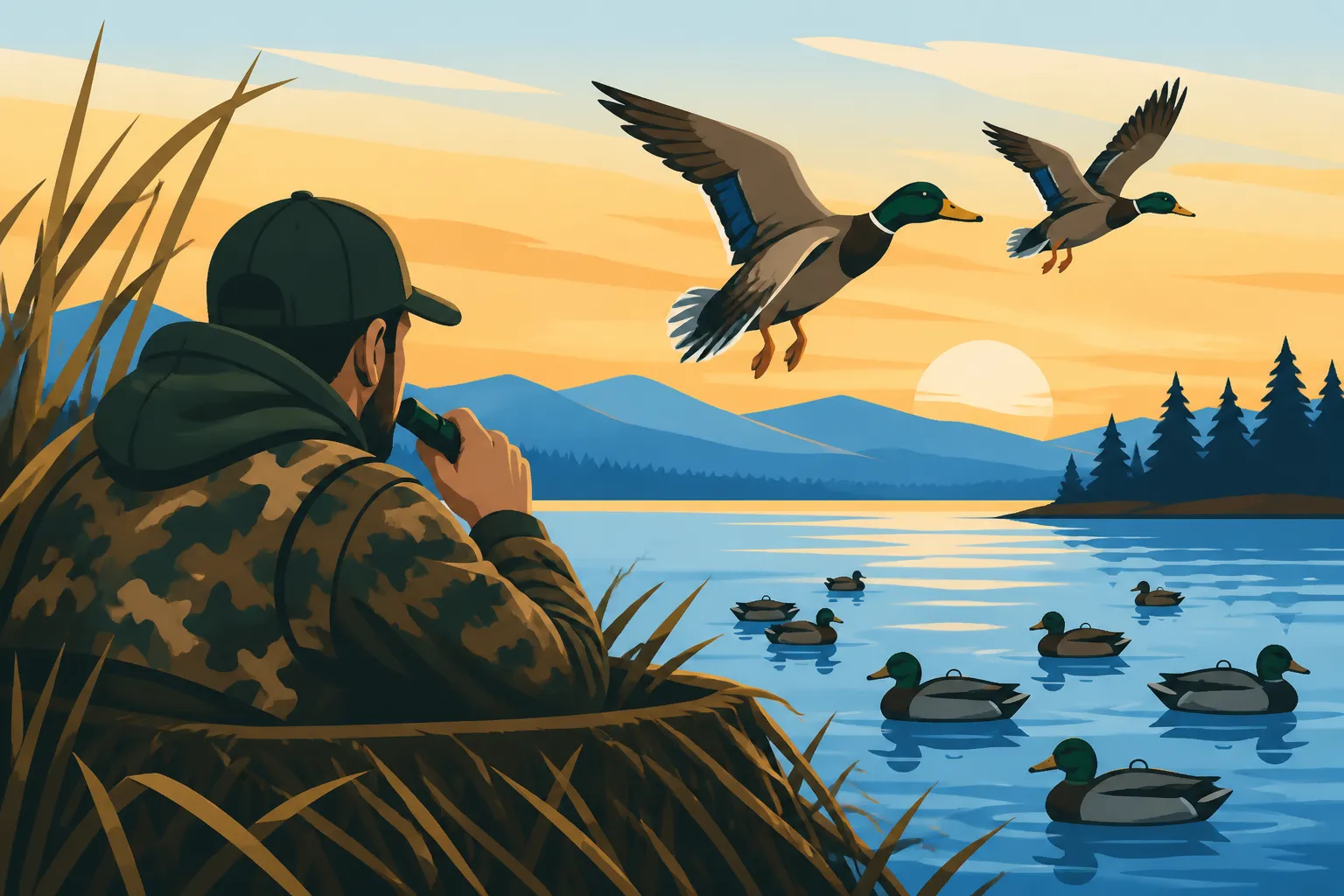
Decoying Ducks on Lake Champlain
There's nothing quite like the sight of ducks cupping their wings and committing to your spread, but on a massive, dynamic water body like Lake Champlain, getting them to finish can feel like an impossible puzzle. Hunters often face the disheartening reality of birds circling high, flaring at the last second, or simply ignoring the most meticulously arranged decoys. This guide is here to help you crack that code, diving deep into the art and science of decoying ducks effectively on Vermont's largest lake, transforming those frustrating near-misses into memorable retrieves.
Understanding Lake Champlain's Unique Waterfowl Dynamics
Lake Champlain isn't just a big pond; it's a diverse ecosystem with myriad features that influence waterfowl behavior and, by extension, how we ought to set our decoys. From vast open expanses to secluded bays and intricate river deltas, each area presents its own set of challenges and opportunities for the dedicated duck hunter. Ignoring these nuances is often why a decoy spread that worked like magic in one spot might fall completely flat just a few miles away.
The Layout of the Lake and Its Impact on Decoying
When you look at Lake Champlain on a map, it's clear it's not uniform. You've got the broad, deep waters of the main lake, which can get incredibly choppy and demand a certain resilience from your decoys and boat. Then there are the dozens of bays, some deep, some surprisingly shallow, that offer shelter and feeding grounds. And don't forget the significant river deltas like the Missisquoi, Winooski, and Otter Creek, where fresh water meets the lake, creating rich environments for dabbling ducks. Each of these zones requires a different approach to decoying. The strong currents in some areas, particularly near river mouths or narrow passages, can pull decoys out of formation or flip them if not properly weighted. It's a constant battle against the elements, and understanding where you're hunting within the lake's vastness is step one to success. Knowing the Vermont Lake Champlain Zone Waterfowl Dates is also paramount, as seasons can vary slightly within the lake's designated zones.
For instance, hunting the vast open stretches of the lake for diving ducks means you'll need heavy, robust rigging for your decoys to withstand the waves and potential strong currents. These aren't your typical backyard pond setups. You might be targeting goldeneyes or bluebills far from shore, necessitating a boat capable of handling rough water and a keen eye on weather forecasts. Conversely, tucked-away shallow bays or the edges of the Missisquoi Delta might be perfect for dabblers like mallards and black ducks, where lighter rigs and a more compact spread are appropriate. Here, the challenge shifts from brute force to subtle realism and concealment. The water depth dictates your rigging length, and a good understanding of the bottom structure, whether it's mud, sand, or rock, helps you choose the right anchors.
Key Duck Species and Their Behaviors on Champlain
Lake Champlain hosts a wide variety of duck species throughout the hunting season, and each has its own preferences and behaviors that dictate how you should set your spread. You'll encounter everything from agile dabbling ducks, which feed in shallow water by tipping up, to powerful diving ducks, which can disappear for minutes at a time to forage on the lake bottom. Trying to decoy diving ducks with a purely mallard spread, or vice-versa, is often a recipe for disappointment, as you're not speaking their language. It's about presenting a scene that feels natural and safe to the birds you're hoping to attract.
Mallards, black ducks, and wood ducks are common dabblers on Champlain. They're looking for shallow, food-rich areas – think flooded timber, marsh edges, or sheltered bays with submerged vegetation. Their behavior is often characterized by dabbling and tipping, rarely fully submerging. A spread for these birds should mimic a relaxed, feeding flock, usually in shallower water. On the other hand, divers like goldeneyes, bluebills (scaup), and canvasbacks prefer deeper, open water where they can dive for mollusks and aquatic plants. They tend to travel in larger rafts and are often less wary of open water than dabblers, but they still want to see a welcoming, unthreatening group of their kind. Knowing How Many Ducks Winter on Lake Champlain gives you an idea of the sheer volume of birds moving through and staying on the lake, emphasizing the importance of diverse strategies. The specific feeding habits of each species are crucial: a raft of divers suggests deep-water foraging, while a tight group of dabblers implies a shallow feeding frenzy.
Essential Decoy Spreads for Champlain Success
Crafting the right decoy spread is an art form, especially on a dynamic body of water like Lake Champlain. It's not just about throwing out a bunch of plastic birds; it's about painting a picture that tells passing ducks, "Hey, this is a safe, inviting spot with plenty of food, come join us!" Different species and different conditions call for vastly different setups. Get this right, and you're well on your way to a successful hunt.
Dabbling Duck Spreads: Mallards, Black Ducks, and Wood Ducks
For dabbling ducks like mallards, black ducks, and the occasional wood duck, realism and a sense of calm are key. These birds are often looking for shallower, sheltered waters, and they're wary of anything that looks unnatural or too crowded. Common formations like the "J" hook, "U" shape, or even just an informal blob can work wonders, provided there's a clear, open landing zone. The "J" hook, for instance, has the bulk of your decoys forming the long arm of the J, with the short arm reaching out slightly to funnel birds into the bend, which acts as your landing strip. The "U" shape is similar, creating a wide opening for birds to land directly in front of your blind. Spacing is critical here; avoid clumping decoys too tightly, as this can signal distress or overcrowding. Give them room to "land."
Adding motion to your dabbler spread can be a game-changer. A still spread on calm water can look incredibly fake, especially to pressured birds. That's where something like a jerk string comes in, allowing you to subtly animate a few decoys, making them bob and splash. Or, for a more consistent motion, consider Mojo Decoys for Vermont Puddle Ducks. These motorized decoys, with their spinning wings, can be incredibly effective at drawing attention from a distance, mimicking a bird flapping its wings to land or take off. However, use them judiciously; too many, or at the wrong time, can sometimes spook wary late-season birds. Placement is also key: put them upwind of your primary landing zone so the ripples they create naturally move into the sweet spot, enhancing the illusion of a lively flock.
Diving Duck Spreads: Goldeneyes, Bluebills, Canvasbacks
Diving ducks are a different beast altogether. They often travel in larger groups and are accustomed to open water. When hunting goldeneyes, bluebills, or canvasbacks on Lake Champlain, you'll typically need a much larger spread than for dabblers, and often deployed in deeper water. Long lines, sometimes called "gang rigs," are a classic choice for divers. These involve a main line with several decoys attached at intervals, creating a long, continuous string of birds. You can deploy multiple lines to create a massive, highly visible spread that mimics a large raft of feeding divers. The sheer numbers are meant to draw attention from afar, reassuring incoming birds that this is a safe, well-populated feeding ground.
Because divers are in deeper water and Champlain can get rough, weighting and anchoring are paramount. Each decoy needs enough weight to stay upright and in place, even in strong winds and waves. Lead keel weights or heavy Texas rigs are often preferred. Anchor lines should be long enough to allow for varying depths, and primary anchor points for your gang rigs need to be substantial. Consider the current: divers tend to swim and feed into the current, so positioning your spread to allow them to finish into the wind and current, just like real ducks, is crucial. The goal is to make it easy and natural for them to land amongst your decoys.
Mixed Spreads and Confidence Decoys
Sometimes, a single-species approach isn't enough, especially on a diverse body of water like Lake Champlain. Mixed spreads, combining both dabblers and divers, can be highly effective, particularly in areas where both types of ducks might be present, such as a bay mouth leading to deeper water. The idea is to appeal to a wider range of species, increasing your chances of success. A common approach is to have your dabbler decoys closer to shore in shallower water, with a transition zone leading out to your diver spread in deeper water. This creates a more natural progression and mimics how different species might utilize the same general area.
Beyond ducks, adding "confidence decoys" can significantly boost the realism and appeal of your spread. Goose decoys, for instance, can make your duck spread appear even safer, as geese are notoriously cautious birds. If geese are comfortable, ducks often feel more at ease. This can be particularly effective on shallow lake edges or in fields adjacent to the water, where you might see mixed groups. You might consider using Goose Decoy Spreads for a Champlain Valley Field if you're hunting those transitional zones. Some hunters also use coot or gull decoys. Coots, being common on Champlain and often found around ducks, add to the naturalness of the scene. Gulls, perching on nearby rocks or floating at the edge of the spread, can signal to wary ducks that the area is safe from predators. These subtle additions can often be the final touch that convinces reluctant birds to commit.
Gear and Setup Specifics for Lake Champlain
Hunting ducks on Lake Champlain isn't a casual affair you can approach with minimal gear. The lake's size, depth, and often unpredictable conditions demand specific equipment choices and a meticulous approach to your setup. From the quality of your decoys to the reliability of your boat, every detail matters. Skimping on the right gear can lead to frustration, wasted trips, and even unsafe situations.
Decoy Selection and Maintenance
Choosing the right decoys is about more than just quantity; it's about quality and realism. On heavily hunted waters like Champlain, ducks become incredibly wary. They've seen it all, and cheap, shiny, or poorly painted decoys will often get ignored or, worse, cause birds to flare. Invest in decoys that offer realistic paint schemes, flocked heads (which eliminate glare), and natural postures. Brands like Avian-X, Higdon, and GHG offer excellent options that stand up to the rigors of big water hunting. Remember, a dozen high-quality, realistic decoys are often more effective than three dozen cheap ones. When considering Decoying Mallards on Lake Champlain, realism in your mallard blocks is key, as they are a primary target.
Decoy rigging is equally important. For dabblers in shallower areas, a simple Texas rig (a flexible monofilament line with a weight on one end and a clip for the decoy on the other) allows for quick deployment and retrieval. For divers in deeper, rougher water, heavier weights and longer lines are essential. Some hunters prefer gang rigs for divers, using a heavy main line with individual decoys clipped on. Maintenance is crucial: clean your decoys regularly to remove mud, algae, and water stains that can make them look unnatural. Store them properly to prevent paint chips and damage. Faded or damaged decoys should be repainted or retired, as they detract from the realism of your spread.
Blind Options and Concealment on the Lake
Concealment is paramount, especially on open water or along sparse shorelines where natural cover is scarce. On Lake Champlain, hunters employ a variety of blind options, each suited to different scenarios. Layout blinds are popular for hunting fields adjacent to the lake or very shallow points, allowing hunters to lie flat and blend seamlessly into the surroundings. These are lightweight and portable, making them ideal for run-and-gun situations. For water-based hunting, boat blinds are often the most practical solution. These blinds are typically built into or attached to a hunting boat, allowing you to move quickly and set up where the birds are. They must be brushed in meticulously with local vegetation – cattails, phragmites, cedar branches – to match the natural surroundings.
Sometimes, natural cover is your best blind. Tucking your boat or layout blind into a stand of cattails, behind a rocky point, or even amidst fallen timber on an island can provide excellent concealment. The key is to break up your silhouette and eliminate any unnatural shapes or colors that could tip off wary ducks. Pay attention to the sun's position throughout the day; a blind that's perfectly concealed at dawn might be silhouetted by mid-morning. Don't forget the dog! Your retriever needs to be equally concealed, or its movements can cause ducks to flare. The ability to quickly and effectively conceal yourself, whether through a purpose-built blind or cunning use of natural features, is a cornerstone of successful decoying on Champlain.
Boat and Navigation Considerations
Lake Champlain is a large body of water, and its conditions can change in an instant. A calm morning can quickly turn into a white-capping gale, making a reliable boat an absolute necessity for waterfowl hunting. You need a stable, seaworthy boat capable of handling rough water, safely transporting your gear, and retrieving downed birds. Duck boats with low profiles and stable hulls are ideal, but many hunters use modified jon boats or V-hull boats. Ensure your boat is properly maintained, with a reliable engine (and preferably a backup trolling motor), working navigation lights, and all required safety equipment.
Navigation on Champlain can be tricky, especially in low light or fog. A good GPS unit is indispensable, loaded with charts of the lake, allowing you to mark your hunting spots, safely navigate through channels, and avoid submerged hazards. Tools like the GoHunt app on your smartphone or dedicated GPS devices can be incredibly helpful for identifying submerged structure, depth contours, and potential hunting lanes. It’s also wise to carry physical maps as a backup. Always check the marine weather forecast before heading out, and be prepared to cut your hunt short if conditions deteriorate. Understanding how to handle your boat in choppy water, safely deploy and retrieve decoys, and anchor securely is crucial not just for hunting success but for your personal safety. Investing in Waders for Vermont Waterfowl Hunting that are durable and insulated will also make your time in and out of the boat much more comfortable, especially in the cold water of Champlain.
Reading the Conditions and Adapting Your Strategy
The weather on Lake Champlain is a fickle beast. What might be perfect conditions for decoying one day can be a complete bust the next, even if the ducks are plentiful. The most successful waterfowl hunters aren't just good at setting decoys; they're masters of observation, constantly reading the wind, the sky, and the water to adapt their strategy.
Wind, Weather, and Water Level Influences
Wind is arguably the single most important factor when decoying ducks. It dictates how your decoys move, where ducks will prefer to land, and how challenging your boat setup will be. Ducks almost always land and take off into the wind. This fundamental principle must guide your spread placement: always create an open landing zone directly upwind of your blind. A brisk, steady breeze brings movement to your spread, making your decoys come alive. However, too much wind can make deploying and retrieving decoys difficult and create dangerously rough water. Conversely, a dead calm day makes decoys look lifeless, necessitating the use of motion decoys or jerk strings to create ripples and visual interest.
Beyond wind, other weather conditions play a significant role. Rain, snow, and fog can actually work to your advantage, often pushing birds lower and making them more willing to commit to a spread. Overcast days reduce glare, which can make your decoys look more natural. Bright, sunny days, however, require careful consideration of sun angle to avoid silhouetting your blind or having your decoys reflect too much light. Water levels on Champlain can fluctuate throughout the season, especially in shallower bays or river delta areas. A drop in water level might expose mud flats, creating new feeding opportunities, while a rise can flood new areas, dispersing birds. Hunters need to constantly adjust their target areas based on these changes. Knowing what the duck Vermont Duck Daily Bag Limit is for the day also informs strategy.
Scouting and Location Selection
Effective decoying starts long before opening day – it starts with rigorous scouting. On a lake as vast as Champlain, you can't just pick a random spot and expect ducks to show up. You need to identify where birds are actively feeding, resting, and flying. This means spending time observing flight patterns, noting where ducks are entering and exiting bays, and finding their preferred loafing and feeding grounds. Look for areas with abundant natural food sources like wild rice, submerged aquatic vegetation, or flooded agricultural fields. Using mapping tools, such as the GoHunt app, can be invaluable for pinpointing these areas, helping you identify subtle changes in depth, isolated islands, or hidden sloughs that might hold birds. GoHunt's satellite imagery can reveal potential blind locations or access points that aren't obvious from the water.
Scouting isn't a one-and-done task; it's an ongoing process throughout the season. Early season patterns might be completely different from late season. As hunting pressure mounts, ducks will often abandon easily accessible areas for more secluded spots. This means you need to be willing to move and explore new locations. Paying attention to what other hunters are doing (or not doing) can also provide clues. If a popular spot suddenly goes quiet, it's likely the birds have moved on to less pressured areas. Successful hunters are often those who are willing to put in the time to find those elusive, unpressured pockets of ducks. Being adept at Reading a Marsh for a Morning Flight will give you a significant edge in these scouting efforts.
Advanced Tactics and Common Mistakes to Avoid
Even with the best gear and a solid understanding of duck behavior, Lake Champlain still presents significant challenges. The most seasoned waterfowl hunters constantly refine their tactics, always looking for an edge, and learning from every experience, good or bad. It's about thinking like a duck and anticipating their moves, especially when dealing with birds that have seen every trick in the book.
Incorporating Motion and Calling Effectively
As mentioned, motion can bring a spread to life, but there's a nuanced art to it. Motorized decoys, jerk strings, and wing-spinners are all tools in the arsenal. While effective, they can also be overused. For heavily pressured birds, subtle motion from a jerk string might be more effective than a constantly spinning Mojo. The key is to make the motion intermittent and natural, mimicking real ducks stretching, feeding, or preening. You don't want your spread to look like a disco party. Consider the conditions: on a windy day, natural decoy movement might be enough, but on a calm day, a little mechanical help can make a huge difference. For more detailed advice, look into Calls and Decoys for Vermont Waterfowl.
Calling is another skill that can make or break a hunt. There's a common misconception that more calling is always better. Often, less is more. On Champlain, where ducks are often educated, overcalling can quickly spook them. Focus on realistic, simple calls: a greeting call to get their attention, a comeback call if they start to veer off, and soft, contented feeding chuckles and quacks when they're working the spread. Learn to read the birds' reactions; if they start to flare, stop calling. If they're locked in and headed your way, subtle clucks or murmurs are all that's needed. Practice your calling often, and try to mimic the natural sounds of ducks you hear on the water.
Dealing with Pressure and Educated Birds
Lake Champlain sees significant hunting pressure throughout the waterfowl season, and ducks quickly become "educated." They learn to avoid common hunting spots, recognize unnatural decoy spreads, and shy away from aggressive calling. This means hunters need to be smarter and more adaptable. One of the best ways to deal with pressure is to hunt obscure spots that other hunters overlook. This might mean walking farther, going into harder-to-reach marshes, or hunting small, out-of-the-way potholes. These often require more effort but can yield incredible rewards. Understanding Hunting Pressure on Vermont Public Land can guide you to these less-traveled areas.
Another tactic for educated birds is to reduce your decoy spread size. Sometimes, a smaller, ultra-realistic spread of a dozen decoys looks far more natural and inviting than a massive spread of 50. Pay meticulous attention to realism: clean decoys, flocked heads, natural postures, and subtle motion. Early season birds might respond to aggressive tactics, but late-season birds, having survived weeks of hunting, require finesse. Changing up your decoy patterns, moving your blind location slightly, or even taking a break from a particular spot for a few days can give birds a chance to relax and return. Consistency in your approach will only lead to diminishing returns; adaptability is your greatest asset. Hunting a Lake Champlain Marsh might require some of these tactics depending on the season.
Safety First on Big Water
Hunting on Lake Champlain, especially during the colder months, carries inherent risks that demand respect and preparation. The water can be frigid, and hypothermia is a real and present danger if you end up in the water. Always wear a personal flotation device (PFD), even if you're a strong swimmer. Make sure your boat is in excellent working order, and always have a means of communication (charged cell phone, satellite messenger, marine radio). It's also wise to hunt with a partner, especially on big water. Two heads are better than one in an emergency, and having someone else to help with deployment, retrieval, and observation makes the hunt safer and more enjoyable.
Before every trip, check the marine forecast not just for wind, but for water temperature and potential for squalls or heavy weather. Dress in layers, including waterproof outer layers, to stay warm and dry. Pack emergency supplies, including extra warm clothing in a dry bag, a first-aid kit, food, water, and fire-starting materials. Knowing basic boat safety and navigation rules is non-negotiable. Lake Champlain can be an incredible place to hunt waterfowl, but it demands caution and respect. Always prioritize safety above all else, ensuring that every hunt ends with everyone returning home safely, ready for the next adventure. For more information about regional seasons, consult the Vermont Waterfowl Zones and Seasons.
| Decoy Type | Primary Use | Typical Spread Shape | Ideal Water Depth | Key Considerations |
|---|---|---|---|---|
| Dabbling Ducks | Mallards, Black Ducks, Wood Ducks | J-hook, U-shape, Loose Blob | Shallow to Moderate (0-5 ft) | Realism, subtle motion, clear landing zone, natural cover. |
| Diving Ducks | Goldeneyes, Bluebills, Canvasbacks, Buffleheads | Long Lines, Large Rafts, Gang Rigs | Moderate to Deep (5-20+ ft) | High visibility, heavy weights, stable boat, large numbers. |
| Mixed Spreads | Attracting diverse species | Combination of Dabbler/Diver zones | Varies | Transition zones, confidence decoys (geese, coots). |
Disclaimer
Please note that hunting regulations, seasons, and licensing requirements are subject to change. Always consult the Vermont Fish & Wildlife Department's official website or current hunting guide for the most up-to-date and accurate information before planning any hunting trip. This guide is for informational purposes only and does not supersede official regulations. Stay safe and hunt ethically.