Layout Blind Hunting a Champlain Valley Field
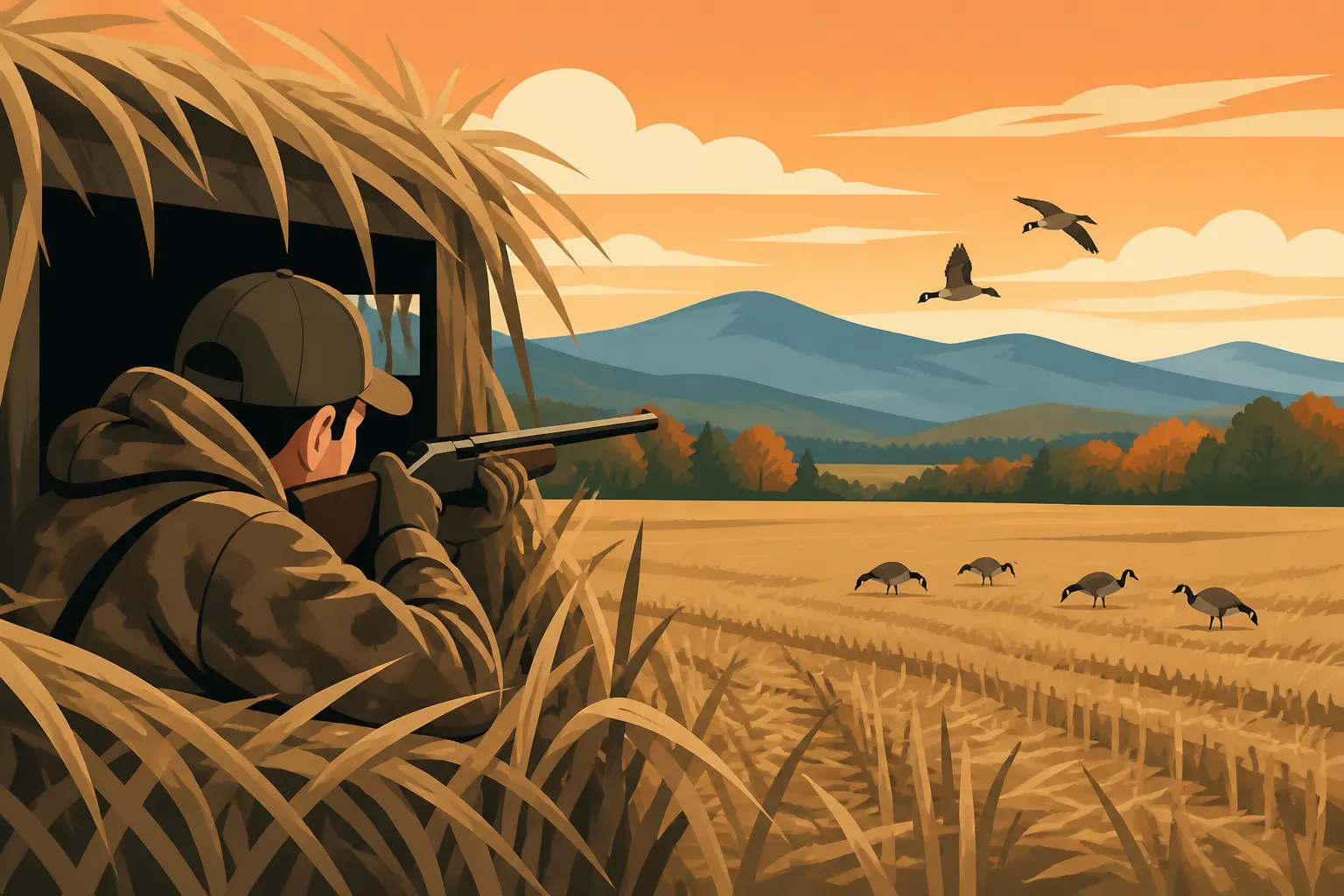
There’s nothing quite like the sight of a perfect spread of decoys in a freshly cut cornfield as the sun begins to peek over the Vermont hills, promising a morning flight of waterfowl. However, the reality often falls short of the idyllic picture, with wary birds flaring at the slightest hint of danger or simply ignoring your setup altogether. This comprehensive guide will walk you through the nuances of hunting ducks and geese from a layout blind in the wide-open fields of the Champlain Valley, helping you overcome common challenges and increase your success.
Understanding the Champlain Valley Field Environment
Hunting the Champlain Valley for waterfowl is a unique experience, vastly different from timber or marsh hunting. The open fields, often adjacent to Lake Champlain or its tributaries, act as vital feeding grounds for migrating ducks and geese. Success here hinges on thoroughly understanding the specific characteristics of this landscape and the behavior of the birds utilizing it.
Identifying Key Feeding Areas
The first step in effective field hunting is knowing where the birds want to be. In the Champlain Valley, this almost always means agriculture. Think about what's been harvested or what's still standing. Cornfields, especially those recently cut for silage or grain, are absolute magnets for hungry geese and dabbling ducks like mallards and pintails. These fields offer an easily accessible, high-energy food source. You'll also find birds frequenting bean fields, wheat stubble, or even occasionally freshly tilled ground where waste grain is still present. It's not just about the crop itself, but the stage of the crop cycle. A standing cornfield will attract birds differently than a cut one, offering different levels of cover and food availability. Pay close attention to these details as you scout, perhaps using aerial imagery from tools like GoHunt to pinpoint potential hotspots.
Beyond the immediate crop, consider the proximity to water. While ducks and geese feed in fields, they need water for resting, loafing, and often roosting. Fields that are within a short flight path of Lake Champlain, the Winooski River, or other significant bodies of water are typically more productive. Birds will fly out from their roosts at first light to feed, then often return to water to rest, only to come back out for another feeding session in the late afternoon. Understanding this daily pattern is crucial for timing your hunts. Look for "loafing areas" — small puddles, drainage ditches, or low spots in fields where water gathers, as birds will sometimes rest here during the day if they feel secure.
Reading Bird Behavior and Flight Paths
Waterfowl are creatures of habit, but they're also highly adaptable and incredibly wary. Observing their behavior before you ever set a decoy is paramount. Pay attention to how they enter and exit a field. Do they commit directly to a particular corner, or do they circle multiple times before dropping in? Are they following a specific contour line or tree line on their approach? These flight paths are often dictated by prevailing winds, topography, and the location of their roosts, and they can remain consistent for days or even weeks. Setting your blind and spread within these established flight lanes will dramatically increase your chances.
Their behavior on the ground also tells a story. Are they actively feeding, heads down, or are they nervous, with many birds standing guard? If they're constantly looking up, preening, or exhibiting signs of unease, it indicates heavy pressure or something in the environment that makes them feel unsafe. A flock that's feeding comfortably and confidently is one that will be much easier to entice into your spread. This pre-scouting isn't just about finding birds; it's about understanding their current temperament and habits, which allows you to tailor your setup for optimal results.
Weather's Impact on Field Hunting
Vermont weather, especially in the Champlain Valley, can be fickle and has a profound influence on waterfowl activity. Wind is arguably the most critical factor. Birds almost always land and take off into the wind. This means your decoy spread and blind placement must account for the prevailing wind direction on the day of your hunt. A strong, steady wind can be your best friend, pushing birds lower and making them more predictable in their approach. However, swirling winds, often found around hills or dense tree lines, can make decoying incredibly challenging as birds struggle to commit.
Rain, snow, and temperature swings also play a significant role. Overcast, drizzly days can keep birds flying lower and longer, often making them more responsive to calls and decoys. Heavy snow can push birds into fields with exposed grain, making food sources more critical. Extreme cold can increase their feeding urgency, but also make them more lethargic. Conversely, bright, sunny, calm days can make birds incredibly difficult to decoy, as they can spot anomalies from a great distance and feel less compelled to feed aggressively. Always check the forecast and adjust your strategy accordingly, realizing that what worked yesterday might not work today due to a change in the weather.
Choosing and Preparing Your Layout Blind
The layout blind is the cornerstone of effective field hunting. It’s designed to disappear into the landscape, offering hunters ultimate concealment where natural cover is scarce. But not all blinds are created equal, and proper preparation is key to turning a good blind into a great one.
Selecting the Right Blind for the Terrain
When it comes to layout blinds, variety abounds. You have blinds that are low-profile and extremely minimalistic, perfect for stubble fields where every inch matters. Then there are larger, more comfortable blinds with higher backrests and more storage, which might be better for longer hunts or colder weather, provided you can brush them in adequately. Consider the dominant crop types in the Champlain Valley fields you hunt. If you're consistently in cut corn, a blind designed for corn stubble with loops for weaving in cornstalks is ideal. If you're in a wheat or bean field, a lower profile blind that blends with shorter stubble might be better. Brands like Final Approach, Avery Outdoors, and Rogers Sporting Goods offer a wide range of options, each with slightly different features to suit various conditions and hunter preferences.
Beyond the profile, think about durability and ease of transport. You'll be dragging these blinds through fields, getting them wet, and stuffing them with natural vegetation. A robust frame and heavy-duty fabric are crucial. Quick setup and takedown are also important, especially on cold, dark mornings. Test out different models if you can, focusing on how easily you can get in and out, how comfortable it is for a long sit, and how well the doors or flaps operate for shooting. Remember, the best blind is the one that disappears best into your specific hunting environment and allows you to shoot effectively. You can learn more about finding the Best Layout Blind for a Champlain Valley Field if you want to dive deeper into specific models and features.
Brushing In for Optimal Concealment
A layout blind, no matter how low profile or well-camouflaged, is just a lump in the field until you brush it in. This step is non-negotiable and often the difference between birds decoying perfectly and flaring at 100 yards. The goal is to make your blind look like a natural part of the field – a pile of stubble, a small rise, or a shadow. Start by gathering the dominant vegetation from the field you're hunting. If it’s a cornfield, cut cornstalks. If it’s a bean field, use the remaining stubble. Avoid bringing in foreign vegetation that clearly doesn't belong.
The key to brushing in is layering. Don't just lay material flat; weave it into the blind's stubble straps, making it stand upright and appear three-dimensional. Break up the hard lines of the blind. Pay particular attention to the edges and the top, as these are what birds will see as they approach from above. Have a friend walk out 50-100 yards and give you feedback. From a bird's eye view, what looks out of place? Are there shiny spots? Is the blind's silhouette too obvious? Remember that the sun's angle changes throughout the day, creating different shadows, so try to brush in evenly. Many experienced hunters will even kick dirt or mud onto the blind to dull any synthetic sheen and help it blend. This meticulous attention to detail is truly what makes your setup lethal.
Comfort and Ergonomics in the Field
While concealment is king, don't overlook comfort and ergonomics. You'll be spending hours, often in cold, wet, or muddy conditions, lying mostly flat. A comfortable hunter is a patient hunter. Ensure your blind offers adequate back support; many come with adjustable backrests. Consider adding an extra cushion or a small, inflatable pad for insulation and comfort. Proper layering is also critical to staying warm and dry, especially during those chilly Vermont mornings. Think about your Base Layers for a Cold September Sit and how they work with your outerwear to manage moisture and temperature.
Beyond physical comfort, think about the practical ergonomics of hunting from a layout blind. Can you easily reach your calls, shells, and thermos without excessive movement? Is your gun positioned for a quick, smooth mount when the birds commit? Many blinds have internal pockets for small items. Arrange your gear strategically before the birds start flying. Your shells should be within easy reach, perhaps in a separate shell bag or pouch. Your calls should be accessible but not jingling. The goal is to minimize unnecessary movement once the birds are working your spread. Practice getting into shooting position from your blind at home, so it becomes second nature in the field.
Decoy Spreads and Calling Strategies
Effective decoy spreads and calling are what bring wary birds down from the sky. In the Champlain Valley's open fields, there's no cover to hide a mistake, so your presentation needs to be as realistic and enticing as possible.
Effective Decoy Placement for Field Hunting
Field decoy spreads are a science and an art. Unlike water, where currents and waves provide natural movement, field decoys are static, so placement and realism are paramount. For geese, a common and effective spread is the "J" hook or a large "U" shape, leaving a landing zone directly in front of your blinds, downwind. Geese prefer to land into the wind, so your landing zone should be oriented accordingly. Place family groups of decoys together, with a few "sentries" standing taller to simulate alert birds. Varying the head positions – feeders, sentries, resters – adds to the realism. For a truly effective Best Goose Decoy Spread for a Champlain Valley Field, you’ll need a good number of full-body decoys, and perhaps some shells or silhouettes to add bulk.
When hunting ducks in fields, especially dabblers like mallards, the spread can be less structured but still needs to look natural. Often, mixing a few duck decoys into your goose spread, or creating a separate, smaller spread nearby, works well. Ducks feeding in fields are usually looking for waste grain or insects. They'll often land just outside the main goose flock. Motion decoys, like spinning wing ducks (Mojo decoys) or flappers, can be incredibly effective for ducks, providing the illusion of movement that static decoys lack. Remember that the ultimate goal is to create a scene that looks safe and inviting, drawing birds in for a closer look.
Mastering Field Calls
Calling in open fields is different from calling in timber or over water. Your calls will carry much further, but birds will also have a clearer view, making any unnatural sounds or over-calling a big mistake. For geese, start with softer clucks, murmurs, and greeting calls as birds are distant. As they approach, increase the intensity and urgency, incorporating honks and pleading calls, but always listen to the birds. If they respond positively, keep doing what you're doing. If they turn away or get quiet, back off the calling. Less is often more with pressured birds.
For ducks in fields, primarily mallards, soft feed calls, quacks, and comeback calls are your bread and butter. You're trying to simulate contented feeding birds. Avoid loud, aggressive calling unless they are truly far out and unresponsive. Often, a single hen mallard quack or a soft greeting call is enough to get their attention. The key is to be conversational, mimicking the sounds they would naturally make on the ground. You can find excellent resources and tutorials on mastering these calls, but consistent practice and listening to real birds are the best teachers.
Adapting Spreads to Changing Conditions
The Champlain Valley is known for its shifting winds and often unpredictable weather. What worked an hour ago might not work now. This means your decoy spread needs to be adaptable. If the wind changes direction significantly, you might need to adjust your blinds and the landing zone of your spread. This can be a pain, but it's essential for success. If birds are consistently landing short, move your blinds back slightly. If they're flaring over a certain part of the spread, investigate what's causing it – maybe a blind isn't brushed in well enough, or a decoy looks unnatural.
Observe how birds are reacting to your Decoying Ducks on Lake Champlain or goose spread. Are they wary of your motion decoys? Turn them off for a bit. Are they ignoring your calls? Try a different cadence or go silent for a while. Sometimes, simply changing the shape of your spread from a J-hook to a V-shape, or adding more active feeder decoys, can make a difference. The more you watch and learn from the birds themselves, the better you'll become at reading the situation and making on-the-fly adjustments.
Advanced Tactics for Pressured Birds
Hunting waterfowl in the Champlain Valley, especially later in the season, means encountering birds that have seen it all. They've been hunted hard, they've seen countless decoy spreads, and they've heard every call in the book. This is where advanced tactics come into play.
Dealing with Skybusters and Educated Flocks
The frustration of watching a flock of geese circle perfectly, only to flare at the last moment because a "skybuster" hunter across the field took an impossible shot, is all too real. Educated flocks quickly learn to recognize patterns of hunting pressure. To combat this, you need to break those patterns. One tactic is to "go dark" on calling. Sometimes, absolute silence is more effective than aggressive calling for wary birds. Let the decoy spread do the work.
Another approach is to scout areas that receive less pressure. This might mean walking further, getting permission on less obvious private land, or hunting smaller, overlooked fields. Use aerial maps like those offered by GoHunt to identify small isolated fields, corners, or draws that might not be easily accessible and thus see less hunting activity. If you know a particular field is hammered every weekend, consider moving to an adjacent field or even a completely different area. The Vermont Fish and Wildlife Department's harvest reports can give you clues about heavily hunted WMUs, helping you target areas where birds might be less wary.
Using Flags and Motion Decoys
While spinning wing decoys can be incredibly effective for ducks, especially early in the season, even they can become a deterrent for highly pressured birds who've learned to associate them with danger. For geese, flagging is a powerful, yet often underutilized, tool. A goose flag, when used correctly, mimics the flapping wings of a landing or fighting goose, catching the attention of birds at a great distance. The key is realistic movement: short, sharp bursts of flagging, not continuous waving. Watch the birds; when they turn to look, stop flagging. When they turn away, flag again.
Beyond the standard spinning wing or flag, consider other forms of motion. Windsocks, for instance, can add subtle movement to a decoy spread without the unnatural flash of a spinning wing. Even a simple jerk string, allowing you to create ripples in a water puddle decoy or make a few full-body decoys move, can make a static spread come alive. The goal with any motion is to add realism and attract attention without raising suspicion. Experiment with different types of motion and observe the birds' reactions carefully.
Adjusting for Different Species Ducks vs. Geese
While both ducks and geese frequent Champlain Valley fields, their habits and preferences differ, requiring specific adjustments to your approach. Geese are often the primary target in agricultural fields due to their size and tendency to feed in large, visible flocks. Your primary spread and calling will likely be tailored for them. However, don't overlook the ducks. Mallards, pintails, and even black ducks will readily feed in corn and other grain fields.
If you're primarily targeting ducks, a spread of only duck decoys might be more effective, mimicking a small group of dabblers. If you're hunting a mixed bag, integrate a smaller cluster of duck decoys within or alongside your main goose spread. Ducks will often land just outside the larger, more imposing goose flock. Adjust your calling to include soft duck quacks and feed chuckles, interspersed with your goose calling. Pay attention to how different species respond. Sometimes, a flock of mallards might be working your goose spread, and a shift in calling strategy can seal the deal. Remember that understanding Vermont Duck and Goose Bag Limits for both species is crucial before you head out.
Staying Legal and Ethical
Hunting is a privilege, and adhering to Vermont's regulations and ethical standards is paramount to its preservation. When hunting in open fields, particularly in a populated area like the Champlain Valley, your actions are often highly visible and can directly impact public perception.
Understanding Bag Limits and Season Dates
Before you even step foot in a field, you must be intimately familiar with Vermont's specific regulations for waterfowl. This includes knowing the season dates for the Champlain Valley Zone, which can have different opening and closing dates or split seasons compared to other zones. You also need to know the daily bag limits and possession limits for individual species (e.g., mallards, Canada geese, wood ducks). These limits can vary based on species, sex (for some ducks), and even time of year. For instance, the general Canada goose bag limit might be different from the late-season resident goose special hunts.
Beyond the basic license, you'll need a Vermont migratory bird license, a federal duck stamp, and be HIP (Harvest Information Program) certified. These are not optional; they are legal requirements for hunting migratory birds. Ignorance of the law is not an excuse, and game wardens patrol these areas diligently. Always double-check the current year's regulations booklet from the Vermont Fish and Wildlife Department. This information is readily available and ensures you're hunting legally and sustainably.
Respecting Landowner Rights
Much of the prime waterfowl hunting in the Champlain Valley is on private agricultural land. Gaining permission from landowners is not just a courtesy; it's often a legal requirement in Vermont. Never assume you can hunt on private property without explicit, clear permission. Even if a field isn't posted, it's still private property. Approaching landowners well in advance of the season, being polite, offering to help with chores, and always leaving the land cleaner than you found it are excellent ways to build rapport.
When you have permission, respect it absolutely. Park where instructed, close all gates, don't drive on wet fields, avoid damaging crops, and never litter. If you wound a bird that flies onto neighboring property, you must have permission to retrieve it. This is not just ethical; it's a critical part of Vermont's trespass laws. A good relationship with one landowner can sometimes lead to opportunities with others. Remember that hunters who violate these trusts jeopardize access for everyone. Understanding Vermont Trespass and Permission Law is fundamental for anyone hunting in the state.
Safety First in Open Fields
Hunting in open fields, especially with layout blinds, presents its own set of safety considerations. First and foremost is hunter orange. While not always required for waterfowl hunting, if you're hunting during an overlap season or in an area where other hunting might occur (like during Bowhunting During Vermont's Rifle Season where deer hunters might be present), wearing hunter orange while transporting your gear or moving between fields is a smart safety practice. Even if you're concealed in your blind, consider wearing orange while scouting or setting up.
Always be aware of other hunters in the area. In popular fields, multiple parties might be hunting. Communicate with them if possible to avoid accidental conflicts or unsafe shooting zones. Establish clear shooting lanes and zones of fire. Never shoot toward roads, buildings, or livestock. When birds come in, clearly communicate with your hunting partners before standing up to shoot. Accidental discharges and pellets hitting other hunters are serious risks. Unload your firearm when crossing fences, getting in or out of vehicles, or walking through dense cover. Common sense and clear communication with your hunting partners are your best defense against accidents.
Post-Hunt Considerations
The hunt doesn't end when the birds hit the ground. Proper post-hunt procedures ensure you respect the game, maintain good landowner relations, and are prepared for your next outing.
Retrieving Game Efficiently
Once a bird is down, efficient retrieval is critical, especially in a layout blind scenario. Have a plan with your hunting partners. Designate who will retrieve which bird, particularly if multiple birds are shot. A well-trained retrieving dog is an invaluable asset in the field, making quick work of downed birds and reducing the chance of lost game. If you don't have a dog, mark the fall with your eyes, and head straight to it. Wounded birds can run or flutter surprisingly far, so quick action is vital.
Always pick up every bird you shoot. Leaving game behind is unethical and wasteful. If a bird falls into dense cover or a ditch, take the time to thoroughly search for it. Use your hat or a landmark to mark the spot you last saw it, then expand your search in a grid pattern. Losing a bird is one of the most disheartening things in hunting, and every effort should be made to avoid it. After all, the goal is to harvest, not just to shoot.
Field Care and Transport
Once retrieved, proper field care of your waterfowl is essential to ensure the meat is of the highest quality. In colder Vermont weather, you might have a bit more time, but in warmer early season conditions, birds can spoil quickly. The best practice is to bleed the bird, then clean out the body cavity of entrails as soon as possible. This allows the carcass to cool down more rapidly. Some hunters prefer to breast out birds in the field to save weight and mess, while others prefer to keep them whole for presentation or specific recipes.
Transporting your birds safely and legally is also important. They must be tagged or identifiable, and you need to keep them separate from other hunters' birds if you're not hunting solo. Use game straps, a cooler with ice (especially for whole birds in warm weather), or a dedicated game bag to keep them clean and prevent bruising during transport. If you're going to be driving for a while, making sure the birds are cooling properly is paramount. Knowing how to handle Field Dressing a Deer in Cold Weather or waterfowl ensures the meat makes it to your table in prime condition.
Scouting for the Next Hunt
A truly successful waterfowl hunter is always scouting, even after the current hunt. As you pick up decoys, drive out of the field, or head home, pay attention to any birds still flying. Are they heading to a different field nearby? Are new flocks coming in? Note where they land, how they approach, and their behavior. These observations are gold for your next outing.
Use mapping tools like GoHunt or OnX to mark successful spots, note changing field conditions, and even track bird movements you observed. Keep a hunting journal detailing weather conditions, wind direction, decoy spreads used, and bird reactions. This data builds invaluable experience and helps you identify patterns over time. The Champlain Valley's waterfowl opportunities are ever-changing, and constant, diligent scouting is the key to consistently putting birds on the table season after season. Remember, a hunt is never truly over; it's just the prelude to the next one.
Disclaimer
Please note: This guide offers general information and recommendations for hunting in Vermont. Hunting regulations, seasons, and licensing requirements can change. It is the hunter's responsibility to consult the most current Vermont Fish and Wildlife Department regulations prior to any hunting activity. Always prioritize safety and ethical hunting practices.