Best Layout Blind for a Champlain Valley Field
Hunting waterfowl in the wide-open expanse of Vermont's Champlain Valley can be incredibly rewarding, but let's be honest, it presents a unique challenge: where do you hide? Unlike the dense hardwoods of the Green Mountains or the thick cedars of a swamp, these agricultural fields and expansive shorelines offer precious little natural cover. If you've ever tried to hunch behind a meager fencerow or a few corn stalks, only to watch a flock of wary geese flare at 200 yards, you know exactly the frustration. This guide is all about helping you choose and effectively use the best layout blind to disappear into the landscape and bring those birds into range across a Champlain Valley field.
Why a Layout Blind is Your Best Friend in the Champlain Valley
The Champlain Valley is a stunning place, isn't it? Rolling farmland, big skies, and the expansive waters of Lake Champlain create a unique hunting environment. But from a hunter's perspective, that wide-open nature can be a real headache. Waterfowl, particularly geese and often ducks too, feed heavily in these agricultural fields – corn, silage, hay, even winter wheat. The problem is, these birds have incredible eyesight, and they've seen every trick in the book. You simply can't hide effectively in plain sight, and that's where a good layout blind becomes absolutely indispensable.
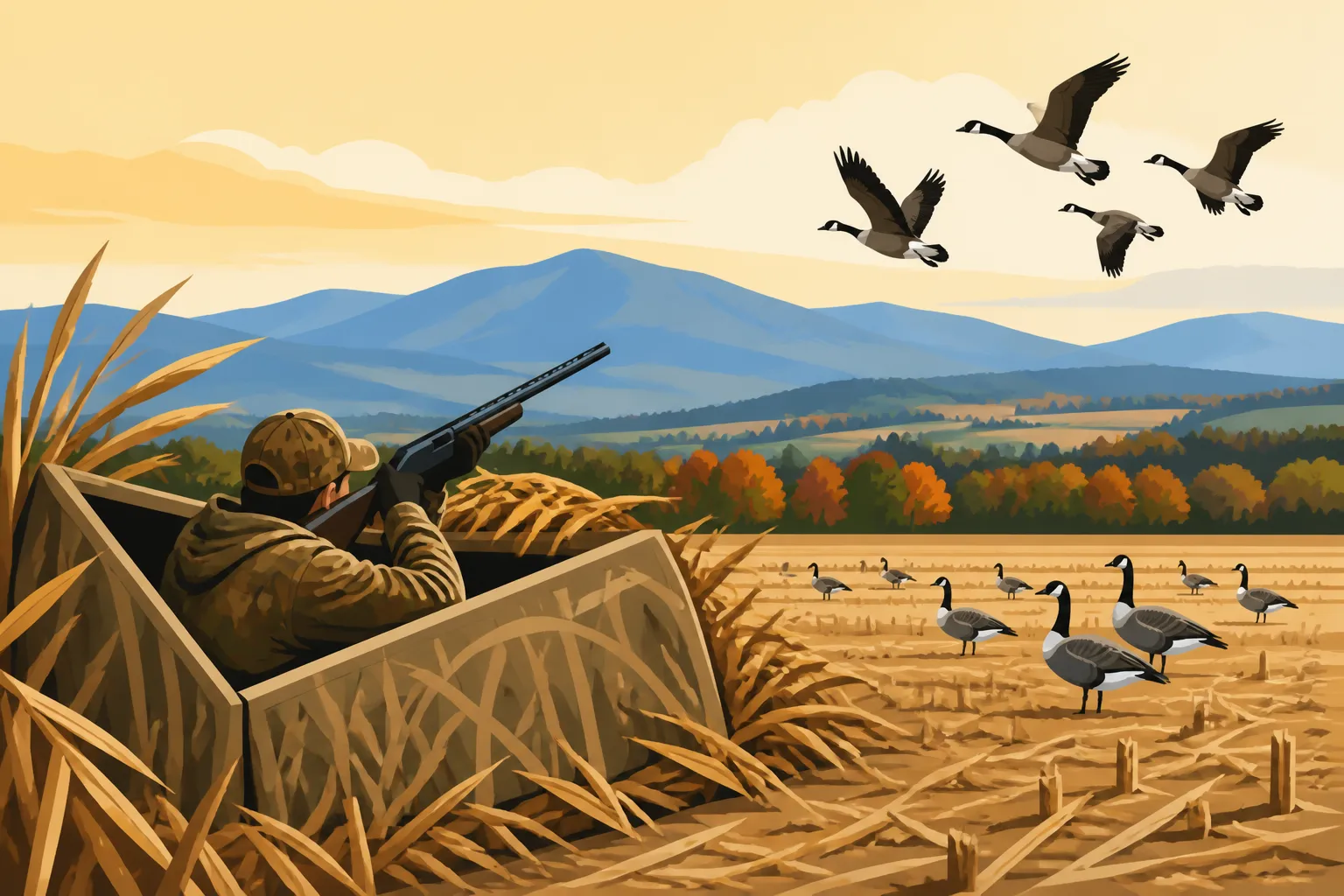
Think about it: when you're targeting geese that have been decoyed countless times, or mallards that might be flying over a cut cornfield, their survival depends on spotting danger from above. A traditional ground blind might work in a woodline, but out in the middle of a sprawling field, it sticks out like a sore thumb. A layout blind, on the other hand, allows you to lie down, becoming a part of the field itself. It drastically reduces your profile, making you virtually invisible when properly brushed in. It's the difference between ducks flaring high and fast, and pitching right into your spread, feet down.
The Challenge of Open Field Concealment
I've spent countless mornings shivering in pits I dug by hand, or trying to make myself small behind a few tufts of grass in a wide-open field. It's miserable, and frankly, it's usually ineffective. Geese in particular are notorious for their ability to spot unnatural shapes. Even a slight rise in the field or a clump of dark clothing can send them packing. The Champlain Valley's fields are often flat, with few natural undulations or significant vegetation once crops are harvested. This forces you to get as low to the ground as possible.
The ground itself can also be a challenge. After a good rain, these fields can turn into muddy messes. Trying to lie directly on the wet, cold ground for hours is not only uncomfortable but can lead to hypothermia in colder weather. A layout blind provides a barrier from the elements, often with padded floors and headrests, making those long, still waits far more tolerable. It's not just about hiding; it's about staying comfortable enough to remain still and focused for extended periods. When you're comfortable, you're a better hunter.
Blending into the Champlain Valley Landscape
The beauty of a layout blind isn't just its low profile; it's how you can make it disappear entirely. These aren't just tents you lie in; they're designed with stubble straps and loops that allow you to attach natural vegetation from the very field you're hunting. Whether it's corn stalks, hay, dry grass, or even a few cattails from a nearby ditch, you can literally blend your blind into its surroundings.
This ability to customize your concealment is crucial. A blind that looks great in a prairie might stick out in a Vermont hayfield. Being able to mimic the specific ground cover of your hunting spot makes you truly vanish. Imagine geese circling, looking directly at your position, and passing right over because all they see is another patch of the field. That's the magic of a well-utilized layout blind in the Champlain Valley. And let's not forget the added benefit of being able to shift position slightly, adjust your calls, or even grab a snack without spooking birds, all while remaining completely hidden. For scouting and understanding optimal field positions, resources like GoHunt can be invaluable for analyzing topography and identifying key areas.
Key Features to Look for in a Champlain Valley Layout Blind
When you're trying to pick out the perfect layout blind for hunting the Champlain Valley, it's not a one-size-fits-all situation. There are a few critical features that will make all the difference in your comfort, concealment, and ultimately, your success. You need something that can stand up to Vermont weather, blend seamlessly into varied agricultural landscapes, and still be practical to get into and out of quickly when those birds commit.
Concealment and Camouflage Patterns
First and foremost, a layout blind has to disappear. This means paying close attention to its camouflage pattern and its overall profile. For the Champlain Valley, you're typically looking at agricultural fields. Patterns that mimic corn stubble, hay, dry grass, or general field debris are going to be your best bet. Many popular brands offer field-specific patterns that work wonders. You want a pattern that breaks up the outline of the blind, rather than just covering it in green or brown. Look for patterns with high contrast and depth, designed to replicate shadows and textures of natural vegetation.
Beyond the pattern itself, the profile is critical. How low to the ground does the blind sit? Even a few extra inches can make a huge difference in how easily wary birds spot you. The lowest profile blinds are generally preferred for ultra-spooky birds. Also, consider the blind's construction; rigid frames can sometimes create hard lines that catch the light or stand out. Some blinds feature more flexible designs or materials that allow for a softer, more natural outline when brushed in.
Durability and Weather Resistance
Vermont weather can be fickle, especially during waterfowl seasons. One morning you might have crisp, sunny skies, and the next could bring a cold, driving rain or even snow. Your layout blind needs to be built to withstand these conditions. Look for robust, waterproof fabrics that won't absorb water and become heavy, or worse, allow moisture to seep through to you. Reinforced stitching, durable zippers, and sturdy frame materials are essential. A flimsy frame will quickly bend or break under the weight of accumulated snow or strong winds.
Consider the base material as well. A waterproof, heavy-duty bottom will protect you from damp or muddy ground, keeping you drier and warmer. Nobody wants to cut a hunt short because they're soaked and freezing. A blind that's easy to clean is also a bonus, as mud and debris are a given when hunting fields. You'll thank yourself later when you're not trying to scrub dried mud out of every crevice. Waders for Vermont Waterfowl Hunting are another essential piece of gear that helps deal with wet conditions, often complementing the protection offered by a good blind.
Comfort and Ergonomics
While concealment is key, comfort is what allows you to hunt effectively for hours. Lying prone in a field for an entire morning or afternoon can take a toll if your blind isn't designed with ergonomics in mind. Look for good padding, especially under your back and head. Some blinds offer adjustable backrests, allowing you to recline slightly, which can be a lifesaver for your neck and back.
Consider the interior space. Can you easily shift your weight, reach your calls, access your shells, or even eat a snack without struggling or making excessive movement? You want enough room to be comfortable, but not so much that the blind becomes bulky or difficult to conceal. Access panels or zipper locations are also important – you need to be able to sit up and shoot quickly and smoothly when the time comes. Test out different entry and exit methods if you can, to ensure you can get out fast when a flock commits.
Portability and Setup Ease
Hunting the Champlain Valley often means moving from one field to another, or sometimes setting up in spots that require a bit of a walk. A heavy, cumbersome blind that takes forever to set up or break down will quickly become a nuisance. Look for blinds that are relatively lightweight and fold down into a manageable size. Carrying straps or a backpack-style design can make transporting it across a field much easier.
Ease of setup is equally important. You don't want to be fumbling with a complicated frame in the pre-dawn darkness, especially when your hands are cold. Many modern layout blinds feature quick-release clips or simple tension-rod designs that allow for rapid deployment. A blind that can be set up in a matter of minutes means more time spent scouting and brushing in, and less time wrestling with gear. A quick setup can also be crucial if you decide to pick up and move to a different part of the field to adjust to shifting bird patterns.
Types of Layout Blinds for Champlain Valley Fields
The world of layout blinds isn't just one kind of contraption. Manufacturers have come up with some really clever designs over the years, each with its own advantages, especially when considering the diverse agricultural landscapes of the Champlain Valley. Knowing the different types can help you narrow down your choices and find the perfect match for your hunting style and the specific fields you'll be frequenting.
Traditional Low-Profile Layout Blinds
These are the workhorses of field hunting, designed for ultimate concealment. As the name suggests, traditional low-profile blinds aim to keep you as flat to the ground as possible. They typically feature a rigid frame that gives them structure, a padded bottom for comfort, and a low-slung lid that springs open when it's time to shoot. The whole idea is to mimic a clump of dirt or a slight rise in the field.
These blinds excel in truly open fields, like harvested hayfields, cut cornfields, or even winter wheat fields where there's minimal standing cover. Their low profile makes them incredibly hard for overhead birds to spot, especially when you've done a good job brushing them in. You'll find many hunters swear by models that keep them just inches above the ground, sometimes with a mesh face screen to allow you to peek out without giving away your position. For areas around Lake Champlain where fields can be vast and flat, these are often the go-to. When planning your hunt, services like GoHunt offer detailed mapping that can help identify these prime, flat field locations for optimal layout blind use.
Pros:
- Maximum Concealment: Lowest profile, making you almost invisible.
- Excellent for Open Fields: Ideal where natural cover is scarce.
- Good Protection: Keeps you off the wet ground and out of the wind.
Cons:
- Less Mobility: Can be harder to quickly shift positions or look around without disturbing the lid.
- Can Be Uncomfortable for Some: Lying completely flat for long periods isn't for everyone.
- Requires Good Brushing: Still needs natural cover added to truly disappear.
Backpack-Style and Frameless Blinds
For hunters who prioritize mobility and ease of transport, backpack-style or frameless blinds are fantastic options. These blinds often forgo a rigid, full-length frame for a more collapsible design, sometimes using tension poles or even inflatable elements. Many of them can be worn like a backpack to and from your hunting spot, which is a huge benefit if you're walking a significant distance across several fields or venturing into public land areas where vehicle access might be limited. Hunting Green Mountain's Backcountry Wilderness Areas might involve more traditional methods, but for a long trek to a specific field edge, these blinds make sense.
While they might sacrifice a tiny bit of the ultra-low profile of their rigid counterparts, modern designs have come a long way in offering excellent concealment. They're often quicker to set up and take down, making them ideal for run-and-gun scenarios or if you frequently adjust your location based on bird movement. If you're hunting a variety of fields, from Hunting a Hillside Hay Field to Hunting a Corn Silage Field Edge, the versatility of a backpack blind can be invaluable.
Pros:
- Superior Portability: Easy to carry, often worn like a backpack.
- Quick Setup/Teardown: Great for mobile hunting strategies.
- Versatile: Adapts well to various field types and terrain.
Cons:
- Potentially Less Structure: Can feel less rigid than framed blinds.
- Might Be Slightly Higher Profile: Though many designs are impressively low.
- Less Protection from Hard Ground: Some lighter models might have less padding.
Panel Blinds and Hybrid Options
Beyond the traditional and backpack styles, you'll also find some hybrid options, often referred to as panel blinds or low-profile ground blinds. These typically consist of several rigid panels that connect to form a small, concealed enclosure. They often offer a slightly more upright seating position than a true layout blind, but still keep your profile much lower than a traditional ground blind. They bridge the gap between maximum concealment and increased comfort.
Some panel blinds are designed to be extremely modular, allowing you to configure them in different ways or even link multiple units together for a group hunt. They might have a roof that can be opened or closed, or even pop-up shooting ports. While they might not be as low as a dedicated layout blind, they can be excellent for situations where there's a bit more ambient cover, such as along a fencerow, a ditch bank, or the edge of a standing crop. If you're Hunting a Champlain Valley Dairy Farm Edge where there might be some taller grass or brush, these hybrids can provide excellent concealment while offering a little more comfort and visibility.
Pros:
- Increased Comfort: More upright seating can be easier on the back.
- Good Visibility: Often easier to scan for incoming birds.
- Modular: Some designs allow for flexible configurations.
Cons:
- Higher Profile: More visible than true layout blinds, requiring more natural cover.
- Heavier/Bulkier: Can be less portable than backpack blinds.
- Might Not Be Fully Enclosed: Some designs are more open, offering less protection from elements.
Setting Up and Brushing In Your Layout Blind for Champlain Valley Success
Having the best layout blind for your Champlain Valley field hunting adventures is only half the battle. The real magic happens in how you set it up and, even more importantly, how meticulously you brush it in. This process is about making your blind disappear completely, not just blending in, but literally becoming an indistinguishable part of the landscape. Trust me, those geese and ducks are scrutinizing every detail from hundreds of feet up.
Choosing the Right Spot
Location, location, location! Before you even think about brushing in, you need to pick the perfect spot for your blind. This usually means studying the flight patterns of the birds, observing where they've been feeding, and understanding the wind direction. Waterfowl almost always land into the wind, so positioning your blind downwind of your decoy spread, facing into the wind, is generally ideal. This allows birds to approach your spread, see what they believe is a safe landing zone, and present a shot when they're directly overhead or slightly past you.
Consider the topography of the field. Are there any subtle depressions, slight rises, or natural clumps of grass that can help break up the outline of your blind? Even a few inches of natural cover can make a huge difference. Avoid setting up on the highest point in a field, as this will make your blind stand out. Look for the "dead zones" where birds won't naturally land but will pass over to get to your decoys. Also, think about your shooting lanes. You want a clear shot at incoming birds, so ensure no obstructions will interfere with your swing. Reading Aerial Photos for Green Mountain Deer might be for deer, but the principles of using mapping to scout field topography apply directly to waterfowl, too.
The Art of Brushing In
Brushing in is where you transform your blind from a fabric shell into a natural part of the field. This isn't just throwing a few stalks on top; it's a careful, deliberate process. Start by collecting local vegetation from the field itself or the immediate edges – corn stalks, hay, dry weeds, stubble, even dirt clumps. The key is to match the color and texture of the surrounding ground.
Utilize the stubble straps and loops that come on your blind. Don't just lay material flat; try to create depth and shadow. Stick stalks and weeds into the loops so they stand up naturally, mimicking the upright growth of the field. Break up the hard edges of the blind's frame and lid. Pay particular attention to the areas where the blind meets the ground, as this is often where unnatural lines are most visible. If you're Hunting a Standing Corn Field for Deer, gathering similar corn stalks to match is crucial. Always make sure to leave clear shooting lanes around your head and shoulders, even if it means slightly less cover in that specific spot. It's better to be able to shoot effectively than to be perfectly hidden but unable to take a shot.
Decoy Spreads and Blind Placement Synergy
Your layout blind and decoy spread work hand-in-hand. The blind's job is to make you disappear, while the decoys' job is to convince the birds to come close enough to your hidden position. Think about the overall picture. If you're setting up a Goose Decoy Spreads for a Champlain Valley Field, consider placing some "feeder" decoys around and even slightly over your brushed-in blind. This helps to further break up its outline and makes it appear as just another part of the feeding flock.
Leave an open landing zone directly in front of your blind, within comfortable shooting range. This is where the birds will ideally try to land, offering you the best shots. Pay attention to how many decoys you're using. Sometimes, less is more, especially on pressured birds. A smaller, realistic spread that looks natural can be more effective than a massive spread that looks unnatural. And always remember: if you see a particular field producing good results for your efforts, make a note of it using a tool like GoHunt's mapping features, so you can revisit that location in the future.
Final Checks and Adapting to Conditions
Before the first bird appears, take a moment to step away from your blind (if safe to do so) and view it from different angles, especially from a slightly elevated position, to simulate a bird's perspective. Are there any shiny spots? Any unnatural shadows? Does it truly blend in? Address any issues before the hunt begins. Even a small piece of exposed plastic or a bright zipper can ruin your hunt.
Throughout the day, be prepared to adapt. If the wind shifts, you might need to adjust your blind or decoys. If the light changes, revealing a part of your blind that was previously hidden, make a quick adjustment if possible. The weather in the Champlain Valley can change quickly, so be ready for anything. And remember, patience is paramount. Even with the best blind and setup, waterfowl will test your resolve. Stay still, stay hidden, and wait for your moment. Hunting Pressure on Vermont Public Land means birds are often more wary, so attention to these details is critical.
| Feature / Consideration | Low-Profile Layout Blind | Backpack-Style Blind | Panel / Hybrid Blind |
|---|---|---|---|
| Primary Use | Open, flat fields | Mobile, varied fields | Field edges, slight cover |
| Concealment | Excellent (lowest profile) | Very Good (still low) | Good (higher profile) |
| Portability | Moderate (folds) | Excellent (wearable) | Moderate (can be bulky) |
| Comfort | Good (padded, flat) | Moderate (lighter pad) | Very Good (more upright) |
| Setup Time | Quick | Very Quick | Moderate |
| Durability | High | Moderate to High | High |
| Brushing In | Essential for success | Essential for success | Highly recommended |
| Ideal For | Wary geese in cut fields | Scouting new fields | Hunting fencerows, ditches |
Disclaimer
This article is for general informational purposes only and does not constitute professional advice. Laws, prices and regulations vary by location and change over time. Consult a qualified professional for guidance on your specific situation.