Hunting a Hillside Hay Field
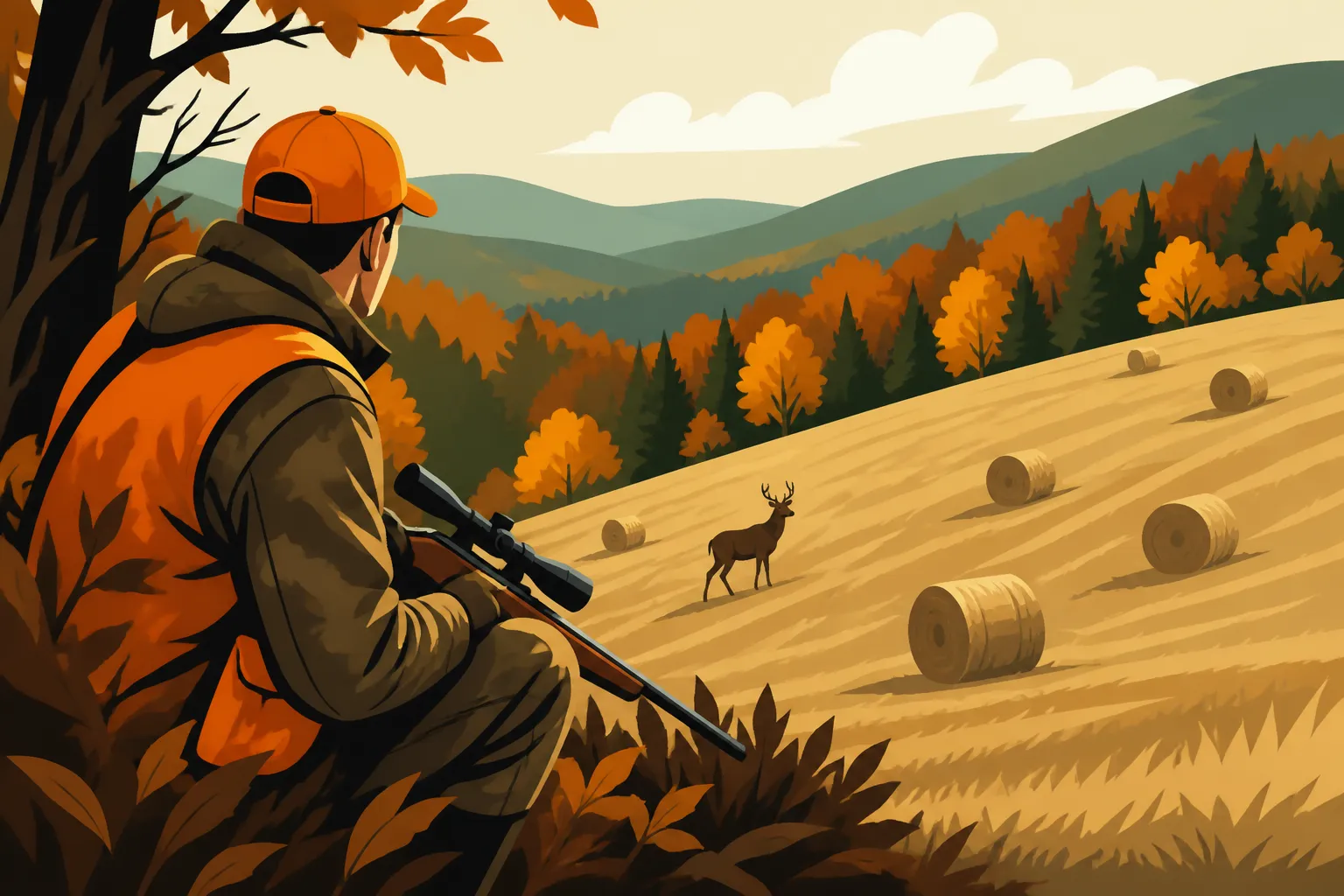
There's a quiet beauty to a Vermont hillside hay field, isn't there? Rolling green or golden brown, stretching up towards the hardwood lines. For many hunters, these open expanses can feel intimidating, like a barren wasteland where deer would never dare to venture during daylight. But I'm here to tell you that overlooking a hillside hay field is a missed opportunity, especially here in Vermont where agriculture and timber often blend seamlessly. This guide isn't about simply sitting on the edge of a field; it's about understanding the nuances of how deer interact with these unique landscapes, how to scout them effectively, and how to position yourself for success when the time comes to make the shot.
Why Hillside Hay Fields Are Secret Magnets for Vermont Deer
You might look at a vast hay field and think, "Nope, too open, too exposed." And on a flat, wide-open tract, you'd often be right during daylight hours. But a hillside hay field, particularly one bordered by varied cover, tells a different story entirely. Deer aren't just looking for food; they're looking for security, thermal regulation, and efficient travel routes. Hillside fields often provide a unique combination of all these elements, making them far more dynamic than they appear on the surface.
More Than Just Grass: The Appeal of Hay Field Forage
When we think of "hay," we often picture a monoculture of grass. But many Vermont hay fields are actually a rich tapestry of forage. Farmers frequently plant mixes that include clover, alfalfa, or various legumes to enrich the soil and provide better nutrition for their livestock. These plants are absolute magnets for deer, providing a high-protein, palatable food source from spring right through the fall. Even after a cutting, the residual growth can still be incredibly attractive, and deer will readily pick through the stubble for dropped leaves or fresh sprouts. A field that might look "cut" to us can still be a five-star buffet for a whitetail.
Beyond the obvious food value, these fields often border other natural food sources. Think about those fields that climb a rise to meet an old apple orchard, or those that have oak or beech trees dropping mast just inside the timber line. The hay field becomes the "appetizer," drawing deer out before they hit the richer, higher-calorie foods, or serving as a crucial late-season food source when snow covers other options. Late-Season Food Sources for Vermont Whitetails often include these very spots, especially if they’re still greening up or offering some digestible roughage.
Thermal Cover and Strategic Escape Routes
A hillside offers something a flat field can't: varied thermal regulation. On a crisp autumn morning, a deer can bask in the early sun on an east-facing slope, warming up after a cold night. Conversely, on a warm afternoon, a north-facing slope might offer just enough shade and cooler air currents to keep a deer comfortable while it feeds. The topography itself becomes part of their survival strategy.
Crucially, hillside hay fields almost always back up to substantial cover—a dense softwood stand, a thick fencerow, or a steep, rocky timbered slope. This adjacency means deer can feed in relative openness, yet be mere steps away from concealment and security. They don't have to cross a quarter-mile of open ground to get to safety; they just need to hop the fence line or duck into the nearest brush. This proximity to escape cover is what makes deer feel secure enough to venture out earlier in the evening or linger later in the morning.
Transition Zones and Funnels: Deer Highways
Hillside hay fields are often natural transition zones. They represent the edge where agricultural land meets forest, or where high ground meets a valley bottom. Deer frequently use these edges as travel corridors, moving between bedding areas in the dense timber on the ridge above and water sources or other feeding areas down below. A subtle dip in the terrain, a fencerow, or even an old logging road running along the timber edge can act as a funnel, concentrating deer movement into predictable pathways. These funnels are absolute goldmines for stand placement, as they dictate precisely where deer will enter and exit the field.
It's not uncommon to see deer using these fields as shortcuts. Instead of navigating through dense, noisy woods, a deer might prefer to skirt the edge of a hay field, particularly if there’s a protective strip of brush. This provides them with a faster, quieter route, and a hunter who understands these natural movements can capitalize on it. You're essentially looking for the "interstate" of deer travel, and often, it runs right along the edge of a hillside hay field.
Scouting Your Hillside Hay Field Like a Pro
Effective scouting is paramount, especially in a seemingly open area like a hay field. You can't just drive by and assume you know what's happening. You need to put boots on the ground, and frankly, some technology in your hand, to truly understand how deer are utilizing these spaces. The more information you gather, the more confident you'll be in your setup.
Reading the Edges and Entry/Exit Points
When you walk the perimeter of a hillside hay field, don't just glance into the open expanse. Focus intently on the edges. Look for worn trails where deer are consistently entering and exiting the field. These trails won't always be obvious superhighways; sometimes they're just subtle depressions in the grass or mud. Pay attention to where these trails lead: Do they go into a specific thicket? An old grown-up hedgerow? A small patch of standing timber?
Also, keep your eyes peeled for rubs and scrapes, especially along the timber line or in any small woodlots that protrude into the field. Bucks will often work these signposts on their way into or out of a feeding area. These aren't just random acts; they're deliberate markings that indicate a buck's travel habits and routine. A fresh rub line along a fencerow leading into a field is a neon sign screaming "Bucks are here!" Finding Sign in Green Mountain Timber can give you more clues on how to interpret these critical indicators.
Harnessing Technology for Terrain Analysis
This is where modern tools really shine. Apps like onX Hunt are indispensable for dissecting a hillside hay field. You can use satellite imagery to identify subtle changes in topography, small pockets of cover, and potential funnels that you might miss from the ground. Look for those slight depressions, fingers of timber, or even old farm roads that might not be visible from a distance but could be a deer's preferred travel route. The property line layer is crucial too, as you don't want to accidentally trespass while setting up. onX Layers for Vermont Land Status offers more insight into how to leverage these digital scouting tools.
Another valuable feature on these mapping apps is the 3D terrain view. On a hillside, this allows you to visualize how wind and thermals might behave. You can see how a ridge line could funnel air currents or how a small draw could create a thermal sink. By understanding the contours, you can better predict deer movement and anticipate how your scent might travel.
Understanding Wind and Thermals on a Slope
Hunting a hillside is fundamentally different from hunting flat ground when it comes to wind and thermals. This is probably the single most critical factor you need to master. In the mornings, as the sun warms the earth, thermals rise, carrying your scent uphill. In the evenings, as the air cools, thermals fall, pulling your scent downhill. This isn't a hard and fast rule every second of the day, as a strong prevailing wind can override local thermals, but it's a powerful general principle.
Here's a simple breakdown:
| Time of Day | Thermal Movement | Scent Drift | Ideal Stand Location |
|---|---|---|---|
| Morning | Rises uphill | Uphill | Below deer, on the ridge/top |
| Evening | Falls downhill | Downhill | Above deer, on the slope |
This means you need a completely different approach and stand location for morning versus evening hunts on the same hillside. A good understanding of Wind and Thermals in Steep Green Mountain Terrain is non-negotiable for success here. Always approach from a direction that keeps your scent out of the primary travel corridors and feeding areas, both on your way in and your way out. Check a reliable weather forecast that includes wind direction, and if possible, use a real-time wind checker like a milkweed pod before you commit to a setup.
Setting Up for Success in a Hillside Hay Field
Once you've done your homework and identified key areas, it's time to choose your setup. This isn't a one-size-fits-all situation; your choice will depend on the specific features of the field, the available cover, and your hunting style.
Strategic Stand Placement: Inside the Edge is Key
The biggest mistake hunters make on fields is setting up right on the edge, silhouetted against the sky or the open field. Deer have incredible eyesight, and they'll spot you a mile away. Instead, think about setting up inside the timber, 10-20 yards back from the edge of the field, on a game trail that leads into the open. This allows you to break up your outline, stay more concealed, and gives you a much better chance of getting a shot at a deer before it's fully committed to the open field.
Look for a strategic tree that offers good cover from multiple angles, particularly the direction you expect deer to approach from. Consider a pinch point or a small funnel created by topography or a cluster of thick pines. You want to be close enough to the field for a clean shot, but hidden enough to remain undetected. Remember, your entry and exit routes are just as important as your stand location itself. You don't want to blow deer out of the field when you're walking in or out. This might mean taking a longer, more circuitous route that keeps you concealed in the timber.
Ground Blinds vs. Treestands: Pros and Cons
Both ground blinds and treestands have their place in hillside hay field hunting.
Ground Blinds:
- Pros: Excellent for concealment, especially if you can brush them in effectively. They're also great for hunters who prefer not to be elevated or for situations where there are no suitable trees. You can blend a ground blind into a fencerow, a small clump of brush, or even an existing rock pile along the field edge. This low profile can be incredibly effective, making you virtually invisible. Using a Ground Blind on Public Land offers more tips on getting these set up right.
- Cons: Limited visibility, especially on a hillside where deer might appear from below or above. Scent control is even more critical, as your scent is closer to the ground and less dispersed by elevation. If a deer gets downwind of you, it's game over quickly.
Treestands:
- Pros: Offer a superior vantage point, allowing you to see deer approaching from a greater distance and providing better shot opportunities over undulating terrain. Elevation helps disperse your scent more effectively, theoretically reducing your chances of being winded (though thermals can counteract this quickly).
- Cons: Requires a suitable tree, which isn't always available right where you need it. Entry and exit can be more challenging to conceal, and you're more exposed to the elements. Setting up on a hillside also means you need to be acutely aware of your shot angle – a deer standing directly below you can be a tough shot.
Consider a hybrid approach too. Maybe a ground blind for evening hunts when deer are more likely to be out and thermals are falling, and a treestand higher up for morning hunts as thermals rise.
Hunting Tactics and Adapting to Conditions
Hunting a hillside hay field isn't a static endeavor. Deer behavior changes throughout the season, and external factors like weather and agricultural activity will heavily influence your success. Being adaptable is crucial.
Timing Your Hunt: Seasonality and Daily Patterns
The way deer use a hay field changes dramatically throughout the hunting season.
- Early Season (September/October): Deer are often focused heavily on high-protein forage to bulk up after summer. They might be out earlier in the evening and later in the morning, especially if hunting pressure is low.
- Pre-Rut/Rut (Late October/November): Bucks will begin cruising these edges more frequently, scent-checking for does. You might catch a buck just cutting across a corner of the field to get from one woodlot to another. This is an excellent time to use calls like grunts or rattles, as a buck might be curious enough to investigate a perceived rival or a receptive doe.
- Late Season (December): If there's still accessible forage, and especially if snow covers other food sources, hay fields can become crucial feeding areas again. Deer will brave colder temperatures to get to available food, often pushing them out closer to midday.
As for daily patterns, evenings are often more productive for feeding deer in these fields, as they emerge from bedding cover. However, a morning hunt, especially from an elevated position above where you expect deer to be, can be incredibly effective if you can get in undetected before first light. Hunting a Funnel Between Two Woodlots shares similar principles regarding timing and deer movement.
Dealing with Changing Conditions
Vermont weather is notoriously fickle, and a hay field can go from a prime spot to a bust overnight if conditions change.
- Rain: Can reduce visibility and dampen scent, but also makes deer move more quietly. After a rain, deer might emerge to feed on fresh growth.
- Snow: Light snow cover makes tracks incredibly obvious, allowing you to confirm travel routes. Deep snow might push deer into different, more sheltered food sources, but if the hay field is one of the only exposed options, it can become a hotspot.
- Wind Shifts: Always be prepared to adjust your strategy or even abandon a stand if the wind shifts unfavorably. No amount of scent control can completely defeat a bad wind direction on a hillside.
- Agricultural Activity: If the farmer cuts the hay or brings in equipment, it will disrupt deer patterns for a few days. Don't be discouraged; deer will typically return once the activity dies down. A freshly cut field can sometimes even act as a renewed attractant.
It also pays to understand how local pressure affects these spots. If you're on public land, deer might become more nocturnal or utilize thicker cover more heavily. On private ground, with less pressure, you might have more leeway to hunt closer to open areas. Hunting Pressure on Vermont Public Land is a good read if you're exploring public access options.
Hunting a hillside hay field in Vermont requires patience, a keen eye for detail, and a solid understanding of deer behavior and topography. It’s not about finding the biggest, most obvious sign, but about deciphering the subtle clues that tell you how deer use these unique, often underestimated, landscapes. Take your time, scout smart, and be ready to adapt – and you might just find your next Vermont whitetail in a spot you once overlooked.
Disclaimer
This article is for general informational purposes only and does not constitute professional advice. Laws, prices and regulations vary by location and change over time. Consult a qualified professional for guidance on your specific situation.