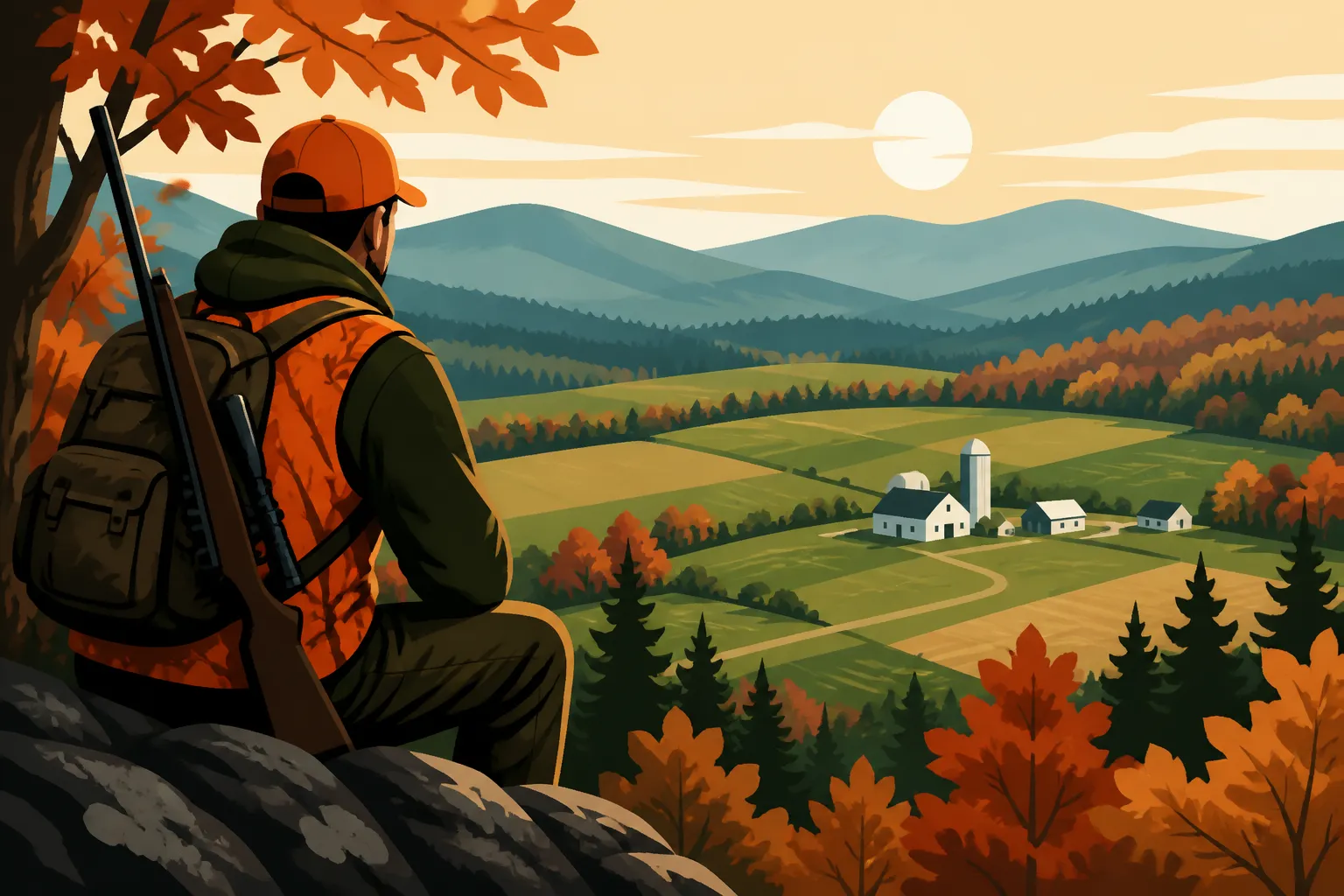
Hunting a Ridge Above a Farm Valley
Oh, the age-old puzzle of hunting those elusive deer that seem to vanish between the high ground and the fertile valley below! It's a classic Vermont hunting challenge, isn't it? You know they're up there in the thick stuff on the ridge, and you know they're down in those rich farm fields or apple orchards, but catching them in between? That's the trick. Many of us spend seasons trying to connect those dots, often feeling like we're just guessing. This guide will cut through that frustration, walking you through the precise strategies for effectively hunting those critical ridge-top locations overlooking Vermont's productive farm valleys, helping you unlock consistent success by understanding deer movement, scouting smarter, and setting up right.
Understanding the Dynamics of Ridge-to-Valley Hunting
Hunting ridges that overlook farm valleys isn't just about picking a spot with a nice view; it's about understanding the subtle, yet incredibly consistent, ways deer utilize these unique landscapes. Vermont's terrain, with its rolling hillsides giving way to often privately-owned agricultural lands, creates a specific set of patterns that, once deciphered, can dramatically increase your odds of success. Deer are creatures of habit and efficiency, and these ridge-to-valley corridors offer them exactly what they need: security, food, and efficient travel.
Why Ridges are Key Transition Zones
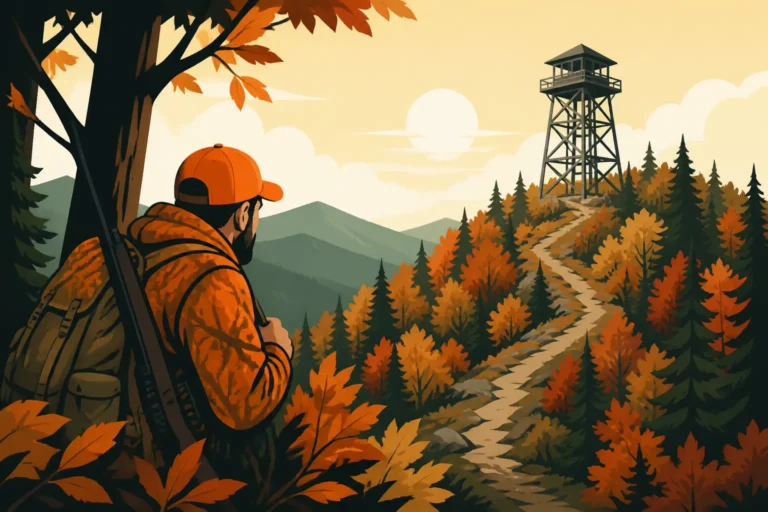
Think about it from a deer's perspective. A high ridge, especially one with thick cover like dense hemlock stands, softwood thickets, or even just old, brushy clear-cuts, offers prime bedding and security. From these elevated positions, deer can often see or smell approaching danger long before it becomes a direct threat. They feel safe up there, especially after the sun comes up and the woods get a little noisier. But deer can't live on security alone; they need to eat, and often, the most readily available and nutritious food sources are found in the farm valleys below – whether that's lush hay fields, standing corn, or even a forgotten apple orchard.
So, these ridges become the natural highway, the transition zone, between their bedding safety and their feeding grounds. As evening approaches, deer will slowly filter out of their ridge-top beds, using natural terrain features to descend into the valley. In the morning, the reverse happens: they'll feed through the night and then, as dawn breaks, begin their ascent back to the security of the ridge. This predictable, twice-daily movement is what we're trying to intercept. It’s not just random wanderings; it's a calculated commute for them, and understanding those routes is paramount. They’ll often use the path of least resistance or the path that offers the most cover, making those ridge edges and slopes incredibly hot during low-light hours.
Reading the Landscape: What to Look For
When you're looking at a ridge that spills into a farm valley, you're not just looking at a big hill. You're looking for specific features that concentrate deer movement. These are the natural funnels, pinch points, saddles, and bench systems that dictate where deer will travel. A saddle, for instance, is a dip in the ridge line, essentially a low point that allows deer to cross from one side to another with less effort than climbing over a peak. These are absolute magnets for movement, especially during the rut when bucks are cruising.
Pinch points can be created by natural rock formations, dense impenetrable thickets, or even man-made features like old stone walls or logging roads that force deer into a narrower path. Pay close attention to any "benches" – those subtle, flat spots or terraces on a hillside. Deer love to walk these benches because they offer easier travel along the contour of the hill, rather than trying to climb straight up or down a steep incline. These benches often have well-worn trails, acting as secondary travel corridors just below the ridge line. Look for primary trails that are well-defined, almost like little deer highways connecting the ridge to the valley floor. But don't overlook secondary trails, sometimes just faint lines of disturbed leaves, that might indicate a less-traveled, but still important, route used by a wary buck. Understanding Wind and Thermals in Steep Green Mountain Terrain is critical here, as deer often use these landscape features to their advantage, letting the wind carry their scent where they want it to go, and using thermals to stay undetected.
Scouting Strategies for Farm Valley Ridges
You can have the best gear in the world, but if you don't know where the deer are moving, it's just a walk in the woods. Scouting these ridge-to-valley areas demands a two-pronged approach: starting with digital reconnaissance from your armchair, and then getting your boots on the ground to confirm your theories and find the real hot spots. This isn't just about finding a deer, it's about finding the deer, and understanding its likely movements between security and sustenance.
Pre-Season Digital Reconnaissance
Before you even step foot in the woods, your mapping apps are your best friend. Tools like onX Hunt have revolutionized how we scout. You can spend hours looking at aerial imagery, topographic maps, and even property line overlays, all from the comfort of your home. Start by identifying the obvious features: the highest points of the ridge, the steepest slopes, and the gradual draws or saddles that descend into the valley. Look for changes in canopy cover – darker greens often indicate dense conifers, which can be prime bedding. Lighter greens might be younger hardwood regrowth, also excellent bedding and browse. Pinpoint any clear-cuts, old logging roads, or powerline cuts that could serve as funnels or travel corridors.
Use the topo lines to find those subtle benches on the side of the ridge. These often don't stand out on aerials but become obvious when you look at the contour lines. You're trying to draw lines on your map, hypothetically connecting bedding areas on the ridge to feeding areas in the valley. Think about where deer would want to travel: where's the easiest path? Where's the most cover? Where does it pinch down? Reading Aerial Photos for Green Mountain Deer can help you visualize these connections. Don't forget to check property boundaries with your app; knowing where private land begins and ends is crucial for ethical and legal hunting.
Boots-on-the-Ground Verification
Once you have a few promising spots marked on your digital map, it's time to hit the woods. This is where you confirm, or sometimes completely debunk, your digital theories. Walking these ridges, especially during the off-season or just before the hunting season opens, allows you to find fresh sign. Look for well-worn deer trails, particularly those that run parallel to the ridge line or cut down into the valley. You'll often find these trails intersecting at saddles or natural benches.
Pay very close attention to rubs and scrapes. Fresh rubs, particularly larger ones on trees, indicate that bucks are in the area and actively marking their territory. Scrape lines along the ridge or leading into the valley are especially valuable, as they show consistent buck activity. These are often found near obvious travel routes or where thick cover meets a more open area. Droppings can tell you a lot too; fresh droppings indicate recent activity. As you scout, try to identify specific bedding areas on the ridge – typically dense, thick cover that offers good visibility downwind. Knowing Where Vermont Bucks Bed in Thick Cover will help you recognize these spots. Walk quietly, observing, and try to visualize how deer would move through the area. Use the detailed mapping provided by tools like onX Hunt or GoHunt to mark every piece of sign you find. This creates a powerful overlay of real-world data on your digital map, helping you hone in on the exact pinch points and travel corridors that are most active. This is also where you might find Scrape Lines Along a Logging Road, another key indicator of buck presence and travel.
Setting Up for Success: Stand Placement and Approach
You've done your homework, both digitally and on foot. Now comes the moment of truth: choosing where to hang your stand or set up your blind. This isn't just about having a clear shot; it's about intercepting deer naturally, without alerting them to your presence. The wrong setup, even in a great spot, can ruin your hunt before it even begins.
Strategic Stand or Blind Placement
When positioning your stand or blind on a ridge overlooking a farm valley, you need to think about the exact moment you want to intercept the deer. Are you hunting the morning shift, when deer are coming up from the valley to bed? Or the evening shift, when they're descending into the valley to feed? For morning hunts, consider setting up higher on the ridge, closer to potential bedding areas, but along a known travel route. You want to catch them before they reach their final bed. For evening hunts, placing your stand a bit lower, perhaps on a bench or at a funnel where trails merge as deer head towards the valley, can be more effective. The key is to be slightly ahead of their expected movement, not directly in their bedding or primary feeding area.
Always consider the prevailing wind and the complex thermals that operate in hilly terrain. In the morning, cool air sinks into the valley, creating a downward thermal draw. In the evening, the reverse happens, as warm air rises up the hillside. You need to position yourself so your scent is blowing away from where the deer are coming from or going to. This often means being on the downwind side of a trail or funnel. Don't be afraid to have multiple stand sites for different wind conditions. A portable stand or a ground blind can offer that flexibility. Think about a stand positioned to overlook a natural Hunting a Ridge-Top Saddle for Rutting Bucks, ensuring your scent isn't blowing into the travel corridor.
Here's a quick comparison of morning versus evening considerations:
| Factor | Morning Hunt (Deer going up) | Evening Hunt (Deer going down) |
|---|---|---|
| Primary Goal | Intercept deer returning to ridge-top bedding | Intercept deer leaving ridge for valley feeding |
| Stand Height | Often higher on the ridge, near bedding transition | Can be lower, on benches or funnels near valley |
| Thermal Flow | Thermals usually sinking (down into valley) | Thermals usually rising (up from valley) |
| Wind Strategy | Position to blow scent into valley, away from beds | Position to blow scent over valley, away from trails |
| Approach/Exit | Approach from valley side, exit down into valley | Approach from ridge top, exit into valley |
| Key Locations | Benches, saddles, thickets near ridge crest | Funnels, pinch points, trails just off ridge |
Mastering Your Entry and Exit Routes
This is arguably the most overlooked, yet critical, aspect of hunting any spot, especially a productive one overlooking a valley. You can pick the perfect stand location, but if your entry and exit routes blow deer out every time you hunt it, you're not going to see much. Your goal is to be a ghost – silent and scent-free. Plan your routes to avoid walking through obvious bedding areas or feeding zones. Use natural features like creek bottoms, ravines, deep ditches, or even the very edge of a field if it offers sufficient cover and a favorable wind.
Always approach with the wind in your face or quartering. If you're hunting an evening stand high on a ridge, you might approach from the ridge top, keeping your scent from blowing down into the valley where deer might already be moving. For a morning hunt, you might park further down in the valley and approach silently up a hidden draw. When leaving, use the same principles. Don't just crash out of the woods. Wait until shooting light has passed and the deer have settled or moved on. Sometimes, letting the deer completely filter into the valley after an evening hunt, even if it means waiting longer in your stand, is the best strategy. Remember, disturbing the area will teach those deer to avoid it, and they learn quickly. Planning your entry and exit is just as important as knowing Hunting a Funnel Between Two Woodlots or placing a stand Hanging a Stand on a Champlain Valley Field Edge.
Adapting to Conditions: Wind, Weather, and Deer Movement
Vermont's weather is notoriously unpredictable, and deer are highly attuned to these changes. A great stand location on one day might be completely dead on another due to a shift in wind, a sudden temperature drop, or an unexpected snow squall. Being able to read these conditions and adapt your strategy is what separates successful hunters from those who just hope for the best.
Hunting the Wind and Thermals
We've touched on this, but it bears repeating with emphasis: wind and thermals are your master and commander in ridge-to-valley hunting. In steep terrain, thermals are a dominant force. As the sun rises and warms the land, air currents typically begin to lift. This means your scent will be carried up the hillside. Conversely, as evening approaches and the air cools, the thermals often reverse, and your scent will fall down the hillside into the valley.
This creates a dilemma: a morning stand that relies on rising thermals might be perfect for catching deer heading uphill, as your scent blows harmlessly over their heads. But that same stand in the evening could be a disaster, as your falling scent would warn every deer in the valley. The solution? Have multiple setups for different wind and thermal directions. Use your onX Hunt app to mark potential stand locations that align with varying wind forecasts. Constantly check the wind with a powder bottle or milkweed seeds. Never, ever trust a consistent wind in a valley; it will swirl and eddy. Always err on the side of caution. Being keenly aware of Wind and Thermals in Steep Green Mountain Terrain is not just good practice, it's essential for success.
Reading Weather Patterns and Deer Behavior
Deer are survivors, and they adjust their behavior based on the weather. A drastic cold front, for instance, often triggers increased movement, especially towards food sources, as deer instinctively know they need to fuel up for colder temperatures. This can make those transition zones incredibly active. A light, fresh snow can be a blessing; it quiets the woods, makes tracking easier, and often prompts deer to move more actively, particularly to Late-Season Food Sources for Vermont Whitetails like lingering mast crops or agricultural fields. Snow also allows you to easily spot fresh tracks, helping you confirm if deer are indeed using your chosen corridors between the ridge and the valley. Observing Reading Vermont Mud for Fresh Deer Movement can also provide crucial clues, especially after a rain.
Conversely, high winds can make deer hunker down in thick cover, making them less likely to move between the ridge and the valley until the wind calms. Heavy, driving rain or a blizzard might also keep them bedded tightly. On these days, still-hunting through thick bedding cover on the ridge itself might be a more productive strategy than sitting a stand. Remember that a keen hunter adjusts, rather than stubbornly sticking to a plan that the deer clearly aren't following. Consider setting up where you can use cover to your advantage for Still-Hunting Green Mountain National Forest Timber if the weather turns nasty. Or, if the visibility is good from your vantage point, try Glassing a Powerline Cut at Last Light to catch deer heading into a field. The animals will tell you what they're doing; you just have to listen and adapt.
Disclaimer
This article is for general informational purposes only and does not constitute professional advice. Laws, prices and regulations vary by location and change over time. Consult a qualified professional for guidance on your specific situation.