Hunting a Sap House Clearing
There's nothing quite like the feeling of unlocking a hidden gem, a hunting spot that others might walk right past, dismissing it as too close to human activity or just "not wild enough." Many hunters assume that the best deer are deep in the backcountry, far from any signs of civilization. But often, some of the most overlooked and productive spots are those subtle edges where human history meets wild nature, and in Vermont, a sap house clearing can be exactly that. This guide will help you understand why these unique clearings are often deer magnets and how you can effectively hunt them.
Understanding the Allure of a Sap House Clearing for Deer
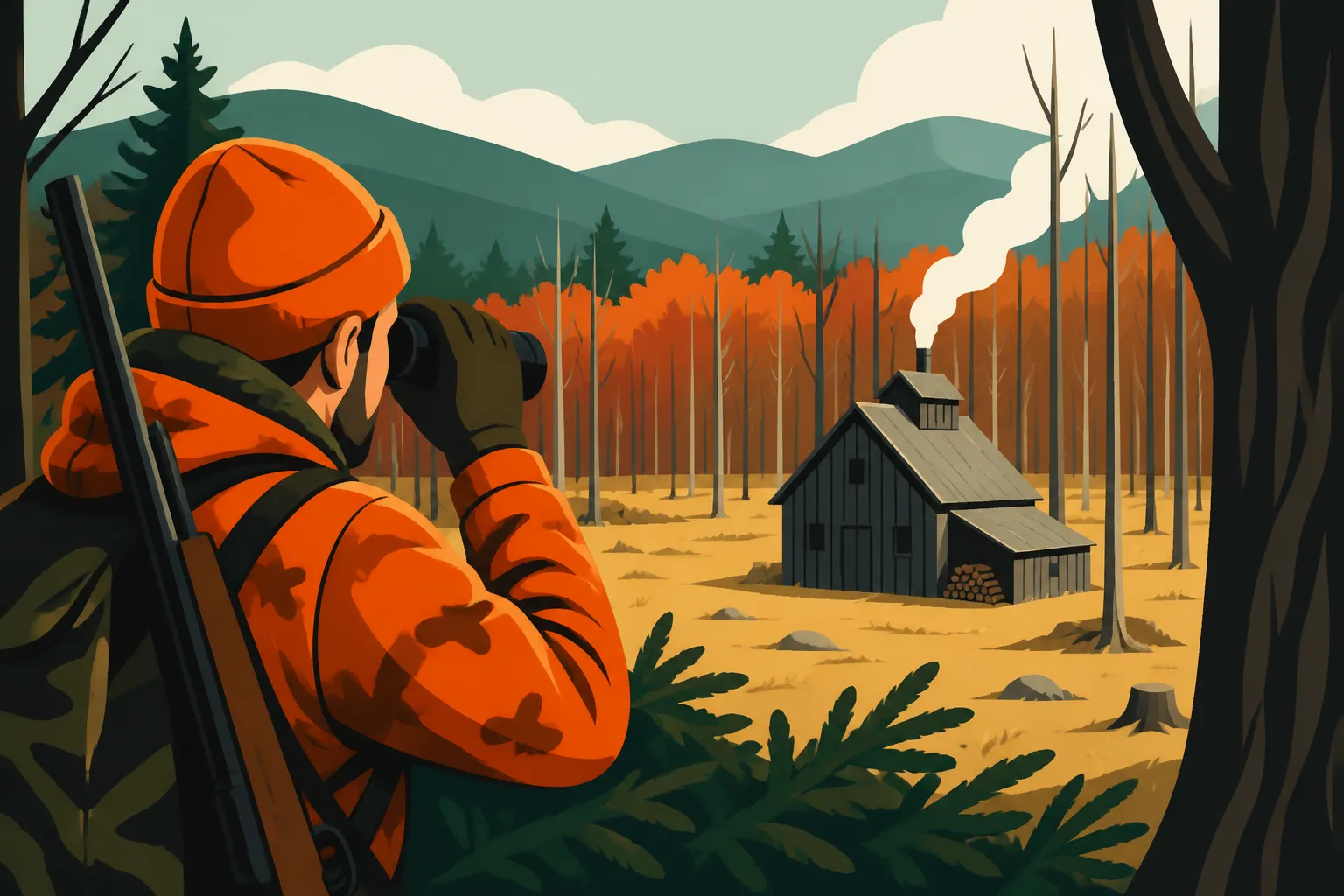
A sap house clearing might seem like an odd place to focus your deer hunting efforts. After all, there's often an old sugar shack, some scattered equipment, and maybe even a network of sap lines crisscrossing the woods. But it's precisely these elements, and the history of the land use, that can create an irresistible draw for white-tailed deer. You're not looking for a pristine wilderness; you're looking for an anomaly in the landscape, a pocket of advantage.
Why Sap Houses Attract Deer (and Hunters Often Miss It)
Think about what a sap house clearing usually entails: it's a section of sugar maples, often mature and stately, that have been managed for decades, sometimes even a century or more. Around the sap house itself, there's typically an open area, maybe an old overgrown field where wood was stacked, or a small area where equipment was stored. This disturbed ground, often enriched from past activity, often sprouts lush, early-season forage. Clover, various weeds, and even certain grasses can thrive here, offering an easy meal for deer. Furthermore, many old sugarbushes have forgotten apple trees, often wild and small, but still producing fruit that deer absolutely crave in the fall. These neglected trees, when they do drop, become a hotspot that often goes unnoticed by hunters focused on larger, more obvious orchards.
Deer, being creatures of edge and opportunity, are drawn to these micro-habitats. The clearing itself provides an open space for feeding, especially during low-light hours, while the surrounding timber offers immediate cover. The human activity, though present, is usually seasonal. Once sugaring season wraps up in early spring, these areas become incredibly quiet. Deer quickly learn that the human presence is fleeting and largely non-threatening during the fall hunting seasons. They'll exploit these clearings for food, bedding just inside the adjacent cover, and as travel corridors. It's a classic example of deer adapting to and benefiting from a disturbance that has long since become part of the natural rhythm.
Reading the Landscape: Identifying Key Deer Sign in a Clearing
To successfully hunt a sap house clearing, you need to understand how deer are using it. It's not just about seeing the clearing; it's about seeing the story the deer are telling you. Start by looking for the obvious: tracks. Around the edges of the clearing, especially where soft ground meets the woods, you'll often find deer tracks leading in and out. Look for varying sizes, which can indicate family groups (does and fawns) or the presence of a larger buck.
Beyond tracks, look for browse lines on young saplings and brush, particularly on new growth that comes up in the disturbed areas around the sap house. Deer love to nibble on tender shoots. During the rut, this becomes especially important: keep your eyes peeled for rubs and scrapes. Bucks will often create rubs on saplings along the transition zone between the open clearing and the denser woods, marking their territory. Scrapes, patches of pawed-away leaves with an overhanging branch, are communication hubs for deer. Finding fresh scrapes indicates active buck use. Pay close attention to any small creeks or wet spots within or adjacent to the clearing, as these can provide a consistent water source and are often great places to find tracks and other sign. Often, these small clearings act as funnels, even if they don't look like a traditional one, guiding deer movement from one section of timber to another. Finding Sign in Green Mountain Timber can give you even more insights into what to look for.
Scouting Strategies for a Sap House Clearing
Successfully hunting a sap house clearing isn't about blind luck; it's about meticulous scouting. Because these areas are often subtle and might not immediately scream "deer hot spot," you need to invest time in understanding how deer use them. This involves both traditional boots-on-the-ground methods and leveraging modern technology.
Pre-Season Reconnaissance: Foot vs. Technology
Before you ever set foot in the woods, spend some time with a good mapping application. Tools like onX Hunt are absolute game-changers for identifying potential sap house clearings. You can often spot these areas on aerial imagery – look for patches of mature hardwoods with a noticeable opening, sometimes with a small building or a network of faint lines (old sap lines) radiating out. Importantly, these apps will show you property lines, which is crucial if the sap house is on private land. You might find a promising clearing that's technically on public land or borders it, giving you a legal access point. Using onX Layers for Vermont Land Status will help you tremendously in this phase.
Once you have a few promising locations identified on your map, it's time for boots on the ground. Your goal during foot scouting is to confirm what the map suggests and find the finer details. Look for defined trails leading into and out of the clearing, paying attention to how they connect to denser bedding areas or other food sources. Identify potential escape routes deer would use if pressured. Are there thickets nearby where deer might bed down during the day? Is there a subtle funnel created by terrain or vegetation that directs deer movement through the clearing? This ground-level inspection is critical for understanding the nuances that aerial photos just can't reveal. For deeper dives into general scouting, check out Scouting Vermont Public Land Before Season.
Timing Your Scouting for Maximum Insight
Timing is everything when it comes to scouting. The best times to scout a sap house clearing for deer sign are typically late winter/early spring and again in early fall.
-
Late Winter/Early Spring: After the snow melts but before heavy leaf-out, deer sign from the previous fall and winter becomes incredibly visible. Rubs and scrapes from the rut will still be evident, though weathered. You'll also see winter trails and browse lines from deer surviving the colder months. This is also a fantastic time for shed hunting, and finding antlers in or around a clearing confirms significant buck activity. The absence of foliage allows you to see the lay of the land, subtle ridges, and natural funnels more clearly. You might also notice where old apple trees are starting to bud, giving you a heads-up on potential fall food sources.
-
Early Fall (Late August/September): This is when fresh sign starts to emerge. As bucks shed velvet, they'll begin making fresh rubs. As the pre-rut kicks in, new scrapes will appear. This is your chance to see exactly where deer are actively feeding on early mast crops or those overlooked wild apples. Pay attention to fresh tracks in damp areas. While trail cameras can be useful, be mindful of their placement to avoid disturbing deer. Placing them on well-used trails leading into the clearing, rather than directly in the open clearing itself, can give you great intel without alerting deer to your presence. Remember to be familiar with Trail Camera Placement on Public Land guidelines if you're on public land. The key is to differentiate new, hot sign from older, less relevant activity. A fresh rub or scrape means a buck is using that area now, or very recently.
Hunting Approaches for a Sap House Clearing
Once you've done your homework and identified an active sap house clearing, it's time to think about how you'll actually hunt it. These unique locations require a thoughtful approach to stand placement, timing, and even the use of calls or decoys.
Stand Placement and Wind Considerations
Choosing the right spot for your stand is paramount. For a sap house clearing, you typically have two main options: a treestand on the edge or a well-camouflaged ground blind.
- Treestand: A treestand offers a higher vantage point, which can be advantageous for seeing deer enter the clearing and for scent control. Set your stand up on the downwind side of the most likely deer entry or exit points, ensuring your scent is blowing away from where you expect deer to approach. Look for a sturdy tree that offers good cover from the clearing itself, allowing you to draw your bow or shoulder your rifle undetected. A common mistake is setting up too close to the clearing edge, silhouetting yourself against the sky. Instead, position yourself 15-20 yards back into the timber, allowing you to shoot into the clearing while remaining hidden.
- Ground Blind: Ground blinds can be highly effective, especially if there's sufficient brush or an old wood pile to help brush it in naturally. A ground blind is excellent for hunters who prefer to stay concealed at ground level or if there are no suitable trees for a treestand. Ensure your blind is brushed in meticulously. Deer are highly attuned to changes in their environment, and a brand-new, uncovered blind will stick out like a sore thumb. Build it early, well before the season, if possible. Consider a natural blind built from fallen limbs and evergreen boughs.
Regardless of your choice, wind direction is non-negotiable. Deer rely heavily on their sense of smell. Always hunt with the wind in your favor. In Vermont's often rolling or mountainous terrain, thermals play a significant role, especially in the mornings and evenings. As the air warms, thermals rise; as it cools, they fall. This can cause your scent to swirl unexpectedly. Be extra vigilant about your scent control and try to position yourself where the prevailing wind and expected thermals will carry your scent away from the deer's approach. You can get more nuanced understanding of this in Wind and Thermals in Steep Green Mountain Terrain. Your entry and exit routes are just as important. Plan them to be as quiet and scent-free as possible, avoiding bedding areas or known travel corridors.
Best Times to Hunt a Clearing
Deer typically use clearings most actively during the low-light hours of dawn and dusk, when they feel safest to venture into open spaces for feeding.
- Morning Hunt: Get into your stand well before first light. Deer may already be in the clearing, so approach quietly and cautiously. The morning hunt can be fantastic as deer move from feeding areas back to bedding. Look for deer making their way across the clearing or along its edges as the sun rises.
- Evening Hunt: This is often the most productive time in clearings. Deer will emerge from their bedding areas in the late afternoon to feed. Position yourself with enough time to let the woods settle before deer start moving.
- Mid-day Movement: While less common, mid-day movement can occur, especially during the peak of the rut or if deer are pressured elsewhere. If you're seeing consistent sign, don't be afraid to sit through the middle of the day, particularly on cooler, overcast days. A sudden change in weather, like a cold front moving in, can also stimulate daytime movement.
Leveraging Calls and Decoys (When Appropriate)
In a sap house clearing, calls and decoys can be effective, but they need to be used judiciously.
- Calls: During the rut, grunt calls and rattling can be incredibly effective for drawing in curious or aggressive bucks. A clearing provides a good visual stage for a buck to respond to calls, thinking another deer is moving through. If you're rattling, ensure you have good cover. A buck responding to your calls will be looking for the source, and a clear view can give you away. Learn more about effective calling in Rattling and Grunting Vermont Bucks or Grunt Calls in Mature Vermont Hardwoods.
- Decoys: A single doe decoy, positioned in the clearing, can attract a cruising buck, especially during the rut. A buck might approach cautiously, trying to scent check the "doe." Place the decoy broadside or slightly quartering away from your stand, creating an ideal shot angle. Be cautious about using decoys outside the rut, as they can sometimes deter deer if not used appropriately. Always ensure the decoy is clearly visible and can be distinguished from a live animal by other hunters, especially when hunting during the rifle season.
Common Challenges and Troubleshooting
Hunting a sap house clearing, while rewarding, isn't without its unique set of challenges. Being prepared for these obstacles will increase your chances of success and ensure you have an enjoyable, ethical hunt.
Dealing with Human Pressure (or Lack Thereof)
One of the beautiful ironies of hunting sap house clearings is that they often experience less hunting pressure than seemingly "wilder" areas. Many hunters bypass them due to the visible signs of past human activity, or simply because they don't look like classic deer habitat. This can be a huge advantage for you, as deer in these spots might be less wary.
However, you still need to be mindful of existing human activity. If the clearing is on private land, always secure explicit permission from the landowner before stepping foot on their property. This is not just good etiquette; it's a legal requirement in Vermont. Vermont Trespass and Permission Law outlines these rules clearly. Even if the sugaring equipment is dormant for the season, respect it. Do not disturb sap lines, taps, buckets, or any structures. These are someone's livelihood, and showing respect is key to maintaining good landowner relations for yourself and future hunters. If you're hunting public land near private property, be hyper-aware of boundaries, often visible through apps like onX Hunt. Deer don't read property lines, and they may cross freely, so understanding the adjacent land use is crucial.
Adapting to Changing Conditions
Deer patterns are rarely static. What worked yesterday might not work today, especially in these dynamic clearing environments.
- Food Source Shifts: If your scouting identified old apple trees as the primary draw, what happens if there's a poor apple year, or all the apples drop and rot early? Deer will shift their focus. You need to be adaptable. After apples are gone, deer will transition to other food sources like acorns (if present in surrounding hardwoods) or browse. If you know Hunting After a Poor Acorn Year, you'll be prepared to adjust your strategy. Be ready to observe where deer have shifted their feeding and adjust your stand accordingly, even if it means moving slightly away from the immediate clearing edge into the timber where other food is available.
- Weather Changes: Vermont weather is famously unpredictable. A warm, dry spell can turn into a cold, wet one overnight. These changes affect deer movement and your comfort. If it's raining or snowing, deer might be more likely to move throughout the day, seeking shelter or feeding before a major weather system settles in. Ensure you have appropriate Layering for a Wet Green Mountain Day to stay comfortable and focused, regardless of what the skies bring. Cold, blustery days might push deer to bed down in thicker, more protected cover just inside the clearing's edge, making those transition zones even more critical.
Ethical Considerations and Respect
Hunting in areas with any proximity to human activity, even historical, carries an extra layer of responsibility.
- Respect Private Property: Again, never assume permission. Always ask. A friendly conversation with a landowner can open up incredible opportunities.
- Leave No Trace: Pack out everything you pack in. This includes spent shell casings, food wrappers, and any flagging tape you might have used. The goal is to leave the area as, or better than, you found it. This reinforces a positive image of hunters.
- Safety First: Be acutely aware of your surroundings. While sap house clearings are often quiet during hunting season, there might still be hikers, birdwatchers, or even curious landowners checking on their property. Always identify your target clearly and know what lies beyond it. Adhere strictly to all blaze orange requirements, especially if hunting during the rifle season in November. This not only protects you but also those who might be recreating nearby.
By understanding the unique draw of sap house clearings, diligently scouting, employing smart hunting tactics, and always acting ethically, you can unlock some truly fantastic hunting opportunities in Vermont.
| Aspect | Treestand on Clearing Edge | Ground Blind in Clearing |
|---|---|---|
| Pros | – Elevated view for better sight lines | – Excellent concealment when well-brushed in |
| – Better scent dispersal (usually) | – More comfortable for long sits | |
| – Can see deer approaching from multiple directions | – Easier to set up and take down (compared to permanent stands) | |
| Cons | – Less cover if trees are sparse | – Limited visibility (can miss deer if not angled correctly) |
| – Risk of silhouetting against sky or open clearing | – Ground-level scent is harder to manage | |
| – Requires suitable tree for safe setup | – Can be more visible if not perfectly camouflaged | |
| Best Use | – Hunting clearings with good cover trees on perimeter | – Hunting clearings with dense undergrowth or natural debris |
| – When needing to see over low brush or terrain features | – When no suitable treestand trees are available | |
| Wind Strategy | – Position downwind of expected deer approach | – Position downwind of expected deer approach and crosswind |
| – Monitor thermals, especially in hilly terrain | – Maximize natural barriers to break up scent plume |
Disclaimer
This article is for general informational purposes only and does not constitute professional advice. Laws, prices and regulations vary by location and change over time. Consult a qualified professional for guidance on your specific situation.