Hunting After a Poor Acorn Year
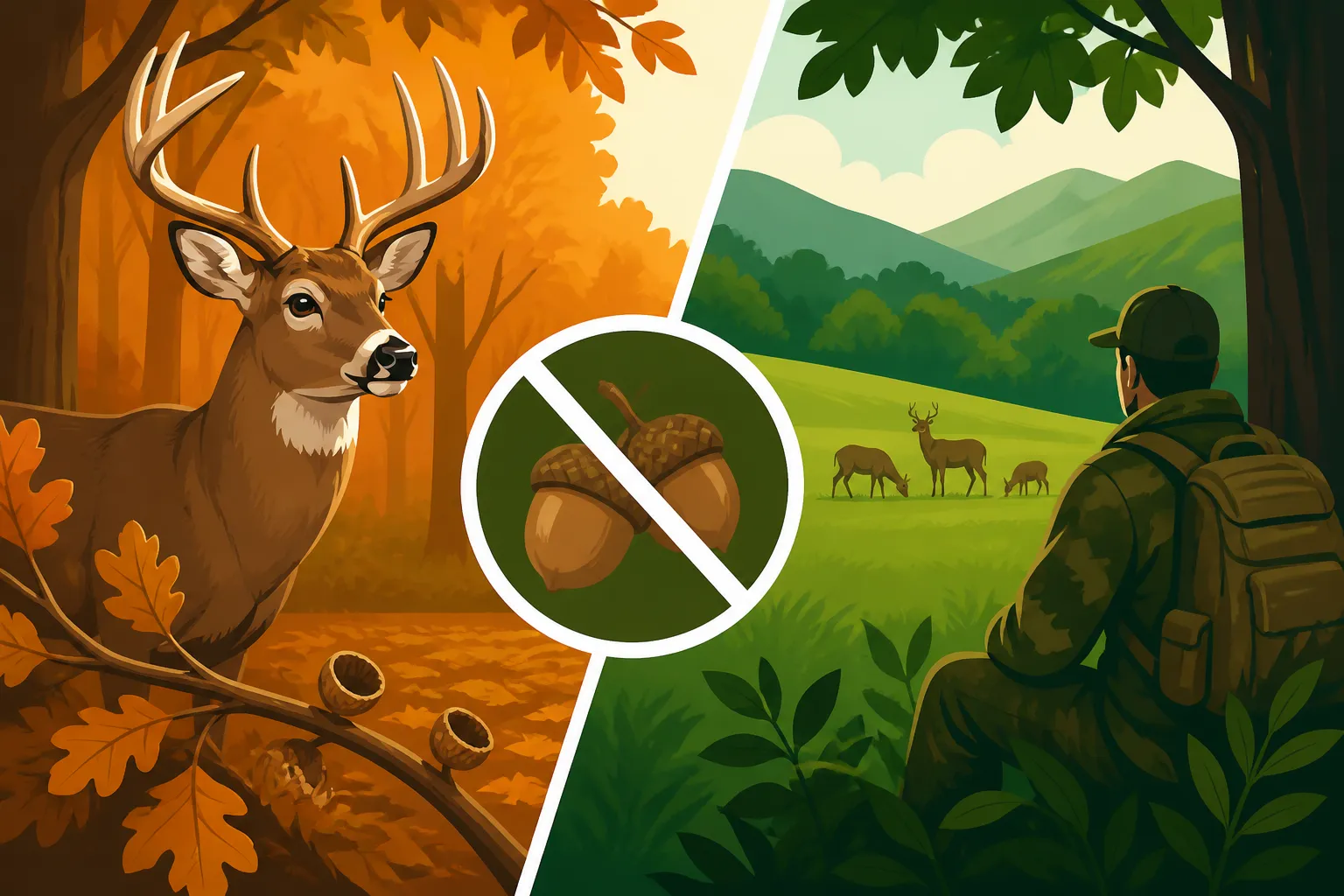
It's a familiar heartache for any Vermont deer hunter: you've spent months scouting, looking for those prime oak ridges, dreaming of a fat buck feasting on a carpet of acorns, only to find the forest floor barren. A poor acorn year can feel like it pulls the rug out from under all your careful planning, leaving you wondering where the deer have gone and how on earth you're going to fill a tag. But don't despair; this guide will walk you through understanding why deer patterns shift dramatically without their favorite fall food, how to pinpoint their alternative hangouts, and the tactical adjustments you'll need to make to find success.
Understanding the Deer's Dilemma: Why Acorns Matter So Much
When acorns, particularly from red oaks which are higher in fat and protein, are scarce, it’s not just a minor inconvenience for deer; it's a significant blow to their pre-winter survival strategy. These little nuts are packed with essential nutrients, providing a critical energy boost that deer rely on to pack on fat reserves needed to endure the harsh Vermont winter. Without this primary food source, their entire world gets turned upside down, and as hunters, we need to understand the ripple effect this has on their behavior.
The Nutritional Impact of Missing Mast
Imagine you're trying to save money for a big purchase, but your main source of income suddenly dries up. You'd have to work harder, look for other jobs, and maybe even take less desirable work to make ends meet. That's essentially what happens to deer when the acorn crop fails. Acorns provide a calorie-dense, easily digestible food source that minimizes the amount of energy deer need to expend foraging. They can simply stand in a productive oak flat, hoovering up nuts for hours. Without this, they're forced to spend significantly more time and energy searching for food, which directly impacts their health and ability to put on the crucial fat layers that protect them from the cold.
This nutritional deficit makes deer more vulnerable. Bucks, especially, need those calories to recover from the rut and grow their antlers. Does need them for gestation and to sustain themselves through winter. When acorns are sparse, deer often enter winter in poorer condition, which can lead to higher winter mortality, especially for fawns and older animals. They become less selective in their diet, often resorting to less nutritious browse simply to fill their stomachs.
Behavioral Shifts: Increased Movement and Dispersal
With their favorite cafeteria closed, deer don't just sit around moping; they start moving. A lot. Instead of congregating in predictable oak stands, they disperse widely, searching for any available food source. This increased movement is a double-edged sword for hunters. On one hand, deer are covering more ground, which might seem like a good thing because they're more likely to cross your path. On the other hand, their movements become far less predictable, making it harder to pattern them or set up on traditional travel corridors.
You'll notice a distinct lack of heavy deer sign in areas that would normally be torn up by deer feeding on acorns. Instead, you might find lighter, more scattered sign across a wider range. This dispersal means that the deer density in any one area drops, challenging hunters to cover more ground and constantly adapt. They might be visiting areas they wouldn't typically frequent in a good mast year, forcing you to think outside your usual hunting box and expand your scouting efforts dramatically.
Pinpointing Alternative Food Sources
When acorns are off the menu, deer turn to a wider array of alternatives. Our job as hunters is to identify these secondary, and sometimes tertiary, food sources and understand where and when deer will be utilizing them. This means becoming a meticulous detective, reading the landscape for subtle clues that indicate a deer's dining preference for the season.
Soft Mast and Browse
Beyond acorns, deer have a diverse palate, especially when forced to adapt. Soft mast, which includes fruits and berries, becomes incredibly attractive. Think about those old, abandoned apple orchards or even individual apple trees tucked away in the woods – deer will absolutely hammer these. Wild grapevines, dogwood berries, crabapples, and even certain types of wild cherries can become hotspots. These sources, while perhaps not as calorie-dense as acorns, offer quick energy and are eagerly sought after. Finding a productive wild apple tree in a poor acorn year can be like striking gold, turning an otherwise barren area into a whitetail magnet.
Then there's browse. Deer are primarily browsers, not grazers, meaning they prefer to eat the tender shoots, leaves, and twigs of woody plants. In a poor mast year, they lean much heavier on this. Look for areas with young saplings and regenerating clear-cuts where species like maple, oak, birch, and even hemlock or cedar offer palatable forage. These areas might not look like prime feeding grounds in a good acorn year, but they become vital when other options are scarce. Reading a Green Mountain Deer Yard will give you insights into understanding where deer concentrate their feeding efforts during lean times and colder weather, often near dense cover.
Agricultural Fields and Planted Food Plots
In agricultural regions like the Champlain Valley, a poor acorn crop means deer will put intense pressure on whatever crops are available. Standing cornfields offer both food and cover, especially later into the season. Deer will meticulously pick through harvested cornfields for dropped kernels. Alfalfa fields, soybean fields, and winter wheat plantings also become high-value targets. If you're hunting near active farmland, these fields, particularly at their edges where they meet thicker timber, will be prime locations. Consider also those dedicated food plots that landowners or clubs might have planted – brassicas, clover, or rye – these become incredibly attractive to deer searching for reliable sustenance.
The key here is observing which fields are being used and when. Deer often feed in agricultural fields under the cover of darkness, but during a poor mast year, you might see them venturing out earlier in the evening or staying later in the morning to get their fill. Pay attention to how these fields connect to bedding areas; the travel corridors between them will become heavily used. Understanding Hunting a Champlain Valley Dairy Farm Edge or Hunting a Standing Corn Field for Deer can give you a strategic advantage when focusing on these agricultural areas.
| Food Source Category | Examples | Typical Location in Vermont | Deer Preference in Poor Acorn Year | Hunter Strategy |
|---|---|---|---|---|
| Soft Mast | Wild apples, crabapples, wild grapes, dogwood berries, wild cherries | Abandoned orchards, old homesteads, clearings, forest edges, riparian zones | High (easily digestible sugars and carbs) | Scout specific trees/vines, set up downwind, target transition zones. |
| Browse | Maple, oak, birch, hemlock, cedar shoots and twigs | Young clear-cuts, regenerating timber, dense thickets, softwood swamps, logging roads | Moderate to High (essential bulk, especially for winter) | Focus on areas with young growth, fresh cuttings, transition lines between cover and browse. |
| Agricultural Crops | Standing/picked corn, alfalfa, soybeans, winter wheat, brassicas, clover | Farmland edges, open fields adjacent to timber | Very High (calorie-dense, readily available) | Hunt field edges, pinch points leading to fields, early morning/late evening sits. |
| Wetland Edges | Aquatic vegetation, tender shoots | Beaver flowages, marsh edges, creek bottoms | Low to Moderate (especially if other options are exhausted) | Consider these for late-season or during mild periods when other food is scarce. |
Adapting Your Scouting and Strategy
A poor acorn year demands a total recalibration of your scouting and hunting strategy. What worked last year might be completely ineffective this season. This is where the truly adaptable hunter shines, leveraging technology and old-fashioned legwork to piece together the new deer puzzle.
Intensive Pre-Season and In-Season Scouting
This isn't the year to rely on past knowledge alone. You need to hit the woods with a fresh perspective, especially during late summer and early fall. Start by checking your traditional oak flats. If they're barren, you know it's time to shift gears. This means intense Scouting Vermont Public Land Before Season, walking more ground, and covering diverse habitat types. Focus on areas you might have overlooked in previous years. Are there old apple trees deep in a forgotten corner of the woods? Is there a new clear-cut that's grown enough to provide ample browse?
During the season, your scouting needs to be continuous. Deer patterns will likely shift as alternative food sources are depleted or as hunting pressure increases. Look for fresh sign – tracks, droppings, rubs, and scrapes – but pay close attention to where they're concentrated around available food. Mapping tools, such as the ones found on GoHunt, are indispensable here. You can use their satellite imagery to identify potential apple orchards, agricultural fields, or recent timber cuts that might be holding deer. Mark every potential food source, then scout it on foot. The Vermont Fish & Wildlife Department's app can also be a useful tool for identifying public land boundaries and specific habitat features.
Leveraging Technology and Understanding Pressure
Trail cameras become even more valuable in a poor acorn year. Instead of placing them solely on major trails or scrapes, focus them strategically on alternative food sources. Place cameras on isolated apple trees, at the edges of agricultural fields, or in regenerating clear-cuts. Pay attention to the time of day deer are visiting these spots. If they're hitting them during daylight, you've found a potential setup. Cellular trail cameras, if you have coverage in the remote parts of the Northeast Kingdom or Green Mountains, can give you real-time intelligence, allowing you to adapt your hunting location on the fly without disturbing the area. Understanding Trail Camera Placement on Public Land is crucial to maximizing their effectiveness without creating undue disturbance.
Hunting pressure also plays a magnified role. When food is scarce, deer are already on edge, constantly searching for sustenance. Add human pressure to that, and they become even more wary and nocturnal. Be mindful of your entry and exit routes. Use the wind and thermals to your advantage, especially in the undulating terrain of the Green Mountains. Wind and Thermals in Steep Green Mountain Terrain will teach you how air currents move and how to approach your stand without being detected. If you find a promising food source, approach it cautiously, minimizing your scent and sound. Consider using a ground blind if you need to adapt your setup quickly to a new feeding area without leaving a heavy scent cone or disturbing existing bedding cover.
Hunting Tactics for Food-Scarce Environments
With a solid understanding of where deer are likely to be and how to find them, it’s time to fine-tune your actual hunting tactics. This often means moving away from passive "sit and wait" strategies and adopting a more proactive approach.
Targeting Transition Zones and Cover
In a poor acorn year, deer will prioritize security cover even more, often bedding very close to whatever limited food sources they can find. This means your focus should be on the transition zones between dense bedding cover and those alternative food sources. Look for thick cedar swamps, hemlock groves, brushy clear-cuts, or dense pockets of hardwoods that offer thermal cover and security. The trails leading from these thickets to a productive apple tree, an active browse area, or the edge of a cornfield are your key target zones. These are the funnels and pinch points that deer must use to get to food. Learning about Hunting a Funnel Between Two Woodlots can be incredibly effective when deer movements are concentrated by topography or cover.
Still-hunting or slow-stalking can be incredibly effective, especially in areas with moderate visibility. Instead of committing to a single stand for the entire day, move slowly through promising areas, observing, listening, and constantly checking for fresh sign. This allows you to cover more ground and potentially intercept deer that are actively foraging or moving between their bedding and feeding areas. Pay particular attention to areas where you'd expect to find Where Vermont Bucks Bed in Thick Cover, as these areas will be especially productive if they're near alternative food.
Extended Patience and Adapting to the Conditions
Hunting in a poor acorn year often requires extended patience and a willingness to adjust your schedule. Deer might not be on a regular "morning browse, midday bed, evening feed" routine. Their movements could be more sporadic and dictated by their immediate hunger. This might mean longer sits, especially during midday, as deer might be forced to move and feed during hours they'd typically be bedded down.
Also, be prepared for late-season opportunities. As winter approaches and even secondary food sources dwindle, deer will become even more concentrated on the remaining viable options, such as standing corn or accessible browse in sheltered areas. The colder it gets, the more vital those calories become, and deer will take greater risks to get them. This is when understanding Late-Season Food Sources for Vermont Whitetails becomes incredibly important. Don't be afraid to change your hunting location daily based on fresh sign, weather patterns, and observations from your trail cameras. The most successful hunters in these challenging years are those who are constantly learning and adapting, treating every hunt as a new puzzle to solve.
Disclaimer
Please be aware that hunting regulations and seasons in Vermont are subject to change. Always consult the most current Vermont Fish & Wildlife Department regulations before planning any hunting activity. This content is for informational purposes only and does not constitute legal advice. Safe and ethical hunting practices are paramount.