Working a Fall Flock Apart Statewide With a Bow
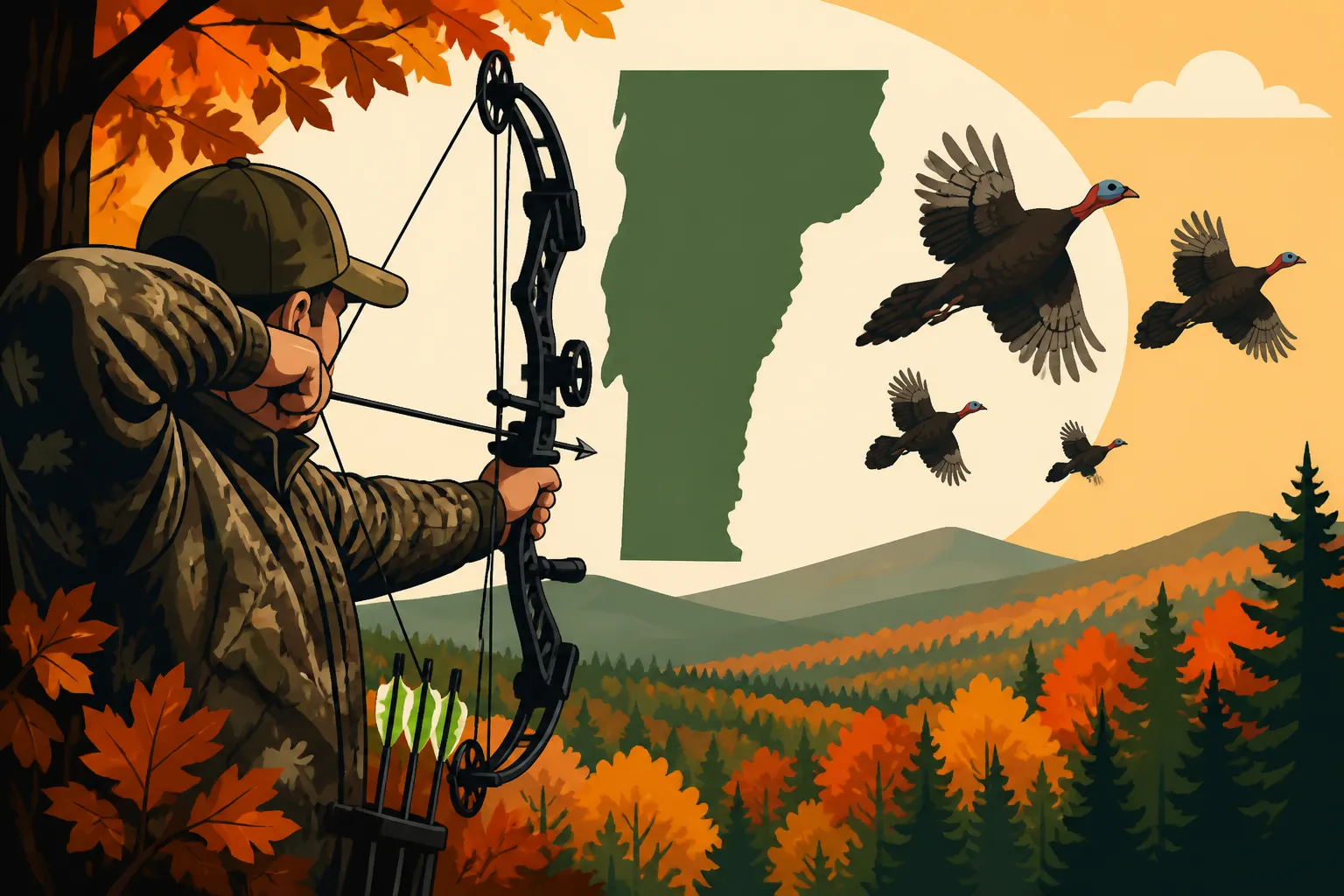
The crisp air of a Vermont autumn, the leaves turning brilliant hues of red and gold – it’s a magical time to be in the woods. But when it comes to chasing wild turkeys with a bow during the fall season, many hunters find themselves scratching their heads. Unlike the vocal, strutting gobblers of spring, fall flocks are often large, wary, and notoriously tight-lipped, making them incredibly tough to get into bow range. This comprehensive guide will break down the proven "break and scatter" method, offering a detailed approach to successfully hunt Vermont's fall turkeys with your archery gear.
Understanding Fall Turkey Behavior for Bowhunters
Fall turkeys behave quite differently than their spring counterparts, and recognizing these distinctions is the first step toward successful bowhunting in the autumn woods. Gone are the days of aggressive gobblers responding to every hen call; fall hunting requires a more nuanced approach, one that leverages the flock's social structure rather than their breeding instincts.
The Difference Between Spring and Fall Flocks
In the spring, turkeys are driven by the strong urge to breed. Gobblers are looking for hens, and hens are looking for suitable mates and nesting sites. This makes calling a key strategy, as you're essentially mimicking a potential partner. Gobblers will often come to calls, and hens can sometimes be lured in by aggressive hen sounds, either out of curiosity or rivalry. The birds are often solitary or in small groups focused on breeding activities.
Come fall, the entire dynamic shifts dramatically. Turkeys are now focused on survival: finding food, avoiding predators, and maintaining flock cohesion. Hens have raised their poults, and these young birds are still relatively dependent on the adult hens. Flocks are much larger, often comprised of multiple hens, their offspring from the spring, and sometimes even adult gobblers, though adult gobblers often form their own bachelor groups. This larger group dynamic creates a sense of safety in numbers, making them incredibly cautious. A fall flock is a formidable unit, and you're not trying to call a single, lovesick bird; you're trying to outsmart a collective intelligence. This is why the "break and scatter" method is so effective – it preys on their instinct to re-gather for safety.
Reading Flock Dynamics and Feeding Patterns
Successful fall turkey bowhunting hinges on your ability to observe and interpret the flock's behavior. These birds are constantly on the move, foraging for acorns, beechnuts, grains, and insects. They'll typically roost in tall trees, often over water or on prominent ridges, gathering at dawn before flying down to feed. During the day, they'll travel extensively, following food sources across a wide range.
As a bowhunter, your goal is to locate these feeding areas and identify their travel corridors. Pay close attention to how the birds interact within the flock. Are they spread out and quietly foraging, or are they bunched up and constantly vocalizing? Are the younger birds sticking close to the hens? Understanding these nuances helps you predict their movements and anticipate the best moment to make your move. For instance, a flock feeding intently in an oak stand might be less alert than one moving quickly through open timber. Knowing where they prefer to feed on certain days can be a game-changer. For example, in a year with a strong mast crop, you might find them consistently in specific oak or beech stands, while a poor mast year could push them towards agricultural fields or even residential areas looking for alternate food sources.
Scouting for Success Before You Hunt
You simply can't expect to stumble into fall turkeys with a bow and expect success. These birds are highly mobile, and getting into a position to execute the "break and scatter" without prior reconnaissance is a recipe for frustration. Thorough scouting is not just an advantage; it's absolutely essential.
Identifying Prime Roosting and Feeding Areas
Before the season even opens, or at least before your hunting day, you need to put in the legwork. Begin by identifying potential food sources. In Vermont, this means looking for mature oak and beech trees, which provide critical mast crops. Old apple orchards, abandoned farms with lingering grain fields, and even areas with wild berries can also be hot spots. Turkeys will follow the food, so finding where they're consistently feeding is your starting point. You're looking for fresh droppings, scratch marks in the leaves, and even dusting bowls where they've ruffled their feathers in dry dirt. These signs indicate current activity.
Once you’ve identified feeding areas, think about roosting sites. Turkeys prefer tall, sturdy trees, often pines or mature hardwoods, on a ridge line or near a water source. The same droppings and feathers you find on the ground can indicate where they've flown down from. If you can locate a consistent roost, you can plan your approach for first light, intercepting them as they fly down. Remember, the goal isn't to shoot them off the roost – that's often unethical and difficult with a bow – but to know their routine. Being able to predict their travel from roost to feeding area gives you an immense advantage. For more detailed insights into this process, check out our guide on Scouting Vermont Public Land Before Season.
Using Technology for Fall Turkey Scouting
In today's hunting world, technology can be a powerful ally. Mapping applications like GoHunt can be invaluable for identifying potential turkey habitat. With GoHunt, you can layer satellite imagery over topographical maps to pinpoint oak ridges, power lines, field edges, and water sources – all key features for turkey activity. You can mark potential roosting sites, feeding areas, and travel corridors, essentially building a virtual roadmap of your hunting area. This allows you to scout more efficiently, even from your couch, and significantly reduces wasted time in the woods.
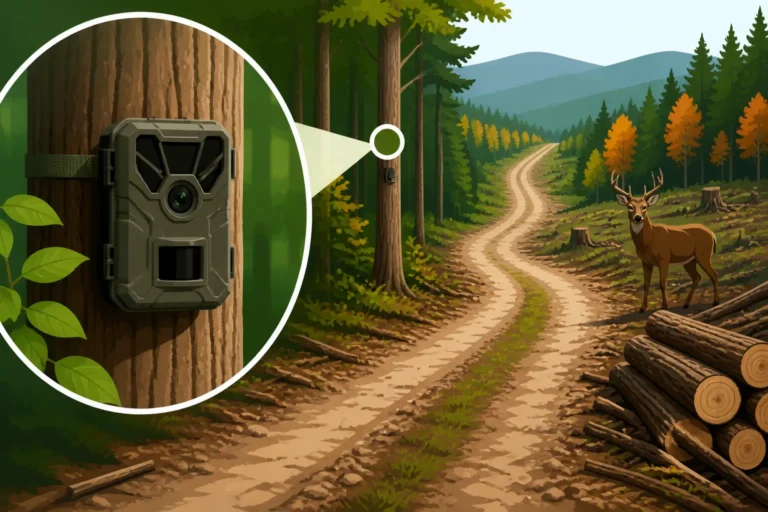
Beyond mapping apps, don't underestimate the power of trail cameras. While traditional wisdom might suggest they're more for deer, strategically placed cameras near known food sources or travel funnels can provide real-time intelligence on flock size, composition, and movement patterns. A few weeks before the season, or even during, a cellular trail camera can tell you if turkeys are still frequenting a specific area, saving you valuable hunting time. Remember to place cameras discreetly and follow all regulations regarding their use, especially on public lands. Another excellent resource for understanding the terrain is to look at Reading Aerial Photos for Green Mountain Deer, which can easily be applied to turkey habitat as well.
Executing the Break and Scatter Method
The "break and scatter" is the bread and butter of fall turkey hunting with a bow. It’s a deliberate strategy that exploits the turkey's instinct to regroup once separated, providing you with a golden opportunity for a close-range shot. But it requires patience, precise execution, and a good understanding of turkey behavior.
The Art of Deliberate Scattering
The first step is to locate a flock. This can be done by simply walking and listening for their distinctive "kee-kee" run calls or clucks as they forage, or by using locator calls like an owl hoot or crow call to elicit a shock gobble (though less common in fall). Once you've found a flock, your objective is to rush them, causing them to scatter in all directions. Don't be timid; you need to be aggressive enough to genuinely disperse them. Sprint towards them, yell, wave your arms – make as much noise and commotion as possible. The goal is to send every bird flying or running in a different direction.
Why does this work? Turkeys are social animals, and being separated from the flock makes them feel vulnerable to predators. Their immediate instinct is to get back together. The younger birds, especially the poults, will start calling almost immediately with desperate "kee-kee" runs or soft clucks, trying to locate the matriarch hens. This distress vocalization is your cue. The more thoroughly you can scatter them, the better, as it creates more confusion and a stronger desire to re-group, making your subsequent calling more effective. For more on this specific tactic, our article on Breaking Up a Fall Turkey Flock offers additional insights.
Setting Up for the Re-Gather
After you've successfully scattered the flock, the real archery hunt begins. Immediately find a good hiding spot, preferably with some natural back cover like a large tree, brush pile, or even a ground blind. You need to be completely concealed, as turkeys have incredible eyesight, especially when they're on high alert after being scattered. If possible, set up near the spot where you broke them, as this is often where they'll try to re-gather. Look for natural clearings or open lanes that offer a good shooting window.
Once you’re set up, remain absolutely still and silent for 15-30 minutes. Let the woods calm down. During this time, the scattered birds will begin to vocalize, sending out "kee-kee" runs, clucks, and lost hen calls. This is your signal to start calling. Position yourself so that if a bird comes in, it's broadside or slightly quartering away, offering a clean shot opportunity. If you're on public land, consider utilizing a portable ground blind. Many hunters find success by Using a Ground Blind on Public Land and taking the time to Brushing In a Blind on a Field Edge to create optimal concealment.
Calling Strategies for Scattered Birds
Calling in fall turkeys after a scatter is a completely different ballgame than spring gobbler hunting. You're not trying to entice a lovesick tom; you're playing on the flock's deep-seated social instincts and their need for security.
Emulating the Lost Poult or Hen
Once the chaos of the scatter subsides and you’re settled into your hidden position, it's time to start calling. Your primary objective is to mimic the sounds of a lost poult or a concerned hen trying to reassemble the flock. The "kee-kee" run is your most powerful tool. This is a series of high-pitched, plaintive whistles that sounds like a lost young turkey. Practice this call until it sounds natural and desperate.
Start with soft, infrequent "kee-kee" runs, giving scattered birds time to respond. Don't overcall; let the turkeys tell you what they want. You might also mix in some soft clucks and yelps, mimicking a hen trying to call her brood back together. The key is to sound like one of them, someone who is also trying to re-establish contact. Listen intently for responses. Often, a single "kee-kee" from a distance will be answered by several other turkeys, giving you a bead on their locations and direction of travel. When compared to Calling a May Gobbler Off the Roost, where you're often trying to sound like a seductive hen, fall calling focuses on distress and re-grouping.
Adjusting Calls for Different Situations
Not every scatter is the same, and not every turkey responds identically. You'll need to be flexible and adapt your calling to the specific situation. If you scattered a group of mostly adult hens and gobblers, they might respond better to more mature hen yelps and clucks. If you scattered a group dominated by young-of-the-year birds, the "kee-kee" run will be far more effective.
Table: Fall vs. Spring Turkey Calling Focus
| Calling Aspect | Fall Turkey Bowhunting (Post-Scatter) | Spring Turkey Hunting (Gobbler Focus) |
|---|---|---|
| Primary Goal | Re-grouping scattered flock, easing distress | Attracting a gobbler looking to breed, rival hens |
| Key Calls | Kee-kee run (distress), soft clucks, plaintive yelps | Gobbles, aggressive hen yelps, clucks, purrs (often louder) |
| Volume/Frequency | Start soft, infrequent; increase as birds get closer or respond | Variable; can be aggressive/loud to challenge or soft to entice |
| Target Audience | Lost poults, worried hens, any scattered flock member | Gobblers (mostly), sometimes curious hens |
| Patience Level | High; birds may take a long time to re-group | Moderate; gobblers can come in quickly or hang up |
| Decoy Effectiveness | Less common, but could use jake/hen if confident in bird movement | Very effective (jake/hen, gobbler) to draw attention and aggression |
Listen to how they respond. If they come in fast and hard, maintain your calling cadence. If they are tentative or hang up, become quieter, more subtle, and patient. Sometimes, a long period of silence followed by a single, soft cluck is all it takes to convince a wary bird to take those last few steps into bow range. Being able to read their body language and adjust your calls accordingly is a critical skill for any fall turkey bowhunter.
Shot Placement and Ethical Considerations with a Bow
Getting a turkey into bow range is a significant achievement. Taking an ethical shot, however, is paramount. Turkeys are smaller than deer, and their vital organs present a different target, requiring precise shot placement for a quick, clean kill.
Targeting the Vitals for a Clean Kill
When bowhunting turkeys, you have two primary vital areas to target: the body and the head/neck. For body shots, the ideal target is a broadside bird, aiming for the area just above the legs, slightly forward of the wing butt. This shot targets the lungs and heart. A solid hit here will drop a bird quickly. A quartering-away shot is also viable, aiming for the opposite shoulder pocket. Avoid quartering-to shots, as the vitals are shielded by bone and muscle.
Many experienced turkey bowhunters prefer a head or neck shot. This requires specialized broadheads designed to be devastating on impact, such as a guillotine-style broadhead. While this shot is incredibly effective for instant lights-out kills, it is also a much smaller target, demanding absolute precision and confidence in your shot. If you are not completely confident in your ability to hit this small target, stick to the body shot. For discussions on broadhead choices, our general guide on Best Broadhead for Vermont Whitetails can offer some foundational knowledge, but remember to research specific broadheads designed for turkeys if going for head/neck shots.
Patience and Follow-Up
The moment of truth can be exhilarating, but it's crucial to maintain your composure. Wait for the bird to present a clear, unobstructed shot. Turkeys are notorious for strutting, walking around, and generally not staying still. Don't rush it. Let them settle down, maybe even feed for a moment, and offer that perfect window.
After the shot, watch the bird intently. If it flies off, mark the last spot you saw it. If it runs, mark the direction. Turkeys, especially those hit with a body shot, can sometimes run or fly a surprising distance. Give the bird time. A good rule of thumb is to wait at least 15-20 minutes for a body-shot bird before initiating a search. This allows the bird to expire quietly. When you begin your search, look for feathers, blood, and any disturbance in the leaves. Follow up slowly and methodically. If you don't find the bird immediately, expand your search in widening circles. Losing a turkey is heartbreaking, so be diligent in your recovery efforts. Remember, patience extends beyond the shot to the recovery.
Gear Considerations for Fall Archery Turkeys
Successfully bowhunting fall turkeys in Vermont means having the right equipment. From head to toe, your gear needs to provide concealment, comfort, and reliability in the diverse conditions of a New England autumn.
Camouflage and Concealment
Turkeys possess some of the sharpest eyesight in the animal kingdom, capable of detecting the slightest movement or unnatural outline. Therefore, your camouflage is paramount. Opt for a pattern that breaks up your silhouette effectively, blending with the dense hardwoods and softwoods of Vermont. Patterns that mimic tree bark, fallen leaves, or dark shadows are excellent choices. A full head net and gloves are absolutely non-negotiable, as uncovered skin will shine brightly and be easily detected.
Think about layering your clothing. Fall mornings can be chilly, but midday can warm up, especially when you're moving aggressively to scatter a flock. A good base layer, a mid-layer for warmth, and a quiet, breathable outer layer are ideal. Crucially, ensure your outer layers are made of quiet fabrics that won't rustle or make noise when you draw your bow or move slightly. Remember, even a slight shift in your position can be enough to spook a wary fall turkey.
Bow and Broadhead Selection
Your bow setup for fall turkeys doesn't need to be drastically different from your deer setup, but there are a few considerations. Ensure your bow is perfectly tuned and shooting consistently. Accuracy is key, especially given the smaller kill zone of a turkey.
When it comes to broadheads, you have a couple of choices, each with its pros and cons:
- Fixed-Blade Broadheads: These are reliable, durable, and generally offer excellent penetration. For body shots, a good fixed-blade broadhead with a wide cutting diameter will do the job effectively. Ensure they are razor-sharp.
- Mechanical Broadheads: These open upon impact, creating a larger cutting diameter, which can be advantageous for internal damage on a body shot. However, some mechanicals can fail to deploy properly on lighter-boned animals like turkeys or if they hit heavy feathers. Choose a reliable model with a proven track record.
- Head/Neck Specific Broadheads: As mentioned earlier, broadheads like those from the Gobbler Guillotine line or similar designs are specifically made for head and neck shots. They have a very large cutting diameter, often several inches, to ensure contact with the vitals of the head/neck. These are highly specialized and should only be used if you are extremely confident in your shot placement.
Regardless of your choice, ensure your broadheads are legal for hunting turkeys in Vermont and that you practice with them extensively. Test them with your field points to ensure they fly identically. This practice is crucial for consistent accuracy when the moment of truth arrives. Our detailed guide on Bowhunting Vermont's Expanded Archery Season can offer additional insights into general archery setups that will serve you well in the fall turkey woods.
Navigating Vermont's Diverse Fall Turkey Habitats
Vermont offers a wide array of habitats where fall turkeys roam, and understanding how to approach each one will significantly boost your success rate. From the rolling farmlands to the dense mountain timber, each presents unique opportunities and challenges for the archery hunter.
Hunting Champlain Valley Dairy Farm Edges
The Champlain Valley, with its mix of open dairy farms, cornfields, and woodlots, can be a turkey hunter's dream. Turkeys often frequent these agricultural areas, especially after harvest, to glean leftover grains. They'll use the woodlot edges for cover, feeding out into fields during the day and returning to the timber to roost.
When hunting these areas, concentrate your scouting efforts on the transition zones – where fields meet woods. Look for tracks and droppings along fencerows and in the timber closest to the fields. The key here is to observe the birds from a distance. Often, you can spot a flock feeding in a field. This is an ideal scenario for the "break and scatter" method. Identify their travel route back into the woods, then make your move. Once scattered, set up quickly along the field edge or inside the timber line, using a natural blind or pop-up. Turkeys will often re-gather quickly if they feel exposed in the open. Our guide on Hunting a Champlain Valley Dairy Farm Edge offers more specific tactics for this unique terrain.
Still-Hunting Green Mountain National Forest Timber
Hunting turkeys in the vast, rugged timber of the Green Mountain National Forest is a different beast entirely. Here, you won't find expansive fields; instead, you'll navigate dense forests, steep terrain, and thick undergrowth. Success in this environment often comes down to covering ground quietly and efficiently – a tactic known as still-hunting.
When still-hunting, move slowly and deliberately, stopping frequently to scan your surroundings and listen for subtle turkey sounds. Pay close attention to ridge lines, saddles, and benches, as these are natural travel corridors. Look for signs of scratching under oak and beech trees, indicating recent feeding. If you locate a flock, the challenge is getting close enough to initiate the scatter without being detected. This might involve a stealthy crawl or a patient stalk. Once scattered, setting up is critical. Utilize the abundant cover – large rocks, fallen logs, or thick evergreens – to melt into your surroundings. The calls of lost poults will echo through the quiet timber, offering a unique opportunity to draw them back into bow range. More about navigating this terrain can be found in Still-Hunting Green Mountain National Forest Timber.
The Northeast Kingdom's Remote Woodlots and Clear-Cuts
The Northeast Kingdom presents some of Vermont's most remote and wild hunting opportunities. Its mix of dense conifer stands, mixed hardwoods, and regenerated clear-cuts provides excellent turkey habitat, but also demands a more rugged approach from the hunter. Turkeys here are often less pressured but can be even more wary due to the inherent wildness of the landscape.
When targeting turkeys in the Northeast Kingdom, focus on the edges of clear-cuts and areas with diverse tree species. Clear-cuts, especially those that are a few years old, offer excellent brooding habitat and abundant insects for poults. Mature hardwoods nearby will provide the crucial mast crops. Utilize logging roads and trails for access, but be prepared to venture off the beaten path. These birds might be spread out over larger areas, making initial location a challenge. Once found, be prepared for a longer pursuit after the scatter, as they may cover more ground before attempting to re-group. Using mapping tools like GoHunt can be especially helpful in these vast areas to mark clear-cut boundaries and potential food sources. Patience and persistence are key when chasing these wild birds.
Permits, Regulations, and Ethical Hunting in Vermont
Before heading into the field with your bow for fall turkeys, it's absolutely crucial to understand Vermont's specific hunting regulations. Ignorance of the law is never an excuse, and ethical hunting practices ensure the future of the sport.
Understanding Vermont's Fall Turkey Permit Rules
To legally hunt fall turkeys in Vermont, you'll need the appropriate licenses and permits. This typically includes a Vermont hunting license and a specific turkey permit. It's essential to check the current year's regulations, as dates and rules can change. You can find up-to-date information on the Vermont Fish & Wildlife Department website. They are constantly updating their resources, and utilizing their official app for checking game and regulations is highly recommended.
Make sure you understand the specific season dates for archery, which are distinct from shotgun or rifle seasons. Our article Vermont Fall Turkey Permit Rules offers a detailed breakdown of what's required. Always carry proof of your licenses and permits while hunting, as well as a form of identification. Being prepared not only keeps you legal but also shows respect for the resource and the regulatory bodies.
Adhering to Vermont's Fall Turkey Bag Limit
Vermont has specific bag limits for fall turkeys, and these can sometimes vary based on the Weapon Management Unit (WMU) you are hunting in, though the statewide archery season generally has a consistent limit. For the statewide archery window, hunters are typically allowed a specific number of birds, regardless of sex. However, it's critical to verify the current year's exact regulations to avoid any infractions.
For residents, Vermont generally allows a more generous bag limit across the spring and fall seasons combined. For example, a resident might be able to take two birds in the spring and an additional bird or two in the fall. Always double-check the specifics for the current year. Once you harvest a bird, remember the reporting requirements. You'll need to report your turkey harvest through the Vermont Fish & Wildlife Department's online reporting system or designated check stations within a specific timeframe. Failing to report your harvest is a violation and deprives wildlife managers of critical data needed to manage the turkey population effectively. For a full breakdown of what you can harvest, refer to our article on Vermont Fall Turkey Bag Limit.
Ethical Considerations Beyond the Regulations
Beyond the written laws, ethical hunting is about respecting the animal, the land, and your fellow hunters. This includes:
- Shot Selection: Only take shots that are within your effective bowhunting range and offer a high probability of a clean, humane kill. Pass on marginal shots, even if it means going home empty-handed.
- Property Respect: If hunting on private land, ensure you have explicit permission and always leave the property as you found it, or better. If hunting public land, be mindful of other users – hikers, bird watchers, and other hunters.
- Game Recovery: As discussed, make every effort to recover any animal you shoot. This is a fundamental ethical responsibility.
- Fair Chase: Uphold the principles of fair chase, meaning giving the animal a reasonable chance. The "break and scatter" method is a legitimate fair chase tactic because it relies on hunter skill and the turkey's natural instincts, not technological advantage.
By adhering to both the letter and the spirit of these regulations and ethical guidelines, you ensure that Vermont's wild turkey resource remains healthy and accessible for generations of hunters to come.
Disclaimer
Please note: Hunting regulations and seasons can change. Always consult the official Vermont Fish & Wildlife Department website or their latest hunting guide for the most current and accurate information before planning your hunt. Safety is paramount; ensure you adhere to all hunter education and safety requirements.