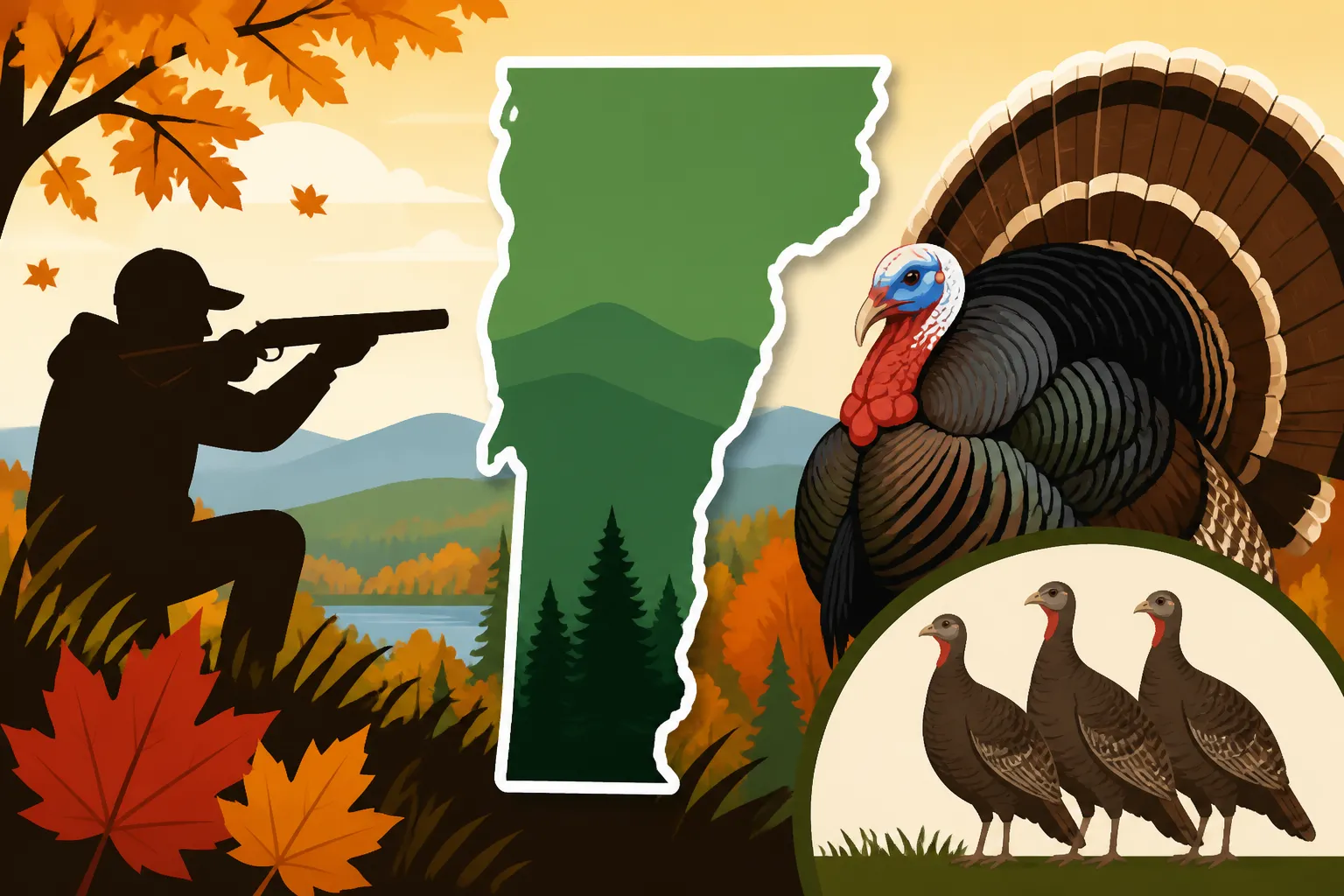
Vermont Fall Turkey Bag Limit
Navigating the specifics of Vermont's fall turkey hunting regulations can sometimes feel like trying to pinpoint a lone gobbler in a dense October woodlot – a real challenge with a lot of potential for confusion. Between statewide archery seasons and limited shotgun zones, understanding the exact bag limit is crucial for any hunter. This comprehensive guide will meticulously break down Vermont's fall turkey bag limits, ensuring you're fully informed and ready for a successful and legal hunt.
Understanding Vermont's Fall Turkey Hunting Framework
The Green Mountain State takes a nuanced approach to managing its wild turkey population, especially when it comes to fall hunting. Unlike the spring season where gobblers are the primary target and residents enjoy a two-bird limit, the fall season is geared towards different management objectives and offers a different set of rules. This difference can often trip up even experienced hunters who are used to other states' more uniform regulations.
The Rationale Behind Varying Limits
Vermont's Fish & Wildlife Department doesn't just pull bag limits out of thin air; there's a carefully considered scientific rationale behind every decision. The varying limits are primarily a tool for population management and conservation, reflecting the health and density of wild turkey populations across different regions of the state. For instance, areas like the Champlain Valley or parts of southern Vermont might support healthier, more numerous turkey flocks due to better habitat and milder winters. In contrast, higher elevations or the more remote reaches of the Northeast Kingdom might have sparser populations.
By setting specific limits and designating certain WMUs (Wildlife Management Units) for different hunting methods, the state can exert finer control over harvest numbers. This precision helps prevent overharvesting in vulnerable areas while still providing ample opportunity in robust ones. Annual harvest data, combined with population surveys and brood success rates, continuously inform these decisions, ensuring that Vermont's healthy wild turkey numbers remain strong for generations to come. It’s all part of a larger, long-term wildlife management strategy that seeks to balance hunter opportunity with sustainable populations.
Key Seasons for Fall Turkey Hunting
When it comes to fall turkey hunting in Vermont, you're essentially looking at two distinct periods: the statewide archery season and a more localized shotgun season. The differences between these two are significant and directly impact where, when, and how you can pursue a fall bird, as well as what your bag limit will be.
The archery season generally kicks off in early October and runs for a good stretch, offering bowhunters a generous window to find their bird. This season is truly statewide, meaning if you have a fall turkey permit and an archery license, you can hunt anywhere in Vermont where turkey hunting is permitted. It's a fantastic opportunity for those who enjoy the challenge of Hunting the Statewide Fall Archery Turkey Season.
The shotgun season, on the other hand, typically begins later in October and is much shorter, usually lasting only a few days. Crucially, it's not statewide. Only specific WMUs are open for shotgun turkey hunting during this window, reflecting localized population dynamics and management goals. Always double-check the current year's regulations for exact dates and open WMUs, as these can shift slightly from year to year. Having a clear understanding of these seasons is the first step in ensuring you're legally prepared for your hunt.
Statewide Archery Versus Shotgun WMUs: What You Need to Know
This is where many hunters find themselves scratching their heads. Vermont's approach to fall turkey hunting isn't a "one size fits all" situation, and the distinction between archery and shotgun zones is paramount for staying within the law and understanding your bag limit.
The Statewide Archery Opportunity
For those who love the close-quarters challenge of bowhunting, Vermont's fall archery turkey season is a fantastic opportunity. The great news for archers is that this season is truly statewide. This means that with your valid hunting license and fall turkey permit, you can pursue turkeys with a bow and arrow in any of Vermont's WMUs that are open to hunting. This wide-open access provides incredible flexibility, allowing you to chase birds from the Champlain Valley lowlands all the way up into the Green Mountains.
The bag limit for the fall archery season is consistently one wild turkey of any sex. This "any sex" designation is a key difference from the spring season, where only bearded birds (typically gobblers) are legal. This means a hen or a jake is fair game during the fall archery season, offering more opportunities. Many archers find this season particularly rewarding for the chance to spot and stalk or call in a fall flock. Tools like the GoHunt app can be incredibly useful here, helping you identify public land access and scout potential turkey roosts or feeding areas across the entire state. They offer detailed mapping layers that can show you property boundaries and likely turkey hangouts, making your Hunting the Statewide Fall Archery Turkey Season efforts much more productive.
Navigating Shotgun-Legal WMUs and Their Specific Limits
Now, let's talk shotguns. While archery is statewide, fall shotgun turkey hunting is much more restrictive. Only certain WMUs are designated as "shotgun-legal" for a very limited period, typically a few days in late October. This is a critical point that cannot be overstated: if you intend to hunt fall turkeys with a shotgun, you must confirm that you are hunting in an authorized WMU for that season.
The list of Which WMUs Allow Fall Shotgun Turkey Hunting can vary annually, but generally, these are areas with robust turkey populations that can sustain additional harvest pressure. Examples might include WMUs like C, D, F, I, J, L, M, and O, which frequently see fall shotgun seasons, particularly in regions with more agricultural land and consistent turkey numbers. Conversely, many northern and eastern WMUs with lower turkey densities typically remain archery-only.
The bag limit for shotgun season within these open WMUs is also typically one wild turkey of any sex. Just like archery season, you can harvest either a hen or a jake. It's vital to consult the current Vermont Hunting & Trapping Guide or the Vermont Fish & Wildlife Department's website each year before you head out, as these zones and dates are subject to change. Again, services like GoHunt provide up-to-date regulatory information and interactive maps that can instantly tell you if your chosen hunting area is open for fall shotgun turkeys, saving you a potential headache and ensuring you're compliant with Vermont Fall Turkey WMU Rules.
Resident and Non-Resident Bag Limits
A common question that often arises, especially for hunters new to Vermont or those who primarily hunt spring turkeys, is whether the fall bag limit differs between residents and non-residents. It's a valid concern, given that some states do have different regulations, and Vermont itself has different spring turkey limits for residents.
Identical Opportunities for All Hunters
The good news, and a point of clarity for everyone, is that Vermont’s fall turkey bag limit is identical for both residents and non-residents. Regardless of whether you live in the Green Mountain State or are traveling from afar, the limit remains one wild turkey of any sex during the fall season, whether you are hunting with archery equipment or in a shotgun-legal WMU.
This uniformity in bag limits simplifies things greatly, as you don't need to worry about different quotas based on your residency status once you're in the field. The focus then shifts entirely to understanding the season dates, legal methods, and specific WMU designations for shotgun hunting, rather than parsing out residency-based harvest restrictions. It's a level playing field once you've purchased the necessary permits. While the permit cost for non-residents will be higher, the hunting opportunity itself is the same. Understanding all aspects of Vermont Nonresident Turkey Permit Cost is important for those visiting the state.
Permit Requirements for Fall Turkey
While the bag limit might be consistent for everyone, acquiring the proper permits is non-negotiable. To hunt fall turkeys in Vermont, every hunter, resident or non-resident, must first possess a valid Vermont hunting license. On top of that, you'll need to purchase a specific Vermont Fall Turkey Permit. This permit is separate from a spring turkey permit, meaning if you hunted in the spring, you’ll still need to acquire a new one for the fall season.
These permits can be conveniently purchased online through the Vermont Fish & Wildlife Department's licensing portal, or in person at any authorized license agent across the state. It's generally a straightforward process, but it's always wise to secure your permits well in advance of the season opener to avoid any last-minute stress. Keep in mind that a valid archery license is also required if you plan to hunt with a bow, and if you're targeting migratory birds like waterfowl, there are additional stamps and certifications needed beyond your base hunting license. Having your physical or digital proof of license and permit with you while afield is not just good practice, it's the law. Apps like GoHunt can also act as a convenient digital wallet for your licenses, though always check if a physical copy is required in specific situations.
Important Regulations Beyond the Bag Limit
Beyond simply knowing your bag limit, a successful and legal fall turkey hunt in Vermont requires an understanding of several other key regulations. These rules are in place to ensure fair chase, promote hunter safety, and support robust wildlife management practices. Overlooking any of these can quickly turn a memorable hunt into a regrettable one.
Legal Methods and Equipment
Vermont is quite specific about the legal methods and equipment for turkey hunting, both in spring and fall. For archery season, you can use traditional bows, compound bows, and crossbows. There are minimum draw weight and arrow length requirements, so always consult the current regulations booklet. Broadheads must be fixed or mechanical and have a minimum cutting width. Shotgun hunters, on the other hand, are restricted to shotguns no larger than 10 gauge and no smaller than 20 gauge. The use of shot sizes larger than #2 or smaller than #8 is prohibited. Rifles are not permitted for turkey hunting in Vermont, nor are electronic calls. Decoys are allowed and can be very effective when Breaking Up a Fall Turkey Flock, especially when hunting a fall flock that has scattered.
Understanding these equipment specifics is crucial. Trying to use an illegal weapon or ammunition can result in hefty fines and the loss of hunting privileges. Always ensure your gear complies with state law before you head into the woods.
Reporting Your Harvest
This is a step that cannot be skipped, and it’s critical for effective wildlife management. Every single wild turkey harvested in Vermont, whether in spring or fall, must be reported to the Vermont Fish & Wildlife Department. This mandatory reporting provides invaluable data to biologists, helping them monitor population trends, assess harvest pressure, and make informed decisions about future regulations, including bag limits and season structures.
You generally have a specific timeframe, often within 48 hours or by the close of the season, to report your harvest. This can typically be done online through the Vermont Fish & Wildlife Department's website, via a dedicated phone line, or by visiting an authorized big game reporting station. The online reporting system is usually quick and efficient, asking for details such as the WMU where the bird was harvested, the date, and the sex of the bird. Make sure you understand the exact requirements for Vermont Turkey Checking Requirements to avoid any penalties. Missing this step, even if you’ve harvested legally, is a violation and can lead to fines.
Ethical Considerations and Sportsmanship
Beyond the legal framework, a true Vermont hunter always upholds a strong ethical code and commitment to sportsmanship. This means striving for a clean, humane shot at all times, ensuring the bird is recovered quickly and efficiently. It means respecting private landowners and their property – always obtaining permission before hunting private land, and leaving gates as you found them.
Good sportsmanship also extends to your interactions with fellow hunters. Public land in Vermont can be busy, especially during popular seasons. Being mindful of other hunters, maintaining safe distances, and demonstrating courtesy contributes to a positive hunting experience for everyone. The beauty of Hunting the Statewide Fall Archery Turkey Season or any other season is not just about the harvest, but about the experience, the connection to nature, and the responsible pursuit of game. Adhering to these ethical principles ensures that hunting remains a respected tradition in Vermont.
| Fall Turkey Season Type | WMU Applicability | Bag Limit (Per Hunter) | Legal Methods (Primary) |
|---|---|---|---|
| Archery Season | Statewide | One Wild Turkey (Any Sex) | Bow (Traditional, Compound, Crossbow) |
| Shotgun Season | Specific WMUs Only | One Wild Turkey (Any Sex) | Shotgun (20, 12, 16, 10 gauge) |
Disclaimer
Please remember that hunting regulations, season dates, and bag limits are subject to change. While this guide provides comprehensive information, always consult the official Vermont Fish & Wildlife Department website or the current year's Vermont Hunting & Trapping Guide for the most accurate and up-to-date regulations before heading afield.