Brushing In a Blind on a Field Edge
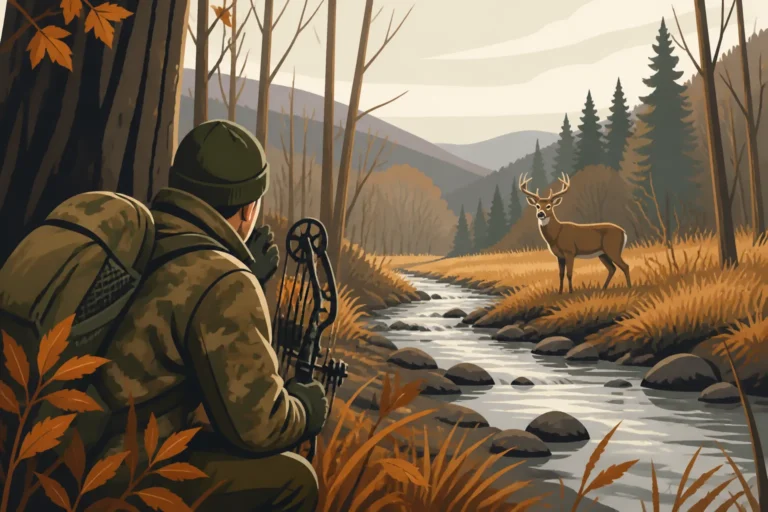
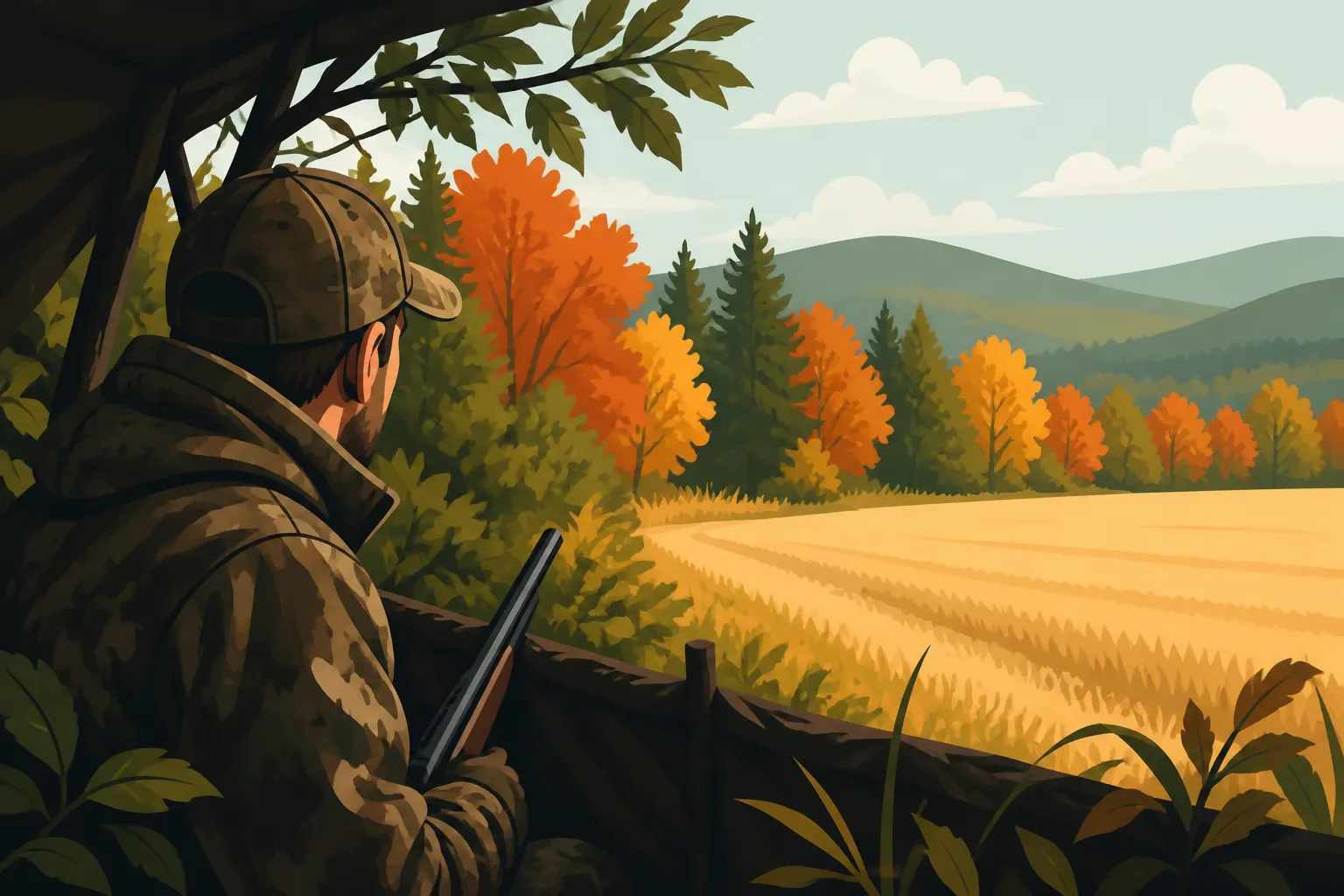
Hunting over field edges in Vermont can be incredibly productive, drawing deer out of thick cover for feeding opportunities, but it also presents a significant challenge: staying completely hidden from ever-wary whitetails in wide-open spaces. Nothing spooks a mature buck faster than catching a flicker of movement or an unnatural silhouette. This guide will walk you through the art of brushing in a ground blind on a field edge, ensuring you become an invisible part of the landscape and drastically increase your chances of success.
Why Field Edge Blinds Are Essential for Vermont Hunters
Hunting the transition zones between dense cover and agricultural fields or food plots is a classic strategy, and for good reason. Deer naturally gravitate to these edges, especially in the late afternoon and early morning, seeking sustenance or simply traveling between bedding and feeding areas. However, these open areas also mean greater visibility, making hunter concealment paramount.
The Challenge of Exposed Hunting Positions
Imagine a big, mature Vermont buck, his senses on high alert. He’s spent years avoiding predators, and he knows what looks out of place. Stepping out of the woods and trying to hide behind a few sparse saplings near a cornfield often results in a quick snort and a disappearing white tail. Field edges, by their very nature, expose you to long sightlines. Deer can spot an unbrushed ground blind from hundreds of yards away, especially if it's placed carelessly against a uniform backdrop. This is where many hunters make a critical mistake, thinking a store-bought camo pattern is enough. It rarely is. The unnatural shape and color deviation from the local flora are dead giveaways. Moreover, human scent can linger, and any movement inside a blind that isn't completely integrated into its surroundings is easily detected.
Maximizing Concealment in High-Traffic Areas
Properly brushing in a blind isn't just about throwing a few branches on top; it's about transforming a manufactured object into an organic part of the environment. In areas like the Champlain Valley, where you might be hunting a vast dairy farm edge or a field of standing corn for deer, absolute concealment is non-negotiable. Deer use these edges as travel corridors, and you want to be right in the thick of their movement without them ever knowing you're there. By meticulously weaving natural vegetation into and around your blind, you break up its outline, eliminate sharp angles, and create a seamless transition from your hide to the surrounding cover. This level of detail allows you to be much more aggressive with your setup location, potentially moving closer to those hot entry routes through a cut cornfield or funnels between two woodlots that deer regularly use.
Choosing the Right Location and Blind Type
Before you even think about cutting branches, the most crucial step is selecting the perfect spot. A well-brushed blind in a poor location is still a poor location. Conversely, even a perfectly hidden blind won’t help if deer aren’t using the area.
Identifying Key Field Edge Funnels and Crossings
Spend time scouting. This isn't just a casual walk; it's a serious investigation. Look for pinch points, natural funnels created by terrain or vegetation, and areas where deer trails converge as they enter or exit a field. Are there specific corners of a field where deer frequently stage before moving out into the open? Are there ditches, creek bottoms, or fence lines that offer natural cover for deer movement parallel to the field edge? Pay close attention to subtle changes in elevation or cover that might concentrate deer movement.
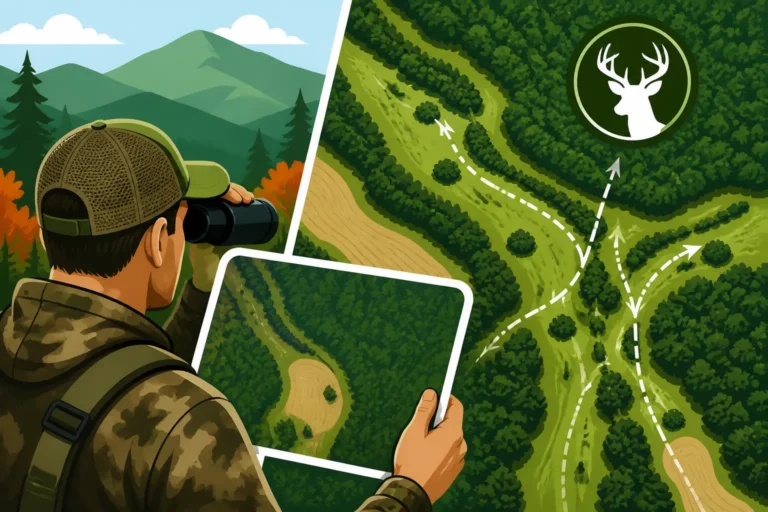
When scouting, use tools like aerial photos for green mountain deer to identify these travel corridors and potential ambush points from a bird's-eye view. Notice where the dense timber meets the open field, or where a logging road might intersect a food source. Often, a small point of woods jutting into a field, or a significant change in elevation like a hillside hay field, will act as a natural magnet for deer. Mark these spots on your GPS. Also, consider the prevailing wind direction for your chosen hunting times. You never want your scent blowing directly into the field or towards an expected deer approach. Observing how wind and thermals in steep Green Mountain terrain affect scent dispersion is critical, even on relatively flat field edges where subtle air currents can betray you.
Selecting a Ground Blind That Blends In
The type of ground blind you choose can make a difference. While any blind can be brushed in, some offer a better starting point. Look for blinds with a natural, earthy color palette or a camouflage pattern that closely matches the dominant vegetation in your area. For instance, if you're hunting against a backdrop of dark pines, a blind with a lighter, deciduous pattern will stand out like a sore thumb.
Consider the material. Some blinds feature "brush loops" or external netting designed specifically for weaving in natural vegetation, which are incredibly helpful. Brands like Ameristep and Barronett make excellent ground blinds with these features, simplifying the brushing-in process. Make sure the blind is large enough for you and your gear, but not so large that it becomes impossible to conceal effectively. A low-profile blind, even if it’s a bit cramped, can often be easier to hide than a cavernous one. Remember, the goal isn't just to hide you, but to hide the blind itself.
Step-by-Step Guide to Brushing In Your Blind
Now for the hands-on part. This isn't a rush job. Give yourself ample time, ideally days or even weeks before you plan to hunt, to allow deer to get accustomed to the blind's presence.
Gathering Natural Materials
The golden rule here is simple: use materials from the immediate vicinity of your blind. This is what Mother Nature has already deemed appropriate for that specific spot.
- Branches and Foliage: Cut branches from nearby trees and shrubs. If you're near a pine stand, use pine boughs. If it's mostly hardwoods, gather dead leaves, fallen branches, and even some living saplings if permissible. Always ensure you have permission from the landowner before cutting any vegetation, especially on private land. On public land, follow all regulations regarding cutting.
- Grasses and Weeds: Tall grasses, goldenrod, cattails, or other weeds common to the field edge can be incredibly effective. They add texture and further break up the blind's outline.
- Fallen Logs and Rocks: If available, incorporate these into your setup. A small fallen log placed in front of or alongside the blind can provide a natural anchor point for brushing materials and further enhance the illusion of natural cover.
The key is variety and abundance. Don't be shy; you'll likely need more material than you think. When you're gathering, think about how light and shadows will interact with your blind. You want a diverse range of textures and colors to mimic the natural randomness of the environment.
Strategic Layering and Blending Techniques
This is where the artistry comes in. Think of it less like building a fort and more like painting a camouflage masterpiece.
- Break Up the Outline First: Start by placing larger branches or small saplings around the base of the blind, especially at the corners. The goal is to eliminate those sharp, unnatural angles that scream "man-made." Push these into the ground or secure them with zip ties if your blind has a frame.
- Add Volume and Depth: Begin weaving smaller branches and foliage into the brush loops or netting of your blind. Don't just lay them flat. Angle them, crisscross them, and create a multi-dimensional effect. Pay particular attention to the roofline and the upper edges, as these are often what deer see first when approaching.
- Mimic Natural Density: If the surrounding cover is thick, make your blind equally dense. If it's sparse, be mindful not to overdo it, or your blind will look like an anomaly. Fill in any gaps where the blind fabric is too exposed. You want to avoid any "windows" of solid fabric that stand out.
- Cover Windows and Entry Points: While you need shooting lanes, ensure any unused windows or the entrance are completely covered from the outside. You can use netting, burlap, or more natural materials. Make sure your shooting windows are brushed in such a way that you can still see out, but deer can't see in. A good strategy is to use loose, wispy grasses or leafy branches that you can easily push an arrow or barrel through.
- Ground Skirt: Don't forget the bottom. Dirt or leaves kicked up around the base of the blind, or even a low skirt of branches, will prevent deer from seeing under the blind, which can also give it away.
Remember, the goal is for a deer to look at your blind and see only a random clump of vegetation, not a tent. Step back frequently during the process, viewing the blind from different angles and distances, including from what would be a deer's perspective. The GoHunt app can be a useful scouting tool, helping you visualize potential blind locations and how they might appear from various angles using its mapping features before you commit.
Scent Control and Site Preparation
Even the most perfectly brushed blind can be compromised by human scent. Deer have an incredible sense of smell, and any lingering odor can be a deal-breaker.
- Minimize Disturbance: When setting up and brushing in, try to keep your footprint light. Wear clean clothes, rubber boots, and gloves. Avoid touching vegetation unnecessarily.
- Wash Your Blind: If possible, hose down your blind before setting it up to remove manufacturing odors. Let it air out thoroughly.
- Natural Scent Cover: Once brushed in, you can sprinkle some local dirt or leaves over the blind to help it pick up natural environmental odors. Some hunters even use commercially available scent wafers that mimic natural smells like pine or earth.
- Approach and Exit Routes: Plan your entry and exit routes to and from the blind carefully. Always approach and leave with the wind in your favor, avoiding areas where deer are likely to be bedding or feeding. Consider using natural topography or existing game trails that provide cover. This attention to detail is just as important as the physical brushing of the blind itself. If you're hunting a Champlain Valley dairy farm edge, your entry and exit routes will likely be different than if you're deep in the woods.
Maintaining and Optimizing Your Brushed Blind
A ground blind isn't a "set it and forget it" piece of equipment, especially in Vermont's dynamic environment. The elements and changing seasons will continuously work to expose your hard work.
Seasonal Adjustments and Refreshing Camouflage
Vermont's seasons bring dramatic changes to the landscape. What blends in perfectly in early September will stand out glaringly by late October or November.
- Early Season (September/October): Lush green foliage dominates. Use fresh, leafy branches, grasses, and vibrant undergrowth. As leaves begin to turn, you might need to swap out some green for yellows, oranges, and reds.
- Late Season (November/December): The woods transform into a world of grays, browns, and bare branches. Replace dead or dried-out leaves and branches with materials that match the muted tones of late fall. If snow falls, add some white or snow-dusted branches to your blind.
- Regular Checks: Plan to revisit your blind regularly, perhaps once a week or before each hunt, to assess its condition. Wind, rain, and snow can dislodge brushing materials, exposing the blind underneath. Animals might also disturb your setup. Think of it like reading Vermont mud for fresh deer movement; you need to read the changes in your blind and adapt.
Keeping a small pair of pruning shears and a roll of natural burlap or some zip ties in your pack can be incredibly useful for on-the-spot adjustments. You might also consider having a secondary stash of natural materials nearby that you can quickly grab for a refresh. This proactive approach ensures your blind remains effective throughout your chosen hunting season.
Addressing Wind, Rain, and Snow Considerations
Vermont weather is notoriously unpredictable. Your blind needs to stand up to the elements while remaining effective.
- Wind: Strong winds are the primary culprit for dislodging brushing materials. When securing branches, use durable ties or weave them tightly. Consider placing some larger, heavier branches or logs at the base to add weight and stability. If possible, choose a blind location that offers some natural windbreak, such as the leeward side of a rise or a dense hedgerow.
- Rain: Excessive rain can cause leafy branches to wilt and sag, compressing your camouflage. Opt for more robust, water-resistant natural materials where possible, like evergreen boughs. If your blind has an internal frame, ensure branches are secured to it, not just draped.
- Snow: Snowfall presents a unique challenge. Fresh snow can easily cover and flatten your carefully placed brushing. If heavy snow is anticipated, either refresh with snow-covered branches or consider a blind that is already white or snow-patterned as a base layer. Packing down the snow around the base of the blind can also prevent deer from seeing under it if the snow drifts.
- Durability: When initially brushing in, use materials that won't degrade too quickly. Thick branches will last longer than delicate leaves. This foresight will save you time and effort in the long run. Even with the best setup, always remember that you're trying to outsmart creatures that rely on their senses for survival. Your commitment to detail is your greatest asset.
| Material Type | Best Use Case | Pros | Cons |
|---|---|---|---|
| Pine/Fir Boughs | Evergreen forests, year-round | Excellent visual break-up, holds form well | Can be heavy, may look out of place in hardwoods |
| Hardwood Branches | Deciduous forests, late fall/winter | Natural match for many Vermont areas, readily available | Lose leaves quickly, may look sparse |
| Tall Grasses/Weeds | Field edges, marshy areas, early season | Lightweight, excellent texture, easy to gather | Wilt quickly, offer less structural concealment |
| Fallen Logs/Stumps | Base concealment, natural anchors | Provides solid base, adds natural element | Immovable, heavy to incorporate |
| Burlap/Camo Netting | Supplemental concealment, quick fixes | Easy to drape, adds density, reusable | Can look unnatural if not blended well |
Sometimes, no matter how well you brush in a blind, deer movement might shift, or hunting pressure on Vermont public land might force you to adapt. Being able to quickly move and re-brush a blind is a valuable skill. Remember, even with an impeccably hidden blind, practices like rattling and grunting Vermont bucks or understanding late-season food sources for Vermont whitetails are crucial for overall success. Whether you're hunting an open area or a thick woodlot, like when still-hunting Green Mountain National Forest timber, concealment is always key.
Disclaimer
Hunting is an inherently dangerous activity. Always prioritize safety, follow all local and state regulations, and obtain appropriate licenses and permits. The information provided in this guide is for informational purposes only and should not be considered a substitute for professional instruction or official hunting regulations. Be aware of your surroundings, know your target and what is beyond, and hunt responsibly.