Working a Creek Bottom for Late-Season Deer
The late season in Vermont can be a truly humbling experience for deer hunters. The woods often feel empty, deer are pressured, and finding consistent sign can seem like an impossible task when the leaves are down and snow starts to fly. This guide is all about peeling back the layers on one often-overlooked yet incredibly productive late-season deer magnet: the creek bottom. We'll dive deep into why these watery corridors hold deer when other spots are barren and how you can effectively hunt them.
The Undeniable Appeal of Creek Bottoms for Late-Season Deer
When November fades into December and the chill truly sets in across Vermont, deer aren't just looking for food anymore; they're looking for survival. Creek bottoms, often dismissed as merely travel corridors during the early archery or even the regular rifle season, transform into vital havens for whitetails facing the harshest conditions of the year. It's not just about water; it's a combination of critical factors that make these low-lying areas irresistible to a deer trying to conserve energy and stay out of the biting wind.
Thermal Cover and Microclimates
One of the primary reasons creek bottoms become so critical late in the season is the thermal cover they provide. Unlike exposed ridges or open hardwoods, the dense vegetation, often a mix of conifers like hemlock and spruce, and thick underbrush found along riparian zones creates a noticeable microclimate. This dense cover blocks wind, trapping what little warmth there is and offering a crucial respite from the elements. Imagine a biting northwest wind ripping across the Green Mountains; a deer bedded just a few feet lower in a dense creek bottom thicket can experience temperatures several degrees warmer and be completely shielded from the wind chill. This isn't just comfort; it's a matter of energy conservation. Every calorie saved not fighting the cold is a calorie that can be used for survival. These areas also tend to hold snow less deeply or melt faster due to ground moisture, making travel easier compared to higher, more exposed ground.
The structure of the land itself plays a huge role. Steep banks and depressions along the creek often act as natural windbreaks, channeling the wind currents over the deer rather than through them. This effect is especially pronounced in the rolling hills and deep valleys that characterize much of Vermont's landscape. A smart hunter, using tools like a detailed topographical map on an app like GoHunt, can easily identify these prime thermal pockets simply by studying the contour lines around water features. Deer learn these spots and will gravitate towards them instinctively as the cold intensifies, making them predictable in otherwise unpredictable conditions.
Consistent Food and Water Sources
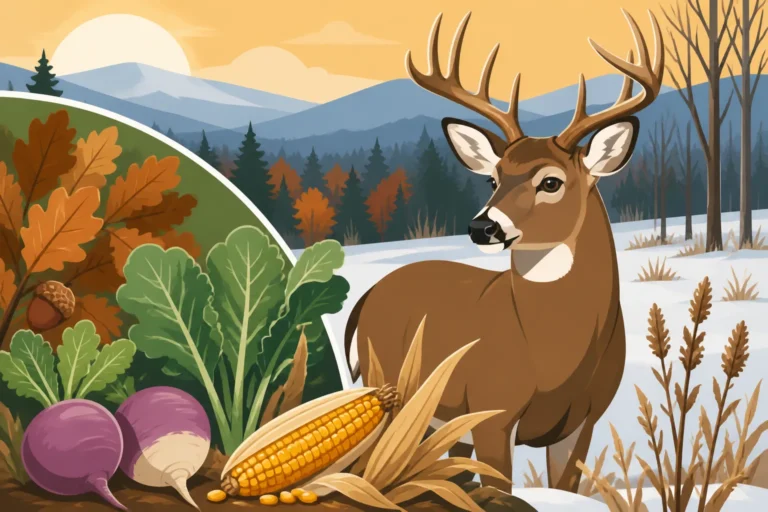
While deer aren't actively seeking out fresh, green growth in December, creek bottoms still offer access to crucial late-season food sources. Browse, such as young saplings and the tender tips of certain bushes, often persist longer or are more readily accessible in these moist environments. Think about species like dogwood, willow, and even some persistent forbs that can cling to life longer near a consistent water source. Even more importantly, creek bottoms often contain remnants of mast crops that have fallen from oaks or beech trees on higher ground and rolled down into the valley, or they might be adjacent to agricultural fields where corn or soybean stubble offers residual nutrition. These small pockets of food, while not abundant, are often enough to supplement a deer's diet when coupled with the energy savings of good thermal cover.
Furthermore, water is, of course, always available. While deer can get moisture from snow or frost, having open water, particularly in sections of creeks that remain unfrozen due to faster currents or spring seepage, is a distinct advantage. This constant access means deer don't have to expend extra energy traveling to and from water sources, further cementing the creek bottom as a comprehensive survival hub. When you're hunting into the December muzzleloader close, every small advantage a deer has is one you need to understand and exploit.
Reading the Landscape: Unlocking Creek Bottom Secrets
Understanding why deer use creek bottoms in late season is only half the battle. The real trick is learning to read the specific signs they leave behind and interpreting how they are using these unique habitats. This requires careful scouting, often best done when there's a light dusting of snow, but even without it, visual cues can reveal a goldmine of information.
Identifying Travel Corridors and Bedding Areas
Deer, like most creatures, are creatures of habit, and their late-season habits often involve moving between bedding, feeding, and watering with maximum efficiency and minimum exposure. Creek bottoms naturally serve as low-impact travel corridors, especially when snow levels become deeper on higher ground. Look for well-worn trails running parallel to the creek bank, or even crossing the creek at shallow points. These trails will often lead directly to or from prime feeding areas like agriculture fields, orchards, or stands of oak and beech on adjacent slopes. When you're reading Vermont mud for fresh deer movement, these trails can be incredibly obvious.
Within the creek bottom itself, keep a keen eye out for bedding areas. These will typically be in the densest, most sheltered cover – thick conifer stands, brushy tangles, or even small benches just above the water line that offer a slight elevation advantage for scent detection. Beds will often be oriented to allow the deer to face downwind while keeping an eye on the upwind approach, or facing into the sun for warmth on a cold day. Look for flattened vegetation, droppings, and rubbed saplings if bucks are still shedding velvet, though late season rubs are less common. These specific spots are where deer feel safe, and understanding their location is crucial for setting up an ambush.
Locating Late-Season Food Sources
Even though fresh browse is scarce, deer are incredibly adaptable. Focus your search for food within or immediately adjacent to the creek bottom. Look for patches of persistent green forage like honeysuckle or wild rose that might still hold some nutritional value. Don't forget to examine any nearby stands of oak or beech trees. While the primary mast drop usually happens earlier, strong winds or late-season freezes can dislodge remaining acorns or beechnuts, sending them rolling down into the sheltered creek bottom where deer can find them relatively easily, especially if snow is shallow.
Agricultural edges are also key. If a creek bottom runs adjacent to a cut cornfield or soybean field, the deer will undoubtedly be utilizing that edge. Residual grains and beans become prime targets. Even abandoned apple orchards, scattered throughout rural Vermont, that have fallen into creek bottoms or grow on their edges can provide a crucial, high-energy food source as the fruit ferments and falls. Identifying these specific food pockets and how deer access them from the security of the creek bottom will dictate your stand or blind placement. Tools like GoHunt's property maps can help you identify these transitions between creek bottoms and potential food sources on private land, guiding your scouting efforts more effectively.
Strategic Hunting Approaches for Creek Bottoms
Hunting creek bottoms effectively requires a tailored strategy that takes into account the unique dynamics of these environments, especially the wind and thermals. Your approach, stand placement, and timing will all need to be meticulously planned to capitalize on deer movement without alerting them.
Understanding Wind and Thermals
Wind and thermals are paramount in creek bottoms. Unlike open country where wind direction might be relatively consistent, creek bottoms often create complex air currents. During the day, particularly as the sun warms the slopes, thermals will generally rise, pulling your scent upwards. As evening approaches and temperatures drop, thermals will typically fall, carrying your scent downwards into the bottom. This means your entry and exit routes, as well as your stand placement, must account for these shifting air patterns. If you're hunting a funnel between two woodlots that involves a creek, these micro-thermals are even more critical to understand.
A common mistake is to hunt directly in the bottom without considering the swirling nature of the wind. Often, it's better to set up slightly upwind and uphill from where you expect the deer to be, allowing your scent to be carried over them, or to take advantage of crosswinds. Pay close attention to how the wind shifts throughout your sit. Carrying a small bottle of powder or a string attached to your stand to visually observe the wind is non-negotiable when hunting these tricky spots. Before you even head out, consulting a weather app like those integrated into GoHunt can give you a better understanding of predicted wind directions and temperature changes, which directly impact thermal shifts.
Stand Placement and Approach
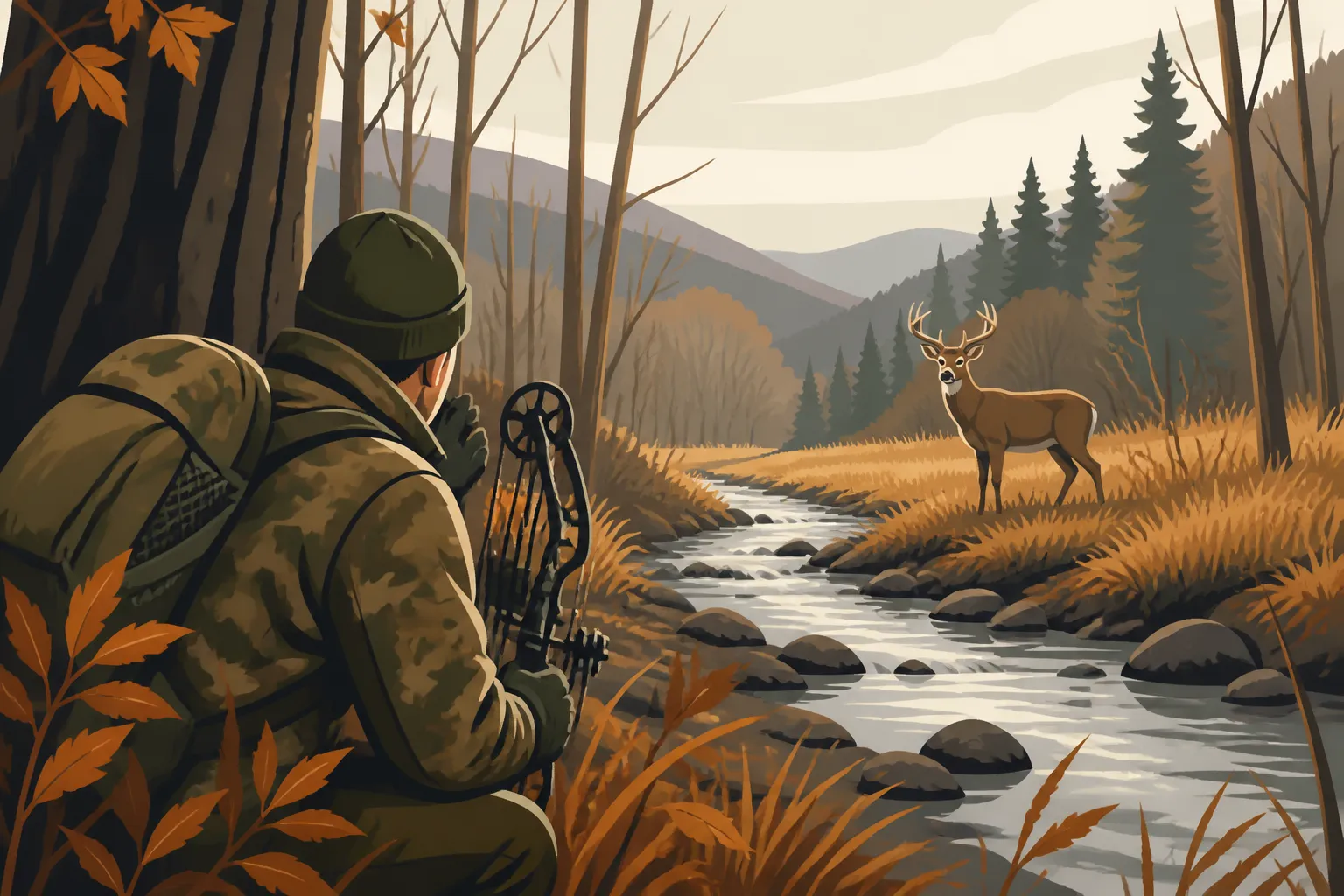
Given the sensitive nature of creek bottom deer, your stand placement and approach are critical. Elevated stands, like hang-ons or climbers, are often ideal as they help get your scent above the primary deer movement lanes and provide a better vantage point over the dense cover. Look for locations where deer trails bottleneck, such as narrow crossings, points where the creek bends sharply, or where dense cover funnels movement to a specific path. Consider how you will approach and exit your stand. Can you use the creek itself as a barrier, walking in the water (if safe and legal) to minimize ground scent, or by using a ridgeline or other natural feature to shield your approach?
Ground blinds can also be highly effective in creek bottoms, especially if you can brush them in naturally against a fallen log or a dense thicket. These offer warmth and concealment, and can be particularly good for cold-weather sitting strategy in the Northeast Kingdom when minimizing movement is key. Just ensure your ground blind is placed with the wind in mind, preferably allowing you to shoot downwind or crosswind from where deer are expected to approach. Always consider the sun's position – you don't want to be silhouetted or have the sun directly in your eyes during prime hunting hours. Sometimes, the best stand location isn't right on the creek, but slightly up an adjacent ridge, overlooking a productive section of the bottom.
| Creek Bottom Feature | Late-Season Deer Appeal | Strategic Hunting Considerations |
|---|---|---|
| Dense Conifer Cover | Excellent thermal cover, wind block, bedding | Ideal for bedding, approach from downwind, set stand overlooking transitions |
| Open Water Sections | Consistent hydration source, easy travel | Look for tracks, set up on trails leading to water, consider morning hunts |
| Steep Banks/Ravines | Natural windbreaks, hidden travel, escape routes | Hunt high points overlooking ravines, be mindful of falling thermals |
| Fallen Logs/Debris | Bedding sites, travel obstacles (funnels) | Check for beds, identify choke points for stand placement |
| Adjacent Food Sources | Crucial for energy, consistent deer visits | Focus on edges, setup between bedding and food, scout for fresh sign |
| Natural Pinch Points | Deer naturally funnel through these areas | Prime ambush sites, focus on fresh tracks and rubs from earlier in season |
Still-Hunting and Tracking Strategies
While sitting can be productive, still-hunting a creek bottom, especially after a fresh snowfall, can be incredibly effective. The snow not only quiets your footfalls but also reveals fresh tracks, allowing you to track a deer in fresh Green Mountain snow directly to its bedding or feeding areas. Move slowly, deliberately, using the natural cover and contours of the creek bottom to break up your silhouette. Pause frequently, often for several minutes at a time, and scan ahead with your binoculars. Deer in late season are highly alert, and often their first reaction is to freeze. Your patience can be rewarded by spotting a deer before it sees you.
When tracking, pay attention to the pace and behavior indicated by the tracks. Trotting tracks might mean a deer is just passing through, while slow, deliberate tracks with frequent stops or changes in direction could indicate a feeding or bedding deer. Look for fresh droppings or pawed-up areas under snow, which are clear indicators of recent feeding. The combination of thermal cover, consistent water, and the potential for residual food makes still-hunting these linear features a prime tactic for hunting into the December muzzleloader close. Always be prepared for a quick shot; late-season opportunities are often fleeting.
Final Thoughts on Creek Bottom Hunts
Hunting Vermont's creek bottoms for late-season deer is a strategy rooted in understanding deer survival instincts. It's about recognizing that as the mercury drops and the snow piles up, deer prioritize thermal protection, accessible food, and consistent water. These often-overlooked corridors provide all three in a compact, defensible package. By diligently scouting, paying close attention to wind and thermals, and employing smart stand placement or patient still-hunting tactics, you can turn a challenging late season into a rewarding one. Remember, these pressured deer are smart, but they are also driven by basic needs – and a well-understood creek bottom can be the key to fulfilling both their needs and your tag. For more specific insights into tracking, you might find Blood Trailing After Dark in Vermont useful, as late-season recovery can be tough. And if you're ever looking to expand your hunting knowledge base, exploring Scouting Vermont Public Land Before Season can provide a solid foundation for year-round success.
Disclaimer
Hunting is an inherently dangerous activity. Always prioritize safety, follow all local and state regulations, and obtain proper licenses and permits. The information provided in this guide is for informational purposes only and should not be considered a substitute for professional instruction or personal judgment. Always consult the Vermont Fish and Wildlife Department for the most current regulations and safety guidelines.