Coyote Calling Vermont Farm Country
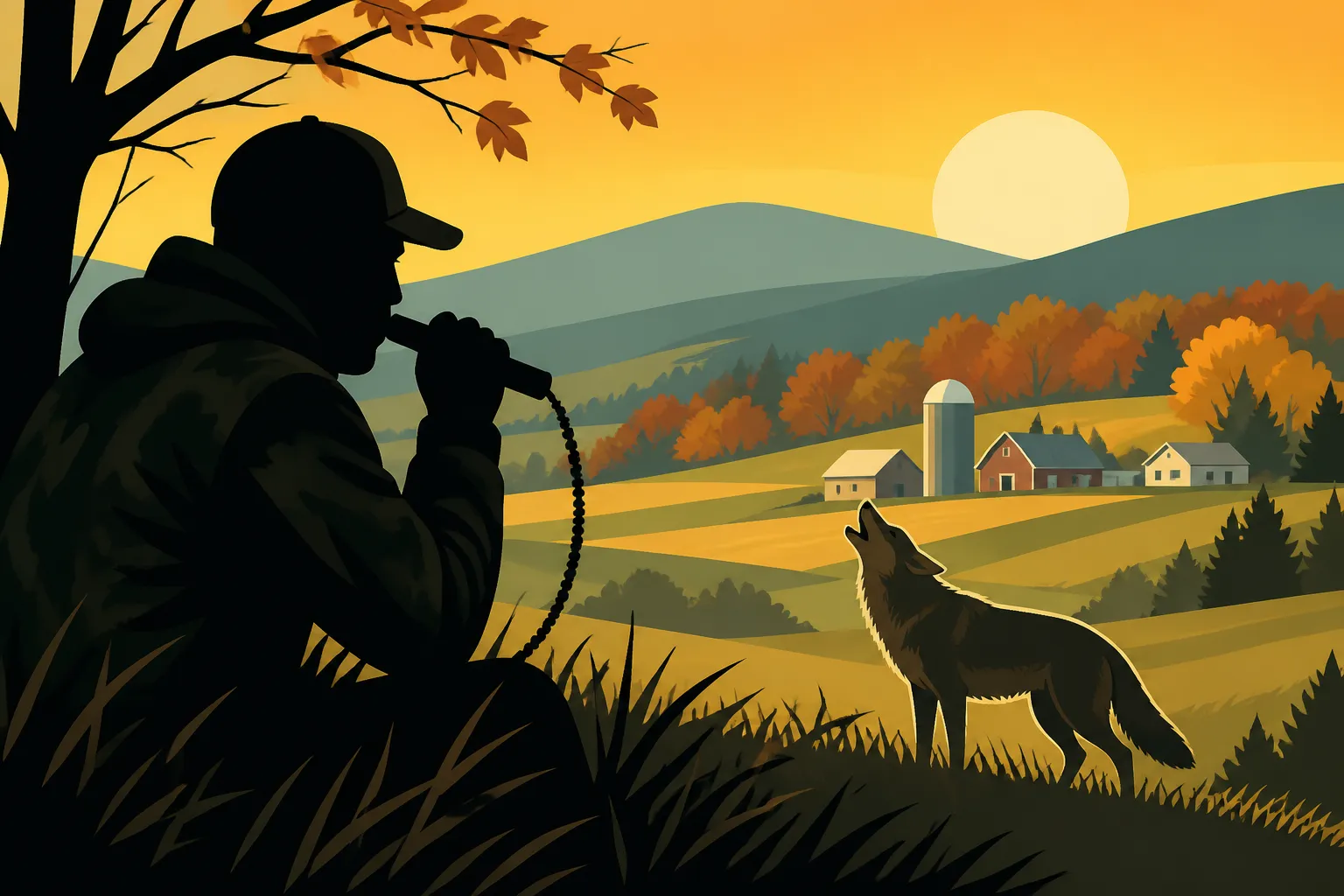
The chilling howl of a coyote cutting through the crisp Vermont air is a sound many of us know all too well, especially those living or hunting in our rich agricultural landscapes. For farmers, it can mean the loss of livestock; for deer hunters, it signals another predator on the landscape impacting fawn survival and deer populations. This guide delves into the nuances of coyote calling specifically tailored for Vermont's farm country, offering strategies to effectively manage these wily predators.
Understanding the Vermont Farm Country Coyote
Coyotes in Vermont are a fascinating and challenging species to hunt. The Eastern coyote, a hybrid with some wolf and domestic dog genetics, is larger and often bolder than its western counterparts, making it a formidable presence across our state, particularly in areas where agriculture and woodlands intertwine. Understanding their habits is the first step toward successful calling.
The Eastern Coyote's Adaptability
These aren't your grandfather's coyotes. The Eastern coyote has proven incredibly adaptable, thriving in diverse environments from the deepest Green Mountain forests to the open expanses of the Champlain Valley. In farm country, they exhibit a remarkable ability to exploit food sources, whether it's rodents in hayfields, deer in adjacent woodlots, or unfortunately, occasionally even farm animals. They learn quickly, adapt their behavior to hunting pressure, and often travel significant distances, making them a moving target. They are incredibly opportunistic, readily changing their diet based on seasonal availability, which is why they are often found around agricultural operations where there's an abundance of prey animals.
Their Impact on Local Livestock and Deer
The presence of coyotes in farm country can be a real headache for landowners, particularly those raising sheep, goats, or even small calves. Depredation incidents, while not always widespread, can be devastating for individual farmers. For hunters, the concern often revolves around deer populations. Coyotes are efficient predators of fawns, and while they rarely take down adult, healthy deer, their impact on recruitment—the number of fawns surviving to adulthood—can be significant. This ecological pressure often drives hunters and landowners to implement coyote control measures, making calling a popular and effective strategy to mitigate these impacts, especially during critical periods like fawning season or when deer are concentrated in winter yards. You can learn more about the broader picture of their population and range in our article on Vermont Coyote Range and Density.
Seasonal Movements in Agricultural Landscapes
Coyote activity and preferred locations shift throughout the year in farm country, largely dictated by food availability and denning habits. In late winter and early spring, they are often seen pairing up and establishing dens, frequently in secluded woodlots bordering open fields, or even in dense brush piles within fields themselves. During this time, they're heavily focused on finding food for their growing pups. As summer progresses, pups start to hunt with their parents, and you might find them targeting rodents in tall grass or venturing into cornfields for cover and prey. Fall brings increased movement as young coyotes disperse and adults consolidate their territories. This is also when they become more vocal. Understanding these seasonal shifts is crucial for knowing where and when to set up your calling stands. For instance, a small, isolated woodlot surrounded by open fields might be a hot spot during denning season, while a large dairy farm's edges with thicker cover could be productive during the fall dispersal.
Essential Gear for Calling Vermont Coyotes
Effective coyote calling in Vermont farm country requires more than just a call and a gun. It demands a thoughtful selection of gear designed to enhance your concealment, reach, and success. The right tools can make all the difference when you're trying to outsmart an animal known for its keen senses and wariness.
Choosing the Right Calls
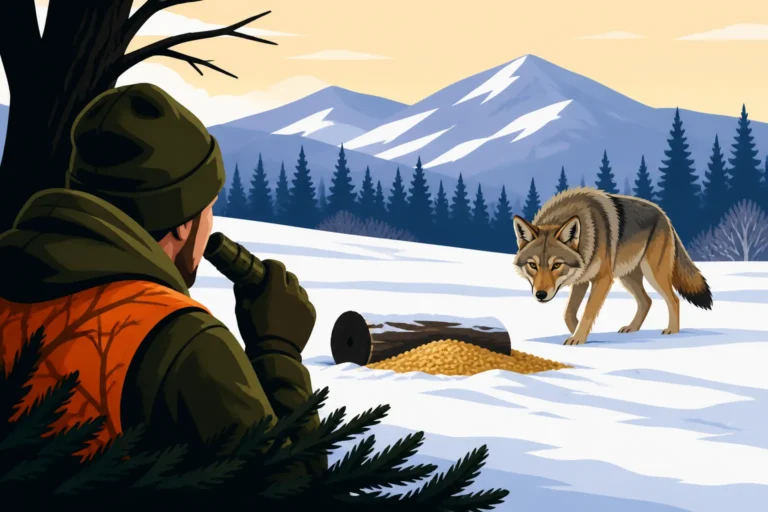
When it comes to calls, you have a couple of main routes: mouth calls and electronic calls. Mouth calls, like open-reed and closed-reed (diaphragm) calls, are incredibly versatile and allow for immediate adaptation to the situation. They can produce everything from a whimpering rabbit distress to a high-pitched fawn bleat, and with practice, challenge howls. They are lightweight, require no batteries, and can be relatively inexpensive. Electronic calls, on the other hand, offer a vast library of realistic sounds, including distress calls, pup howls, barks, and even full coyote vocalizations. Brands like FoxPro and ICOtec are popular choices, offering remote control functionality that allows you to place the speaker away from your position, drawing the coyote's attention away from you. This can be a huge advantage when dealing with wary coyotes. Ultimately, many successful callers use a combination, starting with an electronic call for variety and range, then switching to a mouth call for precise, subtle sounds as a coyote approaches. Finding the right call that replicates a natural sound is key, and our guide on Best Predator Call for Vermont Coyotes offers more insights.
Firearm and Ammunition Considerations
For coyote hunting in Vermont's farm country, you'll want a rifle that offers precision and sufficient range. Calibers like .223 Remington (or 5.56 NATO), .22-250 Remington, .204 Ruger, and .243 Winchester are popular choices, known for their flat trajectories and ability to deliver humane kills on coyotes. A good quality scope with variable magnification (e.g., 3-9x or 4-12x) is essential for target acquisition in varying light conditions and distances. For closer encounters, particularly in thicker brush or around structures, a shotgun loaded with buckshot (like #4 buck or even BB shot) can be highly effective. The choice often depends on the specific terrain of your setup—open fields might favor a rifle, while dense fencerows or small woodlots could be prime shotgun territory. Always remember Vermont's legal requirements for firearms when hunting; you can review them in our resource on Vermont Legal Firearms for Deer Hunting.
Optics for Distant Identification
Coyotes, especially in open farm country, can approach from great distances or hang up just out of comfortable shooting range, scrutinizing their surroundings. Quality optics are invaluable for spotting these wary predators before they spot you. Binoculars, typically 8x or 10x magnification, allow you to scan fields, wood edges, and distant treelines for movement or the tell-tale shape of a coyote. A good rangefinder is also crucial for accurately judging distances, especially when calling across large fields where judging yardage can be tricky. Some hunters also carry a spotting scope, though it's more common for dedicated long-range shooting. Clear, bright optics from reputable brands like Maven, Vortex, or Leupold can make the difference between seeing a coyote that's "hung up" at 200 yards or having it slip away unseen. For hunting planning, using an app like GoHunt can help you scout terrain and identify potential long-range shot opportunities.
Layering for Cold Vermont Mornings
Vermont weather can be notoriously unpredictable, especially during the prime calling seasons of late fall, winter, and early spring. Sitting still for extended periods in freezing temperatures, possibly exposed to wind, demands proper clothing. Layering is not just a suggestion; it's a necessity. Start with a moisture-wicking base layer against your skin to pull sweat away. Add an insulating mid-layer, such as fleece or synthetic puffy jackets, to trap warmth. Your outer layer should be windproof and water-resistant to protect against the elements. Consider clothing that offers quiet movement and good camouflage for the specific environment you'll be in, whether it's snow, bare hardwoods, or mixed fields. Don't forget insulated gloves, a warm hat, and comfortable, waterproof boots. Sitting on a small cushion or pad can also help with warmth and comfort during long waits. Our comprehensive guide on Layering for Vermont's Long Hunting Season offers excellent advice on staying warm and dry.
Strategic Setups in Farm Country
Calling coyotes in Vermont's farm country is all about strategy. These animals are smart, constantly assessing their environment for threats. Your setup needs to be meticulously planned to maximize your chances of success and minimize the chance of being detected.
Identifying Prime Calling Locations
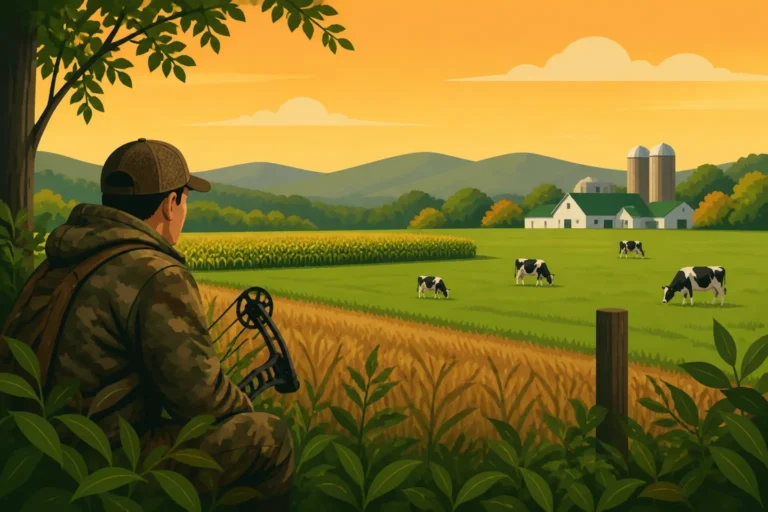
Farm country offers a unique blend of open fields, hedgerows, woodlots, and creek bottoms, all of which can be prime coyote habitat. When scouting, look for funnels—areas that naturally restrict animal movement, such as a narrow strip of woods between two large fields, a deep ravine, or a fenceline that forces animals to travel a specific path. These are ideal ambush points. Field edges where overgrown cover meets open areas are also excellent, as coyotes often travel these boundaries. Look for fresh tracks, scat, or even den sites if you're hunting in late winter or early spring. An overlooked spot can be a small, isolated woodlot or a thick brush island within a larger field, offering cover and a safe haven for coyotes. Using mapping tools, such as the GoHunt app, to identify these natural features and potential travel corridors on a farmer's land can give you a significant advantage. You can gain further insights on targeting these areas by reading our article on Hunting a Champlain Valley Dairy Farm Edge.
Mastering Wind and Thermals
The wind is your absolute best friend and worst enemy when calling coyotes. They have an incredible sense of smell, and if they catch your scent, the hunt is over before it even begins. Always, always set up with the wind in your favor, meaning it should be blowing from the calling area towards you, or ideally, crossing your setup at a sharp angle. This ensures your scent is carried away from the direction you expect coyotes to approach. In hilly or mountainous farm terrain, thermals also play a role. Early in the morning, cold air sinks, causing thermals to drop down valleys and hillsides. As the sun rises and warms the ground, thermals reverse and begin to rise. Factor these microclimates into your setup, especially during the first few hours of daylight or last light. A good rule of thumb is to set up slightly uphill from where you expect a coyote to appear, letting any rising thermals carry your scent over their heads.
Utilizing Natural and Man-Made Cover
Concealment is critical. You need to break up your outline and blend into the environment. Natural cover like thick brush, standing corn, large boulders, or the base of a wide tree can provide excellent camouflage. If you're hunting in very open fields, consider a portable ground blind or even digging a shallow depression to sit in (with landowner permission, of course). Remember that coyotes have excellent eyesight, particularly for movement, so remaining absolutely still is paramount. Position yourself so that you have a clear shooting lane in the direction you expect coyotes to approach, but also cover your back and sides. A common mistake is to face only one direction. Coyotes are notorious for circling downwind to catch scent, so be prepared for them to appear from unexpected angles. A small folding stool can help with comfort and stillness during long stands. We discuss tactics like this in our article about Utilizing a Ground Blind on Public Land, which can be adapted to private farm settings.
Calling Techniques That Work
The art of coyote calling is about more than just making noise; it's about speaking their language, whether it's mimicking a distressed prey animal or another coyote. Success often hinges on understanding which calls to use, when, and how to deliver them convincingly.
Prey Distress Calls
These are arguably the most effective calls for bringing in coyotes. Coyotes are opportunistic predators, and the sound of an injured or dying animal is an irresistible dinner bell. Rabbit distress calls are a classic choice, mimicking a cottontail in distress. Fawn bleats and distress calls are also incredibly potent, particularly during late spring and early summer when fawns are prevalent, but can be effective year-round as coyotes often prey on young deer. Bird distress calls (like a woodpecker or crow distress) can also pique a coyote's interest, as they suggest an easy meal. When using distress calls, aim for realism. A series of sharp, desperate cries, followed by silence, then another series, mimics the natural ebb and flow of a struggle. Don't be afraid to experiment with different calls and volumes based on the time of year and specific prey animals in the area.
Coyote Vocalizations
Sometimes, the best way to call in a coyote is to sound like another coyote. Howls, barks, and yips can be used for several purposes: to locate coyotes, challenge a dominant male, or mimic a family group. Locator howls, often a lone howl or a series of howls, are great for making coyotes reveal their position without necessarily drawing them in. Challenge howls, more aggressive and assertive, can bring in territorial males looking to defend their turf. Pup distress calls, mimicking lost or injured young, can be extremely effective in the spring and early summer, appealing to the protective instincts of adults. Mixing these vocalizations with prey distress calls can create a compelling scenario. For example, a series of pup distress calls followed by a rabbit distress might convey a struggling pup that just found an injured rabbit, potentially drawing in both adults and curious young. When you’re trying to call in coyotes, remember to vary your calling pattern; a coyote that hears the same sound over and over will often get educated quickly.
Understanding Call Sequences and Durations
The sequence and duration of your calling routine are just as important as the calls themselves. Most successful callers start with a short, loud series of distress calls to grab distant attention. Then, they progressively reduce the volume and frequency as the stand progresses, mimicking a struggle winding down. A common sequence might be 60-90 seconds of calling, followed by 2-3 minutes of silence, then another 30-60 seconds of calling, repeated for about 20-30 minutes per stand. However, there's no hard and fast rule, and adaptability is key. Sometimes, an aggressive, sustained calling session is what it takes, while other times, subtle, quiet chirps are more effective for close-in coyotes. Always be prepared to stop calling immediately if you spot an approaching coyote; they may be searching for the sound source and any further calling could give away your position. Patience is vital; coyotes may take several minutes to respond, and some might even circle downwind before committing. Our guide on Coyote Calling at First Light provides excellent strategies for morning setups.
Overcoming Common Challenges
Coyote hunting, especially in well-trafficked areas like Vermont's farm country, comes with its own set of hurdles. Successful hunters learn to adapt and overcome these challenges.
Dealing with Hunted Coyotes
Vermont's coyotes are smart, and in areas with consistent hunting pressure, they can become incredibly wary, often referred to as "educated." These coyotes have learned to associate certain sounds or human presence with danger. To outsmart them, you need to change your tactics. This might mean using less common distress calls, subtle vocalizations, or adopting a "less is more" approach to calling intensity. Instead of aggressive, loud sequences, try short, quiet bursts that sound more natural and less like a trap. Longer silent periods between calls can also make them more confident in approaching. Furthermore, vary your setup locations frequently to avoid leaving a consistent scent cone or pattern that coyotes can learn to avoid. Consider venturing into areas that receive less pressure, even if it means a longer walk. Night hunting, where legal and with proper permits (see Night Hunting Rules for Vermont Coyotes), can also be highly effective for pressured coyotes, as they often feel safer moving under the cover of darkness.
Gaining and Maintaining Landowner Permission
Much of Vermont's prime farm country is private land, making landowner permission absolutely essential. Approaching landowners with respect and a clear understanding of their needs is paramount. Explain your intentions, perhaps offering to help manage the coyote population that might be affecting their livestock or deer. Be clear about your hunting methods, safety practices, and your commitment to leaving no trace. A great way to build trust is to offer to share venison if you also deer hunt or offer to help with chores around the farm. Once you gain permission, treat the land as if it were your own. Respect boundaries, close gates, don't drive through fields unnecessarily, and always communicate your plans. A small gift at the end of the season, like some wild game sausage or a thank-you card, goes a long way in maintaining a good relationship and securing permission for future seasons. GoHunt can be a valuable tool for identifying property boundaries, helping you approach the correct landowners. For more detailed advice, read our guide on Getting Private Land Permission in Vermont.
Adapting to Changing Conditions
Vermont weather and terrain can change rapidly, and successful coyote callers are always ready to adapt. A sudden shift in wind direction, a fresh snowfall, or a change in agricultural activity (like a freshly cut hayfield) can all impact coyote behavior and your hunting strategy. Always check the wind before setting up and be prepared to move if it shifts. Fresh snow can reveal new tracks and travel patterns, offering insights into recent coyote movements and preferred routes, as discussed in Reading Vermont Mud for Fresh Deer Movement. If a field has just been harvested, coyotes might move in to capitalize on the exposed rodents. Being flexible and observing your surroundings constantly will help you adjust your plan on the fly. This might mean shortening your calling sequence on a blustery day or changing your call type if you notice different prey animals in the area.
Coyote Calling Strategy Summary Table
| Call Type | Primary Purpose | Best Time of Year | Volume Suggestion | Notes |
|---|---|---|---|---|
| Rabbit Distress | Mimic injured prey, general attractant | Year-round | Medium to Loud | Most common and consistently effective; vary intensity. |
| Fawn Distress | Mimic injured deer fawn | Spring-Summer, Fall | Medium to Loud | Highly effective during fawning season; appeals to protective instincts. |
| Bird Distress | Mimic injured bird, curiosity call | Year-round | Medium | Good change-up call; can draw coyotes out of curiosity. |
| Lone Howl | Locate coyotes, announce presence | Year-round | Loud | Listen for return howls; use cautiously if coyotes are pressured. |
| Challenge Howl | Challenge territorial males | Fall-Winter (rut) | Loud | Aggressive call; can bring in dominant coyotes quickly. |
| Pup Distress/Whine | Mimic lost or injured pups, appeal to parental instinct | Spring-Summer | Soft to Medium | Effective for bringing in adults during denning season. |
Disclaimer
Hunting is a regulated activity. Always consult the latest Vermont Fish & Wildlife Department regulations before engaging in any hunting activities. Ensure you have the proper licenses, understand season dates, and adhere to all safety guidelines. This information is for educational and informational purposes only and does not supersede official state regulations.