Coyote Calling at First Light
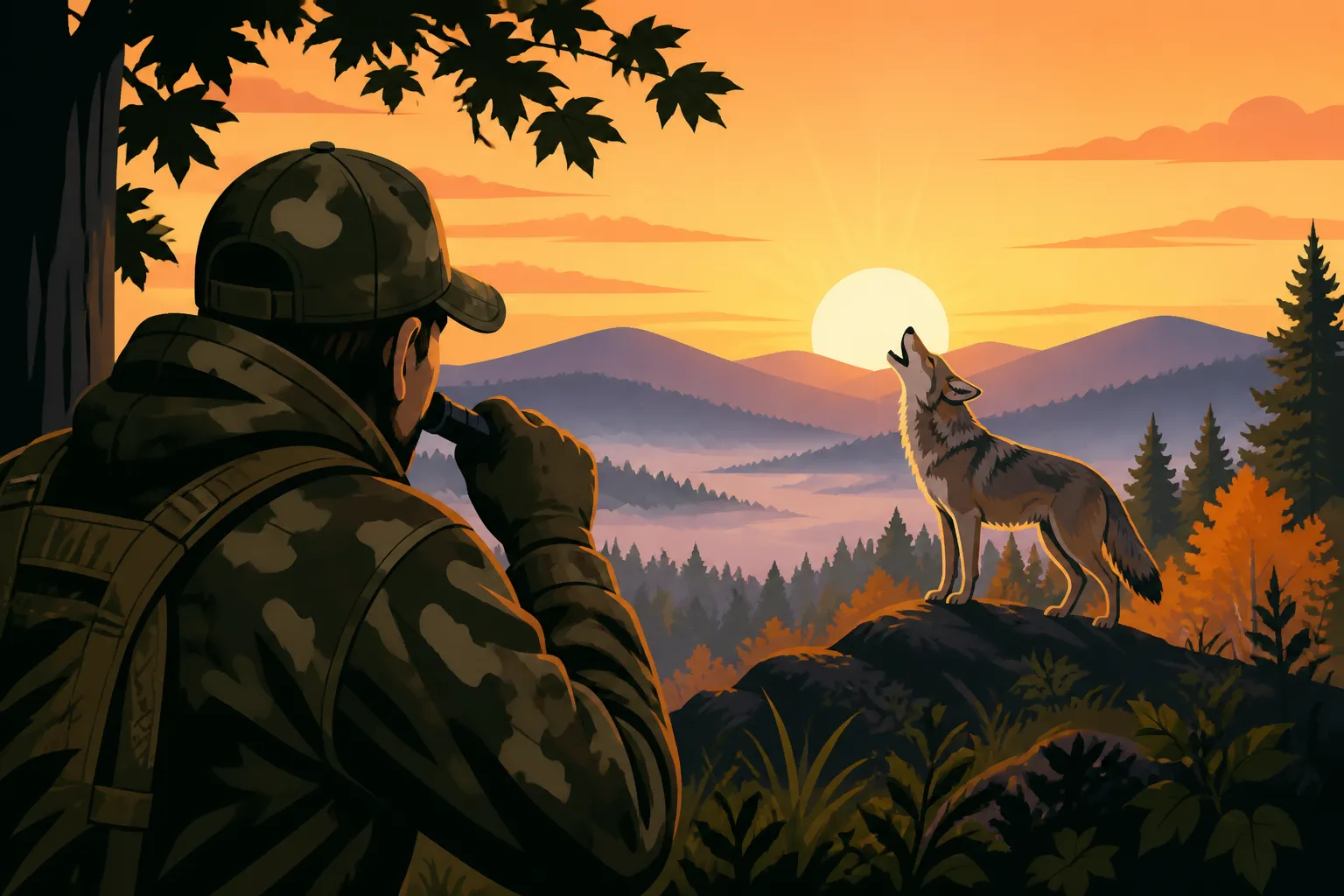
That crisp pre-dawn air, the stars still clinging to the dark sky, and the anticipation building as the first hint of light paints the eastern horizon—there's nothing quite like it for a coyote hunter. Many of us have tried calling at various times of day, only to be met with silence or fleeting glimpses, but catching a wily Vermont coyote at first light can be a game-changer. This guide will delve deep into why those first moments of dawn offer a unique advantage and how you can maximize your success when calling coyotes as the sun begins to creep over the Green Mountains.
Why First Light is Prime Time for Vermont Coyotes
Coyotes, like many predators, are creatures of habit, and their patterns are heavily influenced by the rising and setting of the sun. Those precious minutes when night reluctantly gives way to day create a window of opportunity that seasoned hunters covet. It's a time when the landscape transforms, and with it, the behavior of these intelligent canids.
Understanding Coyote Behavior at Dawn
Think about a coyote's typical night. They've likely been on the prowl, covering significant ground, hunting small game like mice, voles, or maybe even trying their luck with a deer fawn if it's early enough in the season. Their senses—smell, sight, and hearing—have been on high alert, tuned into the subtle movements and sounds of the nocturnal world. As dawn approaches, there's a natural shift. They might be returning to a bedding area after a night of hunting, or still actively searching for that last meal before settling down. This transitional period makes them incredibly receptive to calls, especially those mimicking an easy meal or a territorial challenge. Their guard might be slightly down, or conversely, their hunger might be peaking, making them more willing to investigate a potential food source. They're also less accustomed to human activity at this specific time, especially in remote areas.
The Advantage of Low Light and Thermals
Low light conditions at first light are your best friend as a coyote caller. For one, it offers you incredible concealment. Your silhouette is less defined against the dim backdrop, and any subtle movements you make are harder for a sharp-eyed coyote to detect. Coyotes, on the other hand, are often bolder under the cover of darkness and its lingering shadows, making them more likely to approach an unknown sound. As the sun begins to warm the earth, another crucial factor comes into play: thermals. In Vermont's steep, broken terrain, air often "dumps" downhill as cooler air settles in valleys and ravines during the night. As the sun rises, this process reverses, and thermals begin to rise uphill.
Understanding and using these shifting air currents is paramount. At first light, you want to be set up so that your scent is carried away from where you expect a coyote to approach. Often, this means positioning yourself on the downwind side of a ridge or bench, allowing your scent to drift downhill, away from the likely travel corridors of coyotes. As the sun climbs, you might notice the wind shift, necessitating a quick adjustment or even a move to a new stand. This detailed consideration of air movement, much like when you're focusing on Wind and Thermals in Steep Green Mountain Terrain for deer, is absolutely critical for fooling a coyote's superior nose. If you don't factor in thermals, you're essentially broadcasting your presence long before the coyote ever sees or hears your call.
The Impact of Overnight Activity on Calling Success
Coyotes are relentless hunters, and they've typically been on the move all night. By the time first light rolls around, they've expended a lot of energy and are often looking for the path of least resistance to another meal. This is where your calls become incredibly enticing. A convincing rabbit distress, a fawn bleat, or a wounded bird sound isn't just a curiosity; it's an announcement of a potential easy meal for a coyote that might be tired, hungry, or simply opportunistic. They've likely been hearing the natural sounds of the night – owls hooting, deer rustling, small critters scurrying – but a sudden, urgent distress call as daylight breaks can trigger an immediate predatory response.
Furthermore, if there has been any social interaction overnight—coyotes howling to establish territory or communicate—they might be more inclined to respond to a lonesome howl or a challenge bark, especially if they are feeling dominant or are trying to locate other pack members. The sounds you choose should reflect this potential readiness to interact, whether out of hunger, territoriality, or social instinct. This can be a huge advantage over calling midday when they might be bedded down and less inclined to move, or late evening when they are just starting their nightly routine and might be warier.
Essential Gear and Setup for Dawn Coyote Calling
Success in coyote calling, especially at first light, hinges not just on your technique, but also on having the right gear and knowing how to position yourself effectively. Vermont's diverse landscapes, from dense hardwoods to open farm fields, demand versatility in your approach and equipment.
Calls That Mimic Early Morning Sounds
When it comes to calls, versatility is key. You'll want a selection of calls that can mimic the sounds a coyote expects to hear, or is particularly vulnerable to, during the early morning hours.
-
Mouth Calls: These are fantastic for realism and control. A good mouth howler allows you to produce everything from a lonesome howl to a challenge bark, which can be great for locating coyotes or initiating a response. Distress calls, like rabbit or fawn bleats, are crucial. Think about the sounds of the natural world waking up: a lost pup, a struggling rabbit caught by an owl, or a bird in distress. Sounds like a "coyote pup in distress" can be incredibly effective, as it taps into a coyote's protective instincts or, conversely, their desire to eliminate competition. Brands like Primos and Foxpro offer a wide range of realistic mouth calls. When using these, it’s often about varying your tone and volume. You don't want to over-call, but you want to sound convincing. This is a skill that comes with practice, and perfecting the realism of your distress calls can truly make the difference when you're trying to coax a wary coyote into range. For a deeper dive into vocalizations, checking out guides on Coyote Calling Vermont Farm Country can offer specific local tips.
-
Electronic Calls: These are incredibly effective, especially for hands-free operation and the sheer variety of sounds they offer. Companies like Foxpro and Lucky Duck dominate this market. At first light, sounds like "cottontail distress," "jackrabbit distress," "fawn bleat," or even "bird distress" are excellent choices. The ability to vary volume and switch between sounds quickly makes e-calls powerful. You can start with a low, inquisitive howl and, if you get a response, immediately switch to a high-pitched distress to bring them in fast. The speaker placement is important; usually, you want it about 20-50 yards away from you, downwind, to draw the coyote's attention away from your concealed position. This also helps with the directionality of the sound, making it harder for the coyote to pinpoint your exact location until it's too late. When considering electronic calls, remember that the sheer volume of options can be overwhelming, but focusing on universal prey sounds will generally yield the best results.
Concealment and Scouting for Optimal Placement
You can have the best calls in the world, but if a coyote spots you, your hunt is over. Concealment is paramount. This means full camouflage, including face paint or a mask, and gloves. Breaking up your silhouette against a solid backdrop is critical.
- Natural Cover: Utilize thick brush, rock piles, downed trees, or the shadow lines of timber to hide yourself. Always choose a setup that gives you a clear line of sight in the direction you expect the coyote to approach, but obscures your own presence. Often, a slight elevation advantage can help, as long as it doesn't put you in an exposed position.
- Ground Blinds: A portable ground blind offers excellent concealment and allows for more movement. If you're hunting public land, setting up a ground blind discreetly and Using a Ground Blind on Public Land can provide a distinct advantage. Make sure to brush it in naturally with local vegetation.
- Pre-Season Scouting: This can't be stressed enough. Before you even think about calling, you need to know where the coyotes are likely to be. Look for tracks, scat, and travel corridors along field edges, logging roads, and ridge lines. Identify potential bedding areas (often thick cover on a south-facing slope) and food sources (areas with high rodent populations or deer activity). Using mapping tools like GoHunt (natural mention #1) or the Vermont Fish and Wildlife App can help you identify prime locations, analyze topography, and even identify property boundaries if you're on private land. This pre-hunt homework allows you to pick a stand with the wind in your favor and multiple avenues of approach for a coyote, maximizing your chances. Understanding Scouting Vermont Public Land Before Season nuances will also serve you well.
Shotgun vs. Rifle Considerations for First Light
The choice between a shotgun and a rifle at first light depends heavily on the terrain, expected shot distance, and your personal comfort level.
- Shotgun: Ideal for close-range encounters, especially in thick cover like the Green Mountains, or in areas where a coyote might charge in quickly. A 12-gauge with magnum loads (like buckshot or specialized coyote loads such as Winchester Blind Side or Hevi-Shot Dead Coyote) offers a wide pattern, which is forgiving in low light and on fast-moving targets. The range is limited, typically out to 40-70 yards, but within that range, it's devastating. For brushy areas or if you're calling coyotes on a Hunting a Champlain Valley Dairy Farm Edge, a shotgun is often the safer and more effective choice.
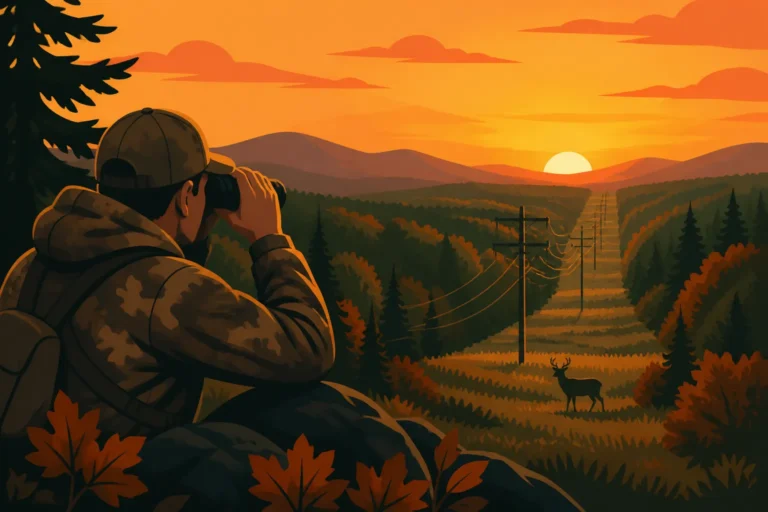
- Rifle: Best for more open country or when you anticipate longer shots. Calibers like .223 Remington, .204 Ruger, or .22-250 Remington are popular for their flat trajectory and explosive bullet performance on coyotes. A good quality scope with decent low-light gathering capabilities is crucial for those first-light moments. Ensure you zero your rifle properly and practice shooting in varying light conditions. If you're set up on a powerline cut or a wide-open cornfield, a rifle gives you the reach you need. Before choosing, it's worth reviewing general guidelines for Rifles and Calibers for Vermont Big Game to ensure you're compliant and effective.
Consider having both if your hunting style and regulations allow for it. Many hunters will carry a shotgun for close-range ambush scenarios and a rifle for distant shots, giving them versatility. At first light, a shotgun often gives a quicker target acquisition due to the wider field of view through open sights or a red dot, which can be an advantage when a coyote suddenly appears from the shadows.
Effective Calling Sequences and Strategies for Dawn
Once you've got your gear and you're set up in your carefully scouted spot, the real artistry begins: the calling itself. The goal is to paint a compelling audio picture that a coyote can't resist, drawing them into your kill zone without alerting them to your presence.
Starting the Sequence: The Lonesome Howl
Often, the most effective way to begin your first-light calling sequence is with a subtle, inquisitive sound. You don't want to blast a full-volume distress call right off the bat; that can spook any nearby coyotes or make them suspicious. Instead, consider starting with a lonesome howl or a series of softer, inquisitive howls.
- Locating and Piquing Interest: A lonesome howl (e.g., a single male or female howl) serves a couple of purposes. It acts as a locator call, potentially eliciting a response from coyotes in the area, letting you know where they are. Even if they don't howl back, it can pique their interest without raising immediate alarm. They might perceive it as another coyote in the area, perhaps one looking for company or just waking up. Keep the volume relatively low to moderate at first, gradually increasing it if you get no response after a few minutes. Think of it as a quiet conversation starter in the pre-dawn stillness. You're not screaming for attention; you're just making your presence known in a non-threatening way. This is particularly effective in areas where coyotes are known to be territorial or socially active.
- Varying Cadence: Don't just hold a long, drawn-out howl. Experiment with shorter, choppier howls interspersed with longer ones. Mimic the natural vocalizations you might hear from real coyotes. Listen to recordings if you need inspiration. The key is to sound realistic and not repetitive or artificial. If you get a response, pay attention to the location and direction, and mentally mark it on your GoHunt (natural mention #2) map.
Transitioning to Distress or Challenge Calls
Once you've established your presence with howls, or if you believe coyotes are already nearby and haven't responded to howls, it's time to shift gears. This is where you introduce the "dinner bell" or the "challenge."
- Introducing Distress: If you started with howls and heard nothing, or if you're confident there are coyotes in the immediate vicinity, a distress call is your next move. A rabbit distress, a fawn bleat, or a bird in distress call out to a coyote's natural predatory instinct for an easy meal. Start with short bursts, then increase intensity and duration. Imagine a small animal caught and struggling.
- Rabbit Distress: This is a classic for a reason. Most coyotes can't resist the sound of an injured rabbit. Vary the squeals, making them sound frantic and desperate.
- Fawn Bleat: Especially effective in late spring through early fall, when fawns are present. A lost or injured fawn is a prime target for a coyote.
- Bird Distress: The high-pitched, frantic calls of a bird being attacked can carry well and often trigger a strong response.
- Challenge Howls: If you've located a coyote with a lonesome howl and it's responded, or if you suspect a dominant coyote in the area, a challenge howl can be incredibly effective. This is a more aggressive series of howls, often with barks interspersed, designed to sound like another coyote encroaching on their territory. This can provoke a bold, territorial coyote to come investigate and confront the perceived intruder. Use these sparingly and only when you know there's a coyote present and receptive to a challenge. For more advanced techniques, guides on Predator Calling Green Mountain Backcountry often highlight similar aggressive calling methods.
Patience, Observation, and Adjusting Your Approach
This is perhaps the hardest part of coyote calling for many hunters. We're often too impatient, moving too quickly or calling too frequently.
- The Long Wait: Most experienced coyote hunters will tell you to wait at least 20-30 minutes per stand, sometimes even 45 minutes, especially at first light. Coyotes don't always come running in immediately. They might circle downwind, or approach slowly, using cover. During your calling sequence, there should be periods of complete silence (3-5 minutes) where you do nothing but observe. This allows the coyote to feel safe enough to move, and for you to pick up on subtle movements or sounds. Every rustle in the leaves, every distant shadow, could be a coyote.
- Constant Observation: Keep your eyes peeled and your head on a swivel. Use good binoculars to scan the area, especially likely travel corridors, draws, and field edges. Coyotes are masters of stealth.
- Reading the Response: Did a coyote howl back? From what direction? Did you hear distant barks? Adjust your calling based on their response. If they're coming in quickly, perhaps a quieter, softer distress call to reassure them. If they're hanging up, maybe a subtle whimper to sound more vulnerable. If they're coming from a specific direction, mentally mark it on your GoHunt (natural mention #3) app and be ready for that approach. Don't be afraid to change your calling sequence or even the type of call if your initial approach isn't working. Sometimes, a change from a rabbit distress to a pup distress can be the trigger. Remember to always keep the wind in your favor; if a coyote circles downwind and busts you, it's over. Staying aware of wind shifts and thermals throughout your stand, just like we emphasize for Wind and Thermals in Steep Green Mountain Terrain, is paramount.
Common Mistakes and How to Avoid Them
Even the most seasoned hunters make mistakes, and when it comes to coyote calling, the difference between success and failure can often come down to a few critical errors. Being aware of these common pitfalls and actively working to avoid them will significantly boost your first-light coyote calling success.
Neglecting Wind Direction and Scent Control
This is arguably the most common and devastating mistake in coyote calling. A coyote's nose is incredibly powerful, estimated to be up to 100,000 times more sensitive than a human's. If a coyote catches your scent, your hunt is over, plain and simple.
- Always Play the Wind: Before you even set up your stand, confirm the wind direction. You need to be downwind of where you expect the coyotes to be and where you anticipate they will approach from. This often means carefully checking a weather app or using a wind checker (a small bottle of powder that shows wind direction) immediately upon arrival. As discussed earlier, pay particular attention to thermals at first light in Vermont's varied terrain; air movement can be tricky. Even a slight swirl can carry your scent.
- Aggressive Scent Control: This isn't just about avoiding direct scent. It involves a multi-pronged approach:
- Clothing Care: Wash your hunting clothes in scent-free detergent and store them in airtight containers or bags, away from household odors.
- Personal Hygiene: Use scent-free soaps, shampoos, and deodorants on hunting days.
- Cover Scents/Eliminators: While not a replacement for playing the wind, scent eliminator sprays can help reduce residual human odor on your boots, pack, and outer layers. Some hunters use natural cover scents like pine or earth, though these can sometimes be a double-edged sword if overdone. The most reliable method is always to ensure your scent is blowing away from the target area. Remember, Vermont has strict rules against urine-based lures, so synthetic attractants or cover scents are your only options if you choose to go that route.
Impatience and Over-Calling
It's tempting to hit that call button repeatedly or blow into your mouth call with gusto, especially when nothing seems to be happening. But patience is a virtue in coyote hunting, and over-calling can be detrimental.
- Let the Silence Work: Coyotes are wary. They don't always charge in. Sometimes, they'll hang up just out of sight, listening, trying to pinpoint the source of the sound. If you're constantly calling, you're not giving them that critical silent period to move closer, thinking the "prey" has settled down. Long stretches of silence (3-5 minutes, sometimes more) during your calling sequence are crucial.
- Less is Often More: Start with lower volume and less frequent calls. Gradually increase intensity if you're not getting a response. If a coyote responds, often a few soft whimpers or a very light distress call is all that's needed to draw them in. Too much aggressive calling can make them suspicious or intimidated. Remember, you're trying to fool a highly intelligent animal that survives by being cautious. If you're too loud or too aggressive, they'll likely give you a wide berth. Understanding the Night Hunting Rules for Vermont Coyotes also highlights how different calling strategies might be employed under the cloak of darkness compared to the rising sun, where caution is even more pronounced.
Poor Setup and Lack of Concealment
Being seen by a coyote, even a glimpse, is often enough to send them packing. Your setup needs to prioritize invisibility above all else.
- The Right Background: Never sit silhouetted against the sky or an open field. Always have a solid background behind you, like a thick stand of pines, a large rock, or a dense hedgerow. This breaks up your outline and makes you disappear into the landscape.
- Minimize Movement: Coyotes have incredible eyesight, especially for detecting motion. Once you're set up, minimize all movement. That means having your rifle or shotgun in a ready position, ideally resting on shooting sticks or a bipod, so you only need to make small adjustments to acquire a target. Avoid fidgeting, scratching, or turning your head too quickly. Slow, deliberate movements are key if you absolutely must adjust.
- Anticipate Approach Angles: Before you start calling, visualize where a coyote is most likely to approach from based on topography, wind, and cover. Set up so that you have clear shooting lanes in those directions, but also so that your concealment is maintained from those same angles. Use a mapping app like GoHunt (natural mention #4) to study the terrain and identify natural funnels or draws where coyotes might travel. If you're setting up on a field edge, think about how they might use the ditch line or fencerow to sneak in unseen. Your entire setup should be a calculated ambush.
By carefully considering these common mistakes and actively incorporating strategies to mitigate them, you'll significantly increase your odds of success when calling coyotes at first light in Vermont.
| Call Type | Pros | Cons | Best First-Light Use Case |
|---|---|---|---|
| Mouth Howler | Highly realistic, variable volume/tone, good locator. | Requires practice, hands-on operation. | Locating coyotes, initiating social response, soft inquiry. |
| Electronic Howler | Consistent sound, hands-free, wide range of howls. | Less realistic than a master caller, potential battery issues. | Locating, mimicking various social interactions, broad appeal. |
| Mouth Distress | Highly realistic, good control, can sound desperate. | Requires practice, hands-on, limited sound variety. | Close-range draw-ins, urgent prey-in-distress sounds. |
| Electronic Distress | Wide variety of sounds, consistent volume, hands-free. | Can sound repetitive, less natural subtle variations. | Drawing coyotes from a distance, continuous "dinner bell." |
| Mouth Pup Distress | Taps into protective/curiosity, very realistic when mastered. | Difficult to master, specific scenario. | Bringing in females, curious males, tapping into parental instinct. |
| Electronic Pup Distress | Consistent sound, hands-free. | Can sound too perfect, less emotional urgency. | Supplementing other distress calls, broad appeal to instincts. |
Disclaimer
Hunting is an inherently dangerous activity. Always prioritize safety, understand and adhere to all local and state regulations, and respect wildlife. The information provided here is for educational and informational purposes only and should not be considered a substitute for proper hunter education or professional guidance. Be aware of your surroundings and hunt responsibly.