Running Beagles on a Vermont Snowshoe Hare
Vermont's winter landscape is breathtaking, but for many small game hunters, the thick cover and deep snow can make pursuing snowshoe hare feel like searching for a needle in a haystack. The thought of busting through brush, only to jump a hare that vanishes instantly, is a familiar frustration. This guide is all about turning that frustration into a rewarding experience by exploring the art and strategy of running beagles on snowshoe hare in the Green Mountain State, combining the deep traditions of hound hunting with practical, modern advice for navigating Vermont's unique challenges.
Understanding Snowshoe Hare Behavior and Habitat in Vermont
Where Hare Hide in Vermont's Winter Landscape
Snowshoe hares, with their incredible camouflage and ability to seemingly melt into the landscape, are creatures of dense cover. In Vermont, you'll primarily find them hunkering down in thick conifer stands, especially young spruce and fir plantations that offer a dense overhead canopy and intricate ground cover. Think about those areas where the branches are so interwoven you can barely squeeze through – that's prime hare territory. They love areas with a mix of regenerating timber, clear-cuts that are a few years old and growing back thick, or the edges of swamps and bogs. These places provide not only excellent concealment from predators like coyotes and bobcats but also a buffet of woody browse to sustain them through the cold months. When you're scouting, look for those dense thickets, particularly if they're near slightly more open areas for feeding. They're masters of avoiding detection, which is precisely why a good beagle's nose is such an invaluable asset. If you're looking for specific areas, consider that Where Vermont Hare Populations Hold Up Best often aligns with these types of regenerating forest habitats.
You might also find them favoring transition zones, such as where a mature hardwood forest meets a thick conifer stand. These edges offer diversity in food sources and escape cover. During heavy snowfalls, hares will often create extensive tunnel systems under the snow, or "snow caves," providing insulated shelter from the biting cold and further protection from aerial predators. This makes them incredibly difficult to locate without a dog. Their preferred browse includes twigs, bark, and buds of various conifers and deciduous shrubs, so areas rich in young growth are always a good bet. Learning to "read" these landscapes, even without a dog, can give you a significant advantage, helping you narrow down your search areas before you even release your hounds.
The Northeast Kingdom, for instance, with its vast tracts of mixed forest, extensive bogs, and varying timber harvest stages, offers some of Vermont's classic snowshoe hare habitat. Other parts of the state with similar dense, regenerating cover or low-lying swampy areas will also hold good numbers. Remember, hares are not just hiding in the thickest stuff; they are actively living there, finding food, and seeking refuge. Identifying these spots on a map, perhaps using a tool like GoHunt to analyze satellite imagery and terrain features, can save you hours of unproductive walking. It's about thinking like a hare and understanding their daily survival needs in a harsh Vermont winter.
Seasonal Patterns and Movement
Snowshoe hare movements are largely dictated by food availability and predator pressure, particularly as Vermont transitions through fall into the deep winter. In late fall, before the heaviest snows, hares are still somewhat mobile, but as the snow deepens and temperatures plummet, their home ranges tend to shrink considerably. They become much more concentrated in those dense thermal covers, moving only short distances to feed. This makes them predictable once you've found a good thicket holding them. The change in their fur color from brown to white is a phenomenal adaptation, typically happening in late October to November, and it's essential for their survival in a snow-covered landscape. Missing this color change could mean you're a little too early for optimal hunting conditions.
The deepest parts of winter, usually from late December through February, offer some of the best beagle hunting. The consistent snow cover means hare tracks are easy for dogs to follow, and the hare's natural inclination to stick to their established runs and dense cover makes for exciting chases. Their diet shifts almost entirely to woody browse during this time, so identifying areas with young saplings and brush is key. You'll notice distinct patterns in their movements: they'll often emerge from their day beds in the thickest cover just before dusk to feed, and then retreat back into secure bedding areas as dawn approaches. This crepuscular activity means early morning and late afternoon hunts can be highly productive, capitalizing on fresh scent.
Understanding these patterns is crucial for planning your hunt. If you're out with your beagles, you're not just casting them randomly. You're deploying them strategically in areas you've identified as likely hare habitat, often leveraging information from previous hunts or scouting trips. Don't forget to consider how different weather patterns, like fresh snow or extremely cold temperatures, might impact their activity. For instance, after a big snowfall, hares might be more reluctant to move, staying put in their snow caves, meaning your dogs will have to work harder to jump them. Conversely, on a clear, still winter day, they might be more active, leaving abundant scent trails. The Vermont Fish and Wildlife Department's Snowshoe Hare in Vermont resources offer great insights into these seasonal shifts.
Training and Running Beagles for Hare
The Making of a Good Hare Dog
Not every beagle is destined to be a top-notch hare dog, but the breed's inherent traits make them fantastic candidates. You're looking for a dog with a strong nose, an eager desire to trail, and the stamina to run for hours, often in challenging conditions. The best hare dogs are those that possess a clear, distinct voice – often called "music" – which allows you to track the progress of the chase, even when the dogs are out of sight in thick cover. This voice is vital; it tells you if they're on a fresh track, if they've jumped the hare, and if the chase is hot. Without it, you're essentially hunting blind, relying solely on guesswork.
Early exposure is key. Bringing a young beagle pup to areas where hare sign is abundant, letting them sniff around, and slowly introducing them to the concept of trailing can lay a solid foundation. Many seasoned hunters will start pups with older, experienced dogs. The younger dog learns by observing and participating, mimicking the older dog's behavior. This mentorship is invaluable, teaching them how to work a track, how to stay on the line, and how to ignore distractions like deer scent. Patience is paramount during this stage; you want to encourage their natural instincts without overwhelming them. A good resource for understanding small game behavior that might overlap with hare is Squirrel Hunting Vermont Hardwoods, which discusses how dogs work ground scent.
Beyond instinct, obedience training is critical. Your beagles need to be responsive to commands like "come," "no," and "leash up," especially when hunting public lands or areas close to roads. While their primary job is to hunt independently, having control is essential for their safety and for maintaining good landowner relations. This control also extends to teaching them to distinguish between game. While a beagle might naturally be inclined to chase anything with a scent, you want them focused on hare. This takes time, consistency, and often involves correcting them when they show too much interest in deer tracks, which is a common challenge in Vermont's diverse woods.
Developing the Chase Instinct
The true magic of beagle hunting for snowshoe hare lies in their incredible ability to follow a scent trail, often one that's several hours old, and then ignite into a full-blown chase once the hare is jumped. This "cold trailing" ability is what sets good hare dogs apart. To develop this, you need to expose your dogs to plenty of hare sign – tracks, droppings, and fresh scent. Start in areas where you know there are hares and let your dogs work. Initially, they might just mill around, but over time, they'll learn to differentiate hare scent from other smells, honing their focus.
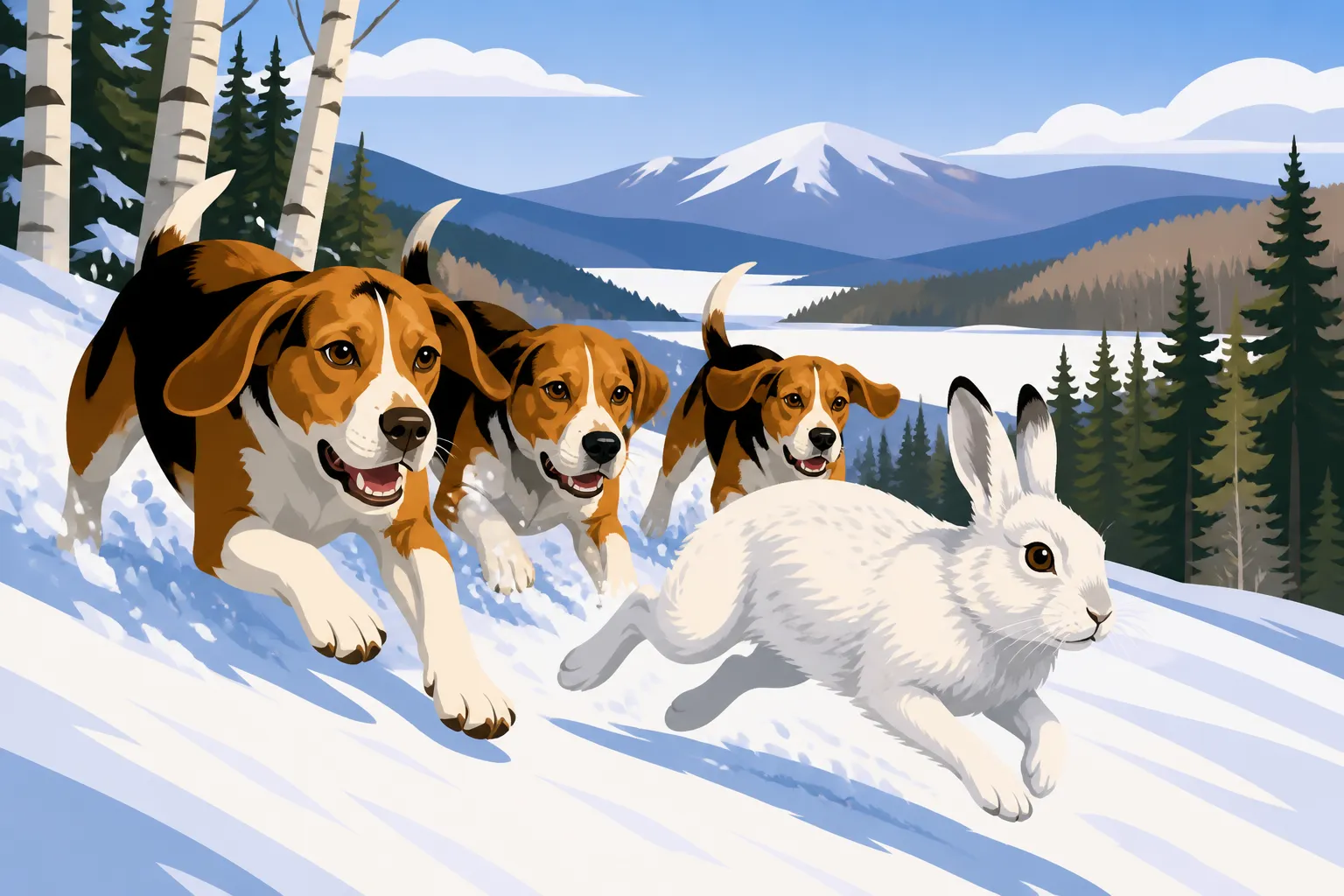
Once a hare is jumped, the chase is on. Hares don't run in a straight line for miles; they typically circle back to their home territory, often using the same network of trails and thickets. This circling behavior is precisely what beagles are bred for, and it's what makes the hunt so exciting. Your dogs will work the track, often sounding off with increasing intensity as they get closer to the hare. This vocalization is not just for the hunter's benefit; it also serves to confuse and wear down the hare. During this phase, it’s vital to let your dogs do their job. Resist the urge to intervene unless they're truly off track or in danger; trust their instincts.
Building stamina and resilience in your beagles is also important for Vermont's sometimes brutal winter conditions. Regular exercise, a good diet, and proper care, especially in cold weather, will ensure they can perform effectively for an entire day's hunt. Introducing them to various types of snow and terrain during training will also help them adapt to the varied landscapes they'll encounter. Remember, a hare can outrun a dog in a straight line, but the beagle's relentless tracking, vocalization, and ability to follow the hare's circles are what ultimately create opportunities for the hunter. The best runs are often those where the hare circles several times, testing both the dogs' endurance and the hunter's patience and positioning.
Key Commands and Socialization for Hunting
While beagles are primarily scent-driven, having a set of reliable commands is absolutely non-negotiable for safe and effective hunting, especially when you're on public land or near roads. Basic obedience like "sit," "stay," "come," and "heel" should be second nature to your dogs. The "come" command, in particular, is critical for calling dogs off a track if they're headed towards a dangerous area or if the hunt needs to end abruptly. Practicing these commands frequently, even outside of hunting season, reinforces their training and ensures they're responsive when it counts. Consistency across all handlers is also important if you hunt with multiple people; everyone should use the same cues.
Socialization is another often-overlooked aspect. If you hunt with multiple dogs or with friends who have their own beagles, your dogs need to be comfortable and cooperative working as a pack. They should be able to share a track, follow each other's lead, and not fight over game or treats. Introducing dogs to each other slowly, in neutral territory, and supervising their interactions can prevent conflicts and foster a harmonious hunting team. A well-socialized pack is a more efficient and enjoyable pack to hunt with. It means less worrying about dog-on-dog aggression and more focus on the chase.
Beyond basic commands, specific hunting commands can also be useful. For instance, some hunters use a distinct whistle or call to signal "find a track" or "come to me immediately." Hand signals can also be effective in situations where vocal commands might spook game or be inaudible over wind and distance. Using a GPS collar system, like those offered by companies often integrated with mapping services like GoHunt, is also a game-changer for monitoring your dogs' location and retrieving them, especially in Vermont's dense and challenging terrain. This technology allows you to track their movement patterns and ensures you know where they are at all times, preventing lost dogs and greatly increasing safety.
Practical Hunting Strategies and Ethics
Reading the Chase: How Hare Run
The true thrill of beagle hunting for snowshoe hare is in actively participating in the chase, not just waiting for the shot. Once your dogs jump a hare and the music starts, you need to become a keen observer and listener. Snowshoe hares are masters of their domain, and their escape tactics are fascinating. They won't just run blindly. Instead, they'll use their intimate knowledge of the local cover, circling back through thickets, running along old logging roads, or even cutting across open patches before diving back into dense conifers. They'll often try to put obstacles between themselves and the pursuing dogs, using downed trees, brush piles, or even dense saplings to their advantage.
Your job as a hunter is to "read" these circles and anticipate where the hare is likely to come next. This often involves moving strategically, positioning yourself along known hare runs or in natural openings that the hare might cross. Listening to the dogs' voices is your primary tool. A consistent, excited bark means they're hot on the trail. A hesitation, or a "chop" in their bark, might indicate the hare has made a tricky turn or temporarily lost the scent. This is where experience truly pays off. Knowing the local terrain, understanding how hares react under pressure, and trusting your dogs' abilities are paramount. The chase might last anywhere from a few minutes to an hour, depending on the hare's evasiveness and the dogs' stamina.
Sometimes, a hare will "hole up" – diving into a brush pile, a rock crevice, or even an abandoned culvert. Your dogs will likely indicate this by intensely barking at the location. While it's tempting to try and flush them, remember that disturbing these natural shelters can be unethical and might stress the animal unnecessarily. Often, the best course of action is to let the dogs work, give the hare a moment, and see if it eventually bolts again. This patience is a hallmark of ethical hunting and a sign of respect for the game. For more on general winter hunting, consider Cold-Weather Sitting Strategy in the Northeast Kingdom.
Positioning Hunters for Success
Once the dogs are on a track, hunter positioning becomes a critical factor in success. Snowshoe hares typically run in large circles that often bring them back near where they were jumped. This allows hunters to set up in strategic locations along these anticipated runways. The key is to find natural funnels, pinch points, or openings within the dense cover that the hare is likely to cross. This could be an old logging road, a narrow deer trail, a break in a thick cedar swamp, or even the edge of a small clearing.
It's common for a hunting party to spread out, with one or two hunters staying closer to the initial jump site, and others moving further out along the expected circle. Communication is vital here. Using two-way radios can help coordinate movements and keep everyone informed of the dogs' progress and the hare's direction. Always be aware of other hunters' positions and your shooting lanes. Safety is paramount, especially when moving through dense cover with dogs running. Never shoot at sound alone; positively identify your target and know what's beyond it before taking any shot.
Remember, hares are small and fast, and shots can be quick. A shotgun with open chokes and smaller shot sizes (like #4, #5, or #6) is usually ideal for the close-range, fast-moving targets you'll encounter. Unlike Hunting Vermont's November Rifle Opener where long-range precision is often key, hare hunting is more about quick reflexes and effective pattern density at shorter distances. Patience is also key – don't rush the shot. Let the hare present a clean, safe opportunity as it circles back. Sometimes, after a long chase, the hare will pause for a moment, giving you the perfect window.
Navigating Vermont's Snow-Covered Terrain
Hunting snowshoe hare in Vermont means embracing winter. You'll be traversing deep snow, often through dense, brushy terrain that's already challenging to navigate without snow. Investing in good quality Best Snowshoes for Late-Season Tracking or skis is not just a luxury; it's a necessity for accessing prime habitat and keeping up with your dogs. Walking through chest-deep snow without them is exhausting and can quickly lead to hypothermia. The right footwear will allow you to conserve energy, move more quietly, and cover ground effectively, making the hunt more enjoyable and safer.
Beyond snowshoes, understanding the terrain under the snow is crucial. Vermont's landscape is dotted with hidden obstacles: downed logs, rock outcroppings, frozen streams, and sometimes unstable ice. A slip or fall in deep snow, especially when carrying a shotgun, can be dangerous. Always watch your footing, and if you're unfamiliar with an area, proceed with extra caution. Using a stout walking stick or trekking poles can provide additional balance and help probe snow depth. This is where scouting before the snow flies, or using detailed topographic maps (perhaps with GoHunt's mapping features) to identify potential hazards, can be invaluable.
The cold itself is a significant factor. Hypothermia and frostbite are real risks. Layering your clothing, bringing extra dry layers, and packing high-energy snacks and hot drinks are essential. Remember that your dogs are also exposed to these conditions. Monitor their paw pads for ice build-up or cuts, and ensure they stay hydrated. A dog coat might even be appropriate for some breeds or extremely cold days. The ability to move efficiently and safely through this challenging winter environment is just as important as having well-trained dogs and good shooting skills. Your enjoyment and success hinge on being prepared for whatever the Vermont winter throws at you.
Gear and Safety for Winter Hare Hunting
Essential Winter Hunting Gear for You and Your Dog
When you're heading out to run beagles on snowshoe hare in Vermont, your gear list needs to be robust, much more so than a fair-weather squirrel hunt. For yourself, start with proper layering: a moisture-wicking base layer, insulating mid-layers (fleece or down), and a waterproof, windproof outer shell. Conditions can change rapidly in Vermont, so having adaptable clothing is key. Think about how active you'll be; you'll warm up quickly when moving, but cool down fast when standing still listening to the chase. A good pair of insulated, waterproof Best Boots for Northeast Kingdom Bog Hunting is non-negotiable, along with gaiters to keep snow out. Don't forget a warm hat, gloves (with a thinner pair for dexterity), and a blaze orange vest or hat for visibility, which is legally required during certain seasons and always a good idea for safety.
For your beagles, gear is just as important. GPS collars, like the Garmin Alpha series or others that integrate with mapping platforms, are arguably the most crucial piece of equipment. They allow you to track your dogs' exact location, see their progress, and ensure their safety. This is especially vital in dense cover where you can lose sight of them quickly. Many of these systems also allow you to issue bark commands or even provide stimulation, though the latter should only be used with proper training. Additionally, consider protective dog vests or collars that offer some visibility and protection from thorns and brush. A small dog first-aid kit, a water bottle, and some high-energy dog treats are also smart additions.
Beyond clothing and dog equipment, a few other items deserve a spot in your pack. A reliable compass and a physical map, even if you're using a GPS unit or a mapping app like GoHunt, provide crucial backup. A headlamp with extra batteries is essential for navigating pre-dawn darkness or if a chase runs longer than expected. A thermos of hot coffee or soup can be a lifesaver on a frigid day. Carrying a multi-tool, a small knife, and fire-starting materials is also prudent for any backcountry excursion. Remember, preparedness isn't just about comfort; it's about safety, especially when you're deep in Vermont's winter woods.
Staying Safe: Cold Weather, Ice, and Terrain Challenges
Vermont winters are beautiful, but they demand respect. The biggest safety concerns when hunting snowshoe hare are often related to the elements and the terrain. Hypothermia can set in quickly if you get wet or don't manage your exertion levels properly. Always dress in layers you can shed or add, and bring a change of dry clothes for the ride home. If you're hunting near water bodies, especially frozen ponds or streams, extreme caution is necessary. Ice can be deceptively thin, and falling through could be life-threatening. Always test ice thickness and know your limits; sometimes it's better to bypass a risky crossing than to push it.
Terrain challenges extend beyond just deep snow. Vermont's woods can be rugged, with steep ravines, rock slides, and thick brush that can conceal hidden dangers. When you're following the sounds of the chase, it's easy to get focused on the dogs and overlook your footing. Move slowly and deliberately, using trekking poles for stability. Let someone in your hunting party know your general plans and expected return time, especially if you're venturing into more remote areas like those described in Hunting Vermont's Green Mountain National Forest. Cell service can be spotty in many parts of rural Vermont, so a satellite messenger or a fully charged emergency radio can be a wise investment. Checking land boundaries and access points on a platform like GoHunt before you go out can prevent headaches and ensure you're on legal hunting ground.
Safety for your dogs is equally important. Ensure they are properly acclimated to cold weather, and don't push them too hard. Keep an eye on their paw pads for ice or cuts, and consider dog boots if conditions are particularly harsh. Be mindful of potential encounters with larger predators like coyotes, especially if your dogs range far. While beagles are usually too fast and nimble to be caught, it's a consideration. Finally, always abide by Vermont's hunting regulations, including Vermont Public Land Hunting Hours and blaze orange requirements. These rules are in place for your safety and the safety of others sharing the woods, ensuring everyone has a positive experience.
Essential Winter Hare Hunting Gear Checklist
| Category | Item | Purpose | Notes |
|---|---|---|---|
| Hunter Gear | Layered Clothing | Warmth, moisture wicking, adaptability | Synthetic base, fleece/down mid, waterproof shell |
| Insulated Waterproof Boots | Keep feet dry and warm | Often combined with gaiters | |
| Snowshoes/Skis | Efficient movement in deep snow | Crucial for covering ground and saving energy | |
| Blaze Orange Hat/Vest | Visibility and safety | Legal requirement and common sense | |
| Headlamp & Extra Batteries | Navigating low light, emergency | Essential for pre-dawn starts or late finishes | |
| GPS/Mapping Device | Navigation, tracking dogs (e.g., GoHunt app) | Physical map & compass as backup | |
| Two-Way Radios | Communication with hunting partners | Important for coordinating movements | |
| Thermos (hot beverage/food) | Warmth, energy, comfort in cold | ||
| First Aid Kit | Addressing minor injuries | For both human and canine | |
| Dog Gear | GPS Collar | Dog tracking, safety, retrieval | Garmin Alpha series, SportDOG, etc. |
| Protective Vest/Collar | Protection from brush, visibility | Puncture-resistant, reflective | |
| Dog Water Bottle/Bowl | Hydration | Essential, even in cold weather | |
| Dog First Aid Kit | Addressing canine injuries | Paw balm, bandages, antiseptic | |
| High-Energy Dog Treats | Reward and energy boost |
Disclaimer
Hunting is an inherently dangerous activity. This guide provides general information and recommendations. Always consult the Vermont Fish & Wildlife Department for the most current regulations, licensing requirements, and safety guidelines. Proper training, preparation, and adherence to all laws are critical for a safe and successful hunt.