Calling an Early May Gobbler Off the Roost
There are few sounds in the Vermont spring woods more electrifying than a gobbler hammering from his roost tree just before dawn. It sends shivers down your spine and sets your heart pounding with anticipation. But let's be real, that initial excitement can quickly turn into frustration when that old tom just sits there, gobbling his head off, completely unwilling to fly down to your calls. This guide is all about tackling that specific challenge: getting that early May gobbler off his roost and into your setup.
Understanding Early May Gobbler Behavior on the Roost
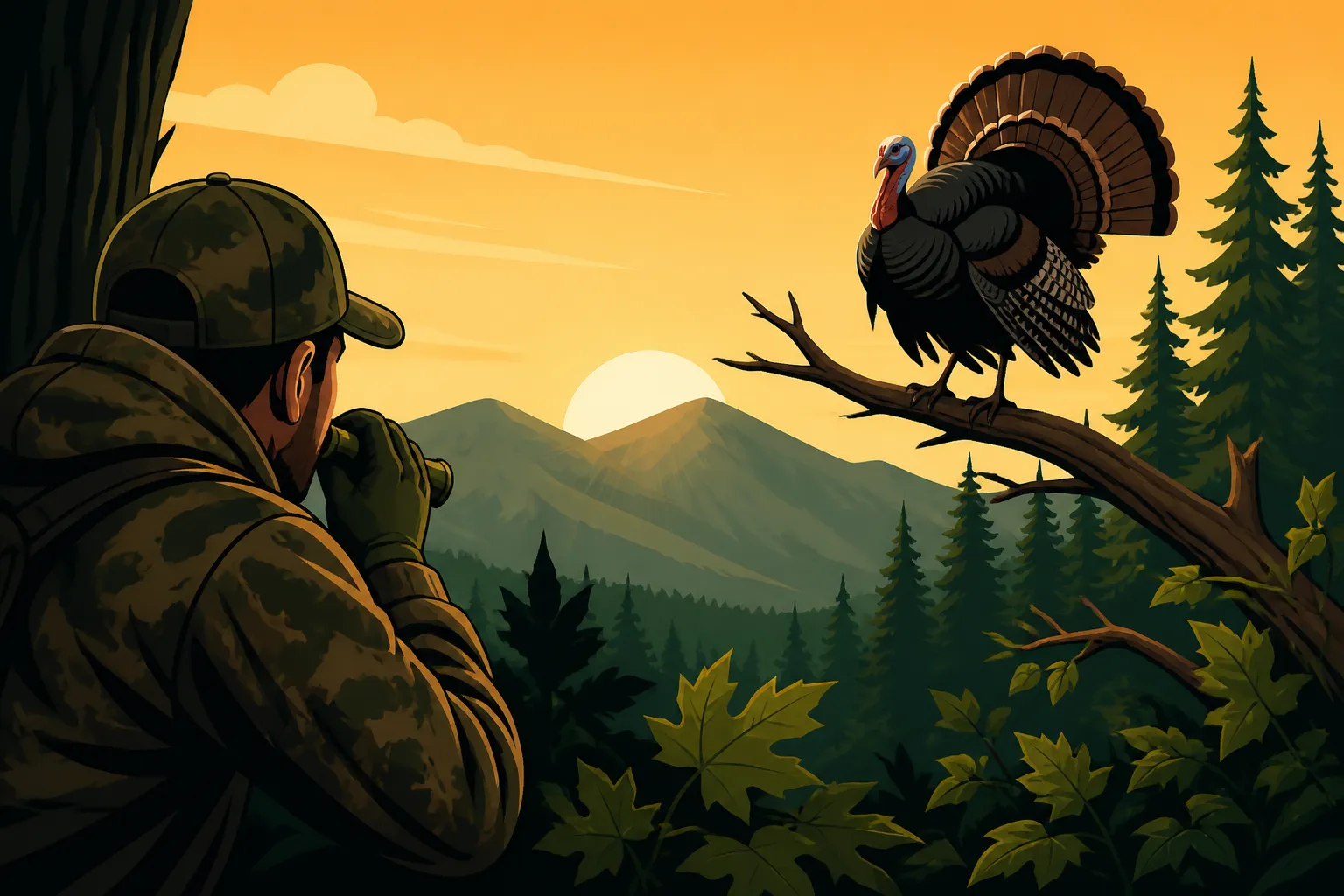
That gobbler sounding off from his perch isn't just making noise for the fun of it; he's communicating. He's letting hens know where he is, asserting his dominance, and generally trying to gather his harem before his feet even touch the ground. In early May, especially right after opening day, these birds are still pretty fresh, but they've also been through a long winter. Their instincts are kicking in hard, and breeding is top priority.
Why Gobblers Hang Up on the Roost
It’s a tale as old as time: you’re set up perfectly, the air is thick with anticipation, and that gobbler is just blasting away from his limb. You let out a soft tree yelp, maybe a fly-down cackle, and he hammers back. You think, "This is it!" Then, silence. Or worse, he gobbles a few more times, and you realize he's just not moving. There are a few key reasons this happens, and understanding them is crucial.
First off, early May mornings can still be quite chilly, and sometimes a gobbler will simply wait for the sun to hit his tree just right to warm up before committing to flying down. He’s not going to rush into a cold, potentially damp field or woodlot. Another huge factor is the presence of real hens. If he’s got a few ladies already roosted near him, or if he hears them yelping softly from their own branches, he has little incentive to come looking for your lone calls. He already has what he wants, or at least he knows where to find them. He’s the king of his roost, and he expects the hens to come to him. This territorial behavior, especially early in the season, is strong. They’re less likely to be desperate for companionship and more likely to be waiting for the ladies to gather beneath them. Sometimes, the bird might even be a two-year-old tom, still learning the ropes, but often, it's an older, more dominant bird who's simply too comfortable with his position. He knows the hens will eventually come.
The Dynamics of Fly-Down
The fly-down is a critical moment in turkey hunting, and it's where many hunts are won or lost. When a gobbler does decide to leave the roost, he rarely just drops straight down. Instead, he’ll often pitch out towards an open area, like a field edge, a logging road, or a clearing in the woods, giving himself a good vantage point to see any potential hens or predators. This is why scouting is so important; knowing where a bird prefers to fly down can make or break your setup. You'll often find them pitching to a relatively open spot where they can strut and be seen, or to a subtle rise where they can survey their kingdom.
Often, these birds will actually fly away from your calling initially, landing a short distance off before circling back or moving towards where they expect to see a hen. This "strut zone" or "assembly point" might be 50 to 100 yards from the actual roost tree. If he hears hens (your calls) but doesn't see them right away, he might become hesitant, or even choose to move away in search of an easier target. Your job is to make him think your "hen" is just out of sight, but headed his way. This is where subtle calling and patience come into play. Aggressive calling right at fly-down can often spook a cautious bird, or make him think your hen is too far off to bother with.
Optimal Roosting Setup Strategies for Vermont Turkeys
Setting up on a roosted gobbler in Vermont’s diverse terrain, from the Champlain Valley dairy farms to the steep Green Mountain forests, requires careful planning and execution. The goal is to get as close as safely and stealthily possible without bumping the bird, then position yourself for a high-percentage shot once he commits to the ground.
Silent Ingress and Positioning
The pre-dawn hike into a roosted gobbler’s domain is a sacred, silent ritual. Every snap of a twig, every rustle of leaves, can give you away. You need to be methodical and slow, especially if you're Still-Hunting Green Mountain National Forest Timber or crossing open fields. Use the cover of darkness and natural terrain features—ridges, swales, large trees, stone walls—to mask your approach. A good headlamp with a red or green light setting can be invaluable for navigation without washing out your night vision or alerting game.
Once you’ve pinpointed his general roost location, you need to make a crucial decision: how close is too close? Generally, aiming for 75 to 100 yards from the roost tree is a sweet spot. This distance is close enough for him to hear your calls clearly once he starts gobbling on the limb, but not so close that your fly-down cackle sounds like it’s coming from directly under his branch, which can sound unnatural. When choosing your exact setup spot, prioritize good back cover (a wide tree, a thick brush pile) that breaks up your silhouette. Ensure you have a clear shooting lane in the direction you anticipate he’ll fly down or approach from. Remember, Setting Up Against a Big Sugar Maple or a cluster of pines offers excellent concealment. Consider the wind direction and thermals, especially in the Green Mountains; cold air sinks, so early morning thermals often pull scent downhill. Try to position yourself so your scent isn’t drifting towards the roost tree.
Decoy Placement for Roosted Birds
Decoys can be a game-changer when calling a bird off the roost, but placement is everything. The biggest mistake is putting them too close to the roost tree, or in a spot where the gobbler has to fly over them to land. This can make them appear unnatural. Instead, think about where that gobbler wants to land and strut after fly-down. Place your decoys (typically one hen, or one hen and a jake) 20-30 yards out from your position, and in the direction you expect the bird to approach.
The key is to create a realistic scenario. If you’re hunting a field edge, place the decoys just inside the edge, in a subtle opening where they’d naturally be. If you’re in timber, find a small clearing or a subtle bench. The decoys should be visible to the gobbler from his flight path, but not so prominent that they look out of place. Consider using a half-strut jake decoy alongside a contented hen; this can be a powerful visual trigger for an early May gobbler, challenging his dominance and making him want to come in and investigate. Brands like Avian-X and Primos make excellent, realistic decoys that are lightweight and easy to carry in the pre-dawn darkness. Remember to set your decoys up before legal shooting light to avoid disturbing the area after the birds are awake. When considering Decoy Placement for Pressured Spring Birds, subtle and natural is often better.
| Scenario | Distance from Roost | Decoy Setup (from your position) | Calling Strategy | Notes |
|---|---|---|---|---|
| Gobbler on Ridge | 75-100 yards | Single hen, 20-25 yards out | Soft tree yelps, fly-down cackle, contented clucks | Expect him to pitch downhill, then approach. |
| Gobbler on Field Edge | 80-120 yards | Hen & jake, 25-30 yards out | Soft tree yelps, aggressive fly-down, gobble-on-ground | He'll likely fly to the field, decoys create a challenge. |
| Gobbler in Thick Woods | 60-80 yards | Single hen, 15-20 yards out | Soft clucks/purrs, subtle yelps, leaf scratching | Keep calling minimal, he needs to find the hen. |
| Gobbler Across Creek | 100+ yards | None or hen if clear path | Louder yelps to get attention, then soft clucks | He might not cross water; plan for him to go around. |
Calling Techniques for Roosted Birds
Calling a gobbler off the roost isn't about being the loudest; it's about being the most convincing. You're mimicking a hen, and hens aren't typically screaming at the top of their lungs from a tree limb. Subtlety, timing, and knowing when to shut up are paramount.
Tree Yelps and Fly-Down Cackles
As the first hints of grey break the horizon, and you hear that first sleepy gobble, resist the urge to immediately unleash a flurry of calls. Start with soft, pleading tree yelps. These are typically 4-6 quiet, drawn-out yelps, mimicking a hen stretching and waking up on her roost. Wait for him to gobble again, then respond with another soft series. The goal here is to acknowledge him, to let him know there’s a hen (you) nearby, but not to scare him into thinking you’re right under his tree. You’re teasing him, building anticipation.
As the light increases and the woods truly begin to wake up, you’ll start to hear other birds – crows, songbirds, maybe even a squirrel chattering. This is often when real hens will start to fly down. When you hear the distinct sound of wings beating heavily, or when you visually confirm a bird flying down (if you can, safely), that’s your cue for a fly-down cackle. This isn't a meek sound; it's a short, excited string of 6-10 sharp, fast yelps that ends abruptly, mimicking a hen flying from her roost. Combine this with the sound of actual wings beating the air and landing (you can slap your hat against your leg or the ground lightly). This sequence is designed to make the gobbler think, "Aha! There she goes! She's on the ground now." It's one of the most exciting moments of the hunt and can often be the final nudge he needs to commit. Remember, the timing of this call is absolutely crucial. Too early, and he might not be ready. Too late, and he might have already flown down and moved off with real hens. Master Best Call for a Vermont Spring Gobbler to effectively use these sounds.
Ground Calling After Fly-Down
Once you’ve done your fly-down sequence, and hopefully, he’s hit the dirt, the game changes. Now, you’re mimicking a hen on the ground, just out of sight, ready to be bred. Your calling should become more confident, but still not overly aggressive. Start with a series of contented clucks and purrs. These are reassuring sounds, signaling that the hen is relaxed and feeding. Mix in some softer yelps – 5-7 medium-volume yelps – that sound like a hen actively looking for the gobbler she just heard. You want him to think she’s moving around, but staying relatively put, waiting for him to come to her.
Patience is your absolute best friend here. An early May gobbler, especially one with hens, is likely to strut and gobble in one spot for a while, expecting the hens to close the distance. Resist the urge to call too frequently or too loudly. Let him gobble, then wait a few minutes before responding with a soft series of clucks or a short yelp. If he’s hung up, consider a subtle change in your sound, maybe using a different call (e.g., switching from a diaphragm to a slate). Sometimes, a bit of subtle ground scratching can add realism, making it sound like a hen is foraging. Using an app like GoHunt can help you scout and understand areas where turkeys often gather after fly-down, giving you a better idea of where to focus your ground calling efforts. If you've observed Vermont Turkey Roost Tree Preferences in your scouting, you'll know where they're likely to drop.
Tactics for When He Hangs Up Post-Fly-Down
Even with the perfect setup and calling sequence, sometimes that gobbler just refuses to close the distance. He flies down, gobbles a few times, and then hangs up 70 yards out, out of range, just strutting and drumming. This is where many hunters lose hope, but don't give up! There are still moves you can make.
Aggressive Calling and Decoy Adjustments
If a gobbler flies down and hangs up, often the issue is that he’s expecting the hen to come to him. You’ve played the role of the coy hen, and now it’s time to be a little more demanding, or even challenge him. Try a more aggressive series of cutting and loud yelps. This can sound like a hen that’s impatient or even slightly annoyed, as if she’s saying, "Alright, I'm here, where are you?" Sometimes this extra urgency is all it takes to tip the scales and bring him in. If he’s still hanging, a series of short, sharp clucks and purrs can sound like two hens squabbling, which can pique his interest and make him curious enough to come investigate. This is especially effective if he sees your decoys.
If you’re hunting with a jake decoy, and the gobbler is holding up, consider a slight adjustment to your decoy spread if you can do it silently and without being seen. Sometimes, simply turning the jake decoy to face the gobbler more directly, or even lying it down as if it’s submitting, can provoke him. A submissive jake can sometimes tempt an older gobbler to come in and assert his dominance. However, any movement needs to be absolutely minimal and done with extreme caution. If you have the luxury of Hunting Vermont's New Archery-Rifle Overlap and are carrying a bow, this distance can be even more frustrating, requiring more aggressive tactics to pull him closer. Understanding Vermont Turkey Gobbling Activity Timing can help you judge if it's worth waiting him out or trying these more aggressive tactics.
The "Silent Retreat" and Reposition
When all else fails, and that gobbler is absolutely glued to his spot, sometimes the best move is to make no move at all – at least not in his direction. This is where the silent retreat comes in. If he’s hung up and won’t budge, try backing out slowly and silently, circling widely to get ahead of him or to a different approach angle. You’re essentially resetting the hunt. This is a tactic often used by experienced hunters when they face a stubborn bird that won't come in.
Once you’ve moved, you can try setting up in a completely new location, perhaps 100-200 yards away, and try a completely different calling sequence. Maybe you were too aggressive before, or not aggressive enough. This fresh approach can often fool a hung-up bird. Sometimes, moving silently to a location where he has to cross a natural funnel, like Hunting a Funnel Between Two Woodlots or a creek bottom, can be effective. If you're really desperate and he’s moved off, sometimes a slight change in terrain, like Working a Fall Flock Apart Statewide With a Bow (even though it's spring, the principle of moving the birds applies), can give you the edge. Just remember: patience and stealth are key to any successful repositioning attempt.
Wrapping Up Your Early May Gobbler Hunt
Hunting early May gobblers off the roost in Vermont is a quintessential spring experience, full of both incredible highs and exasperating lows. There’s no magic bullet, no single call that works every time. It’s a chess match, a dance between hunter and hunted, relying on observation, subtle strategy, and a deep understanding of turkey behavior.
You'll have mornings where everything clicks, and that tom flies down right into your lap. You'll also have those tough mornings where he simply refuses to play ball, leaving you to wonder what you could have done differently. But that's the beauty of it, isn't it? The challenge, the pursuit, the learning with every sunrise. Keep honing your calling, keep scouting, and keep adapting to what those Vermont gobblers are telling you. Soon enough, you'll be dragging that big tom back to the truck. Don't forget to report your harvest according to Vermont Deer Reporting Requirements once you've secured your bird. And for those planning ahead for later in the season, remember that the dynamics can change significantly, so preparing for When Vermont Gobblers Go Quiet in Late May is also crucial.
Disclaimer
Hunting is an inherently dangerous activity. Always prioritize safety, adhere to all Vermont Fish & Wildlife Department regulations, and respect private property. The information provided in this guide is for educational purposes only and should not replace proper hunter education or professional guidance. Ensure you have all required licenses and permits, including your Vermont Spring Turkey Permit Rules and relevant stamps, before heading afield.