Decoy Placement for Pressured Spring Birds
There’s nothing quite like the thrill of spring turkey hunting in Vermont. Those booming gobblers, the crisp morning air, the anticipation. But let’s be honest, after the first few days or a weekend of heavy pressure, those once-eager gobblers often turn into ghost-like phantoms, hanging up at 100 yards, circling wide, or simply refusing to commit. It’s incredibly frustrating when your tried-and-true decoy setup suddenly stops working, leaving you scratching your head. This guide is all about understanding why those birds get so wary and how you can adapt your decoy placement to outsmart even the most pressured spring gobblers in Vermont.
Understanding What Makes Spring Gobblers Wary
Spring turkey hunting kicks off with a bang, but that initial excitement and success often quickly translate into "educated" birds. They learn fast, and what worked on opening day might send them running for cover just a week later. It’s not just hunter numbers; it’s the cumulative effect of calls, decoys, and perceived threats that sharpens their senses. When a gobbler has seen a decoy spread that looks “off” or been busted approaching a setup, he remembers.
Signs of an Educated Gobbler
You know you're dealing with a pressured bird when their behavior changes. Instead of strutting right into your setup, they’ll often exhibit tell-tale signs of suspicion. They might gobble intensely on the roost but then fall silent the moment they hit the ground, or they’ll pitch down silently in a completely different direction than expected.
One of the most common frustrations is the "hang-up." A gobbler might come in, strutting and drumming, but stop just out of range, often behind a brush line or a rise in the terrain. He'll stand there, craning his neck, looking for the source of the calls he heard and the decoys he's now spotting. If he sees something he doesn't like—a hunter fidgeting, a decoy that looks unnatural, or an unexpected movement—he's gone. They become incredibly visual, relying on their keen eyesight to spot danger before committing. Other signs include circling widely, often trying to get an uphill advantage or looking for movement in dense cover, and refusing to enter openings. You might see him doing this in a familiar field in the Champlain Valley, where open spaces make them feel exposed, or even in the more rugged Green Mountain hardwoods, where they use subtle terrain features to their advantage.
Common Decoy Mistakes That Spook Wary Birds
Many hunters, myself included, have fallen victim to common decoy mistakes that are easily overlooked but can ruin a hunt, especially with pressured birds. One of the biggest culprits is using too many decoys, or a setup that’s just too aggressive. A full spread of multiple hens and a strutting gobbler might work wonders on unpressured birds early in the season, but later on, it can actually intimidate wary birds. They've seen it before, or worse, they've been shot at while approaching such a display.
Another major mistake is poor placement relative to your position and the sun. If your decoys are too far out, the bird might hang up and never get close enough for a shot. If they're too close, the bird might pick you out the moment they commit. The sun, believe it or not, plays a huge role. If the sun is at your back, shining directly on your decoys, it can create a glare that looks unnatural to an approaching gobbler. Conversely, if the sun is in the gobbler's eyes as he approaches, it can mask some minor imperfections, but also make him hesitant. And let's not forget the cardinal sin: lack of realism. A cheap, plastic-looking decoy that shines or lacks detail will stick out like a sore thumb to a turkey's incredible eyesight, especially when they're already on high alert. Even the angle of the decoy can matter; an unnaturally alert hen or an improperly oriented jake can send warning signals.
Adaptive Decoy Strategies for Pressured Turkeys
When birds are wary, it’s time to rethink your approach. Forget the big, flashy spreads and start thinking about subtlety, realism, and creating a scenario that makes the gobbler feel dominant and safe. It's about drawing him in without raising his suspicions.
The Lone Hen Approach
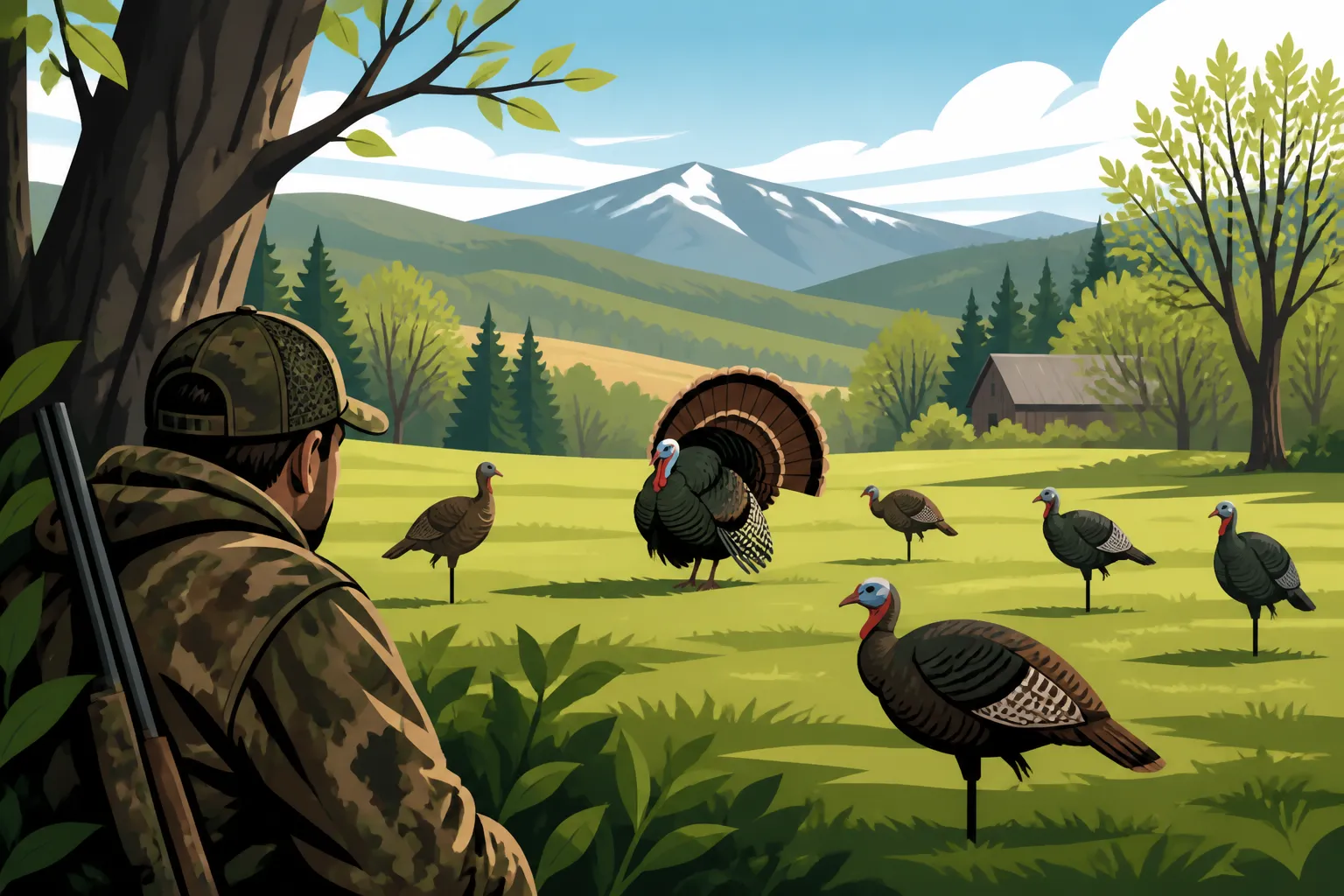
For pressured spring gobblers, often the most effective decoy strategy is also the simplest: a single, submissive hen decoy. This setup screams "easy pickings" to a dominant gobbler without presenting any perceived threat. A single hen indicates availability without competition. Think about it from a gobbler's perspective: he's been battling other gobblers, fending off jakes, and constantly on guard. Seeing a lone hen, perhaps even in a semi-fanning posture or looking relaxed, offers an inviting scenario that appeals to his primal urge to breed, without triggering his fight response.
This approach is particularly effective in areas where birds have been called to heavily, like small woodlots in central Vermont or field edges frequented by other hunters. Position your lone hen so she's facing slightly away from you, as if she's just grazing. This subtle angle can make her appear more natural. Many hunters will even choose a less vibrant, more natural-looking decoy for this scenario, avoiding anything too bright or flashy. Companies like Avian-X and Zink Calls offer highly realistic hen decoys that can make all the difference here. By scaling back your spread, you increase realism and decrease the likelihood of spooking a bird that’s already on edge. This also allows you to be more flexible with your setup, moving quickly to adapt to a bird that might be Calling an Early May Gobbler Off the Roost from an unexpected direction.
Concealment and Decoy Angles
Beyond reducing the number of decoys, how you conceal yourself and how you angle your decoy is paramount. With pressured birds, they're scrutinizing everything. Your setup needs to blend seamlessly into the environment. This means using natural cover effectively, whether you're Setting Up Against a Big Sugar Maple or utilizing a ground blind.
Position your decoy so that the gobbler's approach brings him into your comfortable shooting range, ideally within 20-30 yards, and presents him broadside or slightly quartering away. You don't want him directly facing you, as his vitals are harder to hit, and he's more likely to spot any movement. Crucially, try to place your decoy slightly uphill or on level ground from where you expect the gobbler to approach. Turkeys, especially wary ones, often prefer to approach from a position of perceived dominance or at least from a vantage point where they can survey the scene. If your decoy is downhill, they might hang up, just out of range, to get a better look. Furthermore, consider the angle of the decoy relative to your blind or cover. If the bird sees the decoy and then is forced to look directly at your position, your chances of getting busted increase. A good strategy is to place the decoy where the gobbler will focus on it, drawing his attention away from your exact location. Remember, the goal is to make him commit to the decoy, not to you.
Motion Decoys and Their Role
Motion decoys can be a game-changer or a hunt-ender, especially with pressured birds. In scenarios with unpressured turkeys, a fanning jake or a flapping hen can be irresistible. The visual stimulation of movement mimics real-life interaction and can draw in birds from a significant distance. However, for a bird that's seen it all, too much or unnatural motion can be a red flag.
When dealing with wary birds, if you choose to use motion, keep it subtle. A slight breeze causing a hen decoy's tail to feather, or a carefully controlled fanning decoy that you operate manually to mimic a quick flash, can be more effective than constant, aggressive movement. Think about what looks natural. A real turkey doesn't constantly fan or flap its wings for minutes on end. The key is moderation. Companies like Primos and Flextone offer a range of motion decoys, from full strutting jakes with rotating fans to simple stake-mounted hen decoys that pivot in the wind. Use a manual fanning decoy, for instance, by exposing it for just a few seconds when a gobbler is out of sight or hangs up, then dropping it. This intermittent movement can pique his curiosity without overdoing it. A well-placed flapping motion decoy might work if you're trying to simulate a fly-down and have birds Reading a Green Mountain Deer Yard with intense scrutiny. However, if birds are already hanging up, static, realistic decoys are usually a safer bet.
Advanced Decoy Tactics and Scenarios
Sometimes, getting a pressured gobbler to commit takes more than just a simple setup; it requires a deep understanding of their behavior and the ability to adapt on the fly. This is where subtle refinements in your decoy strategy, combined with effective calling, really shine.
Reading the Terrain and Natural Features
The terrain in Vermont is incredibly diverse, from the wide-open dairy fields of the Champlain Valley to the thick, steep ridges of the Green Mountains. Learning to read these natural features and incorporate them into your decoy placement is critical, especially when targeting wary birds. Turkeys, particularly older gobblers, are masters of using terrain to their advantage, and you should be too.
When you're scouting, pay close attention to benches, draws, rises, and areas of dense cover. A gobbler will often use these features to approach your setup while staying concealed or to get a better vantage point. If you anticipate a gobbler approaching along a specific ridge or through a low saddle, position your decoy just over the crest of that feature, so it's the first thing he sees when he steps into view. This creates an immediate visual, drawing his attention. Similarly, if you're hunting a field edge, don't place your decoys right out in the middle of the field where they might look too exposed. Instead, place them closer to the edge, perhaps near a fence line or a brushy point, where a real hen might naturally feed. This makes the setup feel more secure to an approaching gobbler, especially if he's been pressured by other hunters who often put decoys right in the middle. Utilizing mapping tools like GoHunt can be invaluable here, helping you identify subtle terrain changes and potential travel corridors where you can effectively place your decoys. It's about thinking like a turkey and using the landscape to guide his approach directly into your shooting lane.
Calling in Conjunction with Decoys
Decoys are visual, but calling is auditory, and combining the two effectively is the art of turkey hunting. With pressured birds, your calling strategy needs to be as subtle and believable as your decoy setup. Don't overcall, and match your calls to the scenario you're presenting with your decoys.
If you're using a lone hen decoy, for instance, soft yelps, clucks, and purrs are your best bet. You're not trying to simulate a flock, but rather a single, contented hen. Overly aggressive or loud calling can make a wary gobbler suspicious, as it often sounds unnatural. Conversely, if you're just using a fan or a jake decoy without a hen, you might try some soft jake yelps to challenge an approaching gobbler, making him think another jake is with a hen. The key is to make the sounds match the visual story. If a gobbler hangs up, give him a soft cluck or a purr—something that reassures him rather than challenges him. Often, that soft, natural sound is all it takes to convince him that the decoy he's seeing is truly what he's been hearing. Knowing when Vermont Gobblers Go Quiet in Late May can also inform your calling; sometimes silence is the loudest call.
Adjusting to Mid-Day Lulls and Changing Conditions
Spring turkey hunting isn't always about the thunderous roost fly-down. Mid-day can often be the most challenging, as gobblers might be with hens or simply less vocal. This is when adjusting your decoy strategy for changing conditions, including weather and bird mood, becomes crucial.
If the mid-day brings sunshine and warmth, gobblers might be more inclined to seek shade or travel through timber. Your decoy placement should reflect this. Instead of a field edge setup, consider moving deeper into a woodlot near a dusting bowl or a natural travel corridor. Use a lone hen decoy, perhaps posed as if she's dusting or loafing, which indicates a relaxed, secure bird. If you're hunting public land, you might have to deal with birds that have been bumped around. In this case, consider a minimalist approach or even a ground blind if you're not already using one, perhaps while Using a Ground Blind on Public Land or Brushing In a Blind on a Field Edge. GoHunt's weather overlay can help you predict how conditions might shift, allowing you to anticipate bird movement. If it's windy, decoys might move unnaturally, or sounds might be harder to pinpoint. In these conditions, focusing on highly visible decoys or adding subtle motion can help. Conversely, on calm days, hyper-realism and stillness are paramount. The ability to quickly adapt your setup – whether it's moving your single hen decoy a few yards, changing its angle, or even removing it entirely if a gobbler is circling too widely – is often the difference between filling your Filling a Second Spring Tag as a Resident and going home empty-handed.
| Decoy Setup Type | Number of Decoys | Bird Pressure Level | Calling Strategy | Ideal Scenario | Potential Drawbacks |
|---|---|---|---|---|---|
| Lone Hen | 1 Hen | High | Soft yelps, clucks, purrs | Wary, educated gobblers; small fields, timber fringes | Can be ignored by super aggressive gobblers. |
| Hen & Jake | 1 Hen, 1 Jake | Medium-High | Standard yelps, jake yelps | Appealing to dominant gobblers; open fields, clearings | Jake can spook younger gobblers if too aggressive. |
| Full Strut Gobbler | 1 Strutter | Low-Medium | Aggressive gobbler yelps, cuts | Challenging other gobblers; large fields, early season | Can intimidate shy gobblers; must be realistic. |
| Fanning/Reaping | Fan only | Situational | Aggressive purrs, soft clucks | Exciting and challenging; when bird is out of sight, aggressive | High risk of being seen, can be dangerous. |
| Multiple Hens | 2-3 Hens | Low | Varied hen calls | Simulating a small flock; early season, unpressured areas | Can look unnatural, too many targets for attention. |
Disclaimer
The information provided in this guide is for informational purposes only and is not intended as legal advice. Hunting regulations and best practices can change, and it is the hunter's responsibility to review and comply with all current Vermont Fish & Wildlife Department regulations. Always prioritize safety and ethical hunting practices.