When Vermont Gobblers Go Quiet in Late May
You've been out there since dawn, the air crisp with the promise of a warm spring day, but the woods feel… silent. Not the rich, vibrant silence of a still morning waiting for the first gobble, but a heavy, almost empty quiet. If you're a Vermont turkey hunter, you know this feeling all too well when late May rolls around. What happened to all those boisterous gobblers that were lighting up the timber just a couple of weeks ago? This guide is for every hunter who's experienced that sudden, frustrating silence and wants to understand why it happens and, more importantly, what you can do about it.
Understanding the Post-Peak Gobbling Lull
The spring turkey season in Vermont often starts with a bang, full of aggressive gobbling and toms strutting like they own the world. It’s a magical time, but it’s also fleeting. As May progresses, many hunters notice a significant drop in vocalizations, leading to head-scratching and often, empty vests. This isn't just bad luck; it's a predictable shift in turkey behavior driven by biology and environment.
The Biological Reality of the Breeding Cycle
Think about it: the early part of Vermont’s spring turkey season is all about procreation. Gobblers are wired to attract hens, and their booming calls are the primary advertisement. They’re competing fiercely, trying to establish dominance and draw in as many receptive hens as possible. This intense period of competition and courtship is why you hear so much activity in late April and early May. Gobblers are literally putting it all out there.
However, as the month wears on, most of the hens in the flock have been bred. They're no longer interested in responding to a tom's advances because their biological imperative shifts from mating to nesting. Once a hen starts laying her clutch of eggs and then commits to sitting on the nest, her presence around the gobblers diminishes dramatically. It's like they had a party and forgot to invite you to the after-party! Without receptive hens to chase or compete for, the gobblers' motivation to gobble aggressively wanes. They simply don't need to be as loud or as visible. You’ll often find these quieter periods coinciding with when most hens are incubating their nests, typically in mid to late May, varying slightly by region and local conditions.
Weather's Role in Gobbler Behavior
While biology is the main driver, weather can certainly throw a wrench into the works, accelerating or emphasizing the quiet periods. A consistently warm, mild spring can actually speed up the breeding cycle. If Mother Nature provides prime conditions for hens to get bred and on their nests earlier, then the "gobbling peak" will come and go more quickly. This means that by late May, the birds might be even further along in their post-breeding quiet phase than usual.
Conversely, sudden shifts in weather, like unexpected cold snaps, heavy rain, or strong winds, can also make gobblers less vocal. Turkeys are creatures of comfort, and they're not going to be out gobbling their heads off in a downpour or shivering through an unseasonable cold front. They'll seek shelter in thicker timber or more protected areas, conserving energy and waiting for better conditions. It's not that they've vanished, it's that their immediate priority has shifted to survival and comfort over vocal advertisement. Understanding these nuances of Vermont Turkey Gobbling Activity Timing can give you a significant advantage.
Why Their Priorities Shift and What That Means for Hunters
Once the primary breeding period is winding down, a gobbler’s daily routine undergoes a significant transformation. This shift directly impacts how and where you'll find them, making your traditional early-season tactics less effective.
Hens on the Nest and Toms Roaming Solo
By late May, the vast majority of hens are well into their nesting phase. They've found a secluded spot, laid their clutch, and are now committed to incubating those eggs. This means they are no longer running around the woods, clucking and yelping, and, crucially, no longer actively seeking out gobblers. The "girl band" that the gobblers were trying to impress has essentially broken up for the season.
With fewer receptive hens, the dynamics of the flock change dramatically. Gobblers, no longer needing to compete as aggressively for mates, tend to disperse. Instead of being concentrated in known strutting zones or around roost sites, they spread out across their territory, often becoming more solitary or forming small "bachelor groups" with other toms. This dispersal makes them much harder to locate by sound alone. They might still gobble occasionally, especially at dawn, but it's often a much weaker, less enthusiastic gobble, and they're less likely to respond to your calls. This is a far cry from "Calling a May Gobbler Off the Roost" during the early season. You might even stumble upon a lone tom feeding quietly in a field, completely unaware of your presence until it's too late for a shot.
Food Sources and Changing Patterns
Another critical factor influencing late-season turkey behavior is the abundance of new food sources. Early in the spring, turkeys often rely on residual mast crops from the previous fall, like acorns or beechnuts, or they might scratch through snow patches for greenery. But by late May, Vermont's landscape is bursting with new growth. Insect populations explode, providing a high-protein buffet. Lush green vegetation, tender shoots, and even early berries start to become available.
This shift in the larder means gobblers are no longer as reliant on the limited food sources that might have concentrated them earlier in the season. They can now find food almost anywhere, from forest floors rich with grubs and insects to growing hayfields. This expanded menu means their patterns become far less predictable. They might spend more time foraging in the deeper timber, along creek bottoms, or in dense thickets where insects are plentiful, moving away from the more open fields they frequented during peak breeding season. This makes them less visible and less likely to be stumbled upon, requiring hunters to adapt their scouting and approach. When considering where to set up your ambush, think about these new food sources.
Strategies for Hunting Quiet Late-Season Gobblers
When those booming morning gobbles turn into whispers or vanish altogether, it's time to put away the aggressive tactics that might have worked earlier in "Spring Turkey Hunting in Vermont." Successfully tagging a bird in late May requires a more nuanced, patient, and often more physically demanding approach.
The Art of Silent Scouting and Listening
Forget crashing through the woods hoping for a shock gobble. In late May, your ears become your most valuable tool, but you'll need to use them differently. You need to move through the woods like a ghost, covering ground slowly and silently. Instead of listening for explosive gobbles, train your ears for the subtle sounds: the almost imperceptible drumming of a strutting tom, the soft purrs or clucks of a bird feeding, or even the distinct whoosh of wings as a turkey flies down from the roost or pitches up for the evening. These soft sounds are your new indicators of a turkey's presence.
Locator calls can still be useful, but temper your expectations. An owl hoot or a crow call might still elicit a courtesy gobble, but it's often softer and might not be followed by another. Use them sparingly, more as a way to pinpoint general areas rather than expecting an immediate, enthusiastic response. When you're trying to locate these quieter birds, modern mapping apps are incredibly helpful. I often use GoHunt to scout aerial photos before I even step foot in the woods. This allows me to identify potential roosting areas, dense cover, or transition zones where a quiet tom might be feeding or traveling. Identifying these potential hotspots visually can save you a lot of aimless wandering and help you plan a silent approach.
Aggressive Calling vs. Subtle Tactics
Early in the season, you might have gotten away with ripping out loud, excited yelps and cutts. But by late May, that aggressive approach can often spook a wary, quiet tom. These birds have heard it all before, and they're less driven by the primal urge to breed. Instead, scale back your calling dramatically. Focus on softer, more natural hen sounds: soft purrs, contented clucks, and perhaps an occasional, short series of yelps. The goal isn't to draw them in with urgency, but to pique their curiosity or mimic a hen that’s just going about her business.
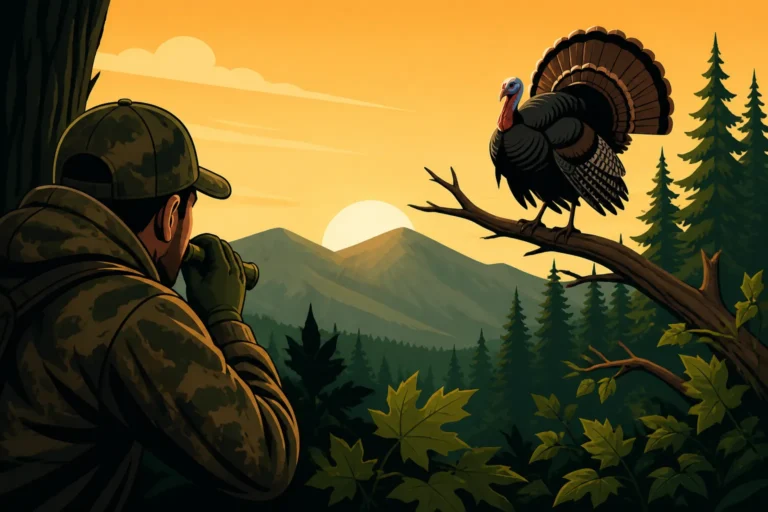
One effective strategy is the "run and gun" approach, but executed with extreme stealth. Move slowly through potential turkey habitat, pause frequently, offer a few subtle calls, and then listen intently for 5-10 minutes. If nothing responds, move another 100-200 yards, and repeat. This allows you to cover more ground and potentially stumble upon a quiet bird that might be convinced by a subtle call. Decoys can also be incredibly effective, especially a jake or a receptive hen decoy. A visual cue can sometimes be enough to draw in a tom that's hesitant to gobble. Position your Decoy Placement for Pressured Spring Birds carefully to offer a realistic setup, often facing away from your position, to encourage the tom to come into view looking for the "hen."
Utilizing Terrain and Cover
When gobblers go quiet, they often seek refuge and food in thicker cover where they feel more secure and can forage undisturbed. This means shifting your focus away from open fields and towards dense pine stands, brushy creek bottoms, steep ravines, or areas where logging has created thick new growth. These are the places where a silent tom might be roosting, feeding, or just loafing.
Pay close attention to transition zones – areas where different types of habitat meet, such as where mature hardwoods border a thick pine plantation, or where a field edge gives way to dense timber. These funnels between two woodlots are natural travel corridors for turkeys. When approaching these areas, use the terrain to your advantage. Walk slowly along ridge lines, use subtle rises and dips to conceal your movements, and always keep an eye out for fresh sign like droppings or dusting bowls. Setting up Against a Big Sugar Maple or another large, concealing tree that offers good visibility but keeps you hidden is crucial. If you're on public land, consider Using a Ground Blind on Public Land to maximize your concealment, especially when dealing with super wary birds.
What to Do When All Else Fails: Persistence and Observation
Even with the best strategies, late-season turkeys can be incredibly challenging. When the woods feel completely empty, it's easy to get discouraged. But this is where persistence, careful observation, and a willingness to re-evaluate your approach truly pay off.
Re-evaluating Your Hunting Spots
The spots that were hot during the early part of the Vermont spring season might be completely dead now. Those open fields where toms strutted endlessly? They might be deserted. It’s time to find new locations based on current turkey behavior. Look for fresh sign: new droppings that indicate recent activity, dusting bowls in secluded sunny spots, or subtle strut marks in soft dirt or mud. These clues tell you where turkeys are right now, not where they were.
Focus on areas with diverse food sources – places that offer both insects and tender greens. Creek bottoms, areas near water sources, or shaded, moist areas where insects thrive can be productive. While not a guarantee, Hunting Deer After a Cold Front can sometimes stir up some unexpected gobbling in deer, and the same can occasionally be true for turkeys, offering a brief window of opportunity after a weather shift. However, don't rely solely on sound; remember to rely on fresh sign and observed patterns. GoHunt's satellite imagery can also show you areas of new growth or differing canopy cover that might hold birds.
The Power of Patience and Still-Hunting
When birds are quiet, patience is your greatest ally. Instead of trying to force a reaction, embrace the long sit. Find a comfortable, concealed spot in an area with good visibility and high potential for turkey activity – perhaps a well-used travel corridor, a feeding flat in the timber, or near a water source. Settle in, be completely still, and let the woods come alive around you. Many late-season toms are bagged by hunters who simply out-waited them, catching a bird as it silently makes its way through its daily routine.
Still-hunting is another incredibly effective technique for quiet birds. This isn't just "walking slowly"; it's moving five steps, pausing for five minutes, and observing every detail. Use your binoculars to pick apart the cover, looking for the tell-tale black blob of a turkey or the glint of sun on a fanned tail. Listen intently for subtle sounds like scratching in the leaves or soft clucks. By moving at a snail's pace, you increase your chances of spotting a silent bird before it spots you, giving you the opportunity to set up a shot or make a soft, enticing call that might just be enough to draw it in. Remember, a quiet tom can appear out of nowhere, so constant vigilance and extreme patience are key.
| Feature | Early May Gobblers | Late May Gobblers |
|---|---|---|
| Vocalization | Frequent, aggressive gobbling, responsive to calls | Infrequent, softer gobbling, less responsive to calls |
| Motivation | Primary focus on breeding, attracting hens | Breeding mostly complete, focus on feeding |
| Location | Often near roosts, open fields, strutting zones | Dispersed, often in thicker cover, diverse food sources |
| Response to Calls | High, aggressive responses to various calls | Low, often unresponsive, subtle calls may work |
| Tactics | Aggressive calling, run-and-gun (loud), decoys | Silent scouting, subtle calling, long sits, still-hunting |
| Food Sources | Limited, seeking early greens/mast | Abundant insects, lush greens, early berries |
Disclaimer
Hunting is an inherently dangerous activity. Always prioritize safety, follow all Vermont Fish & Wildlife Department regulations, and obtain the necessary licenses and permits before heading afield. This guide provides general information and recommendations, but individual hunting conditions and turkey behavior can vary. Always scout your specific hunting area and adapt your strategies accordingly.