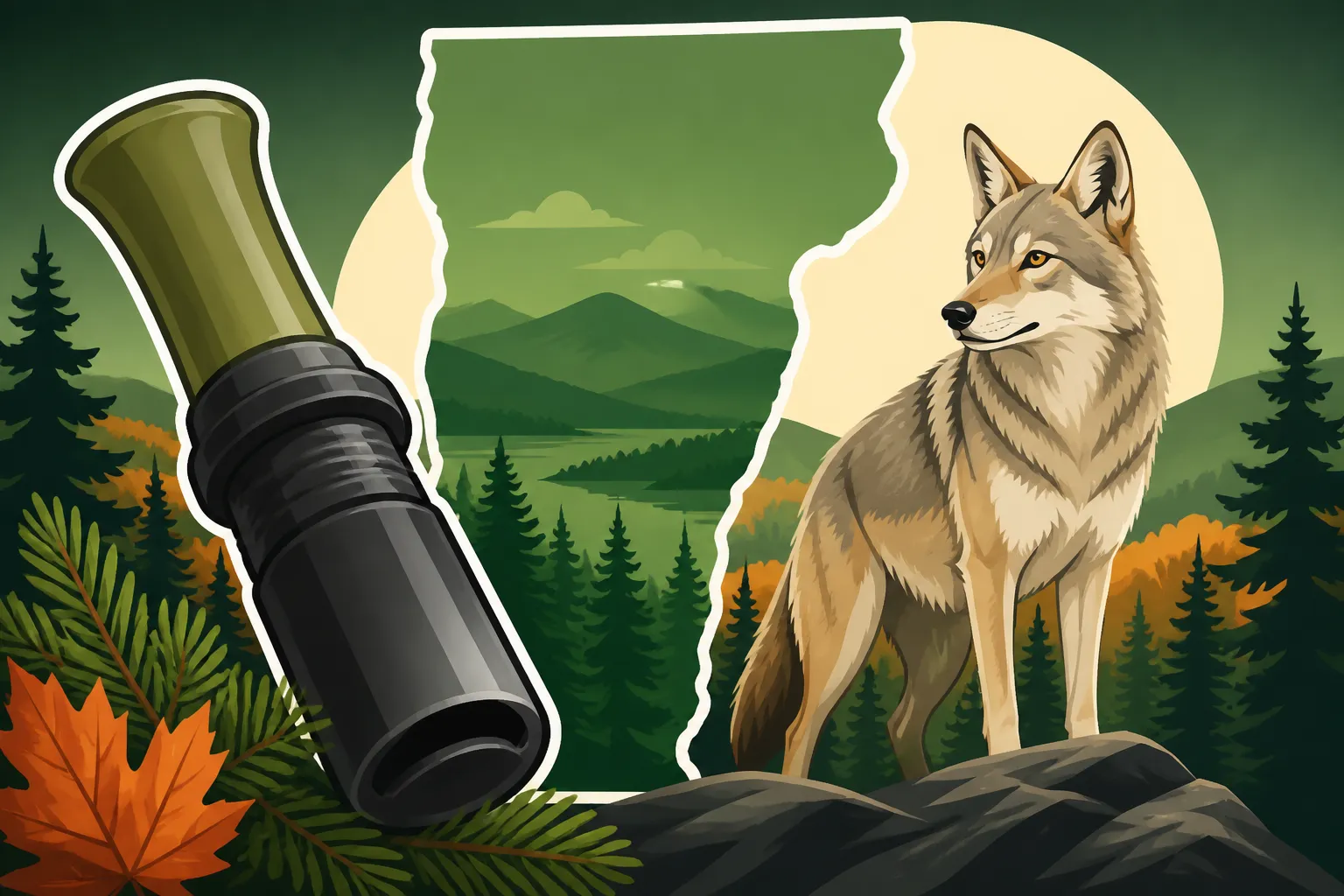
Best Predator Call for Vermont Coyotes
It's a familiar scenario for many Vermont hunters: you spend hours diligently scouting, choose what you think is the perfect setup, blow on your favorite predator call with all the conviction you can muster, and… nothing. Those wily Vermont coyotes, whether they're slipping through the Champlain Valley farmlands or ghosting through the Green Mountain backcountry, often seem to ignore even the most convincing sounds. It can be incredibly frustrating when you're trying to thin out local populations or just enjoy the thrill of the chase. This guide is here to unravel the mystery of calling Vermont coyotes, helping you select the right calls and employ the best strategies to finally bring those clever canines into range.
The Elusive Vermont Coyote: Why Calling Can Be So Challenging
Let's be honest, calling coyotes in Vermont isn't always easy. These aren't the naive coyotes you might find in less-pressured parts of the country. Our Vermont coyotes have seen it all, heard it all, and survived it all. They're smart, adaptive, and often incredibly wary, which can make a hunter feel like they're trying to speak a language no one understands.
Understanding the Vermont Coyote's World
Vermont's coyotes are survivors, constantly navigating a landscape that ranges from dense, unforgiving wilderness to bustling agricultural areas. In places like the Champlain Valley, they're often exposed to human activity, agricultural machinery, and the presence of hunters targeting deer or small game. This constant interaction teaches them caution, making them incredibly adept at discerning genuine threats from perceived ones. They become experts at identifying unnatural sounds or patterns in calling. A coyote that's heard a dozen hunters blow the same generic rabbit distress call will quickly learn to associate that sound with danger, rather than an easy meal.
Conversely, coyotes deep in the Green Mountain National Forest might encounter less direct human pressure, but they're still keenly aware of their surroundings. Their survival depends on their ability to recognize natural prey sounds, locate them quickly, and avoid predators of their own – including us. For them, every sound is a potential clue for food or danger. So, when you're out there trying to imitate a distressed animal, you're not just making noise; you're attempting to insert yourself into a complex auditory world where misinformation can have fatal consequences for them. They'll scrutinize every nuance of your call, from the pitch and volume to the cadence and duration, comparing it to a lifetime of learned experiences. Ignoring this inherent wariness is often the first step towards a frustratingly quiet stand.
The Language of Predator Calls
Think of predator calling as trying to tell a story to a highly skeptical audience. Every squawk, howl, or whimper carries meaning in the coyote world. A rabbit's distress call isn't just "food here"; it might be "easy food for a dominant coyote," or "a quick snack if I don't run into a bigger predator." A pup in distress might signal a vulnerable target, but also potentially an angry mama coyote nearby. If you're simply blasting a single sound repeatedly, you're not really engaging with their complex communication system; you're just making noise.
The key to successful calling, particularly with Vermont's educated coyotes, is to craft a believable narrative with your sounds. Are you a lone coyote looking for a mate? A pair challenging another? A desperate animal caught in a snare? Each scenario requires a different set of vocalizations, varying in intensity and duration. For instance, an aggressive challenge howl might work on a territorial male, but it could send a skittish female running. Understanding what each call communicates to a coyote – beyond just "come here" – allows you to be more strategic. This deep dive into their communication can elevate your success from pure luck to calculated strategy, helping you to understand not just what they hear, but how they might react based on their current circumstances, whether they're hunting Late-Season Food Sources for Vermont Whitetails or simply patrolling their territory.
Deciphering the Best Predator Call for Vermont Coyotes
There's no single magic bullet when it comes to coyote calls. The "best" call is highly situational, depending on the terrain, time of year, coyote pressure, and even the individual coyote's personality. However, understanding the categories of calls and their strengths can help you build an effective arsenal.
The Power and Precision of Electronic Calls
Electronic calls have revolutionized predator hunting. They offer an incredible array of realistic sounds – from various rabbit, bird, and rodent distress calls to a full vocabulary of coyote vocalizations like howls, barks, and whines. The sheer variety and the ability to switch sounds instantly via remote control are huge advantages. Imagine starting with a subtle mouse squeak, then escalating to a dying rabbit, and finally, throwing in a few challenging barks if a coyote hangs up at a distance. This kind of dynamic calling is incredibly difficult, if not impossible, with hand calls alone.
Electronic calls are particularly effective in open country, like the expansive fields of the Champlain Valley or broad clear-cuts, where sound needs to travel far to grab attention. Many electronic callers allow you to program sequences, mimicking a real-life scenario without constant manual input. This frees you up to focus on scanning for incoming coyotes. While some purists argue they lack the "soul" of hand calls, the realism and consistency of modern electronic callers are undeniable. Top brands in this space often provide a range of units that can withstand Vermont's varied weather, from crisp fall mornings to damp, chilly late-season hunts. When you're trying to reach out across a wide-open expanse, electronic calls provide the precision and volume that hand calls sometimes struggle to deliver. Many hunters rely on these devices when Coyote Calling Vermont Farm Country where sound needs to carry over long distances.
The Artistry and Adaptability of Hand Calls
While electronic calls offer convenience, hand calls bring an unparalleled level of artistry and adaptability to the game. Learning to master a variety of hand calls – open reed, closed reed, and diaphragm calls – gives you the ability to react instantly to a coyote's response. A subtle change in breath pressure on an open reed call can shift a dying rabbit's scream to a whimper, or add a pleading tone that can be incredibly convincing to a hung-up coyote. Unlike an electronic call, which often repeats programmed sounds, a skilled hand caller can inject emotion and real-time variation into their calling.
Closed reed calls are generally easier to learn and are excellent for reproducing consistent distress sounds. Open reed calls, on the other hand, offer a wider range of tones and pitches, allowing for more intricate vocalizations, but they require more practice to master. Diaphragm calls, typically used by turkey hunters, can also be adapted for coyote howls and barks, keeping your hands free for your firearm. The true beauty of hand calls lies in their ability to sound imperfect, just like real animals. Sometimes, that slight waver or off-key note is what makes a call sound authentic to a wary coyote who has likely heard the robotic perfection of electronic calls too many times. Carrying a selection of hand calls gives you options for any situation, from a loud, frantic distress call in breezy conditions to a soft lip squeak to coax in a close, hesitant coyote.
Tailoring Your Calling Strategy to Vermont's Diverse Landscapes
Vermont isn't just one type of terrain; it's a patchwork of open agricultural fields, dense hardwood forests, softwood thickets, and rugged mountain ranges. Your choice of call and calling strategy needs to adapt to these different environments.
Open Country and Farmland Tactics
When you're set up on the edge of a sprawling cornfield in the Champlain Valley or overlooking a vast hayfield in central Vermont, your primary challenge is range. Coyotes could be hundreds of yards away, and your calls need to cut through the air and grab their attention. Here, electronic calls truly shine due to their volume and consistency. Start with a long-range locator howl to announce your presence and gauge any responses. If you hear a distant howl, you know you've got a listener. Then, transition to a loud, frantic distress call, such as a jackrabbit or a cottontail in distress. The goal is to paint a vivid auditory picture of an easy meal that's too good to pass up.
Don't be afraid to let your calls run for several minutes, then pause for a few minutes, listening intently. Coyotes will often circle downwind, so your setup needs to account for this. A good rule of thumb is to have an electronic call set up 50-75 yards away from your hiding spot, with a moving decoy near it, to draw the coyote's attention away from you. This allows you to stay concealed as the coyote focuses on the sound and visual. When hunting Entry Routes Through a Cut Cornfield, remember that visibility is key, and your calls need to match that openness. The GoHunt app can be invaluable for pinpointing these open areas and understanding wind direction, which is critical for these longer-range setups.
Deep Woods and Mountainous Terrain Strategies
The dense, rolling terrain of the Green Mountains or the thick spruce-fir stands of the Northeast Kingdom demand a completely different approach. Here, sound doesn't travel as far, and coyotes are often accustomed to navigating heavy cover. Blasting loud calls can sound unnatural and easily spook wary animals. Instead, think subtle, close-quarters seduction. This is where hand calls truly excel, allowing for nuanced, realistic sounds that blend into the forest environment.
Start with softer, shorter distress calls, like a mouse squeak, a vole squeak, or a pup whimper. These sounds suggest a smaller, more localized meal or a vulnerable young animal, which can pique a coyote's curiosity without immediately signaling danger. You'll want to use shorter calling sequences, perhaps 30-60 seconds of calling followed by several minutes of silence, listening intently for soft footsteps, rustling leaves, or a faint whine. Coyotes in these environments are often more accustomed to ambushing prey in thick cover, so they might approach cautiously and silently. Focus your efforts on known travel corridors, saddles, and benches where coyotes naturally move. When you're Still-Hunting Green Mountain National Forest Timber, every subtle sound and movement can betray your position, so your calling needs to be equally subtle. If you know how to effectively manipulate a hand call to mimic these more intimate sounds, you'll find greater success in the tight confines of Vermont's extensive timber country.
Beyond the Call: Enhancing Your Vermont Coyote Hunt
While finding the best predator call for Vermont coyotes is crucial, it's really just one component of a successful hunt. Integrating other tactics, understanding coyote behavior, and being patient can significantly increase your odds.
Decoys, Scents, and Setup Secrets
Calling alone can be effective, but adding visual elements or masking your scent can dramatically increase your success rate. A moving decoy, whether it's a simple fur flag or a motorized rabbit decoy, can be a game-changer. Coyotes are visually driven, and seeing movement associated with the distress call can make them commit fully. It also draws their attention away from your hiding spot, giving you precious seconds to prepare for a shot. Position your decoy so it's visible but not directly in line with your calling device, creating a more dynamic and believable scenario.
Scent control is absolutely paramount, especially when targeting those sharp-nosed Vermont coyotes. They can smell human odor from an astonishing distance, and even a faint whiff can send them backtracking. Always play the wind, ensuring it's blowing your scent away from where you expect the coyote to approach. Using scent-eliminating sprays on your clothes, boots, and gear is a good practice, as is wearing clean hunting clothes. Some hunters also use cover scents like skunk essence or fresh earth, though opinions vary on their effectiveness. The goal is to eliminate anything that screams "human" and convince that coyote that the sounds and sights it's encountering are completely natural. A well-placed decoy and strict scent control can turn a hesitant coyote into a confident one, completing the illusion you've carefully crafted. These details are critical, whether you're working a Scrape Lines Along a Logging Road or sitting a secluded clearing.
Timing, Weather, and Persistence
Coyotes are opportunistic hunters, but certain times and conditions tend to be more productive. Dawn and dusk are universally recognized as prime times for predator activity, as coyotes are often on the move, actively hunting or returning to their dens. Coyote Calling at First Light can be incredibly effective, as coyotes are hungry after a night of activity. Don't discount mid-day, especially on overcast, windy, or drizzly days, when coyotes might be more inclined to move about seeking an easy meal. Harsh weather conditions, like fresh snow or bitter cold, can also increase their willingness to respond to a distress call, as food becomes scarcer and harder to come by.
Persistence is arguably the most underrated virtue in coyote hunting. Don't expect every stand to produce a coyote. Sometimes, you'll call a dozen spots before you connect. If a spot looks promising but yields no results on one day, try it again a few days later under different conditions. Coyotes move through vast territories, and you might just hit a spot when they're not in the area. Pay attention to how coyotes react to your calls – did they howl back but not commit? Did they circle downwind and then disappear? Learning from each stand, even the unsuccessful ones, will refine your strategy over time. Using mapping tools, like those you can find on GoHunt, to mark productive areas, coyote sign, and even unsuccessful stands can help you build a valuable database of information for future hunts. Remember, every time you're out there, you're gathering more intelligence on these incredibly intelligent animals.
| Call Type Category | Best Use Case | Pros | Cons |
|---|---|---|---|
| Electronic Calls | Long-range, open terrain, diverse sounds | Highly versatile, realistic sounds, remote control | Requires batteries, can sound repetitive if overused, higher initial cost |
| Open Reed Hand Calls | Flexible distress & vocalizations, close-in | Highly adaptable, superb realism with practice | Difficult to master, can be sensitive to moisture |
| Closed Reed Hand Calls | Distress sounds, locator howls, easier to learn | User-friendly, good volume, consistent sound | Less tonal variation than open reed calls |
| Diaphragm Calls | Hands-free vocalizations (howls, barks) | Allows weapon readiness, wide range of sounds | Requires practice, can be challenging for beginners |
| Lip Squeaks | Close-range, finishing calls, wary coyotes | Subtle, no equipment needed, natural | Limited range, difficult to maintain consistency |
Disclaimer
This article is for general informational purposes only and does not constitute professional advice. Laws, prices and regulations vary by location and change over time. Consult a qualified professional for guidance on your specific situation.