Best Optics Harness for a Spot-and-Stalk Hunt
Hunting in Vermont often means navigating rugged, steep terrain, tracking game through thick timber, or carefully moving across open fields. The last thing you want is your valuable binoculars swinging wildly, getting banged up, or being slow to access when that buck steps out for just a second. This guide dives deep into choosing the best optics harness specifically for spot-and-stalk hunting in our beautiful Green Mountain State, ensuring your glass is protected, accessible, and comfortable for those long days afield.
Why a Good Optics Harness Matters for Spot-and-Stalk in Vermont
When you're slipping through the woods, trying to get eyes on deer or bear, your optics are an extension of your senses. A flimsy strap or a bouncing pair of binos can quickly turn a hopeful stalk into a frustrating ordeal. In Vermont's varied landscape, from the dense undergrowth of the Champlain Valley to the rocky slopes of the Green Mountains, a dedicated optics harness isn't just a luxury – it's a necessity. It’s about readiness and protection in a challenging environment.
Accessibility and Speed When It Counts
Imagine you've been still-hunting for hours, carefully picking your way through a cedar swamp or along a hardwood ridge. Suddenly, you catch a flicker of movement. Is it a branch? A squirrel? Or is it that big-bodied buck you've been after all season? With a quality optics harness, your binoculars are right there, secured against your chest, allowing for a swift, smooth draw to quickly identify the target. You don't have to fumble with zippers on a pack, unhook a traditional neck strap, or worry about them catching on brush. That split-second speed can be the difference between a successful hunt and a missed opportunity, especially when Hunting the Rut in Early-to-Mid November and bucks are constantly on the move, offering only brief windows.
The frustration of a missed chance because your binoculars were buried or swinging around is something every hunter knows. It pulls at you, knowing you were so close. A good harness keeps them poised for action, right where your hands naturally want to go. Think about those quick peeks over a knoll or through a small window in the timber; you need your glass up and stable now, not after you've wrestled it free. A solid harness becomes part of your natural movement, ensuring your eyes in the woods are always ready to go. You want to feel seamless with your gear, not hindered by it.
Protection from Vermont's Elements and Terrain
Vermont weather is notoriously unpredictable. One minute it's crisp and sunny, the next you're walking through a cold drizzle, or perhaps even an early November snowfall. Your binoculars, rangefinder, and other delicate optics are an investment, and they need protection. A well-designed optics harness often includes a protective cover or a rigid structure that shields your glass from rain, snow, dirt, and dust. This isn't just about keeping them clean; it's about prolonging their lifespan and ensuring clarity when you need it most. Fogged lenses or gritty focus wheels are the last things you want when a trophy steps out.
Beyond weather, the physical terrain in Vermont is a constant challenge. Scrambling over blowdowns, pushing through thick saplings, or descending a steep ravine can expose your optics to bumps, scrapes, and even drops. A harness keeps your binoculars secure and close to your body, minimizing the risk of them slamming into a tree trunk or getting caught on a branch. This close-to-body fit also makes navigating dense cover much easier. Brands like GoHunt offer harnesses with durable, water-resistant fabrics and robust construction designed to stand up to the rigors of backcountry hunting, giving you peace of mind as you focus on the hunt itself, not on babying your gear.
Comfort for Long Stalks and All-Day Hunts
Spot-and-stalk hunting means covering ground – often many miles over varied terrain. A traditional neck strap, while simple, can quickly become a literal pain in the neck. The concentrated weight of binoculars bouncing and chafing can lead to fatigue, discomfort, and even soreness, pulling your focus away from the hunt. An optics harness, by contrast, distributes the weight across your shoulders and back, much like a backpack, but without the bulk and often in a way that feels more integrated with your body.
This ergonomic design is crucial for comfort during extended periods in the field, whether you're navigating Still-Hunting Green Mountain National Forest Timber or trying to get the jump on a gobbler during Working a Fall Flock Apart Statewide With a Bow. The wide straps and padded sections prevent digging and pressure points, making those long treks infinitely more enjoyable. When you're comfortable, you're more focused, more patient, and ultimately, a more effective hunter. The ability to carry your essential optics for hours without distraction is a major advantage that reduces physical strain and keeps your head in the game.
Key Features to Look for in a Vermont Optics Harness
Not all optics harnesses are created equal, and what works for a flatlander chasing mule deer in wide-open country might not be ideal for the dense, vertical forests of Vermont. When you're looking to invest in a harness, consider these critical features that cater specifically to the challenges and nuances of hunting here, ensuring you get the most out of your purchase.
Secure Fit and Adjustability for Active Movement
The cornerstone of any good optics harness is its ability to provide a secure, bounce-free fit. You'll be climbing, bending, crawling, and moving through dense brush, and your binoculars need to stay put. Look for harnesses with multiple adjustment points – shoulder straps, back straps, and sometimes even waist straps – that allow you to customize the fit to your body and your layering system. A harness that can be cinched down tightly, yet comfortably, is paramount; a bouncing binocular is a noisy binocular, and a noisy binocular is a hunting killer.
Some harnesses offer quick-release buckles, which can be a lifesaver if you need to shed a layer or quickly take off your pack for a strenuous climb. The goal is to have your binoculars feel like a natural extension of your body, rather than an external item flopping around. This secure fit also reduces noise, preventing any tell-tale clanging or rustling as you move. A well-fitting harness should accommodate various body types and allow for layering changes throughout Layering for Vermont's Long Hunting Season, ensuring it works whether you're in a light early-season jacket or a bulky late-season parka. Adjustability means it's your harness, not just a harness.
Quiet, Durable Materials for Stealth and Longevity
Vermont's woods are often incredibly quiet, especially on a still, frosty morning or when tracking fresh snow. Any unnecessary noise can easily give away your position. Therefore, the materials used in your optics harness are incredibly important. Avoid anything with loud zippers, Velcro, or stiff, crinkly fabrics that sound like a grocery bag when you move. Instead, seek out harnesses made from soft, silent, yet durable materials like brushed tricot, quiet fleeces, or specially treated nylon that won't rustle or squeak as you move.
Durability is equally critical. This harness is going to be put through its paces, enduring abrasion from branches, rubbing against your pack, and constant use. Reinforced stitching, robust buckles that won't snap in the cold, and tough, tear-resistant fabrics are non-negotiable. Many hunters appreciate harnesses that integrate with other gear, such as those from GoHunt, which often prioritize silent operation and rugged construction that can withstand the abuse of a long season. You want a harness that will last season after season, not one that's falling apart after a few hard hunts in the Green Mountain National Forest.
Storage and Organization for Essential Tools
While the primary purpose is to hold your binoculars, many modern optics harnesses offer additional storage compartments that can be incredibly useful for a spot-and-stalk hunter. Think about the small essentials you always need quick access to: a rangefinder, a wind checker, a small compass, a headlamp, or even your hunting license. Having dedicated, easily accessible pockets for these items can streamline your movements and prevent fumbling, which can cost you time and opportunity.
These extra pockets should also be quiet and secure, preferably with silent magnetic closures or robust, quiet zippers that won't betray your presence. Some harnesses even have modular attachments or Molle webbing, allowing you to customize your setup with small pouches for specific needs, ensuring everything has its place. This level of organization means less digging through your main pack and more focus on the hunt. For instance, being able to quickly grab your rangefinder to verify a shot distance in a wide-open field, like when Hunting a Champlain Valley Dairy Farm Edge, is a huge advantage, preventing guesswork and ensuring ethical shots.
Weather Resistance for Vermont's Variable Conditions
As we touched on earlier, Vermont's weather demands gear that can stand up to the elements. For an optics harness, this means more than just a passing thought; it needs to actively protect your expensive glass. Look for harnesses made from water-resistant or waterproof materials, often with DWR (Durable Water Repellent) coatings, and consider those with integrated rain covers or highly water-resistant main compartments. You've invested good money in your optics; let your harness protect them.
A good weather-resistant harness will ensure that a sudden downpour doesn't fog up your lenses or, worse, seep into the internal workings of your binoculars. While most binoculars are somewhat weather-sealed, an extra layer of protection from your harness can make a significant difference in clarity and longevity. This feature is especially important during the late fall seasons, when cold rain or wet snow is a common occurrence, or if you're venturing into damp areas like a Beaver Flowage Edge at Dusk. Ensuring your optics remain functional in adverse conditions is key to consistent hunting success.
Types of Optics Harnesses and Their Best Uses in Vermont
The market is filled with various designs, each with its own advantages. Understanding the differences will help you pick the perfect companion for your Vermont hunting adventures. While there are simpler neck straps and chest packs, when we talk about a dedicated "optics harness," we're generally referring to those systems designed specifically for binoculars and sometimes a rangefinder, offering superior comfort and protection.
Full-Coverage Chest Harnesses
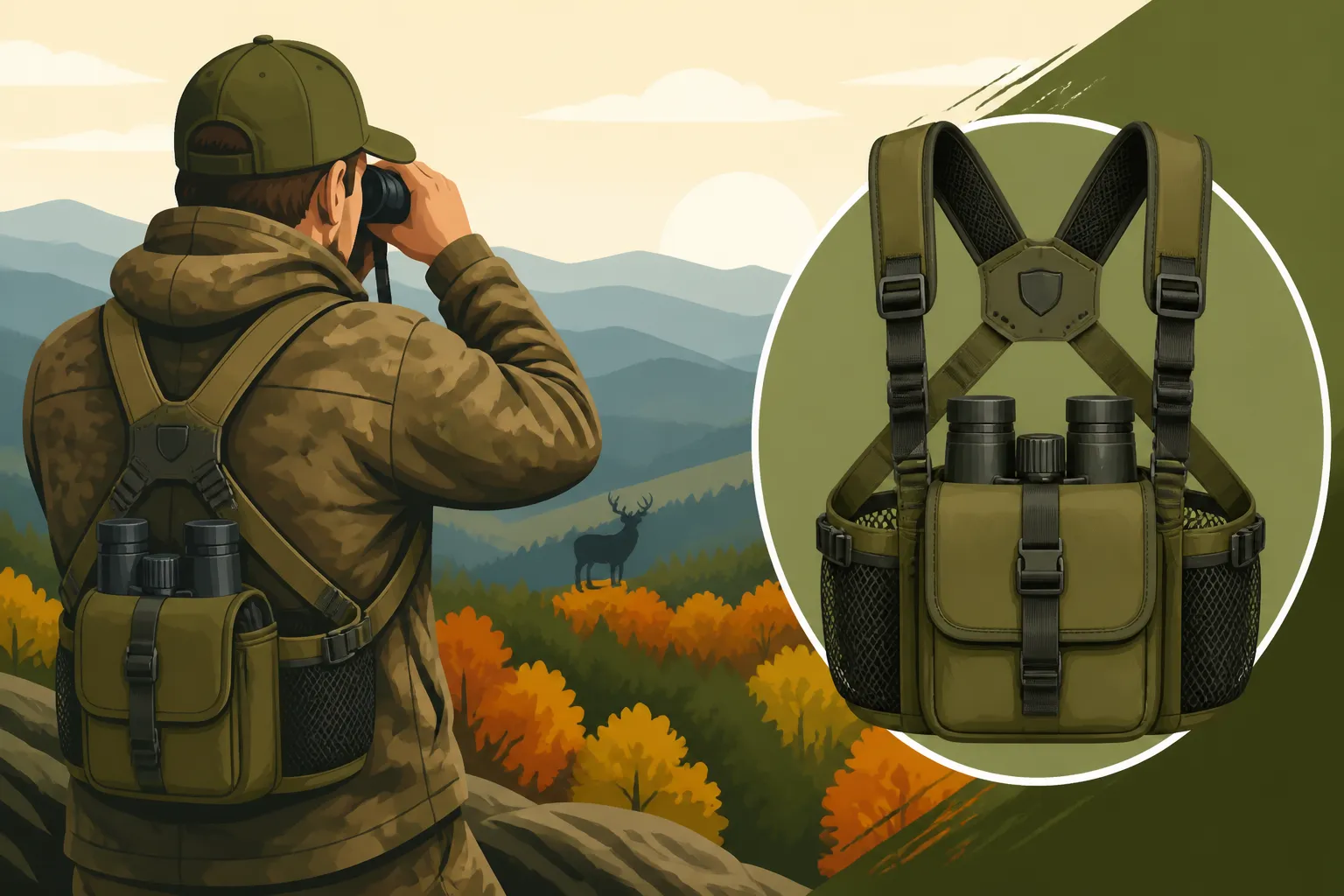
These are, by far, the most popular and versatile option for serious hunters, especially for spot-and-stalk or any active hunting style in rugged terrain. Full-coverage chest harnesses typically feature a main compartment that fully encases and protects your binoculars, often with a magnetic or silent buckle flap for quick access. The harness system itself consists of comfortable, adjustable shoulder straps that distribute the weight across your upper body, and often a back strap to keep the unit snug against your chest. This design keeps your binoculars secure, prevents bouncing, and keeps them out of the way of your arms and gun stock.
Best Uses in Vermont: This style excels in nearly all Vermont hunting scenarios. If you're Still-Hunting Green Mountain National Forest Timber, climbing steep ridges, or pushing through thickets, the full enclosure protects your glass from bumps, scratches, and the elements. The secure fit prevents bouncing, making it ideal for those long walks to a remote stand or when you're actively pursuing game. Many models also include side pockets for a rangefinder, wind checker, or small GPS unit. For hunters who value protection, accessibility, and comfort above all else, a full-coverage chest harness is the way to go. Consider options that offer modularity or integrated accessory pouches, like those designed by GoHunt, for maximum utility and adaptability to your specific hunt.
Minimalist Binocular Harness Straps
While not a "harness" in the traditional full-coverage sense, these systems are essentially upgraded neck straps that use an X-shaped or H-shaped strap system to distribute the weight of the binoculars across your shoulders and upper back, rather than concentrating it solely on your neck. They typically don't offer much in the way of protection for the binoculars themselves, leaving them exposed, but they do provide a hands-free way to carry them more comfortably than a simple neck strap. Your optics are always visible and ready, but also vulnerable.
Best Uses in Vermont: These minimalist straps are best suited for less physically demanding hunts or situations where you need to keep weight and bulk to an absolute minimum, and where weather protection isn't a primary concern. Perhaps you're sitting in a static blind on a clear, dry day, or you're primarily hunting open farmland where dense brush isn't an issue. They can be a good choice for early archery season when Hunting the Regular Archery Opener in October and you're wearing lighter layers, and you're not anticipating harsh weather. However, for serious spot-and-stalk in Vermont's varied, often wet, and thick terrain, the lack of protection and extra storage often makes a full-coverage chest harness a much better investment for your valuable optics.
Setting Up and Maintaining Your Optics Harness for the Long Haul
Getting the right harness is only half the battle. To truly maximize its benefits, you need to set it up correctly and maintain it properly. A well-adjusted and cared-for harness will serve you faithfully for many seasons in the Vermont woods, becoming a reliable, almost invisible part of your essential gear.
Achieving the Perfect Fit and Proper Adjustment
When you first get your optics harness, take the time to adjust it properly. This isn't a "set it and forget it" kind of deal, as your layering changes throughout the season. Start by putting on the layers you typically hunt in – not just a t-shirt. Adjust the shoulder straps so that the binoculars sit high and snug against your chest, just below your sternum. You want them to be easily accessible to bring up to your eyes, but not so high that they impede your breathing or gun mount when you suddenly need to raise your firearm.
Next, adjust any back straps or side straps to pull the harness securely against your body. There should be no significant bounce when you walk or bend over. Walk around, bend, squat, and simulate common hunting movements to ensure it stays put and remains comfortable. If your harness has additional compartments, load them with the items you typically carry (rangefinder, wind checker) to see how the weight distribution feels. Remember, you might need to slightly re-adjust as you add or shed heavy coats later in the season. A good rule of thumb is that it should feel secure but not restrictive; you want to forget you're wearing it.
Cleaning and Care to Extend Lifespan
Your optics harness is going to get dirty. It'll collect mud, dust, pine needles, and maybe even a little blood from field dressing. Regular cleaning is essential to maintain its function, prevent odors that could alert game, and extend its lifespan. Most harnesses can be hand-washed with a mild, scent-free soap and cool water. Avoid harsh detergents or machine washing, as these can damage the fabric, coatings, and buckles, and possibly leave behind strong scents that will spook deer.
After cleaning, allow it to air dry completely in a well-ventilated area, away from direct sunlight or heat sources, which can degrade materials over time. Make sure all zippers, buckles, and magnetic closures are clean and functioning smoothly. Periodically check for any fraying straps, loose stitching, or cracked buckles, and address them promptly. Proper care means your harness will continue to protect your valuable optics and serve you reliably, season after season. This is especially true for the robust designs you find from companies like GoHunt, which are built to be put through their paces but still benefit greatly from diligent care.
Practice and Field Use for Seamless Integration
Just like drawing your bow or shouldering your rifle, using your optics harness effectively requires practice. Spend some time in your backyard or a local park practicing drawing your binoculars smoothly and quietly from the harness. Get a feel for how quickly you can get them to your eyes, focus, and put them back. Practice moving with the harness on, simulating walking through brush, climbing a bank, or kneeling behind cover. You want this action to be second nature.
This practice will build muscle memory, making the action seamless and automatic when you're in the field and the stakes are high. You'll quickly discover the most efficient way to access your rangefinder from its side pocket or how to quietly open the main flap. The more comfortable and practiced you are with your harness, the less you'll have to think about it in the moment, allowing you to fully focus on the animals you're pursuing in the beautiful, challenging landscapes of Vermont. This level of seamless integration with your gear is what makes you a more effective hunter, allowing you to react instinctively rather than fumbling around.
Here's a comparison of common harness features:
| Feature | Full-Coverage Chest Harness | Minimalist Binocular Strap |
|---|---|---|
| Optics Protection | Excellent (encased in main compartment) | Minimal (optics exposed) |
| Comfort | High (weight distributed over shoulders) | Moderate (better than neck strap) |
| Accessibility | High (quick, silent flap access) | High (always visible, but exposed) |
| Storage Capacity | High (multiple pockets for accessories) | Low (often none or minimal) |
| Weather Resistance | Good (water-resistant fabrics, covers) | Low (optics are fully exposed) |
| Stealth (Noise) | Excellent (quiet materials, secure fit) | Good (can sway if not secured) |
| Best for Vermont Use | Spot-and-stalk, rugged terrain, all weather | Light use, static sits, fair weather |
Remember that investing in a quality optics harness isn't just about protecting your binoculars; it's about enhancing your entire hunting experience. It’s about being more comfortable, more efficient, and ultimately, more successful. When you're out there Scouting Vermont Public Land Before Season or Hunting a Ridge-Top Saddle for Rutting Bucks, you want every advantage you can get. This simple piece of gear makes a surprisingly big difference.
No matter where your Vermont adventures take you, from the dense spruce thickets to the open hardwoods, having your binoculars secured, protected, and instantly accessible on your chest is an absolute game-changer. It helps you focus on the hunt, not on fumbling with gear, and that's a true advantage, helping you make the most of every precious moment in the field.
Disclaimer
This article is for general informational purposes only and does not constitute professional advice. Laws, prices and regulations vary by location and change over time. Consult a qualified professional for guidance on your specific situation.