Hunting the Regular Archery Opener in October
The crisp air of an October morning in Vermont, the leaves ablaze with color, the promise of a whitetail deer moving through the hardwoods – there's nothing quite like the start of the regular archery season. But let's be honest, those first few weeks can also be incredibly frustrating. Deer haven't settled into their full rut patterns yet, they're often still in bachelor groups or doe-fawn family units, and their movements can seem erratic. This guide is here to walk you through everything you need to know to navigate the nuances of hunting the regular archery opener in Vermont, helping you connect with a deer when the season is just kicking off.
Understanding Vermont's Regular Archery Opener
When that first weekend of October rolls around, a lot of us are chomping at the bit to get into the woods. But understanding the specific landscape of Vermont's archery season, especially early on, is crucial for success. It's not just about knowing when you can legally hunt, but also understanding the typical deer behavior for this particular window.
Key Dates and Regulations
Vermont's regular archery season typically kicks off on the first Saturday of October and runs through mid-December, overlapping with the rifle season for a period. This means that while you're primarily focused on early October, the season is a marathon, not a sprint. For the most precise start and end dates each year, you'll always want to consult the Vermont Fish & Wildlife Department's official regulations handbook or their website, as these dates can shift slightly. Beyond just the dates, familiarize yourself with legal hunting hours, which usually span from half an hour before sunrise to half an hour after sunset. Early October often means earlier sunrises and later sunsets than later in the season, giving you more daylight hours to hunt. It's also vital to remember that during the regular archery season, you're allowed to harvest one legal buck and one antlerless deer, provided you have the appropriate permits. This is a critical detail, especially if you're holding a specific antlerless permit. You can learn more about the specifics of the season by checking out the article on Vermont Archery Season Dates.
Beyond deer, remember that other small game seasons might be open concurrently, which means you might hear a shotgun blast or two, especially if you're hunting near open fields. While most archers are hyper-focused on whitetails, it's a good reminder to be aware of your surroundings and any other hunters sharing the woods with you. Safety is always paramount, and knowing what other seasons are active can help you anticipate other users of public and private lands.
Permits and Licenses You'll Need
Before you even think about stringing your bow, you need to ensure all your paperwork is in order. To hunt deer with a bow and arrow in Vermont, you'll need a valid hunting license and a specific archery deer permit. Residents and non-residents alike have various options, and it’s always a good idea to secure these well in advance of the season opener to avoid any last-minute stress. You can often purchase these online through the Vermont Fish & Wildlife Department's portal, or at licensed agents across the state. If you’re a resident, exploring the Vermont Resident License Options can help you find the best value, especially if you plan to hunt multiple species throughout the year.
Beyond the basic license and archery permit, if you intend to harvest an antlerless deer, you'll need an antlerless permit for the specific Wildlife Management Unit (WMU) you're hunting in. These permits are allocated through a lottery system for some WMUs and may be available over-the-counter for others, depending on population management goals. The regulations will specify which WMUs allow antlerless harvest during the regular archery season and how to obtain the necessary permit. It's a small but vital piece of plastic that can make the difference between a legal harvest and a missed opportunity. Always double-check your WMU boundaries and ensure your permit matches where you plan to hunt.
Deer Behavior in Early October
This is where the rubber meets the road. Deer behavior in early October is markedly different from the frenzy of the November rut or the late-season scramble for food. In the early part of the regular archery season, bucks are often still in their bachelor groups, though these groups may be starting to break up as testosterone levels rise. They're primarily focused on two things: food and security. The intense chasing and breeding of the rut are still a few weeks away. Does, on the other hand, are likely still with their fawns, and their movements will also revolve around food, water, and bedding areas.
Food sources are king during this period. Acorns, especially white oaks, are a major draw. If the mast crop is good, deer will abandon other food sources for these high-energy acorns. Other important early-season foods include apples (if you can find an active apple orchard), persimmons (less common in Vermont but worth noting), and green fields like alfalfa or clover plots. Understanding these prime food sources is paramount to locating deer. We dive deeper into this in our guide on Hunting a Standing Apple Orchard. Without the pull of the rut, deer aren't moving as far or as frequently, making their patterns more predictable, but also more sensitive to pressure. They'll often feed heavily in the early morning and late evening, bedding down in thick cover during the day.
Another significant factor is temperature. Early October can still bring warm days, especially in southern Vermont. Warm weather means deer are less active during the day, seeking shade and only moving during the cooler parts of the morning and evening. This isn't the time for a mid-day still-hunt unless you're exceptionally stealthy and know a bedding area like the back of your hand. The whitetails are conserving energy, and any movement will be quick and purposeful. If you're observing deer movement, look for patterns that align with the cooler temperatures, which often means shorter windows of activity.
Pre-Season Scouting and Setting the Stage
Success in early October archery season isn't born on opening day; it's forged in the weeks and months leading up to it. Pre-season scouting, both from your computer and with boots on the ground, is arguably the most critical component. Without good intel, you're just wandering around hoping for a lucky encounter.
Leveraging Topographical Maps and Aerial Imagery
Your scouting starts long before you step foot in the woods. Tools like aerial imagery and topographical maps are your best friends. Services like GoHunt provide invaluable layers that can help you identify potential bedding areas, travel corridors, and feeding locations without leaving your couch. Look for pinch points, saddles, benches, and creek bottoms – natural funnels that deer will use to travel between bedding and feeding areas. Pay close attention to changes in elevation, as these often dictate how deer move through the landscape. For instance, a small bench halfway up a Green Mountain ridge could be a perfect staging area.
Satellite images can reveal clear-cuts, old logging roads, and changes in timber type that might not be obvious from the ground. Freshly cut timber areas, especially those with new growth, can provide excellent browse and cover. Identifying these features on a map allows you to prioritize areas for physical scouting, saving you precious time and effort. Many hunters find success by spending hours pouring over maps, looking for those subtle features that concentrate deer movement. Check out Reading Aerial Photos for Green Mountain Deer for an in-depth look at this technique. GoHunt's mapping capabilities are particularly strong for identifying land features that might create natural bottlenecks for deer movement, making your on-the-ground scouting much more efficient.
Boots-on-the-Ground Reconnaissance
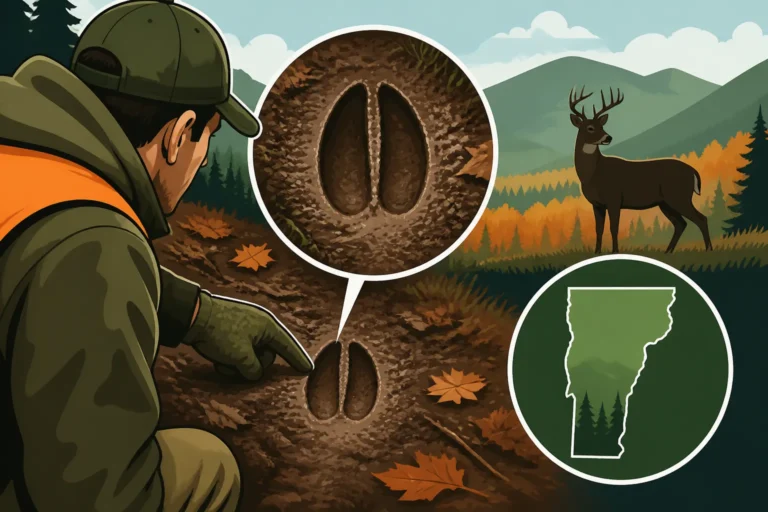
Once you've narrowed down potential spots on your maps, it's time for some boots-on-the-ground recon. This means walking the areas you've identified, looking for fresh sign: tracks, rubs, scrapes (though major scrapes are often still a few weeks off), and droppings. During early October, deer won't be as destructive with rubs and scrapes as they will be in the rut, but you'll still find indicators of their presence. Focus on finding actual deer trails connecting bedding areas to food sources. Look for trails that show consistent, fresh use, as deer often establish predictable routes early in the season.
When scouting, be mindful of your scent. While it’s not hunting season yet, you don’t want to saturate your prime spots with human odor. Wear rubber boots and minimal scent, treating your scouting trips like mini-hunts. Pay particular attention to what the deer are actually eating. Are the acorns dropping? Are they hitting a specific apple tree? This real-time information is more valuable than any historical data. Walk silently, observing everything, and note down precise locations of prime feeding trees or thick bedding cover. This intel helps confirm your map suspicions and allows you to pinpoint exact stand locations for the opener. Our article on Scouting Vermont Public Land Before Season offers further tips.
Setting Up Your Archery Ambush
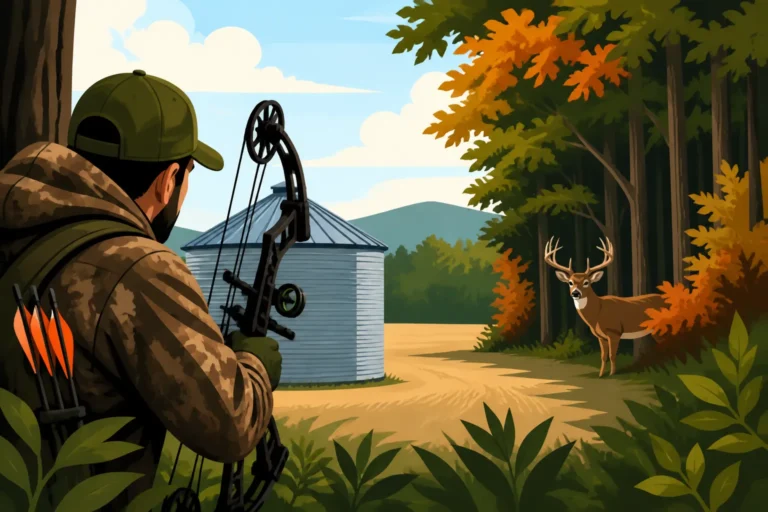
Choosing the right stand location is everything in archery hunting, especially in early season when deer movement is often limited and sensitive. You want to set up downwind of a primary travel corridor or feeding area. Consider prevailing winds and how they might shift throughout the day. For example, a morning hunt might require a different stand placement than an evening hunt if the thermals change with the rising or falling sun. Positioning your stand overlooking a funnel between two woodlots can be incredibly effective, as it naturally constricts deer movement.
When hanging your stand, aim for maximum concealment. Use natural cover like tree branches or thick foliage to break up your silhouette. Ensure your shooting lanes are clear but not overly conspicuous. Practice drawing your bow from your stand to confirm you have enough clearance and a comfortable shooting position. You want to be able to make that shot when the moment arrives without any snags or awkward movements. If you’re considering a field edge, take a look at our tips for Hanging a Stand on a Champlain Valley Field Edge. Remember, the less visible you are and the less impact you make setting up, the better your chances. GoHunt’s detailed satellite imagery can also help you find the perfect tree with good cover and strategic placement relative to deer trails and feeding areas.
Effective Tactics for Early October Whitetails
Early October hunting isn't about calling or rattling like you might later in the year. It's much more about precision, patience, and understanding the subtle patterns of deer before the rut kicks in.
Targeting Early-Season Food Sources
As mentioned, food is the primary driver for deer in early October. Your best bet is to key in on the most appealing and readily available food sources. This means finding those dropping acorns, whether from red or white oaks, or locating a productive apple orchard. Deer will often hit these spots consistently until the food source is depleted or hunting pressure pushes them elsewhere. Set up on the downwind side of these feeding areas, or along the trails leading directly to them from bedding cover.
Consider the time of day. Deer are most likely to feed actively during the cooler parts of the day – early morning and late evening. Your prime hunting times will coincide with these periods. A mid-day sit over a food source might be less productive unless you're near a bedding area that deer are moving out of briefly to grab a bite. If you find a patch of white oaks dropping heavily, chances are good you'll see activity, especially if it's relatively undisturbed. Understanding Late-Season Food Sources for Vermont Whitetails can also provide insight into year-round deer preferences, which can guide your early-season scouting.
Understanding Mid-Day Lulls and Movement
The middle of the day in early October can often be slow, especially if temperatures are mild. Bucks and does alike will retreat to thick cover to bed down, digest, and escape the heat and potential human activity. This doesn't mean you can't hunt mid-day, but your tactics need to change. Instead of sitting over a food source, consider hunting tight to known bedding areas, especially if you have a non-intrusive way to access them. Look for thickets, dense pine stands, or steep ravines where deer feel secure.
However, be extremely cautious when hunting bedding areas. One wrong move, and you can blow deer out of the area, making them far more wary. Often, the best strategy during the mid-day lull is to maintain your position in a well-chosen stand, patiently waiting for the evening feeding activity to begin. Occasionally, a deer might shift bedding locations or move to a secondary food source, offering a brief opportunity, but generally, expect slower action during those midday hours. Knowing Where Vermont Bucks Bed in Thick Cover will give you a major advantage.
Playing the Wind and Thermals
In Vermont's varied terrain, understanding wind and thermals is non-negotiable for an archery hunter. Your scent is your biggest enemy. Always position yourself downwind of where you expect deer to approach. This sounds simple, but in the Green Mountains, it's rarely straightforward. Thermals, which are air currents driven by temperature changes, play a huge role, especially in hilly or mountainous country. In the morning, as the sun heats the ground, air (and your scent) will rise uphill. In the evening, as the air cools, it will sink downhill.
This means a stand that's perfect for a morning hunt on an uphill trail might be completely wrong for an evening hunt on the same trail. You need to scout with this in mind and potentially have multiple stand locations for different wind directions and times of day. Pay attention to how your scent disperses – use a powder bottle or a scent wick to visualize air movement. Never assume the wind at your level is the same as it is 50 yards away or higher up. Our detailed guide on Wind and Thermals in Steep Green Mountain Terrain is an absolute must-read for mastering this.
Common Challenges and Adaptations
Hunting the regular archery opener in October presents its own unique set of challenges compared to other seasons. Being prepared for these can make or break your hunt.
Dealing with Warm Weather and Insects
One of the most persistent complaints about early October archery in Vermont is the weather. While we dream of crisp, cool mornings, it's not uncommon to have days where temperatures climb into the 60s or even 70s. Warm weather directly impacts deer movement, making them more nocturnal and less likely to move during daylight hours. It also makes packing out deer meat a race against the clock if you do harvest one. You'll need to be extra vigilant about cooling the carcass quickly, quartering it in the field if necessary, and getting it to a processor or cooler without delay.
Warm weather also brings out the bugs. Mosquitoes and black flies, while usually less severe than spring, can still be a nuisance, especially in shaded, damp areas. Pack insect repellent, and consider a head net if you're particularly sensitive. Layering light, breathable clothing is essential, allowing you to shed layers as the day warms up. Think about quick-drying fabrics that wick moisture away from your skin. For insights on managing clothing in various conditions, check out our piece on Layering for a Wet Green Mountain Day.
Managing Hunting Pressure
With the regular archery opener, public lands, and even some private parcels, can see a significant influx of hunters. Deer quickly learn to associate human activity with danger, pushing them into thicker cover and making them more wary. If you find yourself in an area with high pressure, you'll need to adapt. This might mean walking further, getting into areas others aren't willing to go, or hunting during less conventional times. Deer will often use incredibly dense, overlooked pockets of cover as sanctuaries when pressured.
One effective strategy is to use the pressure to your advantage. If other hunters are moving deer, you might position yourself along known escape routes or funnels that lead to thicker bedding cover. Alternatively, focus your efforts on mid-week hunts when many casual hunters are back at work, reducing the overall pressure. Utilize tools like GoHunt to analyze public land boundaries and identify parcels that might be less accessible and therefore less pressured. Finding ground that others walk past is a skill, and it's particularly important during high-pressure times. Patience and adaptability are key; the deer that survive are the ones that learn to avoid human contact, so you need to outsmart their survival instincts.
Here's a quick look at some key differences in deer behavior and hunting tactics between early October and the peak of the rut:
| Feature | Early October Deer Behavior | Peak Rut Deer Behavior |
|---|---|---|
| Primary Focus | Food, security, rebuilding reserves | Breeding, seeking does, dominance |
| Movement | Predictable, often nocturnal, tied to food/bedding | Erratic, often active throughout the day, driven by hormones |
| Social Groups | Bucks in bachelor groups (breaking up), does with fawns | Bucks solitary, actively pursuing does |
| Food Sources | Acorns, apples, green fields, mast crops | Less emphasis on feeding, but will grab quick bites |
| Sign | Minor rubs/scrapes, tracks, droppings | Heavy rub lines, active scrapes, intense ground pawing |
| Hunting Tactics | Still-hunting, ambushing food sources, stand hunting funnels | Calling (grunts, bleats), rattling, cruising, stand hunting funnels |
| Temperature Impact | Highly sensitive to warm temps, seek shade | Less sensitive to temperature, driven by breeding instinct |
Disclaimer
Hunting is an inherently dangerous activity. Always prioritize safety, follow all Vermont Fish & Wildlife Department regulations, and obtain proper landowner permission. The information provided in this guide is for informational purposes only and should not replace official regulations or professional instruction. Be sure to wear appropriate blaze orange during designated seasons and always know your target and what is beyond it.