Layering for a Wet Green Mountain Day
There's nothing quite like the feeling of optimism slowly draining away as a light drizzle turns into a steady, cold rain when you're deep in the Vermont woods, miles from your truck. You thought your gear was good enough, but suddenly every fiber feels heavy and clammy, and your core temperature starts to drop. It’s a miserable experience that can cut a hunt short and even become a safety concern. This guide is all about mastering the art of layering for those notoriously damp Green Mountain days, ensuring you stay comfortable, focused, and effective, no matter what Mother Nature throws at you.
The Unique Challenges of Hunting Vermont in Wet Weather
Vermont’s weather is notoriously fickle, especially during hunting season. One minute you might have crisp, clear skies, and the next, a cold, driving rain can sweep in, often accompanied by a biting wind. This isn't just a nuisance; it's a serious factor that can impact your comfort, your ability to stay still and quiet, and even your overall safety. The challenge isn't just staying dry from external moisture, but also managing the internal moisture from your own exertion.
Think about a typical late-October morning. You might be still-hunting up a steep ridge, building up a sweat, only to reach a saddle where you plan to sit for an hour. If that sweat doesn't wick away, and then a cold mist rolls in, suddenly you're soaked from the inside out and rapidly losing body heat. The Green Mountains are famous for this kind of scenario, where elevation changes, thick timber, and open logging roads can all present different microclimates. Add in the inherent dampness of fallen leaves, wet underbrush, and streams, and you've got a recipe for discomfort if you're not prepared. Many hunters underestimate how quickly a seemingly mild rain can turn into a serious test of their gear and their resolve. It's not just about wearing a rain jacket; it's about a holistic approach to moisture management.
Understanding the Core Principles of Layering for Damp Conditions
Effective layering in wet conditions isn't just about piling on clothes; it's a strategic system designed to keep you warm and dry, both from the outside elements and your own perspiration. The fundamental idea is to create multiple air pockets between layers, which your body heats, providing insulation. Each layer also has a specific job: wicking moisture away, providing warmth, and protecting against the elements. When one of these layers fails, the entire system can break down, leaving you cold and miserable.
The key to success lies in choosing materials that perform well even when damp and understanding how to adjust your layers to your activity level. You're not going to wear the same setup when you're hiking vigorously to a stand as you will when you're sitting for hours on end, waiting for a buck. This dynamic approach is critical for hunting in Vermont, where a long walk in can precede a motionless sit. Using a planning tool like GoHunt can help you assess the terrain and potential exertion levels for different areas, allowing you to fine-tune your layering strategy before you even step foot in the woods. Always remember the old adage: "Be bold, start cold," meaning it’s better to be a little chilly at the start of your hike than to overheat and sweat profusely, which inevitably leads to being colder later on.
Essential Layers for a Damp Green Mountain Hunt
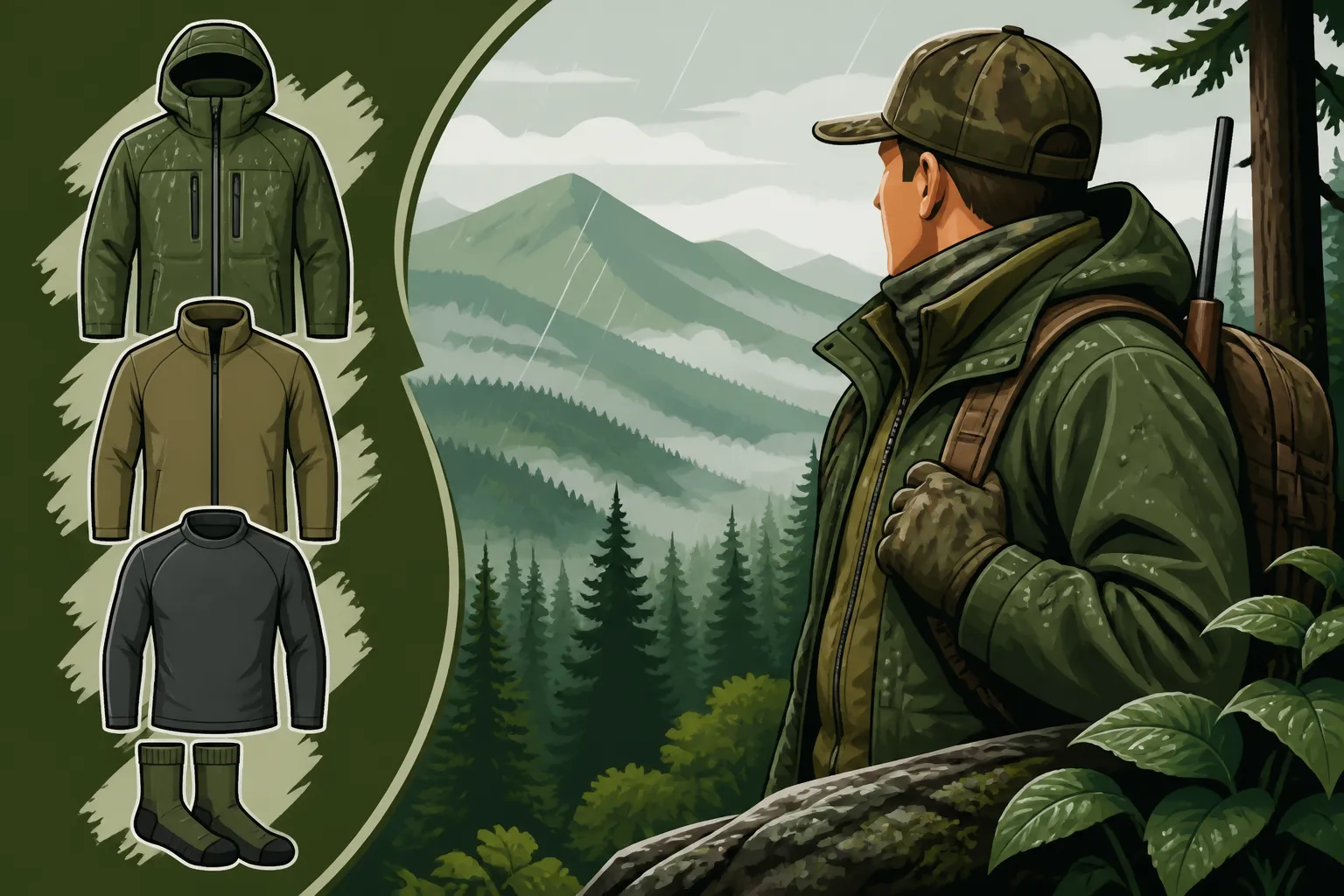
Building an effective layering system for wet Vermont hunting involves three primary components: the base layer, the mid-layer, and the outer shell. Each plays a crucial, distinct role in keeping you comfortable.
The Base Layer: Your First Line of Defense Against Moisture
The base layer is worn directly against your skin, and its primary job is to wick moisture (sweat) away from your body. This is perhaps the most critical layer for staying dry from the inside out. When sweat stays on your skin, it cools rapidly, drawing heat from your body and making you feel cold, even if you have heavy layers on top.
For Vermont’s varied conditions, merino wool or synthetic materials are your best friends. Merino wool is exceptional because it wicks moisture, regulates temperature, and even retains some insulating properties when wet, plus it's naturally odor-resistant. Synthetics like polyester also wick moisture aggressively and dry quickly, often being a more budget-friendly option. What you absolutely want to avoid is cotton. Cotton absorbs moisture like a sponge, dries slowly, and completely loses its insulating properties when wet, essentially turning into a cold, clammy rag that will suck the warmth right out of you. Choose a base layer weight appropriate for the expected temperatures; lighter for early season or higher exertion, heavier for colder, late-season hunts. When planning your hunting gear, consider how a high-quality base layer from brands often reviewed on platforms like GoHunt can make a real difference in your comfort and endurance.
The Mid-Layers: Providing the Warmth
Mid-layers are your insulation engine. Their purpose is to trap air warmed by your body, providing the bulk of your warmth. You might wear one mid-layer or several, depending on the temperature and your activity level. This is where you can really customize your warmth without adding too much bulk that restricts movement.
Fleece, down, and synthetic puff jackets are all excellent choices for mid-layers. Fleece is great because it’s relatively lightweight, breathable, and insulates well even when damp. It also dries fairly quickly. Down offers superior warmth-to-weight ratio but loses almost all its insulating power if it gets thoroughly wet. For consistently wet environments, synthetic insulated jackets are often preferred because their insulation (usually polyester fibers) retains warmth even when soaking wet. This makes them a more reliable choice for truly damp conditions in the Green Mountains, especially if your outer shell isn't completely impervious. You might opt for a thinner fleece vest over a base layer for active walks, and then layer a heavier synthetic puff jacket over that once you settle into your stand for a prolonged sit. Having multiple lighter mid-layers allows for greater versatility than one heavy, bulky layer. You can always shed a layer if you're overheating and avoid sweating.
The Outer Shell: Your Shield Against the Elements
The outer shell is your ultimate defense against wind, rain, and snow. Its job is to keep external moisture out and internal warmth in, while still allowing some breathability to prevent sweat from building up inside. This is often the most expensive piece of your layering system, and for good reason—its performance is paramount when the weather turns foul.
When we talk about rain gear, we're really talking about a spectrum of materials, from water-resistant to fully waterproof. For serious hunting in Vermont, especially Hunting Vermont's November Rifle Season or Muzzleloader Deer Hunting in Vermont, a truly waterproof, breathable shell is non-negotiable. Look for jackets and pants made with waterproof-breathable membranes. These fabrics are designed with microscopic pores that are too small for water droplets to pass through from the outside, but large enough for water vapor (sweat) to escape from the inside. Features like taped seams, waterproof zippers, and adjustable cuffs and hoods are also vital. A good outer shell will also break the wind, which can amplify the chilling effect of dampness. Remember, even the best waterproof gear needs to be maintained; regular washing and re-application of a durable water repellent (DWR) coating will ensure it continues to shed water effectively. When the rain is relentless, your outer shell is what stands between comfort and misery.
Here's a quick overview of layer types and their functions:
| Layer Type | Primary Function | Recommended Materials | What to Avoid |
|---|---|---|---|
| Base | Wicks moisture from skin | Merino wool, Synthetic (poly) | Cotton |
| Mid | Provides insulation/warmth | Fleece, Synthetic insulated | Down (if conditions are very wet) |
| Outer | Protects from wind/rain/snow | Waterproof-breathable fabrics | Water-resistant only (for heavy rain) |
Strategic Layering for Dynamic Vermont Conditions
Successfully navigating a wet hunt in Vermont isn't just about having the right layers; it's about using them intelligently. The dynamic nature of hunting means you'll constantly be switching between periods of high exertion (hiking, dragging a deer) and low activity (sitting on stand). Your layering strategy needs to adapt to these changes.
Adjusting Layers for Activity Levels
The biggest mistake hunters make in damp conditions is over-dressing for the walk in. This leads to sweating, which dampens your base and mid-layers, ultimately making you colder when you slow down or stop. Instead, start your hike with fewer layers than you think you need. Carry your outer shell and an extra mid-layer in your pack. As you start walking, if you feel yourself warming up, shed a mid-layer before you start to sweat. For example, if you're Still-Hunting Green Mountain National Forest Timber, you'll be moving constantly, generating heat. Keep only your base layer and a light mid-layer on, packing your heavy outer shell or thickest mid-layer for when you settle into a glassing spot or stand.
Once you reach your destination and slow down, that's when you add layers back on. Put on your waterproof shell immediately if it's raining or misty, even if you feel warm from the hike. This prevents your insulating layers from getting wet from external moisture. Then, add your warmer mid-layers to trap that precious body heat. This proactive approach to managing your body temperature and moisture is crucial. It requires a little discipline, but it pays off immensely in comfort and prolonged hunt time. Don't be afraid to take a brief break, drop your pack, and adjust your layers before sitting down for a long stretch.
The Role of Accessories and Footwear
Beyond your main body layers, critical accessories often get overlooked when preparing for wet weather. Your hands, feet, and head are major areas of heat loss and are often the first to get cold and wet. Waterproof gloves or mittens, paired with thin wicking liners, are essential. You might even carry two pairs of outer gloves – one for active use, one for sitting still – just in case one gets soaked.
For your feet, waterproof boots are non-negotiable for Vermont's muddy trails and wet undergrowth. Look for boots with a waterproof membrane and adequate insulation for the temperatures you expect. Pair these with good quality wool or synthetic socks that wick moisture. Again, avoid cotton socks at all costs. Carrying an extra pair of dry socks in a sealed bag in your pack can be a game-changer if your feet get wet, providing immense psychological and physical relief. A waterproof hat with a brim will not only keep rain off your face but also help retain significant body heat. Investing in quality gear for these extremities is just as important as your core layers. When you're Tracking a Deer in Fresh Green Mountain Snow, having warm, dry feet and hands can make all the difference.
Troubleshooting and Advanced Tips for Staying Dry
Even with the best layering system, Vermont’s weather can be challenging. Knowing some advanced tips and how to troubleshoot common issues can help you extend your hunt and stay safe.
Ventilation and Zippers
Your waterproof-breathable shell works best when it can vent moisture. Many quality jackets have pit zips (zippers under the armpits) and breathable pockets or mesh linings. Utilize these. If you're hiking and start to feel warm, open your pit zips before you start sweating heavily. This allows humid air to escape without exposing your core to the elements too much. Similarly, if you’re wearing waterproof pants, some models have full-length side zips, which can be opened for ventilation on the go. This active management of your body temperature is what separates a comfortable hunter from a soaked one. Remember, the goal is to prevent sweat from forming in the first place, or at least to get it out as quickly as possible.
Protecting Your Pack and Gear
It's not just you that needs to stay dry. The contents of your pack are equally important. A wet lunch, soggy map, or damp spare layers are not only irritating but can also become a problem if you need them for warmth or navigation. Always use a rain cover for your pack. Better yet, use dry bags or heavy-duty Ziploc bags for critical items like extra socks, maps, first-aid kits, and electronics inside your pack, even with a rain cover on. This double layer of protection is cheap insurance against a spoiled hunt. When you're relying on tools like the Vermont Fish and Wildlife App or a GPS unit to navigate Scouting Vermont Public Land Before Season, keeping them dry and functional is paramount.
Planning for the Unexpected
Vermont is known for its sudden weather shifts. Always pack an emergency "dry kit" even on days that look clear. This might include a lightweight, packable emergency poncho, a mylar blanket, and a small fire-starting kit in a waterproof container. These items are compact but can be life-savers if you find yourself unexpectedly stuck out in worsening conditions, or if your primary rain gear fails. Understanding Wind and Thermals in Steep Green Mountain Terrain can help you anticipate how weather might behave and prepare accordingly. Remember that even on short hunts, conditions can change rapidly, and being prepared for the worst allows you to enjoy the best.
Disclaimer
This article is for general informational purposes only and does not constitute professional advice. Laws, prices and regulations vary by location and change over time. Consult a qualified professional for guidance on your specific situation.