Best Boot Insulation for Late-Season Cold
Few things can ruin a late-season hunt faster than cold feet. You've spent hours scouting, enduring early alarms, and braving the elements, only to have numb toes send you packing back to the truck before legal shooting light is even over. In Vermont, where late fall and early winter can bring truly brutal temperatures and lingering dampness, having the right boot insulation isn't just a comfort; it's a non-negotiable part of your strategy to stay on stand and focused. This guide will dive deep into understanding boot insulation, helping you make the best choices to keep your feet warm and ensure you can outlast the cold when chasing whitetails in the Green Mountains.
Understanding the Role of Insulation in Late-Season Boots
When the air bites and the ground feels like a giant ice pack, your boots become your last line of defense against the cold creeping into your extremities. It's not just about throwing on any old winter boot; it's about understanding how insulation actually works and, perhaps more importantly, how it can fail you in the field.
How Insulation Works and Fails
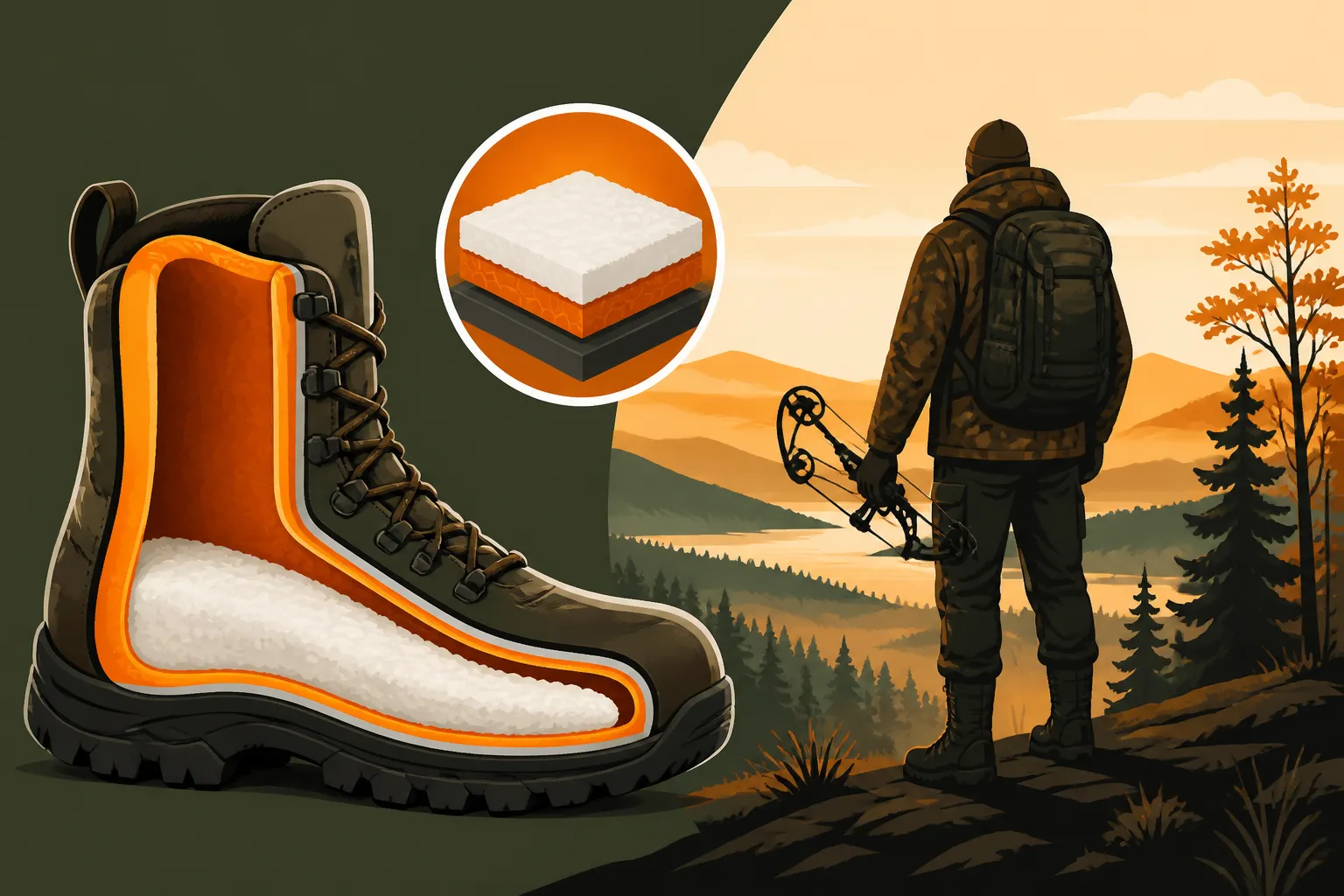
At its core, insulation in your boots works by trapping air. This trapped air creates a barrier that slows down the transfer of heat from your foot to the colder environment outside. Think of it like a miniature sleeping bag for your feet. The more trapped air, generally, the warmer you'll be. Materials are chosen for their ability to loft and hold this air, even when subjected to some pressure.
However, insulation isn't a magic shield, and it has its limitations. Compression is one of its biggest enemies. When you lace your boots too tight, or if the boot fit is too snug to begin with, you compress that valuable trapped air, reducing its insulating power. Similarly, standing or walking on hard, cold ground for extended periods can compress the insulation in the sole, allowing heat to leech out. Moisture, whether from external sources like snow and slush or internal sources like sweat, is another major culprit. Wet insulation loses much of its ability to trap air, leading to a rapid chill. Imagine sitting on a freezing treestand in the low teens, surrounded by fresh snow. Your body is working to stay warm, your feet are static, and if any moisture has built up inside your boots, or if the insulation is compressed from sitting, you're going to feel it quickly. That bone-deep cold in your toes can be excruciating and force you out of the woods prematurely.
Common Insulation Materials and Their Properties
The world of boot insulation offers several materials, each with its own strengths and weaknesses. Understanding these can help you select the best fit for your hunting style and the specific conditions you expect to face here in Vermont.
One of the most widely used synthetic insulations is Thinsulate. It's renowned for offering good warmth-to-weight ratios, meaning you get decent warmth without excessive bulk. Thinsulate comes in various weights, typically measured in grams (e.g., 400g, 800g, 1200g). Higher gram ratings mean more insulation. It performs reasonably well when damp, making it a popular choice for hunting boots that might encounter wet conditions. For many hunters, an 800g Thinsulate boot is a good all-around choice for active hunting in cold weather, offering enough warmth for walking without overheating, but might fall short for prolonged static sits in extreme cold.
PrimaLoft is another high-performance synthetic insulation often found in premium hunting boots. Like Thinsulate, it's designed to mimic the insulating properties of down but excels in wet conditions, retaining much of its warmth even when soaked. It's often praised for its softness and packability. While you might not see it advertised as frequently in pure "gram" weights for boots, it's a strong contender for those who demand excellent performance in damp, frigid environments.
Traditional materials like wool and felt have also been used for centuries, especially in liners. Wool, particularly Merino, is excellent at regulating temperature and managing moisture, even retaining warmth when wet. While full wool-insulated boots are less common, removable felt liners are still popular in pac boots designed for extreme cold. These can be bulky but offer unparalleled warmth for static hunting. Think of the difference between a sleek, insulated leather boot with 800g of Thinsulate and a traditional pac boot with thick felt liners. The pac boot, while heavier and bulkier, will often provide superior warmth for Cold-Weather Sitting Strategy in the Northeast Kingdom because of the sheer volume of trapped air in those felt layers.
Finally, while goose down is an exceptional insulator for jackets and sleeping bags due to its incredible warmth-to-weight ratio, it's rarely used in hunting boots. The reason is simple: down is virtually useless when wet. Given the propensity for snow, slush, and internal sweat in hunting boots, down is just too risky a choice for footwear.
Matching Insulation to Vermont's Late-Season Conditions
Choosing the right amount of insulation isn't a one-size-fits-all proposition, especially when hunting in a place like Vermont, where conditions can swing dramatically from a crisp autumn chill to deep winter freezes.
Factors Beyond Just Grams of Insulation
While insulation gram ratings give you a baseline, several other critical factors play a huge role in how warm your feet will actually feel. Your activity level is paramount. If you're constantly on the move, still-hunting through timber for Still-Hunting Green Mountain National Forest Timber or driving deer with a small group, your body is generating heat, and you might need less insulation to avoid overheating and sweating. Conversely, if you're planning a long, static sit in a treestand or ground blind, especially during the Hunting Into the December Muzzleloader Close, you'll want significantly more insulation. Your body simply isn't generating the same amount of heat, and the cold ground or air will try to steal what heat you have.
The actual temperature range you'll be hunting in is also crucial. A day hovering just below freezing demands different insulation than one where the mercury plummets to single digits or below zero. Moreover, individual personal circulation varies wildly. Some hunters "run cold" no matter what they wear, while others can get by with less. You know your body best, so factor in your own physiological tendencies.
Finally, your sock system is an often-overlooked partner to your boot's insulation. The best insulated boot in the world won't keep you warm if you're wearing cotton socks that hold moisture against your skin. A proper layering system, typically a thin wicking liner sock and a thicker merino wool outer sock, is essential. This combination pulls moisture away from your foot, allowing the boot's insulation to do its job effectively. For example, a hunter setting up on a Hunting a Ridge-Top Saddle for Rutting Bucks might find that an 800-gram boot feels warm enough during the active walk in, but the lack of a proper sock system, combined with sitting for hours, quickly leads to cold feet.
Recommended Insulation Levels for Different Scenarios
Given Vermont's varied late-season conditions, here's a general guide to insulation levels, keeping in mind that these are starting points, and personal preference always plays a role.
- Moderate Cold (20-35°F), Active Hunting: For scenarios where you're consistently moving, like covering ground during the early part of November's rifle season or even still-hunting on a brisk day, 400-600 grams of insulation is often sufficient. This range provides warmth without excessive bulk, allowing for easier movement and reducing the risk of overheating and sweating. If you're going to be walking for Tracking a Deer in Fresh Green Mountain Snow, this level is usually plenty.
- Cold (0-20°F), Active to Moderate Activity: This is where 800-1000 grams of insulation really shines. It offers a significant boost in warmth suitable for colder days with mixed activity levels. Many hunters consider an 800g boot their workhorse for much of Vermont's general deer season, providing a good balance. It's often sufficient for those brisk walks in before settling into a stand for a few hours.
- Extreme Cold (Below 0°F), Static Hunting: When temperatures drop well below zero, or if you're planning those long, motionless sits during the late muzzleloader season or Hunting Deer After a Cold Front, you need maximum insulation. Look for boots with 1200 grams, 1600 grams, or even more. This often means pac-style boots with thick felt liners. While bulky, they are designed to keep you warm when your body isn't generating much heat. The key here is the volume of trapped air.
To help visualize this, here's a quick reference table:
| Insulation Level (Grams) | Suggested Activity | Typical Temperature Range | Notes for Vermont Hunting |
|---|---|---|---|
| 400-600g | High Activity | 20-35°F | Good for walking, light snow. Avoid long static sits. |
| 800-1000g | Moderate Activity | 0-20°F | Versatile for mixed hunting. Popular for active/moderate cold. |
| 1200g+ | Static/Low Activity | Below 0°F | Essential for long treestand sits in deep winter. Pac boots often apply. |
Remember, this table is a guide. Your individual tolerance for cold, your layering system, and even your diet can influence how warm you feel. For example, a well-fed hunter with good circulation wearing an excellent pair of Best Boots for Green Mountain Ridge Terrain and proper socks might feel perfectly fine in an 800g boot at 10°F, while another hunter might need 1200g. It's all about finding what works for you.
Beyond Insulation: Other Critical Boot Features for Cold Weather
While insulation is the star of the show for cold feet, it's not the only factor. A boot designed for late-season Vermont hunting needs a comprehensive approach to keep you warm, dry, and safe.
Waterproofing and Breathability
It might sound obvious, but wet feet are cold feet, no matter how much insulation you have. Excellent waterproofing is non-negotiable for late-season boots. You'll encounter melting snow, slush, icy puddles, and damp ground, all eager to soak through inadequate footwear. Look for boots that feature proven waterproof membranes like Gore-Tex or similar proprietary technologies. These membranes are designed to prevent external water from entering while still allowing some internal moisture (sweat) to escape.
This brings us to breathability. While waterproofing keeps water out, breathability prevents sweat from building up inside your boots. If your boots aren't breathable, your feet will sweat during the walk to your stand, and that moisture will then get trapped. Once you sit still, that trapped moisture will cool rapidly, chilling your feet to the bone. It's a cruel cycle. A good waterproof/breathable membrane helps to mitigate this, letting perspiration vapor escape. Imagine trudging through a slushy logging road on your way to a stand. You get to your spot, sit down, and after 20 minutes, your feet are starting to feel cold. Was it the external wetness, or the sweat that built up on the hike in that's now freezing your toes? Often, it's the latter. This is why Layering for Vermont's Long Hunting Season isn't just about your torso, but your feet as well.
Fit, Sock Systems, and Foot Warmers
A proper fit is paramount. Many hunters mistakenly buy boots that are too small, thinking a snug fit will be warmer. In reality, a boot that's too tight restricts blood flow, which is crucial for keeping your feet warm. It also compresses the insulation, reducing its effectiveness. You should have enough room to comfortably wiggle your toes, even with a thick sock system on. This allows for circulation and ensures the insulation can loft properly.
Speaking of sock systems, this is where many hunters make or break their cold-weather comfort. Forget cotton. Cotton absorbs moisture and holds it against your skin, leading to rapid cooling. Instead, invest in high-quality wool or synthetic socks. A common and effective system is a thin, moisture-wicking liner sock (synthetic or very fine merino) worn underneath a thicker, insulating merino wool sock. This combination wicks sweat away from your skin, moving it to the outer layer where it can evaporate or be held away from your foot, while the wool provides excellent insulation even if it gets slightly damp. When researching different sock options or boot models, resources like GoHunt often provide detailed reviews and comparisons that can help you dial in your setup.
Finally, chemical foot warmers can be a lifesaver on truly frigid days or when you're facing a long, static sit. These small packets generate heat through a chemical reaction. Place them on top of your toes or under the arch of your foot (some boots have specific pockets for them). They can provide that extra boost of warmth needed to extend your hunt by hours. While they shouldn't be your primary defense against cold feet, they are an excellent supplemental tool.
Sole and Traction
Don't overlook the sole of your boot. A thick, well-insulated sole acts as another barrier between your foot and the cold ground. Thin soles transmit cold directly to your foot, even if the upper part of the boot is heavily insulated. Look for boots with a substantial sole design.
Additionally, late-season hunting in Vermont means dealing with varied and often treacherous terrain. Ice, packed snow, mud, and frozen leaves are common. An aggressive tread pattern on your outsole is crucial for safety and stability. Look for deep lugs and multi-directional patterns that can grip a variety of surfaces. Slipping on a steep, icy hillside while trying to traverse a ridge for a Hunting a Ridge-Top Saddle for Rutting Bucks isn't just inconvenient; it can be genuinely dangerous. Good traction gives you confidence and conserves energy, allowing you to focus on the hunt, not on staying upright.
Choosing and Maintaining Your Late-Season Boots
Making the right choice for your late-season boots and then properly caring for them can ensure they serve you well for many seasons to come, making your time in the Vermont woods far more enjoyable and productive.
Making the Right Investment
When it comes to late-season hunting boots, this is not the place to pinch pennies. A quality pair of insulated, waterproof boots is one of the most critical pieces of gear you own. They directly impact your comfort, endurance, and safety in harsh conditions. Consider your primary hunting style: are you mostly treestand hunting, covering miles still-hunting, or a mix of both? This will influence the ideal insulation level and overall boot design. If you're generally active, you might lean towards a slightly lighter insulation, while dedicated sitters will want maximum warmth.
Reputable brands in the hunting and outdoor industry offer a wide range of robust insulated boots. These companies have invested in research and development to produce footwear that can withstand the rigors of cold, wet environments. While prices can vary, remember that a good pair of boots is an investment in your hunting success and well-being. Before making a purchase, spend time researching different models and reading reviews. Websites and communities like GoHunt often have extensive gear reviews and user feedback that can provide valuable insights into real-world performance. Try on boots with the actual socks you intend to wear, and walk around the store for a bit to get a feel for them. Don't rush this decision.
Tips for Longevity and Performance
Once you've invested in a great pair of late-season boots, proper care and maintenance are key to ensuring they perform season after season.
- Dry Them Thoroughly: This is arguably the most important tip. After every hunt, especially if your boots got wet (internally or externally), ensure they are completely dry before storing them. Remove the insoles and open up the boot as much as possible. Use a boot dryer with gentle heat, or stuff them with newspaper to absorb moisture. Never dry them directly next to a roaring fire or on a hot heater, as this can damage materials and adhesives. The frustration of pulling on a still-damp boot for a pre-dawn hunt is something no one needs.
- Clean and Treat: Regularly clean mud and debris from your boots. For leather boots, apply a quality leather conditioner or waterproofing wax as needed to maintain their suppleness and water repellency. For synthetic boots, follow the manufacturer's recommendations for cleaning and re-treating the DWR (Durable Water Repellent) finish. This will help maintain the boot's Best Boots for Northeast Kingdom Bog Hunting capabilities.
- Proper Storage: Store your boots in a cool, dry place away from direct sunlight. Avoid cramming them into a tight space where the insulation might be permanently compressed. If your boots have removable liners, take them out for separate storage to maintain their loft.
- Inspect and Repair: Before and after each season, give your boots a thorough inspection. Check for any tears, separated seams, or worn-out soles. Address minor issues promptly to prevent them from becoming major problems. Sometimes, a little seam sealant or a new pair of laces can extend the life of your boots considerably.
- Mind Your Socks: Continue to use your proper sock system. Even the best boots can be undermined by poor sock choices. Regularly washing your technical socks according to their care instructions will also help them maintain their wicking and insulating properties. Again, resources like GoHunt might offer advice on optimal sock combinations for various conditions.
By understanding the science behind boot insulation, matching it to Vermont's challenging late-season conditions, and combining it with smart choices in waterproofing, fit, and care, you'll be well on your way to enjoying warmer, more successful hunts when the temperatures drop. Don't let cold feet cut your time short in the beautiful Green Mountains.
Disclaimer
This article is for general informational purposes only and does not constitute professional advice. Laws, prices and regulations vary by location and change over time. Consult a qualified professional for guidance on your specific situation.