Best Binocular Harness for a Ridge Walk
There’s nothing quite like the exhilaration and challenge of a long ridge walk in Vermont’s hunting lands. You’re pushing through dense timber, scaling steep inclines, and keeping an eagle eye out for movement. But if your binoculars are bouncing around your chest or digging into your neck, that critical piece of gear quickly becomes a frustrating liability. This guide is all about helping you find the absolute best binocular harness to keep your optics secure, accessible, and comfortable, no matter how rugged your Green Mountain adventure gets.
The Frustration of the Flimsy Harness on a Vermont Ridge
We’ve all been there. You invest in a quality pair of binoculars, knowing they're essential for picking apart distant cover or confirming details in low light. Then you clip them to a basic neck strap or a cheap harness, only to realize the moment you hit the first steep climb or a patch of thick blowdowns that your "solution" is creating more problems than it solves. Ridge walking in Vermont is a demanding activity, and your gear needs to stand up to it.
Why Traditional Neck Straps Just Don't Cut It in Steep Terrain
Let’s be honest, those thin neck straps that come with most binoculars are fine for a gentle stroll in the park, but they are an absolute nightmare on a serious ridge walk. Imagine trying to navigate a steep, rocky ascent in the Green Mountains, perhaps on the way to a prime spot for Hunting a Ridge-Top Saddle for Rutting Bucks. With every step, your expensive optics swing and bounce, often thudding against your chest or, worse, catching on a branch. Not only is this distracting and uncomfortable, leading to neck fatigue long before you’ve reached your destination, but it also creates unnecessary noise that can easily spook game. You're constantly having to hold them with one hand, which is not ideal when you need both hands for balance or to push through dense undergrowth.
The constant jostling can also knock your binoculars out of alignment, or simply make them less reliable. It’s a frustrating cycle: you stop to adjust them, only for them to start swinging again moments later. This isn't just an inconvenience; it can actively hinder your hunt by robbing you of precious focus and energy.
The Real Dangers of Loose Optics When Hunting
Beyond discomfort, a loose binocular setup poses genuine risks. First and foremost, there's the danger to your optics themselves. A hard impact against a tree trunk or a fall onto rocky ground can easily damage lenses, throw off collimation, or even crack the housing. Given the significant investment many of us make in high-quality binoculars, this is a risk no one wants to take. Think about Hunting the Rut in Early-to-Mid November when light is often low and ground cover can be slick with frost or wet leaves. A fall with unprotected binoculars could end your hunt before it truly begins.
Then there's the impact on your hunting effectiveness. When you're trying to quickly glass a distant hillside for Reading a Green Mountain Deer Yard or identify a subtle movement, fumbling with a tangled strap or trying to stabilize bouncing optics costs you precious seconds. Those are seconds a wary buck might use to slip away unnoticed. The noise factor is also huge; a clanking pair of binoculars against a rifle stock or other gear in the silent woods is a surefire way to alert every creature within earshot. A good binocular harness keeps your optics snug and silent, allowing you to draw them smoothly and quietly for quick, decisive glassing.
What Makes a Ridge Walk So Demanding for Gear
Vermont’s terrain, particularly its ridgelines, presents a unique set of challenges that really test the limits of your hunting gear. You're not just walking; you're climbing, descending, side-hilling across contours, and often pushing through dense thickets of spruce, fern, and blowdowns. The ground underfoot can be uneven, rocky, muddy, or slick with moss and fallen leaves. One moment you're traversing an open, windswept rock outcrop, the next you're plunging into a dark, damp ravine.
These conditions demand gear that is not only comfortable but incredibly durable and designed for dynamic movement. A harness that performs admirably on flat ground might fail miserably when you're bent double, crawling under a fallen tree, or scrambling up a near-vertical bank. Weather is another variable; a sunny morning can quickly turn into a cold, driving rain or a sudden snow squall in the higher elevations. Your harness needs to withstand moisture, abrasion, and repeated stretching and flexing without falling apart or losing its integrity. The constant physical exertion means sweat, which can degrade materials over time if they aren't designed for moisture wicking and breathability.
Key Features to Look For in a Ridge-Ready Binocular Harness
When you’re gearing up for serious ridge walking in Vermont, you need a binocular harness that acts as an extension of your body, not an impediment. It’s all about a seamless experience, where your binoculars are precisely where you need them, exactly when you need them.
Comfort and Ergonomics for Long Days Afield
This is perhaps the most critical factor for any piece of gear you’ll wear for hours on end, especially when covering rugged ground. A poorly designed harness will make itself known quickly, digging into your shoulders or chest, causing chafing, and adding to your overall fatigue. Look for harnesses with wide, well-padded shoulder straps that distribute the weight of your binoculars evenly across your upper back and shoulders, rather than concentrating it all on your neck. Some of the best harnesses feature an X-back or H-back design, which prevents the straps from slipping off your shoulders, a common annoyance when traversing uneven ground or Climbing to a Green Mountains High-Elevation Bench.
Breathable materials, often mesh or perforated foam, are also a huge plus. They help prevent sweat buildup, which can lead to discomfort and chafing, especially during strenuous activity or when Layering for a Wet Green Mountain Day. The harness should feel snug but not restrictive, allowing for a full range of motion without inhibiting your drawing a bow or shouldering a rifle. When you put it on, it should disappear, becoming something you don't even think about until you need your glass.
Secure and Quiet Access to Your Optics
A binocular harness needs to strike a delicate balance: your binoculars must be securely held in place to prevent bouncing and damage, yet remain instantly accessible and, most importantly, quiet when you need them. Magnetic closures are a game-changer here. Unlike noisy zippers or velcro, magnets allow for silent, one-handed opening and closing of the main compartment, which is crucial when you spot movement and every decibel counts. Some designs use a quiet elastic retention system or a simple flap with a silent buckle.
The fit of the bino compartment itself is also important. It should hold your specific binoculars snugly, minimizing internal movement and preventing them from rattling around. Many quality harnesses feature adjustable internal dividers or elastic side panels to accommodate different binocular sizes. A secondary elastic tether for your binoculars adds an extra layer of security, ensuring they don't hit the ground if you fumble them while glassing. This attention to quiet operation and secure retention is paramount for anyone serious about Still-Hunting Green Mountain National Forest Timber or any situation requiring stealth.
Durability and Weather Resistance in Vermont's Elements
Vermont’s weather can be unpredictable, and its terrain unforgiving. Your binocular harness needs to be built tough to withstand these conditions. Look for harnesses constructed from robust, abrasion-resistant materials like Cordura nylon, which can shrug off scrapes from branches and rocks. Reinforced stitching at stress points ensures the harness won't fall apart after a few seasons of hard use.
Weather resistance is equally vital. Many top-tier harnesses feature a Durable Water Repellent (DWR) coating or are made from waterproof/water-resistant fabrics. This protects your expensive optics from rain, snow, and condensation, helping to prevent fogging and internal damage. While no harness can make your binoculars fully submersible, a good one will keep them dry during a heavy downpour or when you're pushing through wet brush. Furthermore, consider the quality of the zippers and buckles – they should be heavy-duty, corrosion-resistant, and operable even with cold or gloved hands. Many hunters turn to resources like GoHunt to compare user reviews and field-test experiences before making a purchase, especially for something as critical as a harness in Vermont's variable conditions.
Understanding Different Harness Styles for Your Hunting Needs
Just like there are different types of hunts, there are different styles of binocular harnesses, each with its own set of advantages and considerations. Understanding these variations will help you choose the best fit for your specific Vermont hunting style and the demands of those ridge walks.
Chest Harnesses: The Classic Choice for Stability
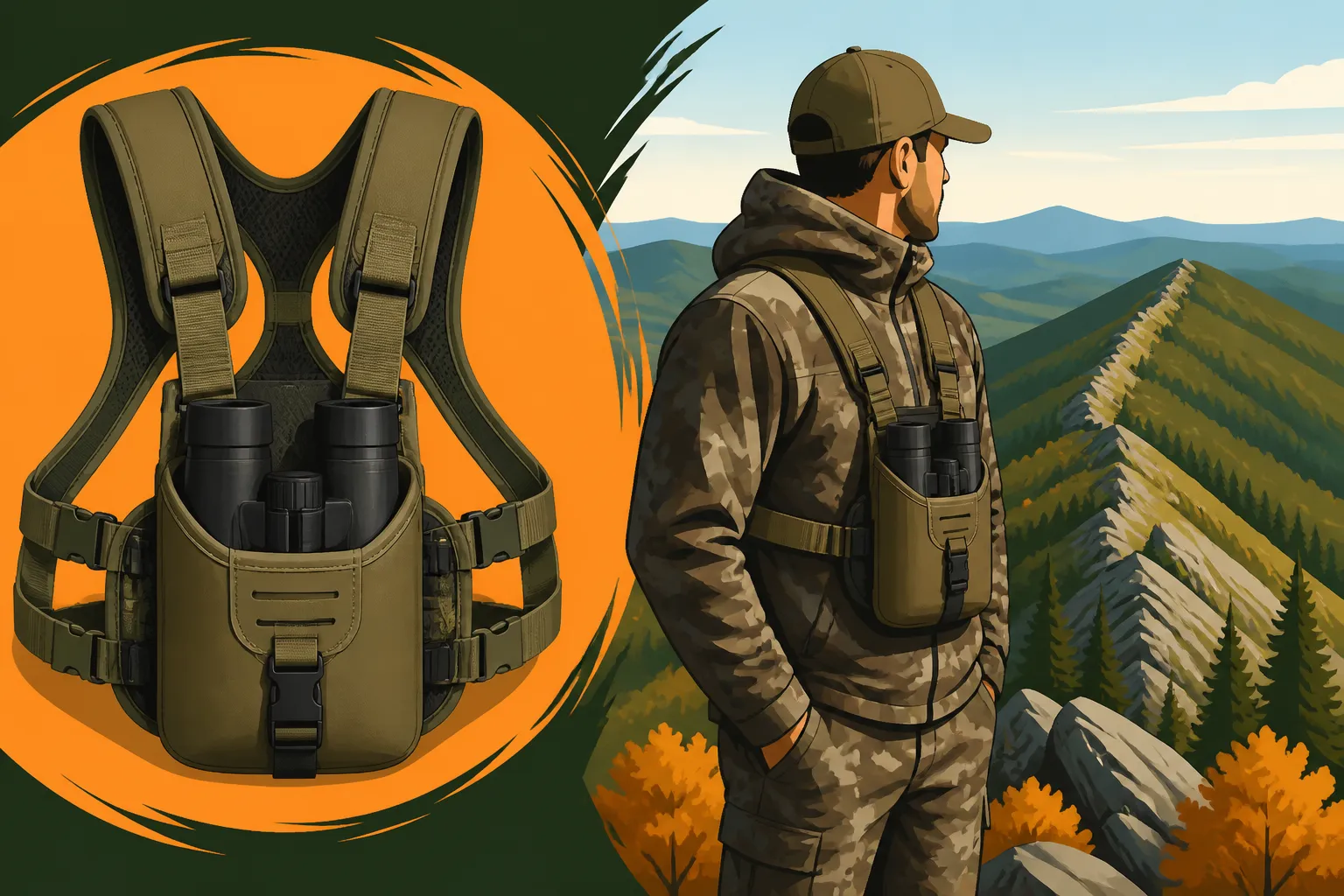
The traditional chest harness, often called a "binocular chest pack," is perhaps the most common and versatile style. These harnesses typically feature a main compartment that sits on your chest, supported by shoulder straps and often a sternum or waist strap for added stability.
Pros:
- Excellent Stability: They hold your binoculars close to your body, minimizing bounce and swing, even when you're scrambling up a steep incline or Hunting a Funnel Between Two Woodlots.
- Hands-Free Operation: Your optics are always within easy reach, allowing for quick deployment without fumbling.
- Weight Distribution: The design distributes the weight across your shoulders and back, taking pressure off your neck.
- Additional Storage: Many chest harnesses include small side pockets for a rangefinder, wind checker, or small GPS unit, keeping essential tools accessible.
- Protection: The main compartment often offers good padding and protection for your binoculars from impacts and weather.
Cons:
- Can Feel Bulky: Some hunters find them a bit bulky, especially when worn under a heavy pack or outer layers. This can sometimes restrict movement or feel cumbersome.
- Heat Retention: In warmer weather, having a pack on your chest can contribute to heat buildup.
- Limited Capacity: While offering some accessory storage, they aren't designed for large amounts of gear.
For a long day of still-hunting or glassing from a strategic vantage point, a well-fitting chest harness is often the preferred choice among Vermont hunters.
Pack-Integrated Harnesses: Streamlining Your Setup
A more modern approach, pack-integrated harnesses, are often part of a larger hunting backpack system. These are designed to create a more streamlined and cohesive gear setup, particularly for multi-day backcountry hunts or when carrying substantial loads.
Pros:
- Seamless Integration: The binocular compartment is designed to work in harmony with your main pack, eliminating redundant straps and potential snags. This can be fantastic when Packing for a Northeast Kingdom Moose Hunt where every bit of efficiency counts.
- Reduced Bulk: By being integrated, they can often feel less bulky on your chest compared to a separate chest pack, especially if the design is minimalist.
- Improved Load Carriage: For those who carry heavy packs, integrating the bino harness can sometimes contribute to better overall load distribution, though the binoculars themselves are a small part of that.
Cons:
- Less Modular: If you want to go out for a short hunt with just your binoculars, you might be forced to wear a larger pack, or you might need a separate, standalone harness.
- Brand Specific: Often, these are proprietary systems designed by specific pack manufacturers (e.g., KUIU, Stone Glacier, Mystery Ranch), limiting your options if you prefer a different pack brand or a particular binocular harness.
- Cost: Buying a full pack system with an integrated harness can be a significant investment.
These systems are ideal for hunters who value a streamlined setup and who consistently carry a large pack.
Hybrid Systems: Combining the Best of Both Worlds
Hybrid systems aim to bridge the gap between standalone chest harnesses and fully integrated pack systems, offering a balance of modularity, protection, and accessibility. These often feature a robust chest pack that can be worn independently but also has attachment points to easily integrate with various backpack shoulder straps.
Pros:
- Versatility: You can wear the chest pack by itself for lighter, shorter hunts or attach it to your main backpack for extended trips. This adaptability is great for the varied hunting scenarios in Vermont, from Fall Turkey Hunting Vermont's Statewide Archery Window to a full Moose Hunting Vermont's Northeast Kingdom expedition.
- Customization: Many hybrid systems allow you to add or remove accessory pouches, giving you the flexibility to carry exactly what you need.
- Enhanced Comfort: They often incorporate the best ergonomic features of standalone chest harnesses while offering the option to offload some of the weight to a pack.
Cons:
- Potential for Complexity: More modularity can sometimes mean more straps to adjust initially, though once set, they typically perform well.
- Cost: These systems can sometimes be pricier due to their advanced features and modular design.
A hybrid system offers a compelling solution for the hunter who wants maximum flexibility and the ability to adapt their gear to the specific demands of each hunt, whether it's a quick morning sit or a multi-day backcountry excursion.
| Harness Type | Key Advantage | Best For | Considerations |
|---|---|---|---|
| Chest Harness | Maximum stability, quick access, dedicated storage | Day hunts, still-hunting, glassing | Can feel bulky under large packs, heat retention |
| Pack-Integrated | Streamlined system, no redundant straps | Multi-day backcountry hunts, heavy pack loads | Less modular, brand-specific, higher initial cost |
| Hybrid System | Versatility, modularity, customizable storage | Varied hunt types, adaptable gear setups | Can be more complex to set up initially, costlier |
Choosing and Adjusting Your Harness for Optimal Performance
Once you’ve got a good idea of the type of harness that suits your hunting style, the next crucial step is selecting the right one and then dialing in its fit. A great harness can still feel terrible if it’s not adjusted properly, and a well-adjusted harness can truly enhance your hunting experience.
Sizing and Fit: Getting It Right for Your Body and Binos
This cannot be stressed enough: a binocular harness is only as good as its fit. The best way to ensure a proper fit is to try it on with your actual binoculars inside the compartment, and crucially, wear it with the typical layers you’d use during hunting season. If you’re planning on Hunting a Muzzleloader Tag After Rifle Season Closes in December, you’ll likely be wearing substantial insulation, and that will change how a harness sits on your body.
The shoulder straps should sit comfortably without digging in or slipping off. Adjust the main straps so the binocular compartment rests high on your chest, just below your sternum. This position keeps your optics out of the way of your belly when bending over, and allows for quick, natural access. There should be no excessive slack, but also no constricting tightness that restricts your breathing or movement. For hunters who value detailed gear reviews and fit guides, platforms like GoHunt often provide community insights and expert advice that can be invaluable in making the right choice for your specific needs. Make sure all buckles and straps are secure and won't loosen unintentionally during a strenuous hike.
Access and Protection: Balancing Speed with Security
The whole point of a good harness is to protect your binoculars while keeping them instantly ready for use. Practice drawing your binoculars from the harness silently. Can you do it with one hand? Does the lid flop open noisily? Does the internal tether allow for enough extension to comfortably glass, but recoil snugly when you’re done?
The main compartment should offer sufficient padding to cushion your optics from minor bumps and jostles, especially important when navigating through the dense timber of the Green Mountains. Ensure the closure system (magnetic, buckle, or elastic) is secure enough to prevent your binoculars from falling out if you lean far forward, yet intuitive enough for rapid deployment. When you're Tracking a Deer in Fresh Green Mountain Snow or looking for a subtle flick of an ear, you don't want to be fighting your gear. The balance here is key: maximum protection and secure retention, without sacrificing quick, quiet access.
Strategic Placement of Additional Gear
Many binocular harnesses come with secondary pockets, and utilizing these wisely can make a huge difference in your efficiency afield. Think about what small, essential items you need quick, silent access to. A rangefinder often fits perfectly in a side pocket, allowing you to pull it out and check distance to a target without ever opening your main pack or fumbling through pant pockets. A wind checker, a small compass, a lip balm, or a lens cloth are other common items that benefit from being readily available.
However, resist the urge to overload these pockets. The more you cram into your harness, the bulkier and heavier it becomes, potentially negating the comfort benefits. Keep it to truly essential, small items. The goal is to streamline your access to core tools, not to turn your binocular harness into a mini-backpack. Think about the flow of your hunt and what you’ll reach for most often, especially during those critical moments when a deer steps out. A well-organized harness means less fumbling and more focus on the hunt itself.
Disclaimer
This article is for general informational purposes only and does not constitute professional advice. Laws, prices and regulations vary by location and change over time. Consult a qualified professional for guidance on your specific situation.