Best Rangefinder Binocular Combo for Open Country
It's happened to all of us: you're out there, maybe on the edge of a vast Champlain Valley cornfield, or perhaps glassing a sprawling clear-cut in the Northeast Kingdom, and you spot that trophy buck or a distant bull moose. Your heart races, your breath catches, and then the mental gymnastics begin. How far is it? Is that a 400-yard shot or a 500-yard shot? Fumbling for your binoculars, then reaching for your separate rangefinder, only to have the animal vanish in the precious seconds you lost. This guide is all about simplifying that critical moment, helping you understand why a rangefinder binocular combo is not just a luxury, but often a necessity for hunting Vermont's open country, and how to choose the best one for your adventures.
Why Open Country Demands Specialized Optics
Hunting in Vermont isn't always about thick woods and tight shots. We have some incredible open country, from expansive hayfields and agricultural lands in the valleys to big clear-cuts and distant ridgelines in the Green Mountains and Northeast Kingdom. These wide-open spaces offer amazing opportunities for spotting game at a distance, but they also introduce unique challenges, especially when it comes to accurately judging range and making a confident shot.
The Frustration of Separated Units in the Field
Think about it: you're sitting on a hillside overlooking a massive field, or maybe you're peeking over a crest into a clear-cut stretching out before you. You bring your binoculars up, searching for movement, for a tell-tale flicker of an ear or a patch of hide. Suddenly, there it is! A deer, or even a bear, standing confidently hundreds of yards away. Your immediate reaction is to verify. Is it legal? Which way is it heading? But crucially, how far away is it?
This is where the frustration often sets in. You have to lower your binoculars, reach for your rangefinder, bring that up to your eye, try to reacquire the target, get a reading, and then maybe go back to your binoculars to continue observing. This dance of swapping gear is not only cumbersome but eats up precious time. A wary animal might take those few seconds to step behind a cluster of trees, dip into a swale, or simply melt back into the timber, taking your shot opportunity with it. I've been there, fumbling with icy hands on a crisp November morning, cursing myself for not having a more streamlined setup. It’s those moments that teach you the value of efficiency.
The Need for Speed and Precision When Time is Short
In hunting, especially when you've done all the hard work of scouting, tracking, and positioning, a shot opportunity can present itself in mere seconds. You might have a buck step out of a bedding area into an open cut-over for just a brief moment at last light. Or a moose could emerge from a thick spruce stand to feed on browse at the edge of a bog. In these scenarios, there's no time for fumbling.
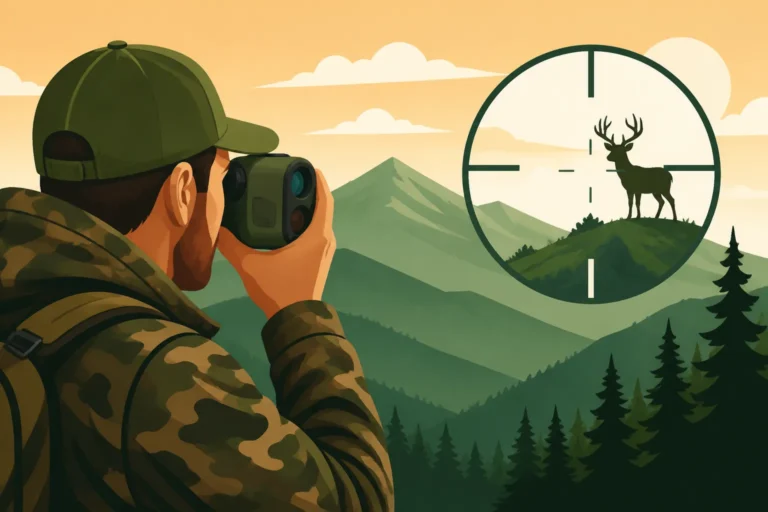
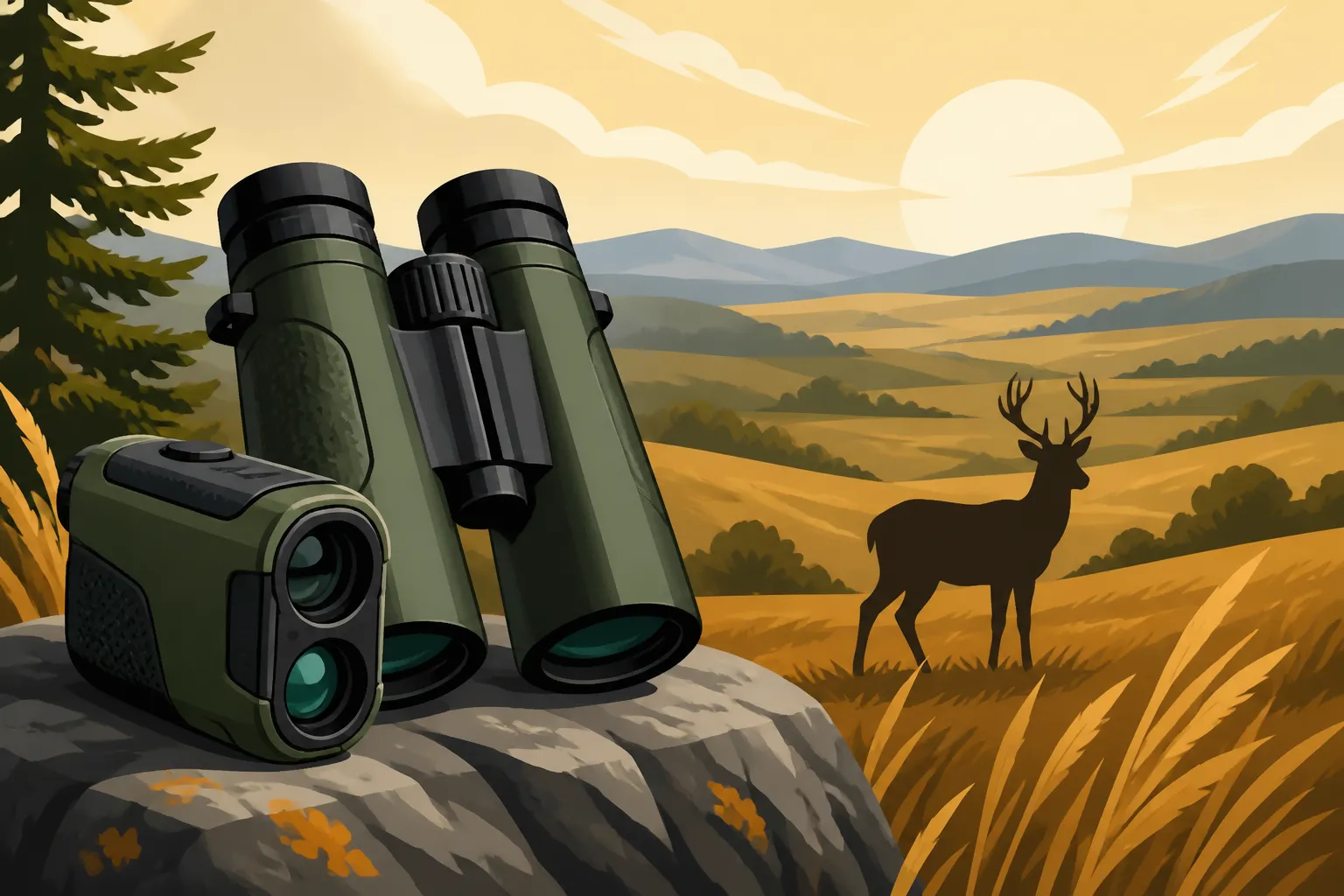
A rangefinder binocular combo fundamentally changes this dynamic. Your primary glassing tool becomes your ranging tool, all in one seamless motion. You spot the animal, press a button, and bam – you have the exact distance displayed right in your field of view. This integration not only saves time but also reduces movement, which is critical. Every unnecessary movement you make increases your chances of being spotted by sharp eyes. The precision comes from the fact that you’re ranging the exact spot you’re looking at, often with image stabilization or a steady rest, removing the error introduced by trying to re-center a separate device. This speed and precision can mean the difference between filling your tag and going home empty-handed, especially on larger, more open tracts of land.
Key Features to Look for in a Rangefinder Binocular Combo
Choosing a rangefinder binocular combo isn't just about grabbing the first one you see. These are significant investments, and you want to ensure the optics you choose are going to perform when it matters most, particularly in Vermont's varied, and sometimes challenging, open terrains.
Optical Clarity and Magnification in Wide-Open Spaces
When you're glassing a vast expanse, optical quality is paramount. You're not just looking for a deer; you're looking for an antler tine, the flick of a tail, or the subtle shift in color that indicates a camouflaged animal. This demands clear, bright images, even in low light conditions like dawn and dusk when game is most active. Look for optics with high-quality glass, good coatings, and an appropriate objective lens size.
Magnification is another critical factor. For open country, many hunters gravitate towards 10x or even 12x magnification. A 10×42 (10x magnification, 42mm objective lens) is a fantastic all-around choice, offering a good balance of magnification, field of view, and light-gathering capability. If you're consistently hunting very large clear-cuts or vast agricultural fields and have a steady rest (like a tripod), a 12x magnification can offer an edge in spotting distant details, but it will come with a slightly narrower field of view and can be harder to hold steady freehand. The clarity should allow you to not only spot the animal but discern its features, ensuring you're targeting a legal animal, and not, for example, a smaller doe during a buck-only season. When you're Glassing a Clear-Cut for a Bull Moose, that extra clarity can help you identify if it's a bull or cow from a great distance.
Ranging Capabilities: Distance, Accuracy, and Angle Compensation
This is where the "rangefinder" part of the combo really shines. You need a unit that can consistently and accurately range targets out to the distances you expect to shoot, and beyond, especially in open areas. For rifle hunters in open country, a range of 800-1200 yards for deer-sized targets is a good benchmark, giving you plenty of overhead for scouting and ranging beyond your ethical shooting limits. For moose, you might want even more.
Accuracy is measured in yards or meters, and most modern combos are impressively precise. However, consistency is key – you want it to give you the same reading reliably. Another vital feature, especially in Vermont's rolling landscape, is angle compensation. When you're shooting uphill or downhill, the true ballistic distance is shorter than the line-of-sight distance. An angle-compensating rangefinder (often labeled as "horizontal distance" or "compensating for angle") will give you the corrected distance you need for an accurate shot. Without it, shooting steep angles can lead to significant misses. Think about those long shots across a ravine or up a steep logging road – angle compensation saves the day. For more on single-unit devices, you might want to read up on Best Rangefinder for Green Mountain Ridges.
Ergonomics, Durability, and Weather Resistance
Hunting in Vermont means dealing with all sorts of weather and terrain. Your optics need to be tough. Look for a combo that feels good in your hands, with a rubber armor coating that provides a good grip and protects against bumps and drops. The focus wheel should be smooth but firm, and the diopter adjustment should allow you to perfectly tune the image to your eyes. Eye relief is also important, particularly if you wear glasses.
Weather resistance is non-negotiable. "Waterproof" and "fogproof" are the minimum requirements. This means nitrogen or argon purging to prevent internal fogging and robust seals to keep out rain, snow, and condensation. Imagine sitting in a ground blind Brushing In a Blind on a Field Edge during a steady drizzle; your optics can't fail. Look for models that can withstand submersion for a short period, just in case they take an unexpected dip. These devices are an investment, so they need to be built to last through years of rugged use in the Green Mountain State.
Practical Considerations for Vermont's Diverse Open Terrain
Vermont's open spaces are not all created equal. From the broad, flat agricultural expanses of the Champlain Valley to the sprawling clear-cuts and high-elevation benches of the Northeast Kingdom, each presents its own set of challenges and demands specific considerations for your rangefinder binocular combo.
From Champlain Valley Fields to Northeast Kingdom Clear-Cuts
Let's talk about the Champlain Valley first. Here, you're often looking across vast cornfields, hayfields, and dairy pastures. Deer often feed out in the open, especially at dawn and dusk. The terrain is generally flatter, but the distances can be immense. A combo with excellent light transmission will be crucial here, as those golden hour shots are common, and you need to resolve detail against a low-light backdrop. The ranging capability needs to reach those far treelines or the opposite side of a massive field. When Hunting a Champlain Valley Dairy Farm Edge, you could be ranging an animal hundreds of yards away in a wide-open pasture.
Contrast that with the Northeast Kingdom's clear-cuts and expansive timber blocks. Here, the terrain is often rolling, with steep grades, regenerating saplings, and scattered pockets of mature timber. While "open," it's a different kind of open. Angle compensation on your rangefinder is absolutely critical here, as you'll constantly be ranging up and down hillsides. The ability to quickly range multiple targets in various parts of a clear-cut without switching devices will save valuable time as deer often filter out into these areas from heavy cover. For big animals like moose, which frequent these areas, a wide field of view in your binoculars can help you scan large sections efficiently. For more specific binocular advice for these kinds of areas, check out Binoculars for Glassing a Northeast Kingdom Bog and Best Binoculars for a Northeast Kingdom Bog.
Battery Life and Field Maintenance
It's easy to overlook battery life until your rangefinder goes dead just as that monster buck steps out. Most rangefinder binocular combos use common batteries like CR2 or CR123. Always carry spares, especially during colder months when battery performance can decline. It's not a bad idea to get into the habit of checking your battery level before each hunt, or at least before a multi-day trip. A good habit is to replace them before the season starts.
Field maintenance is also straightforward but important. Keep a lens cleaning pen or cloth in your pack. Vermont weather can be unpredictable, and smudges from rain, mud, or even your own breath can severely degrade optical performance. A quick wipe down can restore clarity. If you're out for an extended period, especially in wet conditions, make sure to dry your optics thoroughly each night to prevent mold or corrosion. Don't forget that if you're using a brand like GoHunt for planning and scouting, you can often integrate gear lists and maintenance reminders directly into your trip planning, ensuring you're always prepared.
Here's a quick look at some key features:
| Feature | Importance for Open Country | Why it Matters |
|---|---|---|
| Optical Clarity (ED Glass) | Very High | Crucial for spotting subtle details at long distances, especially in low light. |
| Magnification (10x-12x) | High | Provides necessary detail for distant targets; choose based on terrain and stability. |
| Ranging Distance | High | Needs to exceed your maximum ethical shot distance for scouting and identification. |
| Angle Compensation | Essential | Corrects for uphill/downhill shots, vital in Vermont's rolling terrain. |
| Scan Mode | High | Allows continuous ranging of moving targets or multiple objects quickly. |
| Weatherproofing | Essential | Protects against rain, snow, fog, and humidity common in Vermont. |
| Ergonomics & Grip | High | Comfortable to hold for extended glassing periods; secure grip in wet conditions. |
| Battery Life/Type | High | Reliable power source; common battery type and spares are key. |
Integrating Your Combo Into Your Hunting Strategy
Having the best rangefinder binocular combo in the world won't do you much good if you don't know how to integrate it effectively into your hunting strategy. It's about more than just buying the gear; it's about developing the skills to use it to its full potential.
Practicing Your Glassing and Ranging Technique
Just like with shooting your bow or rifle, practice makes perfect when it comes to glassing and ranging. Before season opens, take your combo out to an open field or a clear-cut near your hunting area. Practice slowly scanning, looking for deer-like objects, and then instantly ranging them. Get into the habit of ranging various landmarks: that distant stump, the far corner of the field, the edge of the woods. This helps you develop a mental map of ranges in your hunting spot.
If you're using a mapping tool like those found on GoHunt, you can even pre-range key points on your maps. Use the satellite imagery to identify potential shooting lanes or travel corridors and then, once in the field, confirm those ranges with your combo. This preparation can save you critical seconds when an animal appears. Remember to use a stable rest whenever possible—a tripod, shooting sticks, or even leaning against a tree can make a huge difference in both glassing and ranging accuracy, especially at higher magnifications. Consider Tripod Setups for Glassing a Clear-Cut for more stable viewing.
Maximizing Your Efficiency on a Stalk
When you spot a game animal at a distance in open country, your rangefinder binocular combo becomes invaluable for planning a successful stalk. Once you've ranged the animal, use your binos to identify potential cover, changes in elevation, and wind direction that will aid your approach. You can range multiple points along your intended stalk route, giving you precise distances to various checkpoints.
This allows you to move with confidence, knowing exactly how far you need to close the distance and what ranges you'll be dealing with at each stage of your approach. If you're trying to Hunting a Clear-Cut Regrowth Edge or Glassing a Powerline Cut at Last Light, knowing the exact distances to those strategic spots where a deer might appear is crucial. Carrying your combo comfortably and securely in an Best Optics Harness for a Spot-and-Stalk Hunt also ensures it's always accessible and protected while you're on the move. And if that stalk leads to a shot opportunity in open farmland, having practiced with Best Shooting Sticks for Open Farmland will provide that extra stability you need for a confident shot. The goal is to move deliberately, minimizing surprise, and being ready to take that ethical shot when the opportunity finally arises.
Disclaimer
This article is for general informational purposes only and does not constitute professional advice. Laws, prices and regulations vary by location and change over time. Consult a qualified professional for guidance on your specific situation.