Best Rangefinder for Green Mountain Ridges
Hunting Vermont's Green Mountains presents some truly unique challenges, and one of the most frustrating has to be accurately judging distance when a buck steps out on a steep hillside or through a tangle of softwood. Those rolling elevations and dense timber can play serious tricks on your eyes, making a 30-yard shot feel like 50, or vice versa. This guide is all about cutting through that uncertainty, helping you understand what makes a rangefinder truly excel in our rugged Vermont landscape, and ensuring you get a precise reading every single time.
The Unique Challenges of Ranging in Vermont's Green Mountains
Vermont's Green Mountains are absolutely gorgeous, but man, they are not built for easy ranging. Unlike wide-open western states or flat farmlands, our terrain here throws every curveball imaginable at a hunter trying to get an accurate distance. It's not just about how far away an animal is; it's about the entire environment conspiring to make that simple measurement a real head-scratcher. If you've ever ranged a distant deer only to have the laser bounce off a sapling 10 yards closer, you know exactly what I'm talking about.
Steep Angles and Elevation Changes
One of the biggest culprits for inaccurate readings in the Green Mountains is the constant up-and-down of the terrain. You might be perched on a ridge, looking down into a hollow, or perhaps you're at the bottom of a ravine, aiming up at a deer silhouetted against the sky. In these situations, your rangefinder's straight-line distance to the target isn't the true ballistic distance your bullet or arrow will actually travel. Gravity affects projectiles differently on inclines and declines. If your rangefinder just gives you the horizontal distance, you could easily shoot over or under your target, especially at longer ranges. This isn't just a minor adjustment; it can be the difference between a clean kill and a frustrating miss.
Think about it: a deer standing 40 yards away horizontally but 20 feet below you isn't the same as a deer 40 yards away on flat ground. Your arrow or bullet will get there faster than it would on flat ground, because gravity is working with it for a portion of its flight. Without the right technology, you're left guessing, and guessing is not a recipe for success in the field. This challenge becomes even more pronounced when you're bowhunting, where even small errors in distance estimation can lead to significant point of impact shifts. It's why seasoned hunters here in Vermont swear by rangefinders that account for these factors.
Dense Cover and Obstructions
Vermont's woods are thick, plain and simple. We've got hardwood forests, dense softwood stands, and endless patches of brush, saplings, and undergrowth that can make getting a clean laser reading feel like trying to find a needle in a haystack. Many standard rangefinders struggle with this. Their laser beam might be too wide, or the processor might not be sophisticated enough to filter out foreground clutter. You aim at that buck standing just beyond a cluster of young pines, and instead of giving you the range to the deer, it bounces off the nearest branch. It’s infuriating when you finally get a shot opportunity, and your gear lets you down.
This isn't just about frustration; it's about missed opportunities. A buck might only be visible for a few precious seconds, and if you're fiddling with a rangefinder that can't cut through the subtle screen of branches, that moment passes. A good rangefinder for the Green Mountains needs to have strong signal processing and a "last target priority" mode, which means it will ignore closer objects and pick up the farthest target in the laser's path. This feature is absolutely critical when you're Still-Hunting Green Mountain National Forest Timber or trying to pick out a deer in a tight cedar swamp. Without it, you're constantly battling phantom readings that are off by 5, 10, or even 20 yards.
Variable Light Conditions
From the soft glow of a pre-dawn climb to the glaring midday sun cutting through the canopy, and then the deep shadows of late afternoon, Vermont's light conditions are constantly in flux. Add in a misty morning, a drizzly afternoon, or even a sudden snow shower, and you've got a recipe for ranging trouble. Some rangefinders perform brilliantly in bright sunlight but become sluggish or completely unreliable in low light or adverse weather. This is a huge problem because many of our prime hunting hours, especially for deer and bear, occur during those transitional periods of low light.
Imagine Hunting the Rut in Early-to-Mid November, when bucks are on the move at dawn and dusk. You need a rangefinder that can perform consistently when the light is dim, helping you make a confident shot before legal shooting hours close. A rangefinder with a bright, clear display – often red for better visibility against dark backgrounds – and optics that gather ample light will be your best friend. Look for models with adjustable brightness settings, so you can tailor the display to the ambient light. Flimsy lenses or coatings that don't transmit light effectively will only hinder your ability to get a quick, accurate read when it matters most.
Key Features to Look for in a Green Mountain Rangefinder
When you're out there in the Green Mountains, wrestling with the terrain and the elements, your gear needs to be an extension of yourself, not a hindrance. Picking the right rangefinder isn't just about buying the most expensive one; it's about choosing a tool with the specific features that address the challenges we just discussed. Don't compromise on these essentials, because they're what will make the difference between a confident shot and a doubtful one.
Angle Compensation Technology
This is, hands down, the most important feature for hunting in Vermont's Green Mountains. As we talked about, shooting up or down a steep slope changes the effective distance your projectile travels. A standard rangefinder will give you the line-of-sight distance, which is fine for flat ground, but critically flawed for angled shots. Angle compensation technology, often referred to as "horizontal distance" or "true ballistic range" (TBR), calculates the equivalent horizontal distance to your target, which is the figure you should use for your bullet or arrow trajectory. Most quality brands offer this, and it's a non-negotiable for serious Vermont hunters.
For example, if a deer is 50 yards away downhill, your rangefinder might tell you 50 yards. But with angle compensation, it might tell you the actual ballistic distance is more like 45 yards. If you shoot for 50 yards, you'll likely shoot over. This technology takes the guesswork out of the equation. Whether you're standing on a steep ridge overlooking a valley or tucked into a hollow shooting up at a deer, this feature provides the correct data for your shot. When you're spending days Still-Hunting Green Mountain National Forest Timber, you’ll encounter every kind of angle imaginable, and having a rangefinder that automatically adjusts for it gives you incredible confidence.
Optical Quality and Magnification
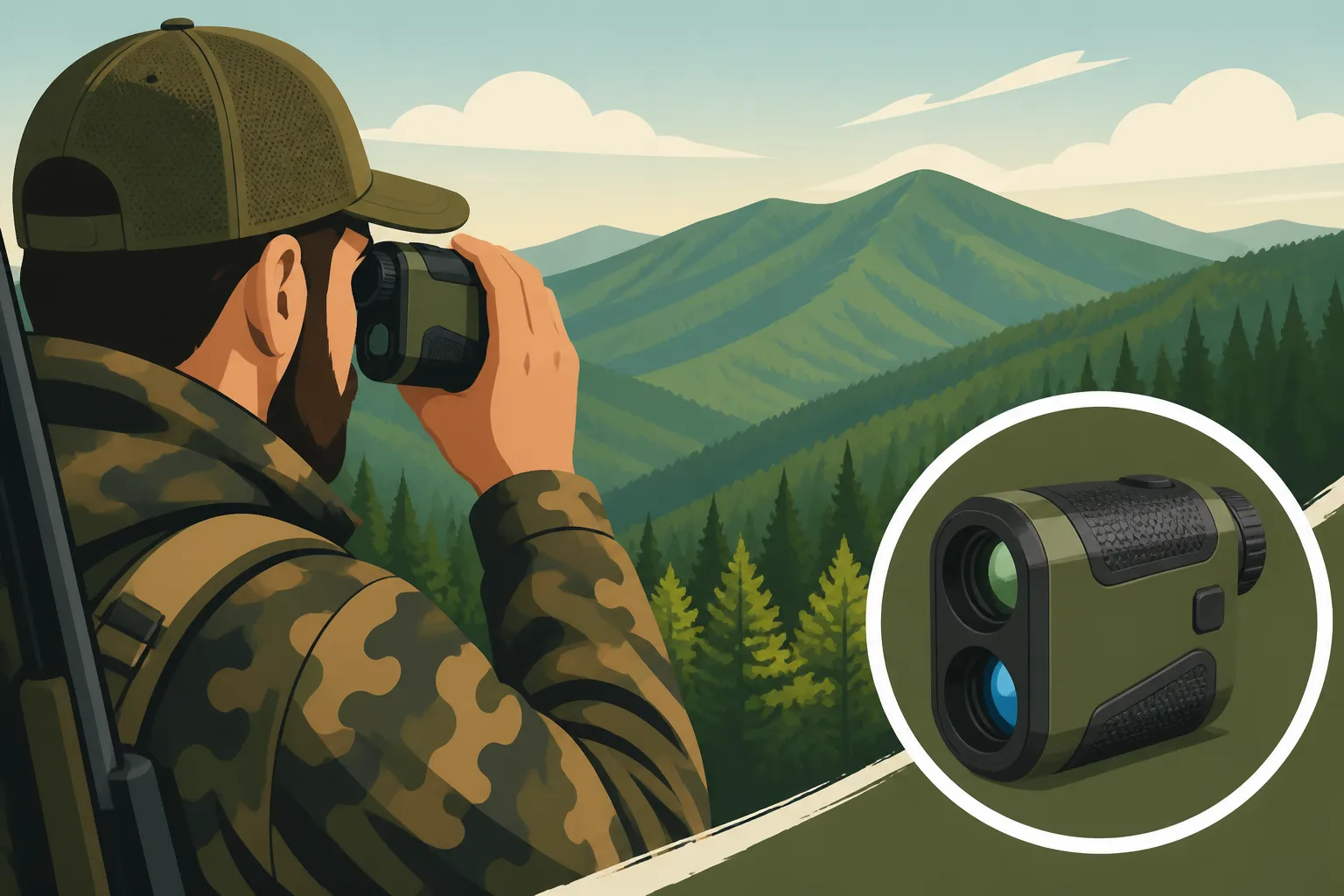
A rangefinder is essentially a mini-monocular, and the quality of its optics directly impacts how well you can acquire and range your target. You want clear, crisp glass that provides a bright image, especially in those low-light conditions common during dawn and dusk. Look for fully multi-coated lenses, which reduce glare and maximize light transmission. A higher quality optical system also helps you precisely pinpoint your target within the reticle, ensuring you're ranging the animal itself, not the tree next to it. Poor optics can cause eye strain and make it harder to differentiate between your target and the surrounding cover.
Magnification is also key, typically ranging from 4x to 8x. For most deer hunting scenarios in our often-dense woods, a 6x or 7x magnification is ideal. It provides enough power to pick out details at reasonable ranges without making the image too shaky or the field of view too narrow, which can be an issue if you're trying to quickly acquire a moving target. While a high magnification might seem appealing, remember that it also amplifies hand shake, making it harder to hold steady on a small target like a deer's vitals. A good balance of magnification and clear optics is what you need for hunting a Reading a Green Mountain Deer Yard from a distance or picking out a turkey among fall leaves.
Ranging Capability and Speed
Nobody wants to wait an eternity for a rangefinder to spit out a number, especially when an animal is on the move or about to disappear. You need a rangefinder that's fast and reliable. Modern rangefinders are incredibly quick, often providing readings in a fraction of a second. Look for models that boast rapid acquisition times. This speed is crucial when you're trying to Work a Fall Flock Apart Statewide With a Bow and need quick, successive readings on multiple birds, or when a buck busts out of cover and pauses briefly.
Beyond speed, consider the maximum effective range. While you might not be making 1,000-yard shots in Vermont's woods, having a rangefinder that can comfortably range out to 800-1,200 yards for deer-sized targets means it will have no trouble giving you accurate readings at typical hunting distances (50-300 yards), even through light obstructions. A rangefinder that struggles to hit 300 yards reliably on a deer is going to disappoint you. The stated maximum range is often for highly reflective targets like buildings, so always look at the manufacturer's specified range for deer or non-reflective targets. This extra power provides a cushion, ensuring reliability even when conditions aren't perfect, like when you're ranging through a light drizzle or haze.
Durability and Ergonomics for Vermont Terrain
Hunting in Vermont means dealing with all kinds of weather and challenging terrain. From scaling steep hillsides to navigating dense undergrowth, your gear takes a beating. A rangefinder that looks great on the shelf but falls apart in the field is useless. You need a device that can withstand the rigors of a full hunting season, perform reliably in damp conditions, and be easy to handle even when your hands are cold or gloved. This is where durability and ergonomics really shine.
Waterproofing and Fog Proofing
Vermont weather is notoriously unpredictable. One minute it's crisp and sunny, the next you're caught in a driving rain or a thick, swirling fog. Your rangefinder absolutely needs to be able to handle these conditions without skipping a beat. Look for models that are fully waterproof and fog-proof, usually sealed with O-rings and nitrogen-purged to prevent internal fogging. Water ingress can ruin electronics, and a fogged-up lens renders the device useless. This is not a feature to compromise on, especially if you plan on being out during Hunting Vermont's November Rifle Season or the late-season archery in December.
Imagine trying to range a deer on a misty morning when your rangefinder's internal optics have fogged up, or when a sudden downpour leaves your non-waterproof unit short-circuited. These scenarios lead to missed opportunities and frustration. Investing in a rangefinder that is truly sealed against the elements means you can focus on the hunt, knowing your gear will perform regardless of what Mother Nature throws at you. You might also want to carry a small micro-fiber cloth in your pack to wipe away external moisture or smudges from the lenses, ensuring a clear view.
Rugged Construction and Grip
The Green Mountains are tough on gear. Your rangefinder is going to get bumped, jostled, and maybe even dropped. It needs to be built like a tank. Look for a robust housing, often made from a durable polymer or aluminum alloy, that can absorb impacts. Rubber armor is an excellent feature, as it provides both protection from drops and a secure, non-slip grip. This is especially important when your hands are wet, cold, or gloved. A rangefinder that feels flimsy in your hand won't instill confidence when you're trying to get a quick reading on a trophy buck.
Consider how the rangefinder feels in your hand – is it balanced? Are the buttons easily accessible and distinguishable by touch? Can you operate it effectively with one hand, leaving your other hand free to hold your bow or rifle steady? Many of us are climbing through a Green Mountain National Forest high-elevation bench or picking our way through blowdowns, and a secure grip is paramount. A good, tactile grip ensures you won't accidentally drop it when you're moving through dense cover or trying to get a quick reading in a high-pressure situation. This blend of protection and usability ensures your rangefinder will last season after season.
Compact Size and Ease of Use
While all the advanced features are great, a rangefinder needs to be practical to carry and use in the field. Bulky or overly complex devices just get in the way. Look for a compact, lightweight design that can easily slip into a pack pocket, a bino harness, or even a jacket pocket. The controls should be intuitive – typically just one or two buttons for power and ranging. You don't want to be fumbling through menus when you should be focused on your target. One-handed operation is a huge plus, allowing you to quickly range without setting down your weapon.
Think about how you’ll integrate it into your existing kit. A rangefinder that’s too big or heavy will quickly become a nuisance, maybe even left behind. The whole point is to have it readily available when you need it most. If you're wearing heavy gloves during the late season, can you still effectively press the buttons and get a reading? Prioritize simplicity and accessibility. Modern rangefinders are often quite small, some even integrated into binocular systems for maximum efficiency, like some of the offerings you might see discussed on platforms like GoHunt that focus on combining features for backcountry hunters. Whether it's tucked into your optics harness or carried in a dedicated pouch, its ease of access directly impacts its utility.
| Feature Category | Key Feature | Why it Matters for Green Mountains |
|---|---|---|
| Ranging Performance | Angle Compensation | Crucial for steep uphill/downhill shots, provides true ballistic range. |
| Fast Acquisition | Don't miss opportunities on fleeting targets; quick reads are vital. | |
| Last Target Priority | Filters out foreground clutter (branches, saplings) for accurate reads. | |
| Effective Ranging Distance (Deer) | Ensures reliable readings at common hunting distances in dense cover. | |
| Optical Quality | Fully Multi-Coated Lenses | Bright, clear image in all light conditions, especially low light. |
| Adequate Magnification (6-7x) | Balances target acquisition with steady holding in thick woods. | |
| Bright, Adjustable Display | Clear visibility of readings in varying light, including dawn/dusk. | |
| Durability & Ergonomics | Waterproof & Fog-proof | Essential for Vermont's unpredictable rain, fog, and snow. |
| Rugged, Rubber-Armored Housing | Withstands bumps, drops, and provides a secure, non-slip grip. | |
| Compact & Lightweight | Easy to carry, fits in a pack or bino harness without bulk. | |
| One-Handed Operation | Quick and efficient ranging without juggling gear. |
Testing Your Rangefinder in the Field
Having the best rangefinder money can buy is one thing, but knowing how to use it effectively in real-world hunting situations is another. There’s a learning curve with any new piece of gear, and rangefinders are no exception. Just like you wouldn't take a new rifle into the woods without sighting it in, you shouldn't rely on a new rangefinder without thoroughly testing it in conditions similar to what you'll encounter during the hunt. This proactive approach will build your confidence and refine your skills, making you a more effective hunter.
Practice Ranging Varied Terrain
Don't just range a flat target in your backyard. Take your rangefinder out into the woods, specifically targeting areas that mimic the kind of terrain you'll hunt. Practice ranging objects at different angles – up a steep bank, down into a gully, across a wooded ravine. Focus on ranging specific points, like the base of a tree, a rock, or a stump, at varying distances. This will help you get a feel for how your rangefinder's angle compensation works and how quickly it provides accurate readings on challenging targets. It’s also an excellent time to practice using your Best GPS App for Vermont Public Land to mark points and confirm distances on a map.
Try ranging through light cover to see how well its "last target priority" or "brush mode" performs. Notice how different surfaces reflect the laser – some trees might be easier to range than others, for example. The more you practice, the more familiar you’ll become with your rangefinder's capabilities and quirks. This isn't just about the device; it's about training your eye to quickly spot potential targets and anticipate the challenges in ranging them. Knowing your rangefinder inside and out can shave precious seconds off your reaction time when that mature buck finally steps into a shooting lane.
Understand Its Limitations
No rangefinder is perfect. Even the best models can struggle under certain conditions. Extremely dense fog, heavy rain, or thick snow can sometimes scatter the laser beam, making it difficult to get a reading. Very small targets at extreme distances, especially in busy backgrounds, can also be challenging. It's crucial to understand these limitations so you know when to trust your device and when to rely on other estimation methods or simply pass on a questionable shot. This is especially true in areas where Hunting Pressure on Vermont Public Land might push deer into the thickest cover.
Pay attention to when your rangefinder gives you an error message or an inconsistent reading. Does it struggle more with dark objects versus light ones? How does battery life hold up in cold weather? Knowing these nuances will help you make better decisions in the field. Sometimes, even with a top-tier rangefinder, the best approach might be to range a known landmark near your target and use that as a reference. This critical understanding prevents you from making a shot based on faulty data. Platforms like GoHunt often have user reviews that can give you real-world insights into how different rangefinders perform under specific conditions, which can be invaluable for understanding potential limitations before you even buy one.
Remember that a rangefinder is just one tool in your hunting arsenal. While invaluable, it complements, rather than replaces, good woodsmanship and ethical judgment. Combine its precise readings with your knowledge of Wind and Thermals in Steep Green Mountain Terrain and Finding Sign in Green Mountain Timber to truly master hunting in Vermont.
Disclaimer
This article is for general informational purposes only and does not constitute professional advice. Laws, prices and regulations vary by location and change over time. Consult a qualified professional for guidance on your specific situation.