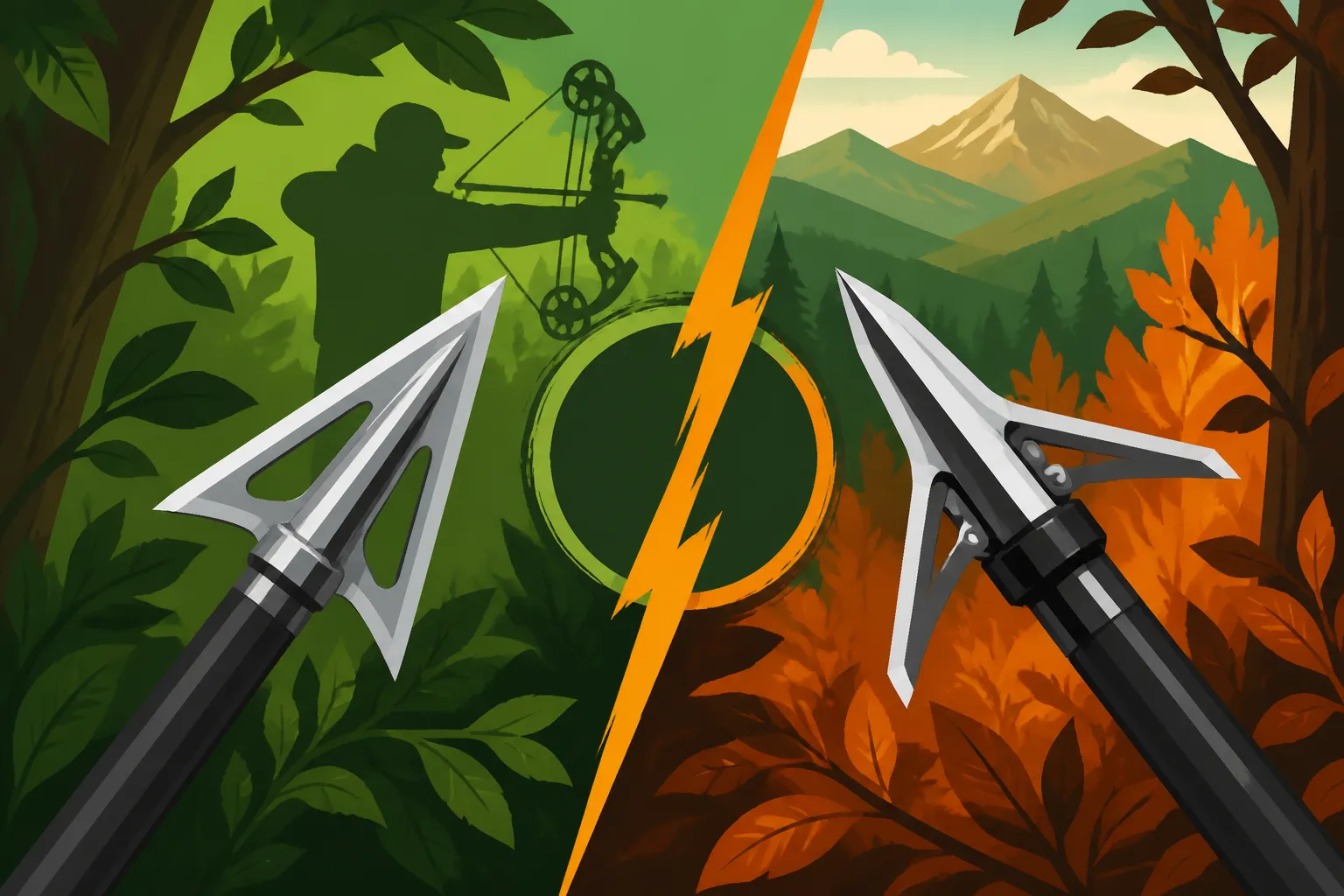
Fixed Versus Mechanical Broadheads in Thick Cover
When you're out in the beautiful, yet undeniably dense, woods of Vermont, every piece of gear has to perform. And when it comes to bowhunting, few decisions are as critical – and as debated – as choosing between fixed-blade and mechanical broadheads. It's a real conundrum, especially when you're facing down thick softwood stands, tangled blowdowns, or a frustrating patch of young saplings that seem specifically designed to snag your arrow mid-flight. This guide is here to cut through the noise, helping you understand the nuances of both broadhead types so you can make the best choice for your bow setup and the specific, often challenging, cover you hunt in Vermont.
Understanding the Two Main Broadhead Philosophies
Before we dive deep into the specific challenges of Vermont's thick timber and how each broadhead performs, let's lay down the basics. There are two overarching philosophies when it comes to broadhead design for bowhunting: fixed-blade and mechanical (or expandable) broadheads. Each has its loyal adherents and its vocal critics, and understanding their fundamental differences is key to making an informed decision.
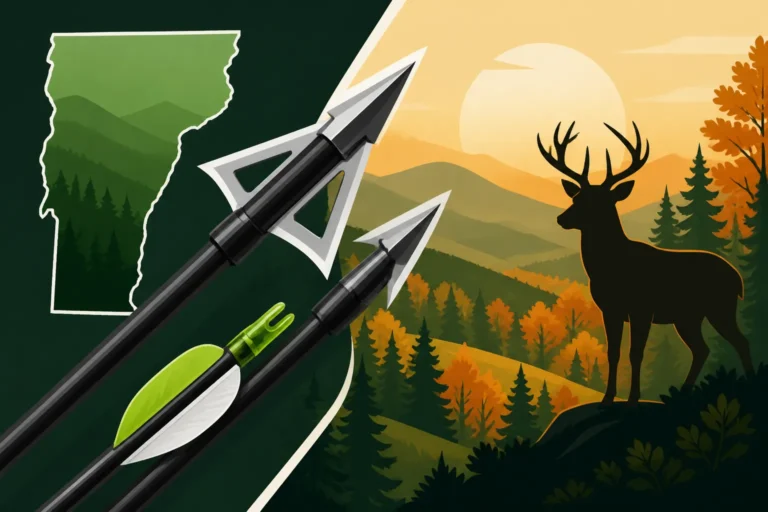
A fixed-blade broadhead, as the name implies, has blades that are rigidly attached to the ferrule (the main body) of the broadhead. They are always in their "open" or "deployed" position, meaning there are no moving parts to deploy upon impact. These broadheads come in various designs, from two-blade designs that look like traditional arrowheads, to three-blade, four-blade, and even more complex configurations. Some feature a "cut-on-contact" tip, designed to start cutting immediately upon impact, while others have a chisel tip, meant to blast through bone. The key characteristic is their static nature – what you see is what you get, from the moment you nock your arrow to the moment it (hopefully) finds its mark.
Mechanical broadheads, on the other hand, feature blades that are tucked away or folded back during flight, typically resulting in a smaller profile than a fixed-blade. Upon impact with the target (the animal), these blades deploy, usually expanding to a much wider cutting diameter. The deployment mechanism can vary, from spring-loaded systems to those that rely solely on kinetic energy from the impact to pivot or slide the blades open. The primary appeal of mechanicals is often their field-point accuracy, as their smaller in-flight profile tends to reduce wind drift and bow tuning issues. However, that mechanical aspect also introduces potential points of failure or concern, which we'll explore in detail.
Why Vermont's Thick Cover is a Game Changer for Broadheads
Vermont isn't known for wide-open prairies or vast, sparse deserts. Our hunting grounds are often characterized by rolling hills, steep mountains, and, you guessed it, incredibly dense timber. From the thick softwood swamps of the Northeast Kingdom to the overgrown clear-cuts and tangled sapling regeneration in the Green Mountain National Forest, hunters here routinely face scenarios where an arrow might encounter more than just air on its way to the target.
Imagine still-hunting through a section of young spruce or balsam fir. The trees are packed tight, their branches interwoven, creating a nearly impenetrable wall. You spot a buck slipping through a narrow lane, offering a shot that, while clear of the main trunk, might require your arrow to brush a few stray twigs or a low-hanging branch. Or perhaps you're set up on the edge of a beaver flowage, and that prime shooting lane suddenly has a new branch hanging in it after a recent storm. These aren't isolated incidents; they're the norm for many Vermont hunters. This is why the choice between fixed and mechanical broadheads takes on such critical importance here.
The main concerns in thick cover revolve around two related issues: deflection and premature blade deployment. A broadhead with a larger in-flight profile (like many fixed blades) has more surface area to potentially catch a twig or branch, leading to deflection and a missed shot. However, a mechanical broadhead, with its blades designed to deploy on impact, runs the risk of those blades deploying prematurely if it brushes against a heavy branch, a piece of bark, or even a tough clump of leaves. A broadhead that opens before it hits the animal isn't going to fly true, nor will it penetrate effectively. It's a lose-lose situation, and it's a very real possibility in Vermont's diverse and often unforgiving habitat.
Fixed-Blade Broadheads: The Reliable Workhorse for Dense Woods
For many seasoned Vermont bowhunters, the fixed-blade broadhead is the tried-and-true workhorse, particularly when navigating the gnarly sections of our woods. Their simple, robust design often provides a sense of reliability that can be invaluable when every shot counts.
Advantages of Fixed-Blades in Thick Cover
The primary advantage of fixed-blade broadheads in dense environments stems from their inherent design: no moving parts. This means there's virtually no risk of premature blade deployment from brushing against a branch, which is a significant concern for mechanicals. When your arrow zips through a narrow gap in the alders or brushes a low-hanging hemlock bough, a fixed-blade broadhead will maintain its integrity and intended flight path much more consistently. This can give you a lot of confidence when you're faced with a slightly cluttered shooting lane, knowing your broadhead isn't going to "open up" on a twig.
Furthermore, fixed blades are generally known for superior penetration. Because their blades are static and often designed with a strong ferrule, they tend to drive deeper, especially on quartering-away shots or when encountering bone. In Vermont, where deer can be stout and tough, and shots aren't always perfect, that extra penetration can be the difference between a quick recovery and a long, frustrating blood trail (or worse). Consider a scenario where a buck steps out, and your arrow hits a rib on entry; a fixed-blade is often better equipped to power through that bone and continue its path to the vitals. Sites like GoHunt often feature discussions among hunters who prioritize penetration above all else for larger, tougher game.
Considerations and Potential Drawbacks
While the reliability and penetration of fixed blades are compelling, they aren't without their own set of considerations. The most common challenge is tuning your bow to achieve consistent, field-point-accurate flight. Because fixed blades present a larger surface area to the wind and air currents, any minor imperfections in your bow's tune – or in your shooting form – can be amplified, leading to inconsistent flight or "broadhead planing." This means more time on the practice range, meticulously adjusting your rest, nocking point, and cam timing until your broadheads group perfectly with your field points. This can be a frustration for new bowhunters or those with less time to dedicate to tuning.
Another factor is the potential for deflection on heavier brush. While they won't deploy prematurely, a large fixed blade can still be pushed offline if it hits a substantial branch. Imagine an arrow striking a 1/2-inch hardwood sapling; while it might cut through, the initial impact could still alter the arrow's trajectory enough to miss the target. However, many hunters feel this risk is acceptable, as a true deflection is often preferable to a mechanical broadhead opening up and flying wildly.
For example, when you're Still-Hunting Green Mountain National Forest Timber in dense, mature stands, you'll often have clearer shooting lanes, but the chances of an unexpected branch or leaf clump are always there. A reliable fixed-blade, like a cut-on-contact model, provides peace of mind that even if it encounters a small obstruction, its flight will be less compromised than a mechanical that might deploy mid-air. Similarly, if you're stalking in areas with heavy undergrowth, having a broadhead that maintains its integrity when brushing against thick vegetation can make a significant difference.
Mechanical Broadheads: Accuracy with a Caveat in the Thick Stuff
Mechanical broadheads have gained immense popularity for a reason: they promise field-point accuracy, often right out of the package, making tuning much simpler for many archers. This is a huge draw, especially for those who struggle with fixed-blade tuning or want to quickly get their bow ready for the season.
The Allure of Field-Point Accuracy
The primary appeal of mechanical broadheads is their streamlined profile in flight. With the blades tucked away, the arrow behaves much more like it would with a simple field point. This translates to less air resistance, less wind drift, and typically, far less fuss when it comes to tuning your bow. For many hunters, being able to screw on a mechanical broadhead and have it hit exactly where their field points do is a massive advantage, boosting confidence and simplifying their pre-season preparations.
Mechanicals also often boast a much wider cutting diameter than most fixed blades once deployed. This can create a larger wound channel, theoretically leading to more significant blood trails and quicker recoveries. A large cutting diameter can be particularly effective on broadside shots in open country, maximizing damage to the vitals. When hunting situations allow for clean, unobstructed shots, such as on a Hunting a Green Field Planted for Deer or when Hunting a Champlain Valley Dairy Farm Edge, a mechanical broadhead can be incredibly effective, delivering devastating results with impressive accuracy.
The Vermont Hunter's Dilemma: Risks in Dense Cover
However, the very mechanism that gives mechanicals their accuracy and cutting diameter is also their Achilles' heel in thick Vermont cover. The risk of premature blade deployment is a legitimate concern. If an arrow carrying a mechanical broadhead brushes against a solid branch, a thick vine, or even passes through a dense patch of tall grass or cattails, there's a chance a blade could snag and deploy before reaching the animal.
When a mechanical broadhead opens prematurely, its aerodynamics are instantly altered. It will no longer fly true, potentially veering significantly off target. Furthermore, if it does manage to hit the animal, the impact energy will have been partially dissipated in the deployment process, and the broadhead may not be fully open or stable, leading to poor penetration. Imagine an arrow hitting a deer with a half-open mechanical – the result is often a poor wound, shallow penetration, and a very difficult tracking job, if not a lost animal. This is a scenario that many Vermont hunters dread, especially when Tracking a Deer in Fresh Green Mountain Snow or in rugged terrain.
Another consideration is that mechanical broadheads tend to require more kinetic energy for optimal performance. While modern bows are incredibly powerful, if your bow's draw weight or arrow speed is on the lower side, or if you're using a lighter arrow, a mechanical broadhead might struggle to achieve full penetration, especially on bone hits or steep quartering shots. This is why many manufacturers recommend heavier arrows (often discussed on hunting forums like GoHunt) when pairing with their mechanicals to ensure maximum kinetic energy transfer.
Making the Choice: Factors Beyond the Broadhead Itself
Choosing between fixed and mechanical broadheads isn't just about the broadhead itself; it's about your entire setup, your hunting style, and the specific terrain you frequent. There's no single "best" answer for every Vermont hunter.
Your Bow Setup and Tuning Capability
This is perhaps the most critical factor. If your bow is impeccably tuned, and you're consistently shooting field-point-accurate groups with fixed blades, then the primary argument for mechanicals (easier tuning) loses some of its weight. Fixed blades, when properly tuned, are incredibly accurate and reliable. However, if you struggle with fixed-blade tuning, or your bow simply won't group them well, then a mechanical broadhead might be the only way to achieve consistent accuracy, even with the risks in thick cover.
Consider your arrow weight and FOC (Front of Center). A heavier arrow with a good FOC tends to penetrate better, regardless of broadhead type. When discussing Best Arrow Weight for Vermont Deer, this becomes a crucial part of the equation. A well-tuned heavy arrow can mitigate some of the penetration concerns with mechanicals, while boosting the already impressive penetration of fixed blades. Always practice extensively with your chosen broadhead and arrow combination to ensure confidence. This practice is essential for Tuning a Bow for Broadhead Flight.
Hunting Style and Terrain
Think about where and how you primarily hunt. Are you primarily sitting in a treestand over a food plot or field edge, where shooting lanes are generally open and clear? In such a scenario, the risk of premature deployment is significantly reduced, and a mechanical broadhead's wider cutting diameter could be a major benefit.
However, if your hunting involves a lot of still-hunting, stalking, or setting up in tight timber stands and Hunting a Funnel Between Two Woodlots that are choked with saplings, then the robustness of a fixed-blade broadhead becomes a much more attractive proposition. If you frequently find yourself needing to thread an arrow through small gaps in the foliage, the fixed-blade offers greater peace of mind. For those doing Hunting a Clear-Cut Regrowth Edge, where young, dense growth is abundant, the fixed blade is often the more reliable choice.
Personal Confidence
Ultimately, your confidence in your gear is paramount. If you're constantly worrying about whether your mechanical broadhead will deploy prematurely, or if your fixed-blade isn't flying true, that mental distraction can negatively impact your hunt. Practice with both types if you're on the fence. Shoot them in various scenarios (safely, of course), including tight brush if possible, to see how they perform. The broadhead you trust the most, and with which you can consistently place a lethal shot, is the one you should be using.
Let's look at a quick comparison:
| Feature | Fixed-Blade Broadheads | Mechanical Broadheads |
|---|---|---|
| In-Flight Profile | Larger, blades always exposed | Smaller, blades tucked away |
| Tuning Ease | Can be more challenging, requires precise bow tuning | Generally easier, often "field-point accurate" |
| Deflection Risk | Can deflect on heavy brush, but won't "deploy" | Higher risk of premature deployment on brush/obstructions |
| Penetration | Excellent, especially on bone and quartering shots | Good, but can be reduced on bone/steep angles if energy is low or deployment hindered |
| Cutting Diameter | Typically smaller (1"-1.25" common) | Often larger (1.5"-2"+ common) |
| Reliability | Very high, no moving parts to fail | High, but with a potential for mechanical failure or premature deployment |
| Blood Trails | Good, proportional to cutting diameter | Potentially better due to larger cutting diameter |
A Word on Modern Designs
It's worth noting that broadhead technology is always evolving. Some fixed blades now have sleeker profiles to aid in tuning, while some mechanicals feature more robust retention systems to prevent premature deployment. There are even hybrid designs that aim to combine the best of both worlds. When looking at your options, like considering the Best Broadhead for a Vermont Whitetail, research the latest models and read real-world reviews, perhaps even from resources like GoHunt, to see how they've performed in conditions similar to Vermont's. For those who also Bowhunting During Vermont's Rifle Season, the choice of broadhead remains equally critical regardless of what other hunters might be carrying.
Ultimately, the best broadhead for you is the one that you have absolute confidence in, that consistently flies true from your bow, and that is robust enough to handle the unique challenges of Vermont's stunning, yet often formidable, hunting terrain. Practice, understand your equipment, and choose wisely.
Disclaimer
This article is for general informational purposes only and does not constitute professional advice. Laws, prices and regulations vary by location and change over time. Consult a qualified professional for guidance on your specific situation.