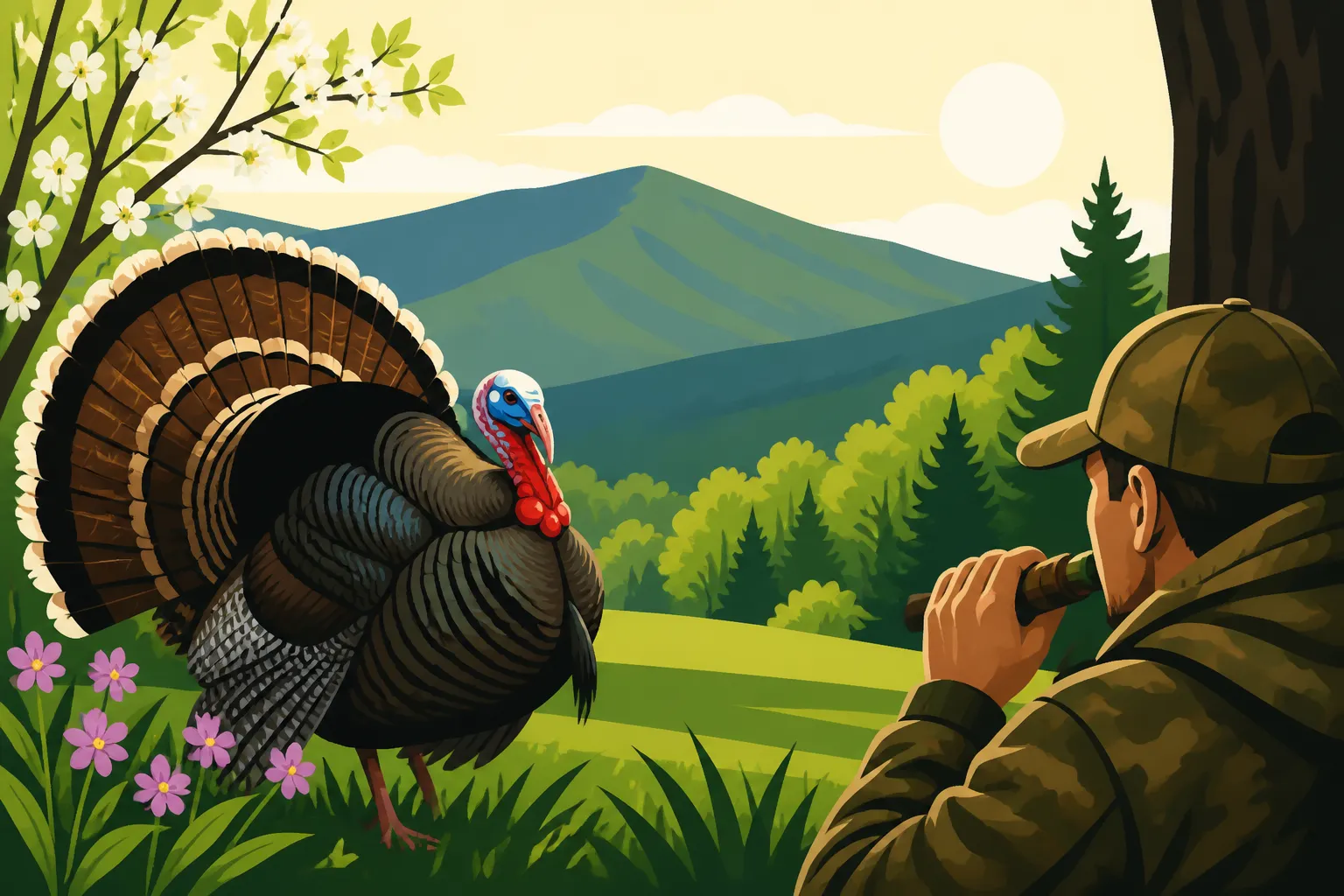
Best Call for a Vermont Spring Gobbler
Oh, the spring gobbler! If there's one thing that can test a hunter's patience and sanity in Vermont, it's trying to coax a love-struck tom into range. You spend hours scouting, set up perfectly, make what you think is the sweetest yelp, and he gobbles his head off… right back where he started, 100 yards out, and suddenly goes silent. It's enough to make you pull your hair out! This guide is all about navigating that frustration, helping you understand the various calls at your disposal, and crucially, when and how to use them to bag that elusive Vermont spring gobbler.
Why Vermont Spring Gobblers Are So Tricky to Call
Let's be honest, Vermont gobblers aren't always the easiest birds to talk to. They've heard it all, especially on public land, and sometimes they act like the most fickle creatures on four (or two!) legs. Understanding why they behave the way they do is the first step in figuring out how to get them to commit.
The Evolution of Spring Bird Behavior
Think about it: at the beginning of the spring season, gobblers are just starting to feel those hormones rage. They've been relatively quiet all winter, and now suddenly, every hen call means a potential mate. This can make them incredibly responsive. When the season first opens, especially in areas with less pressure, you might find birds practically running to your calls. They're eager, sometimes even desperate, to find a hen. They haven't been educated by weeks of hunter pressure, nor have they already bred most of the local hens. This early excitement is a window of opportunity, and often, more aggressive calling can pay off.
However, as the season progresses, things change dramatically. Hens begin to sit on nests, and gobblers might find themselves with fewer available mates. They might still gobble a lot, but they're often looking for a lonely hen, one that's actively seeking them. By late May, When Vermont Gobblers Go Quiet in Late May, many hens are already on their nests, and the gobblers that are still gobbling might be "heavily henned" – meaning they have real hens with them. These birds are a nightmare to call because they expect you to come to them. The tom knows he has hens, so why should he risk walking into a potential predator's ambush when he can just keep his harem close? This shift in behavior demands a complete change in your calling strategy, moving from aggressive to subtle, or sometimes, no calling at all.
Hunter Pressure and Educated Birds
Vermont's public lands, while beautiful and abundant, can see a fair amount of hunting pressure, especially during prime times. These birds aren't stupid. They learn. They hear every yelp, cut, and gobble from every hunter walking through the woods. A gobbler that has been called to twenty times in a week, only to find a hunter or nothing at all, quickly becomes "call-shy." This is a real frustration many of us face. They might gobble from the roost, letting you know they're there, but then clams up or pitches down and walks in the opposite direction the moment you try to engage.
This pressure means you often need to be more subtle, more patient, and sometimes, even more creative. Loud, aggressive calling that might work in a low-pressure area or on private land early in the season can actually push these educated birds away. They associate that sound with danger. It forces us to think beyond the textbook tactics and really hone our listening skills. Often, the soft clucks and purrs, or even just strategic silence, can be far more effective than trying to out-gobble another hunter or a real hen. It's a humbling experience, but one that teaches you a lot about the nuanced world of wild turkeys.
The Arsenal: Essential Calls for Vermont Spring Gobblers
When it comes to talking turkey, you've got a whole toolbox of sounds and instruments at your disposal. Each call has its strengths and weaknesses, and knowing which one to pull out when is key to success in the Vermont woods.
Slate Calls (Friction Calls)
Slate calls, often referred to as pot calls, are a fantastic starting point for any turkey hunter, and often remain a favorite for seasoned pros. They consist of a round pot, usually made of slate, glass, or aluminum, and a striker, which is a small peg often made of wood, carbon, or synthetic material. The magic happens when you drag or tap the striker across the surface of the pot, creating friction that produces incredibly realistic turkey sounds.
Pros:
- Realistic Sounds: With practice, you can produce a wide range of incredibly lifelike yelps, clucks, purrs, and even cutts. The nuanced sounds are excellent for enticing birds.
- Versatility: You can vary the tone and volume easily by changing strikers or the pressure you apply. A light touch can give you soft purrs, while a firmer, quicker motion generates sharp, excited cutts.
- Ease of Use (Relatively): While they take practice, most hunters can get decent sounds out of a slate call fairly quickly. It's often easier for beginners to achieve consistent sounds than with a diaphragm call.
- Multiple Surfaces: Many calls come with interchangeable surfaces (or different sides), allowing for varied tones. A glass surface might be sharper and louder, while slate is softer and more mellow.
Cons:
- Requires Hand Movement: This is the biggest drawback. You need both hands to operate a slate call, which means you can't have your gun or bow ready at the exact moment you're calling. This can be a critical disadvantage when a gobbler suddenly appears silently in your setup.
- Weather Sensitive: Moisture can severely impact the sound quality, especially on slate or glass surfaces. Keeping them dry is crucial, often requiring a small piece of sandpaper or a conditioning pad to rough up the surface.
- Volume Limitations: While they can be loud, they often don't have the piercing volume of a diaphragm call, which can be a factor on windy days or when trying to reach distant birds.
For those long, patient sits or when you're sure you have some time before a bird shows, a good slate call is indispensable. It's perfect for soft, subtle calls when a bird is close or when you're trying to coax a hung-up tom. Remember, consistency and realism often trump volume, especially when a gobbler is listening intently.
Box Calls (Friction Calls)
The classic box call is another friction call that has put countless gobblers in the freezer. It consists of a box, typically wood, with a lid that slides across a lip to create sound. The simplicity and effectiveness of a box call make it a perennial favorite.
Pros:
- Loud and Clear: Box calls are known for their volume and crisp, clear tones. They can really carry across open fields or through dense timber, making them excellent for locating distant birds or calling on windy days.
- Easy to Use: Of all the turkey calls, the box call is arguably the easiest to learn to use effectively. Within minutes, most beginners can produce convincing yelps and cutts.
- Versatility: You can vary the sounds by changing pressure, speed, and where you strike the lid. Tapping the lid can even simulate clucks.
- Durable: Generally quite robust and less sensitive to minor moisture than some other friction calls.
Cons:
- Bulkier: Box calls are larger and can be awkward to carry quietly, especially when still-hunting.
- Requires Hand Movement: Like slate calls, they require two hands (or one hand holding the box and one moving the lid), making it hard to be fully ready for a shot.
- Less Subtle: While you can make softer sounds, it's harder to get the truly subtle purrs and soft clucks that slate and diaphragm calls excel at. The inherent loudness can sometimes be a disadvantage on pressured birds.
- Can Be Susceptible to Sounding "Tinny": If not tuned or if made with cheaper materials, some box calls can sound artificial or tinny, which can spook wary birds.
A box call is excellent for those initial stages of a hunt, like Calling a May Gobbler Off the Roost when you need to reach out and touch a distant bird with a loud, confident series of yelps. It’s also great for cover sounds when you're moving between setups. Just be mindful of how much movement it requires once you expect a bird to be close.
Diaphragm Calls (Mouth Calls)
Diaphragm calls, also known as mouth calls or reed calls, are thin latex or Mylar reeds stretched across a frame, held in the roof of your mouth. You push air over the reeds with your tongue to produce sounds. These are the workhorse calls for many experienced hunters.
Pros:
- Hands-Free Operation: This is the ultimate advantage. You can have your gun shouldered or bow drawn, ready for a shot, while still calling. This is critical when a gobbler comes in silent or from an unexpected direction.
- Wide Range of Sounds: With practice, you can produce every turkey sound imaginable: yelps, clucks, purrs, cutts, kee-kees, and even gobblers.
- Volume Control: You can go from the softest, most seductive purrs to screaming cutts and gobblers, all with subtle changes in air pressure and tongue position.
- Weather Resistant: Since they are inside your mouth, they are unaffected by rain, snow, or humidity.
Cons:
- Steep Learning Curve: Mastering a diaphragm call takes significant practice. It can be frustrating at first, and many hunters give up before achieving realistic sounds. The learning curve is undoubtedly the biggest barrier.
- Discomfort: Some people find them uncomfortable in their mouth, or they might cause a gag reflex initially. Finding the right size and frame can help.
- Can Sound Scratchy: Until you get the technique down, the sounds can be scratchy or unrealistic.
For any Vermont turkey hunter serious about getting close to these wary birds, especially when Bowhunting During Vermont's Rifle Season or when you need to remain completely still, investing the time to learn a diaphragm call is paramount. It gives you an incredible edge when that bird finally commits.
Locator Calls (Owl Hoot, Crow Call)
Locator calls aren't meant to sound like a turkey. Instead, they imitate other animals that cause a gobbler to "shock gobble" – that is, gobble in response to a sudden, loud sound. Common locator calls include owl hoots, crow calls, and even coyote howls.
Pros:
- Locate Distant Birds: Excellent for getting a general idea of where turkeys are, especially at dawn or dusk, or after a long period of silence.
- Minimal Pressure: Since you're not making turkey sounds, you're not educating the birds or giving away your position to other hunters trying to sound like a hen.
- Cover Noise: A loud locator call can help cover the sounds of you moving into a position or setting up.
Cons:
- No Drawing Power: They won't bring a bird to you. Their sole purpose is to make the gobbler reveal his location.
- Can Spook if Overused: If you repeatedly hammer an owl hoot, a smart gobbler might get suspicious or simply stop responding.
- Other Animals Respond: You might get crows or owls responding more than turkeys, which can sometimes be confusing.
Locator calls are crucial for scouting and for kick-starting a hunt. A well-placed owl hoot at first light, as you are Calling a May Gobbler Off the Roost, can often tell you exactly where to set up. Platforms like GoHunt often have articles discussing scouting techniques that subtly use locator calls to gauge wildlife activity without directly alerting game to human presence.
Matching the Call to the Situation: Vermont Scenarios
Knowing your calls is one thing; knowing when to use them is where the art of turkey hunting truly lies. Vermont's diverse terrain and varied bird behavior demand adaptability.
Calling a Gobbler Off the Roost
This is often the most exciting and productive part of a spring turkey hunt. You're out there in the pre-dawn dark, listening for that first limb-hanger. Once you've heard a gobble, the game is on. Your goal is to convince that bird that a hot hen is waiting for him on the ground.
Strategy:
- Locator First: Start with a soft owl hoot or crow call as the woods begin to lighten to pinpoint his exact tree. Don't overdo it. Just enough to get a response.
- Soft Tree Yelps: Once you've located him, try some very soft, sleepy tree yelps using a diaphragm or slate call. These should sound like a hen just waking up. Don't call too loudly or too aggressively yet.
- Patience is Key: Listen. Does he respond? Is he gobbling harder? You want to hear him pitch down from the roost. Once he's on the ground, he's more mobile and often more receptive.
- Increased Aggression (Carefully): After he's on the ground, and if he's still gobbling but not moving, you can slightly increase the volume and urgency of your yelps and maybe throw in a soft cluck. The idea is to sound like an impatient hen, making him come to you.
- The "Run-and-Gun" Approach (on public land): On larger public tracts, if a bird is still gobbling well off the roost but not moving, consider quickly adjusting your position to cut the distance, especially in areas with good cover. This reduces the distance he has to travel and increases his willingness to commit. Always prioritize safety and clearly identify your target.
Remember, the moment he hits the ground, the situation changes. He might have hens already. So, calling him off the roost involves a delicate balance of enticing sounds and patient listening. Many seasoned hunters will tell you that the early morning is often your best shot, especially if you can get him before he links up with real hens.
Working a Hung-Up Bird
This is the classic, soul-crushing scenario: the gobbler gobbles his head off, sounds like he's getting closer, then stops just out of sight, maybe 60, 80, or 100 yards away. He's "hung up," expecting you, the "hen," to come to him. This is where many hunts fall apart.
Strategy:
- Assess the Situation: Why is he hung up? Is there a fence, a creek, thick brush, or open terrain between you? Is he with hens? Your calling needs to counteract whatever is holding him back.
- Go Silent: Often, the best thing to do is nothing. If you keep calling, he knows exactly where you are and won't move. Go completely silent for 15-30 minutes. Let him wonder where that "hen" went. This can sometimes make him nervous enough to take those last few steps.
- Soft, Subtle Sounds: If silence doesn't work, try very soft clucks and purrs with a diaphragm or slate call. Mimic a hen scratching around, completely unconcerned. This non-threatening sound can sometimes pique his curiosity.
- Decoy Strategy: If legal in your area and you have time to set one up, a hen decoy (or a hen and jake combo) can be incredibly effective. Sometimes, seeing a "visual" hen is what it takes for him to commit. Remember, Decoy Placement for Pressured Spring Birds is crucial.
- Move (Carefully): This is a high-risk, high-reward move. If you know exactly where he is, try to move silently and strategically to a new position, perhaps angling to get him to come around a visual barrier. Use the terrain to your advantage. A platform like GoHunt, with its detailed satellite imagery and topographical maps, can be invaluable for planning these subtle movements in Hunting a Funnel Between Two Woodlots or around obstacles. Just be incredibly cautious and never move when he might see you. A good understanding of Wind and Thermals in Steep Green Mountain Terrain can also help with these approaches.
- Aggressive Calling (Last Resort): If all else fails and you're about to give up, sometimes a very aggressive series of excited cutts and yelps can either push him away or, on rare occasions, shock him into coming in. It's a gamble, but sometimes you have nothing left to lose.
The key to working a hung-up bird is patience, observation, and a willingness to try different tactics. No two hung-up birds are exactly alike.
Calling in Open Woods vs. Thick Cover
The type of habitat you're hunting in Vermont dictates your calling approach just as much as the bird's mood.
Open Hardwoods (Like in the Champlain Valley or parts of the Green Mountains):
- Visibility is High: In open woods, birds can see a long way. This means they can spot you if you move, and they can also spot decoys easily. It also means they can see if there's no hen there, which can make them wary.
- Volume Carries: Sounds travel well here. You might not need to call as loudly, but your calls will be heard further.
- Calling Strategy: Use longer, clearer yelps to reach out. Be ready for the bird to show up quickly once he commits, as there's less to obstruct his path. Visuals like a decoy can work well here. Focus on realism and making that hen sound irresistible. You can hear them gobble and respond from a distance, which is great for pinpointing.
Thick Softwood or Dense Regrowth (Common in the Northeast Kingdom or areas after timber harvests):
- Visibility is Low: This is a double-edged sword. The bird can't see you, which is good, but he also can't see your decoys (if you're using them) or confirm there's a hen there. This cover can make him more cautious.
- Sound Absorption: Thick cover absorbs sound. You might need to call louder or more frequently to ensure your calls are heard over distances.
- Calling Strategy: Focus on loud, sharp cutts and yelps to penetrate the dense foliage. Diaphragm and box calls are excellent here for their volume. The bird might be more willing to come through thick stuff because he knows he's hidden, but he'll be listening intently. Be prepared for a closer shot, as he might just pop out of the brush very close. Sometimes, soft purrs and clucks in thick cover, sounding like a hen scratching nearby, can draw him in the last few yards if he's hung up. Consider Hunting a Clear-Cut Regrowth Edge where the thick cover meets more open woods—turkeys often use these transitions.
Understanding your surroundings is just as important as understanding your calls. The right call, delivered in the right way, for the right situation, is what separates a hopeful hunter from a successful one.
Practice Makes Perfect: Mastering Your Calls
You wouldn't expect to hit a bullseye without shooting practice, and turkey calling is no different. The more you practice, the more realistic and versatile you'll become, directly impacting your success in the Vermont spring woods.
Realism Over Volume
It's a common beginner's mistake to think that louder is better. While volume has its place, especially for locator calls or reaching distant birds, realism should always be your top priority. A poorly executed, loud yelp can do more harm than good, especially on call-shy, pressured birds. Think of it this way: would you rather listen to a loud, grating, artificial sound, or a softer, perfectly modulated, realistic one? Turkeys are no different.
How to Practice Realism:
- Listen to Real Turkeys: The absolute best way to improve is to listen to actual hens. Find videos online, listen to recordings, or even better, spend time scouting in the woods and just listen. Pay attention to the rhythm, tone, and inflection of their yelps, clucks, and purrs.
- Record Yourself: Most smartphones have a voice recorder. Record your calling and then play it back. Compare it to recordings of real turkeys. You'll quickly identify what sounds off. It might feel a bit awkward at first, but it's an incredibly effective learning tool.
- Vary Your Calling: Don't just make one type of yelp. Practice excited yelps, questioning yelps, assembly yelps, and subtle tree yelps. Learn to make soft clucks and purrs that sound like a contented hen. The more sounds you can make, and the more realistically you can make them, the better your chances.
- Use Multiple Calls: Practice switching between your diaphragm, slate, and box calls. A real hen doesn't always sound exactly the same; varying your calls can add to the illusion of multiple hens or a single hen moving and changing her tone.
A confident, realistic call, even at a lower volume, will always be more effective than a loud, unrealistic one. It shows the bird that you're a genuine hen, not just some random noise in the woods. This is especially true when Hunting the Youth and Novice Turkey Weekend, where new callers can often benefit from focusing on simple, realistic sounds.
The Importance of Silence
This might sound counterintuitive in an article about turkey calls, but knowing when not to call is just as crucial as knowing how. We're often conditioned to think that if a bird is gobbling, we must keep calling back. But that's not how real turkeys interact all the time.
When to Embrace Silence:
- He's Coming In: If a gobbler is consistently gobbling and getting closer, stop calling. He knows where you are. Every call you make from this point on is just giving away your exact location and potentially allowing him to pinpoint you and hang up. Let him come. Get your gun up, stay still, and wait.
- He's Hung Up: As discussed earlier, if a bird is hung up, sometimes going silent for an extended period (15-30 minutes, or even longer) is the best tactic. It makes him think the hen has left, which might make him curious enough to come investigate.
- Over-Pressured Areas: On public land, where birds have heard every call in the book, sometimes showing supreme restraint is your best bet. A soft, single cluck every 10-15 minutes might be all it takes to reassure a bird without spooking him.
- The "Gobble and Go": Often, a gobbler will gobble from the roost, you'll call, he'll gobble back, and then… silence. He might be coming in silently, or he might have gone the other way. If he goes silent after a few responses, don't keep hammering him. Wait. Watch. Listen. Sometimes a subtle cluck after 15 minutes of silence can confirm if he's still around.
Think of it like dating: constantly talking can be annoying. Sometimes, a little mystery and letting the other party pursue you is what works. Turkey hunting has a lot in common with that! You've got to play hard to get sometimes. Learning Filling a Second Spring Tag as a Resident often comes down to mastering this subtle dance.
Call Type Comparison
Here's a quick comparison of the primary call types you'll use for Vermont spring gobblers:
| Call Type | Primary Use | Key Advantage | Key Disadvantage | Best for Situations Like… |
|---|---|---|---|---|
| Slate Call | Realistic yelps, clucks, purrs | Highly realistic, versatile | Two-handed operation | Close-range, subtle calling; working hung-up birds. |
| Box Call | Loud yelps, cutts, assembly calls | Easy to learn, loud | Bulky, two-handed operation | Locating distant birds, early morning aggressive calls. |
| Diaphragm Call | All turkey sounds, varied volume | Hands-free operation | Steep learning curve | Close-quarters, silent approach, anytime hands-free is critical. |
| Locator Call | Shock gobble to locate birds | Locate distant birds | Doesn't draw birds in | Pre-dawn scouting, mid-day silence breaks. |
Ultimately, there isn't one "best call" for a Vermont spring gobbler. The real secret is having a diverse set of calls, understanding their strengths, and most importantly, knowing how to adapt your calling to the specific situation, the bird's mood, and the terrain around you. Practice tirelessly, listen intently, and be patient. Those long hours in the Vermont woods, perfecting your craft, will eventually pay off with a tom strutting into your setup. Happy hunting!
Disclaimer
This article is for general informational purposes only and does not constitute professional advice. Laws, prices and regulations vary by location and change over time. Consult a qualified professional for guidance on your specific situation.