Best Call for a Vermont Fall Flock
Fall turkey hunting can be a completely different animal than the spring gobbler pursuit, and frankly, it often leaves hunters scratching their heads. You're not hearing those booming morning gobbles, and the aggressive calling tactics that worked in May just aren't cutting it. It's frustrating when you know there are turkeys around, but you just can't get them to respond. This guide is here to unravel the mysteries of calling Vermont's fall turkey flocks, giving you the knowledge and the confidence to choose and use the right calls to fill your tag.
Understanding Fall Turkey Behavior and Vocalizations
Forget everything you know about lovesick spring gobblers for a moment. Fall turkeys operate on an entirely different social dynamic, driven by family units and survival, not breeding. This shift is crucial to understanding how to call them effectively.
The Dynamics of Fall Flocks
In the fall, Vermont turkeys are generally grouped into larger family units, often composed of a hen and her poults (young birds) from the spring hatch, sometimes joined by other adult hens. You might also find groups of jakes (young males) or mature gobblers forming their own smaller bachelor groups, or even solitary old toms. The core of fall turkey behavior revolves around these flocks staying together for safety, feeding, and general well-being. They move as a unit, constantly communicating with soft contact calls, especially when foraging.
This "family first" mentality means they rely heavily on each other for everything from spotting predators to finding the best food sources. When these flocks get separated, their primary instinct is to regroup. This is where your calling comes into play – you're essentially mimicking a lost or lonely bird desperately trying to find its way back to the family. These birds will be systematically moving through the landscape, from the hard mast ridges in areas like the Green Mountains High Country to more open agricultural fields looking for waste grains on a Champlain Valley Dairy Farm Edge. Observing their movement patterns and preferred feeding areas is key.
Their daily routines are centered around efficiently locating food, whether that's acorns, beechnuts, waste corn, or insects. They'll spend hours scratching through leaf litter, often making quite a bit of noise doing so. This consistent sound can sometimes be your first clue that a flock is nearby. Understanding that they prioritize staying together for security and food, and that they will actively try to reassemble if broken up, is the fundamental principle behind successful fall turkey calling.
Key Fall Turkey Vocalizations to Mimic
When you're chasing fall turkeys, you need to add a few new sounds to your repertoire. The most critical, hands down, is the kee-kee run. This is the signature sound of a lost or lonely poult, a series of high-pitched, pleading whistles that often ends with a few soft yelps. It’s a sound that tugs at the maternal instincts of a hen and the social need of other young birds to regroup. If you master one fall call, make it this one.
Next in importance are assembly yelps. These are louder, more commanding yelps, similar to a spring hen yelp but with an unmistakable urgency to them. A hen uses these to call her scattered brood back together, a clear signal that it's time to regroup. Combining these with softer clucks and purrs can create a realistic scenario of a contented flock or a bird trying to gently make contact. Think of it as a conversational call.
And don't underestimate the humble cluck and purr. These are soft, contented vocalizations turkeys make while feeding or moving casually. They're excellent for close-range work, especially when birds are wary or just out of sight. Sometimes, a series of soft purrs can be all it takes to reassure a bird that's hanging up, making them take those last few steps into range. These subtle sounds convey a sense of calm and safety, which is paramount in drawing in cautious fall birds.
Why Fall Calling Differs from Spring
The biggest difference between fall and spring calling lies in the motivation of the birds. In spring, you're tapping into the breeding instinct, trying to lure a gobbler in with the promise of a receptive hen. Gobblers are often reckless and driven by hormones, making them more forgiving of less-than-perfect calling. It's a game of competition and attraction.
In fall, however, you're appealing to the turkeys' social instincts and their need for security. You're mimicking a lost flock member, aiming to reunite family groups. There's no hormonal urgency for a gobbler to commit to your calls. Fall birds, especially the mature hens, are incredibly wary, having survived a season of hunting pressure and natural predators. They’ve heard it all before and are much less tolerant of unnatural sounds or over-calling. The aggressive, loud calling that works in spring will often send fall turkeys running in the opposite direction.
This means your volume and intensity need to be dialed way back for most situations. You're looking for subtle, realistic, and reassuring sounds rather than bold challenges. Expect birds to come in cautiously, often silently, and be ready for them to hang up just out of range. Patience and the ability to read their body language become far more important than just making noise. Knowing When Vermont Gobblers Go Quiet in Late May can help illustrate just how different their behavior is once breeding season is over.
Essential Calls for Decimating a Fall Flock
Having the right tools in your vest makes all the difference. While there are many types of calls out there, a few stand out as essential for tackling Vermont's fall flocks.
Mastering the Kee-Kee Run
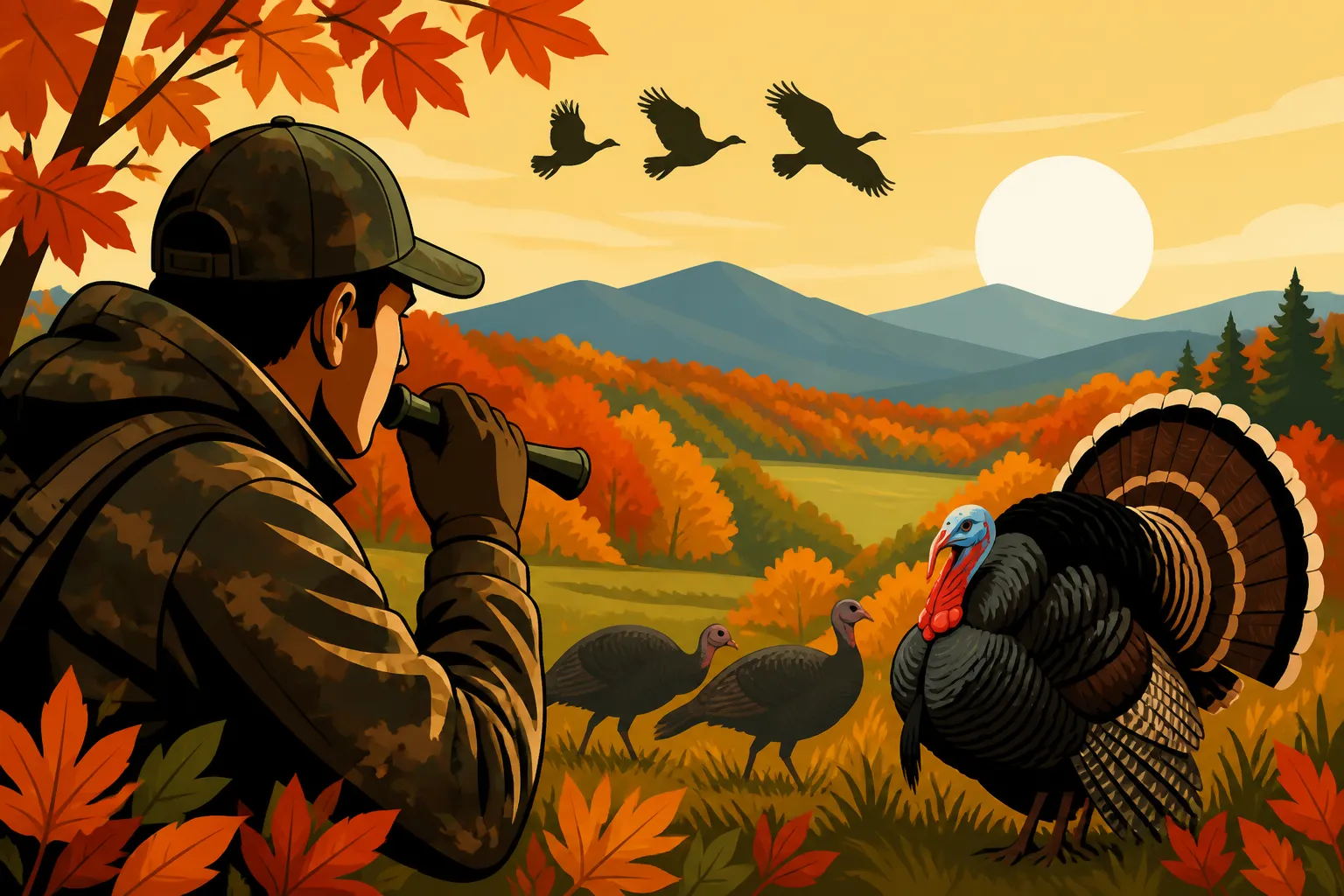
The kee-kee run is your secret weapon for fall turkeys, especially when working scattered flocks. It mimics the pleading sound of a young bird trying to find its family. To execute a proper kee-kee run, you'll produce a series of three to five high-pitched, almost whistling "kee" notes, often followed by a couple of soft, broken yelps. It should sound like "kee-kee-kee-yelp-yelp." The high pitch is key, indicating a young bird.
Many hunters find a mouth diaphragm call or a high-pitched slate or crystal pot call best for producing this sound. Practice getting that distinctive, rising whistle at the beginning. Imagine a cool, crisp autumn morning in Vermont, perhaps after you've intentionally Breaking Up a Fall Turkey Flock. You've set up quickly, and after a few minutes of silence, you begin with a soft kee-kee run. It speaks directly to the turkeys’ instinct to regroup, and can often bring in hens with their poults. Vary the length and intensity – sometimes short and sweet, sometimes a bit more drawn out, just like actual turkeys communicate.
While often associated with poults, a kee-kee run can also draw in adult hens, responding out of maternal instinct or simply the social urge to gather. It signifies vulnerability and the need for company, which is a powerful motivator for a flock. Using this call effectively can be the difference between an empty vest and a successful hunt.
The Power of Assembly Yelps and Clucks
When you're trying to gather a scattered flock, or even just locate birds that you suspect are in the area, the assembly yelp is incredibly effective. This is a louder, more emphatic series of yelps, typically 5 to 10 notes, that a hen uses to call her family back together. It's not the flirty yelp of spring; it's a "come home" call.
You can perform assembly yelps on a box call, a pot call, or a diaphragm call. Box calls are particularly good for carrying sound over distance, making them useful for initial locating or after a flock bust. For example, if you've broken up a flock in a dense timber stand on a Green Mountain Ridgeline Public Access, after the initial chaos dies down, a series of assembly yelps can reassure scattered birds and encourage them to move towards your position.
Interspersing these assembly yelps with soft clucks and purrs adds a layer of realism. Imagine a hen making louder calls to gather her flock, then softening her tone as she thinks they're getting closer. This combination can be incredibly convincing. A few soft tree yelps and even a fly-down cackle at dawn can also act as an assembly call, mimicking birds waking up and beginning their day, signaling other birds to join in.
The Versatility of Mouth Diaphragm Calls
Mouth diaphragm calls are arguably the most versatile calls for fall turkey hunting, primarily because they allow for completely hands-free operation. This is a huge advantage when you need to remain absolutely still, keeping your hands on your gun or bow as a bird approaches cautiously. These calls can produce the full range of fall turkey vocalizations, from the highest kee-kees to soft clucks, purrs, and aggressive assembly yelps.
The key to success with a diaphragm call is finding one that fits comfortably in your mouth and allows for precise air pressure control. Many hunters find that a triple-reed call offers a good balance, capable of producing both the high-pitched whistles needed for kee-kees and the rasp for realistic yelps. Consistent practice, working on breath control and tongue position, is essential to master the various sounds.
Their hands-free nature means you can subtly cluck or purr to stop a walking bird for a shot without any sudden movements that might spook it. This is invaluable when a wary fall turkey decides to come in silently and quickly. Platforms like GoHunt often provide excellent instructional content and videos that can really accelerate your learning curve with these challenging but rewarding calls.
The Steady Dependability of Pot Calls
Pot calls, also commonly known as slate or friction calls, are a fantastic addition to any fall turkey hunter's vest. They are renowned for their ability to produce incredibly realistic and consistent kee-kees, yelps, clucks, and purrs. The sound they generate is often a bit mellower and less aggressive than some diaphragm calls, which can be exactly what wary fall birds want to hear.
The magic of a pot call comes from the combination of the call's surface material (slate, glass, aluminum, crystal) and the striker material (wood, carbon, plastic). For soft, subtle kee-kees and purrs, a slate surface paired with a wooden striker is often ideal. For louder assembly yelps, a glass or aluminum surface with a carbon or plastic striker can provide more volume and rasp.
Pot calls are relatively easy to learn, making them a great choice for beginners. They're excellent for use when you're well set up and can make the slight hand movements required to operate them without alerting turkeys. Just remember the importance of conditioning your call surface with sandpaper or a conditioning pad to maintain optimal sound quality. They are a reliable tool for Working a Fall Flock Apart Statewide With a Bow because of their consistent and realistic tones.
Strategic Calling Techniques for Vermont's Fall Woods
Having the right calls is only half the battle; knowing how and when to use them is where true mastery comes in. Fall turkey hunting demands a thoughtful, strategic approach.
Breaking Up a Flock and Calling Them Back
One of the most effective and time-tested strategies for fall turkeys is intentionally scattering a flock and then calling the individual birds back to your position. It might sound counterintuitive, but it plays directly into their innate desire to regroup. First, you need to locate a feeding flock. This might involve extensive scouting, or simply stumbling upon them.
Once you’ve found them, the goal is to get as close as possible without being detected, and then charge them, yelling and making as much noise as you can to send them scattering in every direction. The more dispersed they are, the better. After the chaos, quickly find a suitable ambush location with good cover, such as a large tree or a brush pile. Wait patiently for 15-30 minutes for the woods to settle down and for the birds’ initial panic to subside.
Then, begin with soft, plaintive kee-kees, mimicking a lost poult. The scattered birds will likely be vocalizing themselves, making soft contact calls as they try to locate each other. Your calls will act as a beacon, drawing them in. As you hear responses, match their intensity – if they're soft and distant, keep your calls subtle; if they become more urgent, you can respond in kind. This method works incredibly well across varied Vermont landscapes, from dense cedar swamps to open hardwood ridges.
Locating Scattered Birds
Unlike the spring, where a booming gobble tells you exactly where a bird is, fall turkeys are generally much quieter. You can't rely on gobbling to pinpoint their location. Instead, you'll need to employ locator calls that mimic other animals. Crow calls, owl hoots, and even coyote howls can often elicit a "shock" vocalization – a soft yelp or kee-kee – from a hidden turkey, giving away its position.
Move slowly and deliberately through good fall turkey habitat, paying close attention to fresh sign like scratchings under mast trees, dusting bowls, or tracks. Stop frequently, use your locator call, and then wait patiently for a response. Early morning and late afternoon are often the best times to get a reaction. Using a detailed mapping app, perhaps one with features similar to GoHunt, can help you identify prime feeding areas, like a recently harvested field or a Hunting a Standing Apple Orchard where birds might be congregated. Similarly, a Hunting a Green Field Planted for Deer could attract them.
Once you get a response, don't immediately switch to turkey calls. Mark their direction and move to a good setup spot, using the terrain and cover to your advantage. Sometimes, just a very soft tree yelp or two at fly-down time, or a few quiet clucks while you're glassing a field edge, can reveal a flock's presence without alerting them to your exact location. The goal is to be a ghost, letting them come to you after you've identified their general area.
Reading the Response and Adjusting Your Calls
Fall turkeys are incredibly sensitive and will react differently based on their level of wariness and their desire to regroup. The most crucial skill in fall calling is learning to read their response and adjust your calling accordingly. If you hear soft, hesitant kee-kees or yelps, it signals a cautious bird. A louder, more eager response means they are likely keen to regroup. Your job is to match their intensity, never exceeding it.
If a bird is clearly approaching, especially if it’s silent, put your calls away. Let the turkey come to you. Any further calling at this point can make it suspicious and cause it to "hang up" just out of range, or worse, turn and leave. If a bird does hang up, sometimes a few very soft clucks or purrs, or a quiet kee-kee run, can be enough to bring it those last few yards. But be very sparing; often, silence is the best call when a bird is close.
Adjusting your calls also means knowing when to stop calling altogether. If you’re not getting any responses, or if birds are moving away from your calls, it’s time to change tactics. Either move to a new location, switch to a different type of call, or simply go silent for an extended period. Over-calling is the quickest way to educate and spook fall turkeys, especially the wary old hens. Subtlety, realism, and most importantly, patience are your ultimate tools for success.
Advanced Fall Calling Strategies and Best Practices
To truly excel at fall turkey hunting, it's about refining your techniques and incorporating smart habits into your routine. These advanced strategies will make you a more well-rounded and successful hunter in Vermont's autumn woods.
Incorporating Locator Calls in Fall
While spring hunters lean heavily on gobbler locators, fall requires a different approach. Since turkeys rarely gobble in autumn, you'll need to provoke a "shock" response using other animal sounds. Beyond the standard crow or owl calls, consider adding a hawk screech or even a distant coyote howl to your repertoire. These loud, sudden noises can often trigger an involuntary yelp, cluck, or kee-kee from a hidden turkey, giving away their position without them realizing they’ve been heard.
The optimal times for locator calls are early morning, when birds are still on the roost, and late afternoon. An owl hooter can be particularly effective pre-dawn to get a roosted flock to sound off. Throughout the day, as you're moving and scouting, regularly stop to use a crow call in areas with good visibility where you suspect birds might be feeding or traveling. This systematic approach, combined with using tools like the Scouting Vermont Public Land Before Season features within a GoHunt app, helps you cover ground efficiently and pinpoint pockets of turkeys.
Once you get a response, resist the urge to immediately switch to turkey calls. Instead, move stealthily to a position where you can set up effectively, using the terrain and natural cover to your advantage. Sometimes, just knowing where they are is enough, allowing you to intercept them quietly rather than calling them directly into your setup.
Practice and Patience: The Ultimate Tools
No matter how many different calls you own, or how expensive they are, consistent practice is the only way to become proficient. Spend time listening to actual turkey vocalizations – there are many online resources available – and then try to replicate them with your calls. Record yourself, listen critically, and compare your sounds to real turkeys. Realism trumps volume or fancy calling every single time, especially with wary fall birds.
Patience is equally, if not more, crucial. Fall turkey hunting is often a game of waiting. There will be long periods of silence, sometimes hours, before a bird responds or appears. Don't get discouraged or move too soon. Maintain your vigilance, keep scanning the woods, and trust your setup. Many times, a silent bird will simply materialize in front of you, having worked its way in cautiously.
When you implement the "breaking up a flock" strategy, patience is paramount after the bust. Give the turkeys ample time to settle down and for their natural instinct to regroup to kick in before you start calling. Rushing in too soon can put birds on edge and make them hesitant to respond. Sometimes, waiting 30-45 minutes after the initial scatter is more effective than immediate calling, allowing their natural calls to build up before you introduce your own. You may be Hunting After a Poor Acorn Year, meaning birds are more spread out and harder to locate, requiring even more patience.
Safety and Ethics in Fall Turkey Hunting
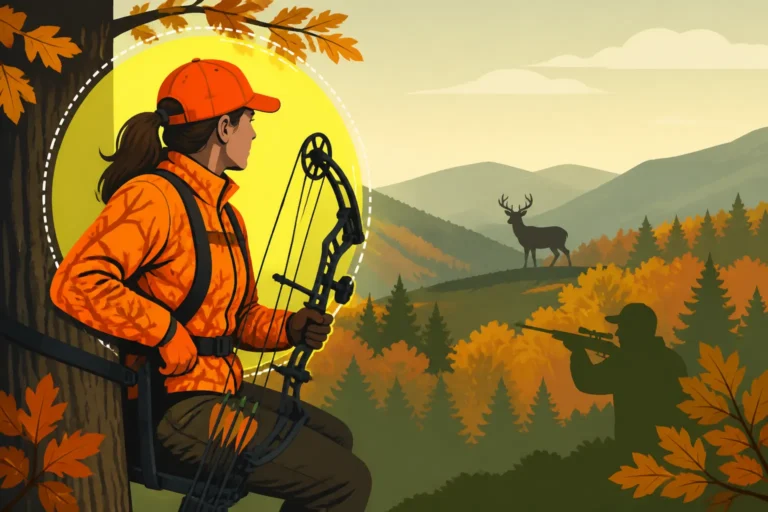
Above all, safety must always be your primary concern. Fall turkey season in Vermont often overlaps with other popular hunting seasons, particularly deer. This means visibility is incredibly important. Always wear adequate blaze orange when moving through the woods; it’s legally mandated during specific deer seasons. While you might take it off once you're settled into your stationary setup, always remember to put it back on before moving. A quick refresh on How Much Blaze Orange Vermont Requires is always a good idea.
Always, always be 100% certain of your target before you pull the trigger or release an arrow. In the fall, with birds moving in groups, it can be easy to lose track of individual birds or mistake movements in dense cover. Make sure you clearly see the entire bird and know what’s beyond it. Be intimately familiar with Vermont Fall Turkey Permit Rules for your specific WMU and understand the bag limits.
Beyond legal requirements, ethical hunting practices are paramount. Always respect private land boundaries, and never hunt without explicit permission from landowners. Be considerate of other hunters in the woods; communicate clearly if you encounter someone else to avoid conflicts or unsafe situations. Properly tagging and reporting your harvest according to Vermont Fish and Wildlife Department regulations ensures good management and a positive reputation for all hunters.
| Call Type | Primary Fall Use | Key Advantage | Learning Curve | Best For |
|---|---|---|---|---|
| Mouth Diaphragm | Kee-kees, yelps, clucks, purrs | Hands-free operation | Intermediate | Close-range, subtle communication, bust & call |
| Pot (Slate/Glass) | Kee-kees, yelps, clucks, purrs | Realistic, consistent sound | Beginner | General calling, reaching moderate distances |
| Box Call | Assembly yelps, loud locating | Good volume, easy to operate | Beginner | Scattering flocks, reaching far-off birds |
| Locator Calls | Finding roosted or hidden birds | Provokes "shock" vocalizations | Easy | Covering ground, initial flock detection |
Successful fall turkey hunting in Vermont demands a real shift in mindset and a very specific approach to calling. By understanding the social dynamics of fall flocks and mastering key vocalizations like the kee-kee run and assembly yelps, you can significantly increase your chances of success. Whether you prefer the hands-free versatility of a mouth call or the dependable realism of a pot call, combining effective calling with strategic tactics like scattering a flock and careful listening will put you in a prime position. Always remember that patience, consistent practice, and ethical hunting are the cornerstones of a rewarding fall season in the Green Mountain State.
Disclaimer
This article is for general informational purposes only and does not constitute professional advice. Laws, prices and regulations vary by location and change over time. Consult a qualified professional for guidance on your specific situation.