Tuning a Bow for Broadhead Flight
There are few things more frustrating for a bowhunter than watching a perfectly aimed arrow go wild downrange, especially when you know your field points were stacking perfectly. That stomach-dropping feeling when your broadheads decide to go on an adventure of their own is enough to make anyone question their setup. This guide is here to walk you through the precise steps and considerations for tuning your bow specifically for broadhead flight, ensuring your arrows fly true when it matters most, whether you're chasing whitetails in the Green Mountains or fall turkeys statewide.
Understanding Broadhead Flight Dynamics
Before we dive into the nitty-gritty of tuning, it’s crucial to understand why broadheads behave differently than field points in the first place. It’s not just in your head – there are fundamental aerodynamic principles at play that make broadhead tuning an essential part of any ethical bowhunter's preparation.
Why Broadheads Fly Differently Than Field Points
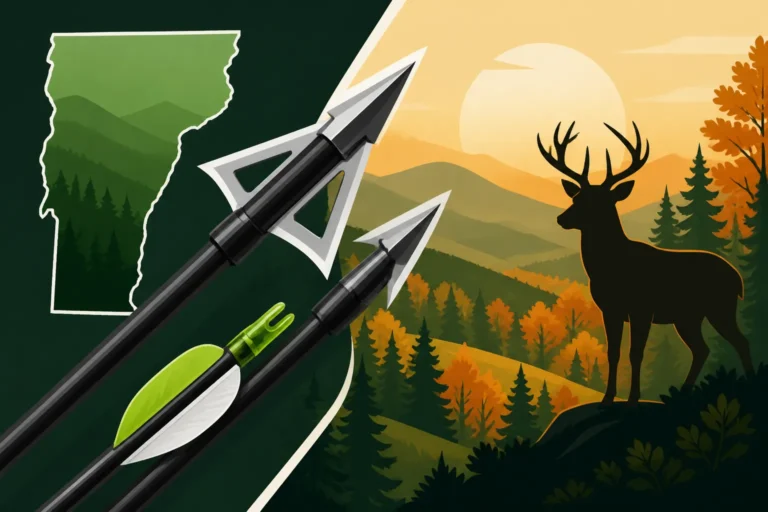
Imagine a field point, sleek and aerodynamic, designed to slip through the air with minimal resistance. Now, picture a broadhead, with its sharp blades and often wider profile. These blades, whether fixed or mechanical, introduce significant surface area and drag. Think of them like small rudders on an airplane. While a field point is largely unaffected by minor imperfections in your shot or bow setup, those broadhead blades amplify any issues. Even the slightest torque from your grip, a subtle hiccup in your release, or an out-of-tune bow can cause those "rudders" to steer the arrow off course. This is why an arrow that flies perfectly with a field point can look like a wounded duck with a broadhead attached. The physics of drag, lift, and torque are all working against you if your system isn't perfectly harmonized.
Another key factor is the center of pressure. On a field point, the center of pressure and the center of gravity are very close, creating a stable flight. With a broadhead, especially a fixed-blade, the blades shift that center of pressure forward. This means the arrow needs proper fletching stabilization at the rear to counteract the added drag and potential instability from the front. If your fletching isn't properly matched to your broadhead, or if the arrow isn't leaving the bow perfectly straight, those broadhead blades will take over and cause the arrow to plane, fishtail, or porpoise. It’s a delicate balance, and getting it right is the difference between a clean kill and a frustrating miss.
Common Broadhead Flight Issues and How They Look
When your broadheads aren't flying true, they tend to exhibit a few tell-tale signs. Recognizing these issues is the first step toward diagnosing and fixing the problem. You might see the arrow "fishtail," where the nock end kicks left or right as it leaves the bow, wobbling like a fish swimming. This indicates a horizontal nock travel issue – meaning the arrow isn't leaving the string cleanly along the horizontal plane. It could be related to cam lean, an improperly set arrow rest, or even torque from your grip.
Then there's "porpoising," which is when the nock end of the arrow kicks up or down. This suggests a vertical nock travel issue. Maybe your nock point is too high or too low, or your rest is set incorrectly vertically. The arrow will look like a dolphin leaping through the water as it flies, with the point diving and the nock rising, or vice versa. Finally, you might just get erratic flight, where the arrow seems to go wherever it pleases, with no consistent pattern. This can be a combination of issues, or it could point to a severe problem like fletching contact with the bow, a damaged arrow, or an incredibly out-of-tune bow. Seeing these patterns is critical for knowing which adjustment to make, rather than just blindly tweaking things.
Essential Steps for Broadhead Tuning
Tuning your bow for broadhead flight isn't a single event; it's a systematic process. You build upon foundational steps to achieve that perfect, laser-like flight. Don't skip these crucial initial checks and tuning methods, as they lay the groundwork for success.
Pre-Tune Checklist: Bow Condition and Components
Before you even think about shooting broadheads, you need to ensure your bow is in tip-top shape. This means a thorough inspection of every component that impacts arrow flight. Start with your limbs: are they straight? Are there any cracks or delaminations? Move on to your cams: are they synchronized? Are there any signs of lean? Use a T-square or a specific bow-tuning tool to check for cam lean at full draw. If your cams are leaning excessively, it can cause severe fishtailing. Next, inspect your string and cables for wear, fraying, or stretching. A stretched string can throw off your tune significantly.
Your arrow rest is another critical component. Make sure it's securely mounted and not wobbly. Is it sitting level? Are the launcher arms or containment prongs free from wear? For drop-away rests, ensure it's dropping cleanly and not making contact with your fletching. Check your nock point – is it secure and in the right position? A good starting point is usually a hair above 90 degrees to the string. Lastly, examine your arrows. Are they straight? Are the fletchings intact and properly adhered? Any damaged fletching will wreak havoc on broadhead flight. Don't overlook the spine of your arrow; ensure it's matched correctly to your bow's draw weight and length, as an improperly spined arrow is nearly impossible to tune for broadheads. Many hunters use online arrow spine calculators or consult with experts at their local pro shop.
Paper Tuning for Initial Broadhead Alignment
Paper tuning is often the first step in diagnosing how your arrow is leaving the bow. It's a fantastic visual aid that tells you if your arrow is exiting with horizontal and vertical nock travel issues. You’ll need a paper tuning stand, or you can even rig up a frame with paper in your garage or at a safe outdoor practice range. Stand about 6 to 10 feet away from the paper. Shoot a field point through the paper, then a broadhead. Ideally, you want a "bullet hole" tear – a small, clean rip in the paper with no excessive horizontal or vertical tearing.
- Reading the Tears:
- Nock Left (Right-Handed Shooter): If the nock end tears left, your rest might be too far to the left, or your nock point is too low. Adjust the rest slightly to the right or raise your nock point.
- Nock Right (Right-Handed Shooter): If the nock end tears right, your rest might be too far to the right, or your nock point is too high. Adjust the rest slightly to the left or lower your nock point.
- Nock High: If the nock end tears high, your nock point is likely too low, or your rest is too high. Lower your rest or raise your nock point.
- Nock Low: If the nock end tears low, your nock point is likely too high, or your rest is too low. Raise your rest or lower your nock point.
Make small adjustments – tiny movements with your rest or nock point can make a big difference. Repeat the process until you achieve a clean tear with both field points and broadheads at this close range. Remember, paper tuning is just the beginning; it gets you in the ballpark, but isn't the final answer for broadhead flight. This step is a critical diagnostic tool to get you started before you try more advanced methods like bare shaft tuning.
Walk-Back Tuning for Finer Adjustments
Once you've achieved a decent tear through paper, walk-back tuning is an excellent next step to refine your horizontal broadhead alignment. This method helps eliminate any slight left or right issues that might not show up clearly at close range. You'll need a large target with a vertical line drawn down its center. Stand at about 20 yards and shoot an arrow with a field point, aiming directly at the center of the line. Then, without adjusting your aim point, walk back to 30, 40, and 50 yards, shooting an arrow with a field point at each distance, aiming at the exact same spot on the vertical line.
Ideally, all your arrows should land in a perfectly straight vertical line down the target. If your arrows consistently land to the left of the line at longer distances, your rest needs to move slightly to the right. If they land to the right, move your rest slightly to the left. Just like with paper tuning, make very small adjustments. Once your field points are stacking vertically, repeat the process with your broadheads. Your broadheads should now also follow that vertical line. If they still drift significantly left or right compared to your field points at longer ranges, you may have subtle cam lean or even an issue with your broadhead itself. This method is fantastic for revealing minute horizontal deviations that paper tuning might miss, especially when you consider longer shots you might take when Hunting the Rut in Early-to-Mid November or other open country scenarios.
Advanced Broadhead Tuning & Troubleshooting
Sometimes, basic tuning gets you close, but there's still a nagging inconsistency. This is where advanced techniques come in, helping you achieve pinpoint accuracy and troubleshoot those stubborn issues.
Bare Shaft Tuning: The Ultimate Foundation
Bare shaft tuning is, in many ways, the most pure form of tuning, as it completely removes the influence of fletchings from the equation. It's often performed before paper tuning for the most discerning bowhunters. The idea is simple: if an arrow flies straight without fletching, it means it's leaving the bow perfectly, and your fletchings are just there to guide it consistently. This isn't for the faint of heart, as bare shafts are notoriously difficult to shoot accurately, but the information they provide is invaluable.
To bare shaft tune, you'll need a target that can safely stop a bare shaft without damaging it, usually a foam block. Stand about 10-15 yards from the target. Shoot a fletched arrow, aiming for the center. Then, without changing your aim, shoot an identical arrow without fletching. Pay close attention to where the bare shaft impacts relative to the fletched shaft.
- Bare Shaft Nock Left (Right-Handed Shooter): The arrow is stiff, or your rest is too far left. Move your rest to the right or consider a weaker spined arrow.
- Bare Shaft Nock Right (Right-Handed Shooter): The arrow is weak, or your rest is too far right. Move your rest to the left or consider a stiffer spined arrow.
- Bare Shaft Nock High: Your nock point is too low, or your rest is too high. Raise your nock point or lower your rest.
- Bare Shaft Nock Low: Your nock point is too high, or your rest is too low. Lower your nock point or raise your rest.
Once your bare shaft impacts directly with your fletched shaft at 10-15 yards, you've achieved a phenomenal tune. This foundation means your bow is perfectly launching your arrow, which will make Best Broadhead for a Vermont Whitetail choices and Best Arrow Weight for Vermont Deer decisions even more effective. This process requires patience, but the confidence it builds is immeasurable. Remember to always confirm your tune with broadheads at longer distances after bare shaft tuning is complete.
Broadhead Selection and Its Impact
The type of broadhead you choose can significantly impact how easy or difficult it is to tune your bow. Generally, smaller fixed-blade broadheads, especially those with compact designs, tend to fly more like field points and are easier to tune. Their minimal surface area means less wind resistance and less "rudder effect." Larger fixed-blade broadheads, or those with more aggressive angles, might require a more precise tune because their greater surface area will magnify any imperfections in your setup or shooting form.
Mechanical broadheads, on the other hand, are often marketed as "field point accurate." While many do fly exceptionally well, they are not entirely immune to tuning issues. If a mechanical broadhead isn't closing properly, or if its blades are not perfectly aligned, it can still cause erratic flight. It’s always critical to practice with the exact broadheads you plan to hunt with, ensuring they deploy correctly and fly true from your specific setup. When deciding between Fixed Versus Mechanical Broadheads in Timber, consider not just the cutting diameter but also the aerodynamic profile and how it interacts with your bow's tune. GoHunt often has detailed reviews and comparisons of different broadheads, which can be a great resource as you consider your options for Vermont hunting.
Troubleshooting Persistent Issues
Even after following all the tuning steps, you might encounter persistent broadhead flight problems. Don't despair! Sometimes the issue is more subtle. Here are a few things to check:
- Fletching Clearance: Ensure your fletchings are not making contact with your arrow rest, cables, or even your riser as the arrow leaves the bow. A little foot powder on your fletchings and arrow rest can reveal contact points. Adjust your rest or nock point, or consider a different fletching configuration or vane height if contact is severe.
- Limb Twist: Though rare on modern bows, a slightly twisted limb can be a nightmare for tuning. Inspect your limbs from different angles; if one limb tip appears twisted relative to the other, it's a pro shop issue.
- Arrow Nock Fit: Is your arrow nock too tight or too loose on the string? A nock that pinches the string too tightly can cause porpoising, while one that's too loose can lead to inconsistent release.
- Broadhead Quality Control: Unfortunately, not all broadheads are created equal. Sometimes, a batch of broadheads might have manufacturing inconsistencies that cause erratic flight. If you've tried everything else, try a different broadhead from a new pack. Spin test your broadheads on your arrows to ensure they are perfectly concentric and don't wobble.
- Shooting Form: Don't forget the human element! Torque in your grip, plucking the string, or inconsistent anchor points can all manifest as broadhead flight issues, even with a perfectly tuned bow. Have a friend watch your form, or even better, film yourself shooting. Addressing fundamental form issues can sometimes solve all your tuning woes. Resources like GoHunt sometimes offer video tutorials on proper shooting form which can be incredibly helpful.
Tuning a bow for broadhead flight is a blend of science, patience, and a little bit of artistry. It's about achieving harmony between your bow, your arrow, and your shooting form. While it might seem tedious, the confidence you gain knowing your arrow will fly true to its mark is an invaluable asset in the field. Whether you're setting up for Bowhunting Vermont's Expanded Archery Season or getting ready for Hunting Vermont's Regular Archery Season Into December, a well-tuned broadhead setup is paramount for ethical and successful hunting.
| Broadhead Flight Issue | Probable Cause(s) | Common Adjustment(s) |
|---|---|---|
| Nock Left Tear | Rest too far left, Nock point too low, Stiff arrow | Move rest right, Raise nock point, Weaker spine |
| Nock Right Tear | Rest too far right, Nock point too high, Weak arrow | Move rest left, Lower nock point, Stiffer spine |
| Nock High Tear | Nock point too low, Rest too high | Raise nock point, Lower rest |
| Nock Low Tear | Nock point too high, Rest too low | Lower nock point, Raise rest |
| Fishtailing | Horizontal nock travel issues, Cam lean, Grip torque | Adjust rest left/right, Correct cam lean, Refine grip |
| Porpoising | Vertical nock travel issues, Nock point error | Adjust nock point up/down, Adjust rest height |
| Erratic/Inconsistent | Fletching contact, Damaged arrow, Poor broadhead QC | Check clearance, Replace arrow, Spin test broadheads |
Disclaimer
This article is for general informational purposes only and does not constitute professional advice. Laws, prices and regulations vary by location and change over time. Consult a qualified professional for guidance on your specific situation.