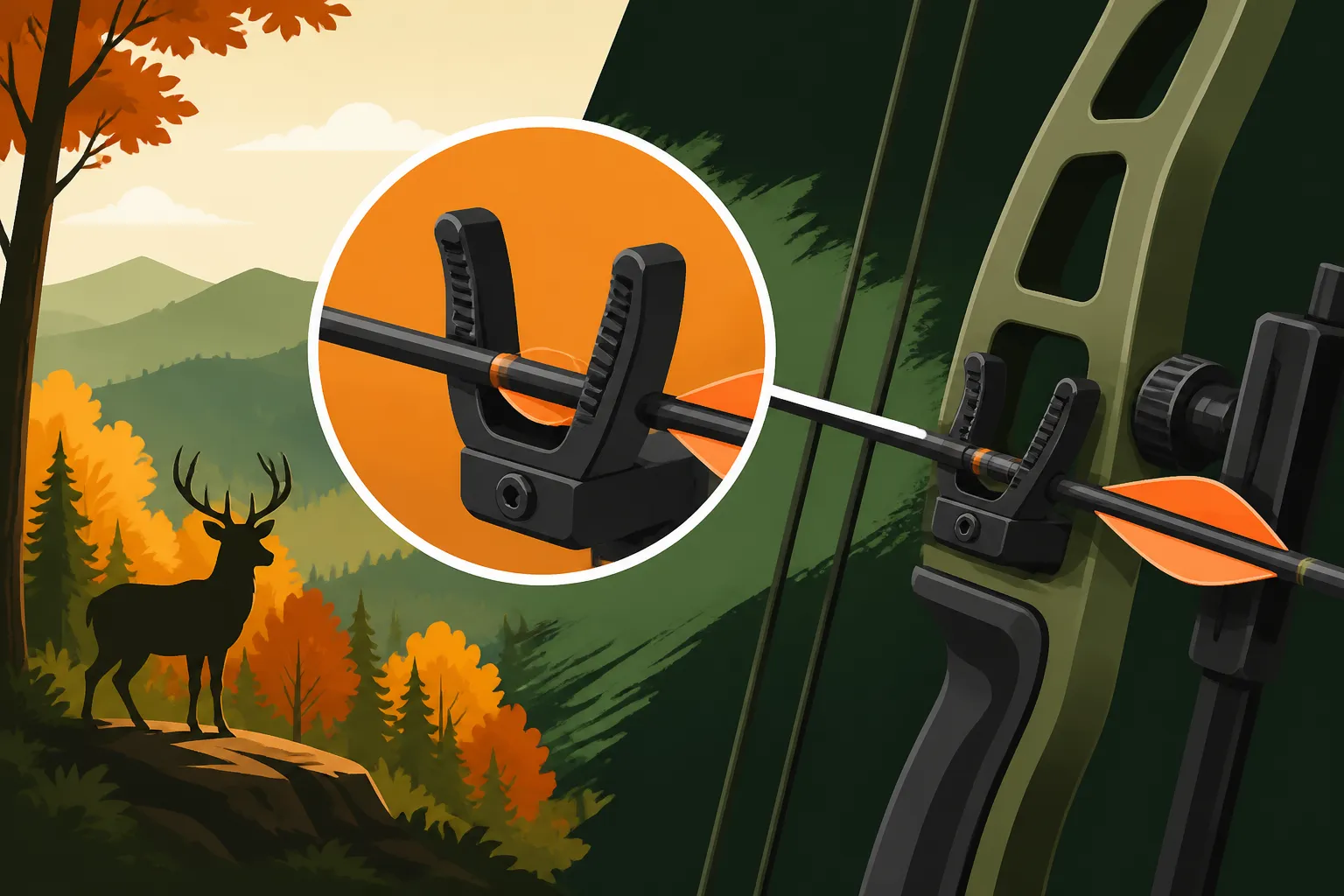
Best Arrow Rest for a Hunting Setup
Oh, the arrow rest. It's one of those pieces of bowhunting gear that often gets overlooked, yet it's absolutely critical to consistent arrow flight and, ultimately, ethical shot placement. If you've ever battled inconsistent arrow grouping, strange fletching wear, or just a general feeling that your bow isn't shooting as well as it should, there's a good chance your arrow rest might be the culprit – or at least a major contributor. This guide is all about helping you understand the different types of arrow rests out there and how to pick the best one to make your hunting setup sing.
Understanding the Different Types of Arrow Rests
Choosing an arrow rest can feel a bit overwhelming with all the options on the market. But at its core, an arrow rest’s job is simple: hold your arrow consistently until you release the string, then get out of the way without interfering with your arrow's flight. How it accomplishes that determines its type and suitability for different hunting styles. It's not about one being inherently "better" than another in all situations, but rather which one best suits your needs, your bow, and your hunting environment.
Fixed Blade Rests: The Traditional Workhorse
When you think about the most basic, no-frills arrow rest, you're likely thinking about a fixed blade rest. These are often the standard on many entry-level bows, but don't let their simplicity fool you – they are incredibly effective and still favored by many experienced bowhunters, especially those who appreciate rugged reliability. A fixed blade rest, as the name suggests, has a blade or shelf that supports the arrow throughout the entire shot cycle, from draw to release.
The classic example is a "Whisker Biscuit" style rest, which is essentially a full-containment circular brush that holds the arrow firmly in place. You literally push the arrow right through the bristles. This design is fantastic for keeping your arrow from falling off the rest if you bump your bow while stalking through thick timber or adjusting your body in a treestand. It offers incredible security, which can be a huge confidence booster when you're perched high above the forest floor, trying to maneuver for a shot at a wary buck. Hunters who spend a lot of time still-hunting or stalking in challenging terrain, where an arrow falling off the rest could mean a missed opportunity or a loud clatter, often swear by these. They're also wonderfully simple to install and require almost no maintenance beyond an occasional check for wear.
Another type of fixed rest is a simple shoot-through prong or blade, often made of a hard plastic or spring steel. These rests offer minimal contact with the arrow's fletching, theoretically reducing potential drag and increasing accuracy, provided your tuning is spot on. While they don't offer the same level of containment as a Whisker Biscuit, they are extremely durable and have no moving parts to break or freeze up in cold Vermont weather. For the hunter who values rock-solid dependability above all else, and who is confident in their ability to keep an arrow on the rest during the draw, a fixed blade rest can be a fantastic choice. The key is making sure your fletching passes through cleanly.
Containment Rests: Security for the Stand Hunter
Containment rests are a broader category that overlaps a bit with fixed blade rests, but they specifically emphasize keeping the arrow firmly on the rest at all times, even before the draw. This is a huge benefit for anyone hunting from a treestand or ground blind, or navigating dense brush. Imagine you're in your stand on a crisp November morning, a big buck is working its way towards your shooting lane, and you need to subtly adjust your body or lean around a tree. The last thing you want is your arrow to pop off the rest, creating a clanging noise or an awkward fumbling moment that sends the deer scattering.
These rests often feature a cage-like design, prongs that extend high, or brushes that completely encircle the arrow shaft. They aim to prevent the arrow from falling off in any direction – up, down, or sideways. While a Whisker Biscuit is a prime example of a full-containment fixed rest, other containment rests might have spring-loaded arms that cradle the arrow, only dropping away at the shot. This combination of security and minimal fletching contact can be very appealing. The peace of mind you get from knowing your arrow isn't going anywhere, even if you tilt your bow or bump it slightly, is invaluable in a high-pressure hunting situation.
For those long, cold sits during Hunting the Rut in Early-to-Mid November or when you're trying to stay completely silent as a deer approaches, a good containment rest is worth its weight in gold. They're particularly useful for newer bowhunters still getting comfortable with their draw cycle and holding steady. The only potential downside is ensuring absolutely zero fletching contact on the shot. While modern designs are excellent at minimizing this, it's something to pay close attention to during your tuning process.
Drop-Away Rests: The Modern Performance Standard
If you've been around bowhunting for a while, you've probably seen the massive shift towards drop-away rests, and for good reason. These rests are designed to support the arrow for the initial part of the shot cycle – from the draw through release – and then, at the moment the string is released, the launcher or cradle instantly "drops away" and out of the path of the arrow's fletching. This means absolutely zero contact between the rest and your fletching, theoretically leading to the cleanest, most consistent arrow flight possible.
The mechanism usually involves a cord connected to your bow's down cable. As you draw the bow, the cable pulls the rest into the upright position, holding your arrow. When you release, the cable slackens, and a spring or gravity causes the rest to drop lightning-fast. The key benefit here is the absolute elimination of fletching contact. Even the slightest brush of your fletching against a fixed rest can cause your arrow to wobble or veer off course, leading to inconsistent groups and less accuracy downrange. With a drop-away, once the arrow clears the rest, it's flying completely unimpeded.
This pursuit of perfect arrow flight is why many serious bowhunters, especially those who shoot mechanical broadheads or are obsessed with maximizing accuracy for longer shots, choose drop-away rests. They are particularly popular for target archery as well, where every point counts, and that precision translates directly to hunting success. Tuning a drop-away can be a bit more involved than a fixed rest, as you need to ensure the timing of the drop is perfect, but once dialed in, they offer unparalleled performance. When considering Tuning a Bow for Broadhead Flight, a drop-away rest often simplifies the process by removing one potential variable of fletching contact.
| Arrow Rest Type | Key Feature | Pros for Hunting | Cons for Hunting | Ideal Hunter Profile |
|---|---|---|---|---|
| Fixed Blade | Simple, stationary support (e.g., Whisker Biscuit) | Extreme durability, no moving parts, full arrow containment (Whisker Biscuit), silent operation. | Potential for fletching contact if not perfectly tuned, can wear fletching over time. | The minimalist, traditionalist, or budget-conscious hunter who values rugged reliability and constant arrow containment, especially in rough terrain or still-hunting situations. |
| Containment | Securely holds arrow until release | Prevents arrow from falling off in any situation, excellent for treestand/ground blind hunters. | Can still have minor fletching contact if not timed or tuned correctly. | Hunters prioritizing arrow security and quiet drawing, particularly those in treestands, ground blinds, or moving through dense cover where accidental arrow dislodgement is a concern. |
| Drop-Away | Launcher drops clear of arrow instantly | Zero fletching contact, maximizes accuracy and arrow flight consistency, excellent for broadheads. | More moving parts (potential for issues), can be noisy if not dampened, requires precise timing/tuning. | The performance-driven hunter focused on maximum accuracy, especially with broadheads or longer shots, willing to invest time in tuning, and prioritizes clean arrow flight above all else. |
Key Factors to Consider When Choosing an Arrow Rest
Picking the "best" arrow rest isn't about finding the most expensive or feature-rich model; it's about finding the right fit for you. What works for your buddy might not be ideal for your style of hunting or your bow setup. There are several crucial factors that should guide your decision, especially when you're hunting in a diverse state like Vermont, where conditions can range from open farm fields to dense, steep mountain timber.
Your Hunting Style and Terrain
Think about how you typically hunt. Are you primarily a treestand hunter, spending hours perched silently, waiting for deer to come to you? Or are you a mobile hunter, still-hunting through thick cover, climbing steep ridges, and often drawing your bow from awkward positions? Your hunting style heavily influences what you need from an arrow rest.
For instance, if you're like me and spend a lot of time still-hunting through the Green Mountain National Forest, slowly making your way through tight pockets of spruce and fir, the constant movement and potential for bumping your bow against branches makes full arrow containment a huge plus. A fixed blade rest like a Whisker Biscuit, or a quality containment rest, would give me immense peace of mind. I don't want my arrow rattling around or, worse, falling off at the critical moment because I tripped over a root. That level of security means I can focus on my foot placement and scanning for game, rather than constantly checking if my arrow is still on the rest. This applies to those who are constantly on the move, chasing small game in Squirrel Hunting Vermont Hardwoods or actively trying to intercept a deer on the move.
On the flip side, if you primarily hunt from a comfortable, heated ground blind in a static position, or if you're in a highly controlled treestand setup in a clear shooting lane, then the absolute containment might be less critical than maximizing arrow flight precision. In this scenario, a well-tuned drop-away rest could give you that extra edge in accuracy, especially if you're shooting at the longer end of your comfort zone. The trade-off for potentially less "grab-and-go" security is often compensated by the clean flight. When considering Bowhunting Vermont's Expanded Archery Season, which often means longer shots in open fields, that accuracy advantage of a drop-away could be very appealing.
Durability and Reliability in Vermont Conditions
Vermont weather is no joke. From crisp, clear autumn days to freezing rain, sleet, and even early season snow, your gear needs to stand up to the elements. An arrow rest with too many tiny moving parts might be more susceptible to freezing up, collecting dirt, or malfunctioning in adverse conditions. I've had friends out during a late October rain squall complain about their drop-away rest getting sticky with mud or even ice affecting the timing. These are real-world frustrations that can ruin a hunt.
When you're out there in the cold, wet woods, simplicity often equates to reliability. Fixed rests, with their minimal moving parts (or none at all), are incredibly durable and less likely to fail when you need them most. They don't have springs to weaken, cords to fray, or pivots to seize. This makes them a favorite for many seasoned hunters who prioritize bomb-proof gear over minute performance gains. You can drag them through brush, get them soaked, and they'll still perform.
If you opt for a drop-away or a more complex containment rest, it's crucial to look for models made with high-quality, corrosion-resistant materials. Pay attention to sealed bearings or mechanisms that are designed to shed water and debris. Many modern drop-aways have made huge strides in this area, but it's still a point of concern. Regular inspection and cleaning, especially after a wet or muddy hunt, become even more important with these types of rests. When you're Hunting a Muzzleloader Tag After Rifle Season Closes in December, and the temperatures are dropping, you want a rest that you know will work every single time.
Ease of Setup and Tuning
Let's be honest, not everyone is a professional bow technician, and even if you are, you don't want to spend hours fiddling with your gear when you could be scouting or practicing. The ease of setting up and tuning your arrow rest is a significant factor. A rest that's difficult to install or adjust can lead to frustration, wasted arrows, and ultimately, less confidence in your setup.
Fixed rests like the Whisker Biscuit are notoriously easy to install. Bolt it on, run your arrow through, adjust the height and center shot, and you're pretty much done. While there's still a tuning process, it's generally straightforward. Other fixed blade rests might take a little more care to ensure proper fletching clearance, but still, they're relatively simple.
Drop-away rests, while offering superior performance, typically require a bit more attention to detail during setup. You need to attach the actuation cord to your down cable, ensure the timing is correct (so it drops just as the fletching clears), and then fine-tune your center shot and elevation. Some rests feature micro-adjustments that make this process easier, while others require loosening screws and making small manual shifts. This is where tools like the GoHunt app or other digital resources can be invaluable, offering tuning tips or video guides to walk you through the process. A properly tuned bow, especially the relationship between your rest, Broadheads and Arrows for Vermont Archery, and your Best Bow Sight for Vermont Archery Season, is the foundation of accuracy.
For a busy hunter who wants to spend more time in the woods and less time in the workshop, an easier-to-tune rest might be the better option. If you enjoy the technical aspects of bow tuning and chasing perfection, then a more adjustable drop-away might be right up your alley. Just remember, a poorly tuned rest, regardless of its type, will lead to poor arrow flight.
Matching the Rest to Your Bow and Arrows
Once you've narrowed down the type of arrow rest that aligns with your hunting style and priorities, the next crucial step is ensuring it's a perfect match for your specific bow and the arrows you intend to shoot. This isn't just about aesthetics; it's about mechanical compatibility and maximizing the performance of your entire system. A mismatch here can lead to frustrating tuning issues, reduced accuracy, and even damage to your equipment.
Compatibility with Your Bow's Riser and Cable Slide
Before you even think about buying a rest, you need to ensure it will physically fit your bow. Most modern arrow rests attach to the riser of your bow using a standard bolt pattern. However, not all risers are created equal, and some may have different mounting points or clearance issues, particularly with older bows or certain specialized models. It's always a good idea to check the manufacturer's specifications for both your bow and the arrow rest.
Beyond the attachment point, consider the clearance around your bow's cable slide or roller guard. Many drop-away rests utilize a string that connects to the downward-moving cable. If this string interferes with the cable slide or other components on your bow's riser, it could cause premature wear, inconsistent timing, or simply not function correctly. Some rests are designed with adjustable arms or mounting plates to help mitigate these issues, but it's something you need to be aware of. You want a clean, unobstructed path for all moving parts. Using resources like the GoHunt gear database or calling your local pro shop can help you confirm compatibility before you invest.
Another often overlooked aspect is the overall balance of your bow once the rest is installed. While most rests are lightweight, some can add a bit more mass to one side of the riser. This isn't typically a deal-breaker, but it's something to keep in mind, especially if you're already trying to fine-tune your bow's balance with stabilizers for optimal feel and accuracy. The goal is to have your rest integrate seamlessly with your bow, becoming an extension of the system rather than an afterthought.
Arrow Fletching Clearance and Vane Helical
This is arguably one of the most critical aspects of arrow rest selection. Your arrow's fletching (vanes or feathers) must pass cleanly through or past the rest without any contact. Even the slightest brush can induce an oscillation in your arrow's flight, causing it to plane, wobble, or simply not fly true to where you're aiming. This becomes even more pronounced when shooting Best Broadhead for a Vermont Whitetail, as broadheads exaggerate any inconsistencies in arrow flight.
With fixed rests, especially the Whisker Biscuit style, you need to ensure your fletching is tough enough to handle repeated passes through the bristles without excessive wear. Some hunters prefer certain vane materials or orientations (like a slight helical or offset) that are more forgiving with these rests. If you're using a shoot-through fixed prong rest, perfect center shot and a meticulously tuned bow are paramount to avoid contact.
Drop-away rests shine here because their entire purpose is to get out of the way. However, even with a drop-away, you need to ensure the timing is correct. If the rest doesn't drop fast enough, or if your fletching is particularly large or has an aggressive helical, you could still experience contact. This is why many hunters spend considerable time experimenting with different fletching sizes, materials, and orientations when setting up their Best Arrow Rest for a Hunting Setup. The goal is a perfect, clean pass, resulting in pristine arrow flight from the moment it leaves the string to the moment it hits your target.
Maintaining Consistency for Accurate Shots
Consistency is king in bowhunting. Every component of your setup, from your release aid to your Best Arrow Weight for Vermont Deer, plays a role in sending that arrow downrange consistently. Your arrow rest is no exception. A good rest provides a consistent launch platform shot after shot, allowing you to develop muscle memory and trust in your equipment.
When you're practicing, especially when preparing for a critical moment in the woods, you need to know that your rest is performing exactly the same way every time. Any slop, play, or inconsistency in the rest's movement or how it holds the arrow will manifest as frustrating flyers and erratic groups on the target. This is particularly important for hunters who spend a lot of time honing their skills, perhaps using detailed mapping from Scouting Vermont Public Land Before Season to understand shot angles and distances. You want your equipment to be as reliable as your preparation.
Modern arrow rests, especially high-quality drop-aways, are designed with precision tolerances to minimize any play and ensure consistent performance. Fixed rests, by virtue of their simple design, also offer excellent consistency, provided they are not excessively worn. Regular checks for wear, loose screws, or any abnormal movement are essential to maintain this consistency. After all, the moment of truth in the woods often hinges on an arrow flying exactly where you expect it to.
Maintenance and Troubleshooting Your Arrow Rest
Just like any other critical piece of hunting gear, your arrow rest isn't something you can just slap on your bow and forget about. Proper care and knowing how to troubleshoot common issues can save you a lot of headaches, especially when you're out in the field. A well-maintained rest is a reliable rest, and reliability is paramount when a trophy buck steps into your shooting lane.
Regular Inspection and Cleaning
I can't stress this enough: inspect your gear regularly. This isn't just about your arrow rest, but it's a great place to start. Before and after every hunting trip, and certainly before any serious practice session, give your arrow rest a thorough once-over.
Here's what to look for:
- Loose Screws: Vibrations from shooting and general wear and tear can loosen mounting screws or adjustment screws. A wobbly rest is an inaccurate rest. Carry a small set of Allen wrenches in your pack and check them periodically.
- Wear and Tear: On fixed rests like a Whisker Biscuit, check the bristles for excessive wear or breakage. If the bristles are uneven or missing in a section, it can affect arrow flight and should be replaced. For prong-style rests, look for bends, cracks, or excessive wear on the prongs themselves. On drop-away rests, check the launcher arm for any bends or signs of impact.
- Fraying Cords/Cables: If your drop-away uses a timing cord, check it closely for any fraying or nicks. This cord is under tension and can eventually wear out. A frayed cord is a ticking time bomb for a malfunction.
- Dirt and Debris: Especially after a wet or dusty hunt, dirt, mud, or fine plant matter can get into the moving parts of a drop-away rest, causing it to become sticky or sluggish. Use a soft brush or compressed air to clean out any grit. Avoid harsh chemical cleaners unless specifically recommended by the manufacturer, as they could damage components.
- Spring Function: For drop-aways, ensure the spring mechanism that returns the launcher to its dropped position is functioning smoothly. It shouldn't feel sticky or hesitant.
Regular cleaning, especially after being exposed to rain or mud while Hunting a Champlain Valley Dairy Farm Edge, will extend the life of your rest and ensure its consistent performance. A little preventative maintenance goes a long way in preventing a crucial piece of gear from failing at the worst possible moment.
Common Issues and Quick Fixes
Even with the best maintenance, sometimes issues arise. Knowing how to quickly diagnose and fix common arrow rest problems can be a lifesaver in the field.
- Inconsistent Arrow Flight / Poor Grouping:
- Check for Fletching Contact: This is the most common culprit. Dust your fletching with powder (like foot powder) or even draw an arrow through a piece of lipstick to see if there are any marks on the rest. Adjust center shot, rest height, or even vane orientation if necessary. On a drop-away, re-check timing.
- Loose Components: Go back and check all screws, not just on the rest, but on your sight and stabilizer too. A loose component anywhere can throw off your shot.
- Worn Parts: As mentioned, worn bristles on a biscuit or a bent prong can cause issues. Replace them if needed.
- Arrow Falling Off the Rest (Non-Containment Rests):
- Inconsistent Nocking Point: Ensure your nocking point is set correctly, often slightly above center. If your arrow is angled too far down, it can jump off.
- Poor Drawing Form: A jerky draw can sometimes cause the arrow to lift. Practice a smooth, consistent draw.
- Bow Tilt: Some hunters inadvertently tilt their bow. While a slight tilt is fine, excessive tilt can make an arrow fall off a non-containment rest.
- Drop-Away Rest Not Dropping Reliably:
- Timing Cord Issues: The cord might be too tight, too loose, or frayed. Adjust the length or replace it if damaged.
- Obstruction/Dirt: Clean out any debris that might be impeding the mechanism.
- Bent Launcher/Pivot: Inspect for physical damage. If it's bent, it likely needs replacement or repair by a pro shop.
- Noise from the Rest:
- Un-dampened Drop-Away: Some drop-away rests can make a slight "clunk" sound when they drop. Many come with felt or rubber dampeners. Ensure these are in place and haven't worn off. You can often add more felt or moleskin to quiet areas of contact.
- Loose Parts: A rattling sound almost always indicates a loose screw or component. Tighten everything down.
When you're hunting, especially something like Fall Turkey Hunting Vermont's Statewide Archery Window where silence is absolutely crucial, any extraneous noise from your bow setup can spook game. Taking the time to silence your rest beforehand is a worthwhile endeavor.
When to Upgrade or Replace
Sometimes, simple fixes just won't cut it. Knowing when to bite the bullet and replace or upgrade your arrow rest is important for maintaining peak performance and your confidence in your setup.
- Irreparable Damage: If your rest takes a hard hit, resulting in a bent launcher arm, cracked housing, or a twisted mounting bracket, it's often beyond a simple fix. Trying to bend parts back into shape can compromise their integrity and lead to inconsistent performance or catastrophic failure.
- Excessive Wear: While minor wear is normal, if components like spring mechanisms, bearings, or the main launcher body are excessively worn, loose, or corroded, it's time for a new one. A rest with too much "play" in its parts will never provide consistent arrow flight.
- Constant Tuning Problems: If you're constantly battling fletching contact, inconsistent arrow groups, or timing issues with a drop-away, even after thorough cleaning and adjustment, it might be that the rest itself is faulty or simply not well-suited to your bow or shooting style anymore.
- Outdated Technology: Bow technology evolves, and so do arrow rests. If you've got a very old rest and you've recently upgraded your bow or changed your arrows (perhaps moving to a faster, lighter arrow with different fletching), a newer rest might offer significant performance improvements and better compatibility. While old gear can still be great, sometimes an upgrade genuinely provides an advantage, especially when looking for that extra edge in Hunting Vermont's New Archery-Rifle Overlap.
- Change in Hunting Style: If you've transitioned from primarily treestand hunting to more aggressive spot-and-stalk tactics, or vice-versa, your old rest might not be the best fit anymore. Don't be afraid to change your gear to match your evolving needs as a hunter.
Investing in a quality arrow rest is an investment in your accuracy and confidence. Don't let a faulty or ill-suited rest be the weakest link in your bowhunting chain.
Disclaimer
This article is for general informational purposes only and does not constitute professional advice. Laws, prices and regulations vary by location and change over time. Consult a qualified professional for guidance on your specific situation.