Best Sabot Weight for an Antlerless-Only Hunt
Figuring out the ideal sabot weight for your muzzleloader, especially when you're specifically targeting antlerless deer in Vermont, can feel like you're trying to crack a secret code. You want that perfect blend of accuracy, ethical performance, and manageable recoil, but with so many options out there, it’s easy to get overwhelmed. This guide is here to demystify sabot weights, helping you choose the right combination for a successful and confident antlerless-only hunt in the Green Mountain State.
The Foundation: Understanding Sabots and Their Role
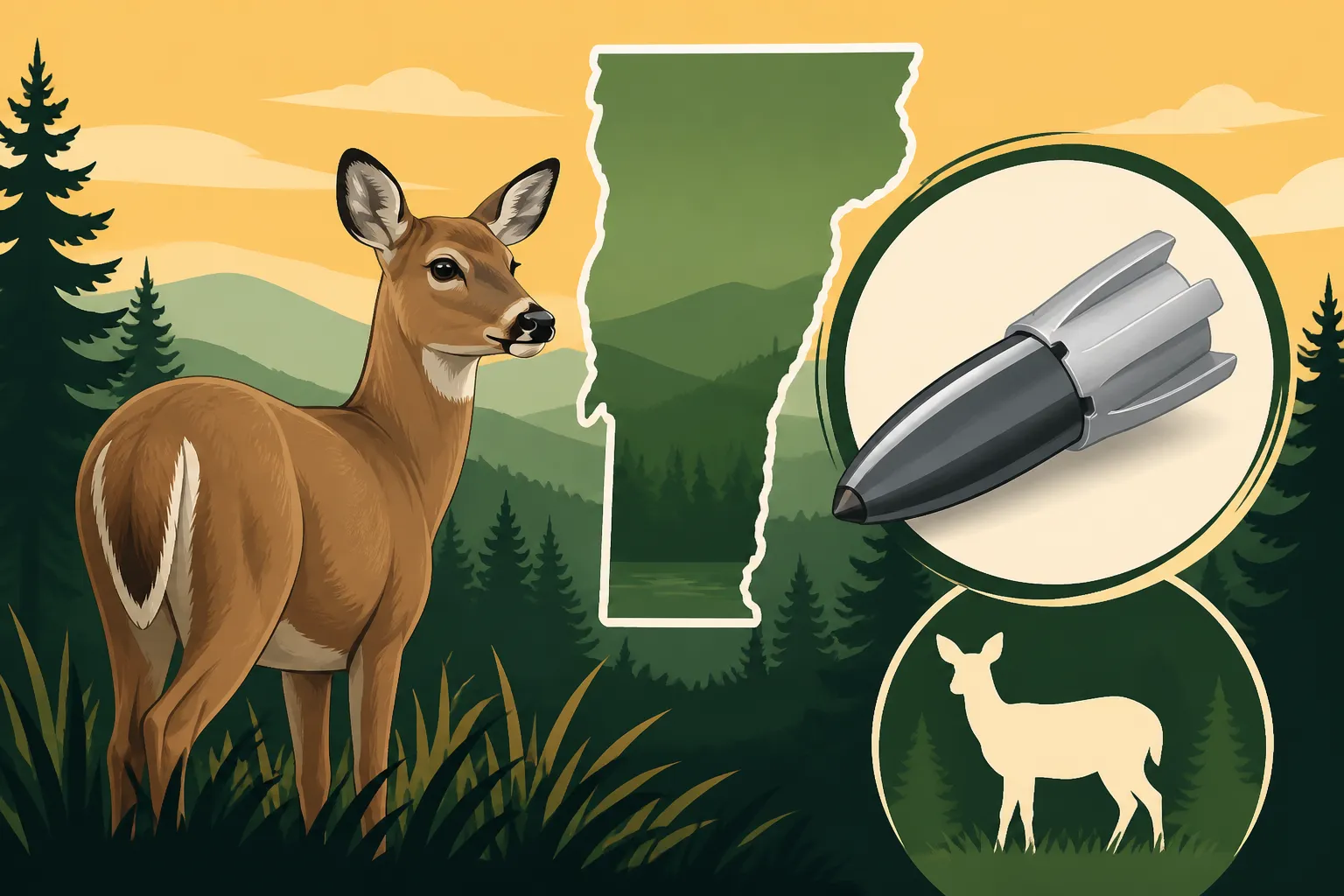
Before we dive into specific weights, let's nail down what a sabot is and why it's so critical for modern muzzleloader hunting. Simply put, a sabot is a plastic sleeve that allows you to shoot a smaller diameter, typically jacketed bullet, through a larger bore muzzleloader. Think of it like a cup that holds a rifle bullet snugly as it travels down your smoothbore or rifled barrel, then peels away once it exits the muzzle, letting the bullet continue on its way.
Why Sabots Matter for Muzzleloaders
In the old days, muzzleloaders shot round balls or conicals that matched the bore diameter. While effective, these often lacked the aerodynamic efficiency and controlled expansion of modern rifle bullets. Sabots changed the game entirely. By using a sabot, your .50 caliber muzzleloader can now launch a .45 or .44 caliber jacketed bullet, which significantly improves accuracy, extends effective range, and enhances terminal performance on game. The plastic sabot creates a gas seal, ensuring maximum pressure builds up behind the projectile, propelling it consistently. Without a good sabot-to-bullet-to-bore fit, you're looking at poor accuracy, inconsistent velocities, and a less-than-ideal hunting experience.
For an antlerless hunt, precision is paramount. You're often looking for a clean, quick kill, and a well-chosen sabot and projectile combination gives you the confidence to make that shot count. The goal isn't just to hit the deer, but to hit precisely where you aim, which is exactly what modern sabot technology helps facilitate.
Components of a Saboted Muzzleloader Load
When you're loading a modern muzzleloader, you're essentially combining three key components that work in harmony: the powder charge, the sabot, and the projectile. The powder charge dictates the velocity, while the sabot and projectile combination determines how accurately that velocity translates into impact downrange. Different sabots are designed to hold various bullet diameters, from .40 caliber up to .45 or even .475 in a .50 caliber muzzleloader. The common calibers for deer hunting in Vermont are typically .44 and .45 caliber bullets nested in a .50 caliber sabot.
It’s a bit of a balancing act; a lighter sabot might mean less plastic to separate, potentially improving accuracy, but it’s really the projectile itself that carries the weight for penetration and energy transfer. As you explore options for your Muzzleloader Deer Hunting in Vermont, understanding this synergy is key. You'll find that some bullets come pre-packaged with sabots, taking some of the guesswork out, while others require you to mix and match. This freedom allows for significant customization to find your rifle's sweet spot.
Factors Influencing Sabot Weight Selection for Antlerless Hunts
When you're focused on an antlerless-only hunt, your primary goal is a clean, ethical harvest. This means choosing a sabot and projectile combination that delivers excellent accuracy and sufficient kinetic energy for humane dispatch. It's not just about hitting the target; it's about anchoring that deer quickly. Several factors come into play when deciding on the best sabot weight, and they all interact to influence your shot performance.
Projectile Weight vs. Sabot Weight: A Critical Distinction
Here’s where a common misconception sometimes creeps in: hunters often talk about "sabot weight" when they really mean the projectile weight that the sabot carries. The sabot itself is made of plastic and adds very little to the overall mass that matters for ballistics. What truly dictates your ballistic performance—trajectory, energy, and terminal effect—is the actual bullet weight. For antlerless deer, you're typically looking at jacketed bullets ranging from 200 grains to 300 grains.
- Lighter Projectiles (200-240 grains): These generally offer flatter trajectories, which can be advantageous in more open areas or if your shot distances might stretch a bit further. They typically provide ample energy for antlerless deer at reasonable muzzleloader ranges (say, out to 150 yards). A flat trajectory can be a confidence booster, especially when estimating range in the field.
- Heavier Projectiles (250-300 grains): These carry more kinetic energy and momentum, leading to better penetration, especially if you encounter a quartering shot or hit a major bone. While their trajectory will be more rainbow-like at longer distances, within typical muzzleloader ranges (under 100 yards), the difference is often negligible, and the added punch can be reassuring. For dense cover hunting, where shots are typically closer, the heavier grain bullet can be a great choice. Hunting Vermont's October Antlerless Muzzleloader Window often involves such closer-range opportunities.
Ultimately, your rifle will tell you what it prefers. Different twist rates in barrels will stabilize certain bullet weights better than others. It's not uncommon for two identical muzzleloaders to shoot different bullet weights with varying degrees of accuracy.
Velocity, Energy, and Recoil Considerations
The relationship between projectile weight, velocity, and energy is a crucial one. Lighter bullets, given the same powder charge, will typically achieve higher velocities. Higher velocity translates to a flatter trajectory and potentially more hydrostatic shock on impact, which can contribute to quicker deer drops. However, too much velocity with a lighter bullet can sometimes lead to excessive fragmentation if the bullet isn't designed for it, reducing penetration.
Heavier bullets, while slower, retain their energy better at longer distances and typically penetrate deeper. For an antlerless deer, sufficient penetration to reach vital organs is the absolute goal. You don't need excessive energy, just enough to pass through the deer cleanly.
Then there's recoil. Lighter projectiles generally produce less recoil. While muzzleloaders aren't known for their gentle kick, a lighter bullet can make practice more enjoyable and help you maintain better sight picture after the shot, which is critical for quick follow-ups if needed. When considering Sabot Choices for an Antlerless-Only Hunt, think about how much recoil you're comfortable managing, especially if you're planning on extended practice sessions.
Bullet Construction and Terminal Performance
The type of bullet construction also plays a huge role, irrespective of just the weight. For antlerless deer, you generally want a bullet that expands reliably without disintegrating.
- Conical/Lead Saboted Bullets: These are traditional options. Full lead conicals can be heavy and offer good penetration, but expansion might be less controlled than jacketed bullets.
- Jacketed Hollow Points (JHP): Many modern sabot bullets are JHPs, designed to expand rapidly on impact, creating a larger wound channel. They are excellent for deer-sized game.
- Bonded Core or Partitioned Bullets: These maintain more weight on impact, ensuring deep penetration even after hitting bone, making them a very reliable choice for ethical kills.
Companies like Hornady with their SST or Federal with their BOR Lok line offer excellent options that are widely used and trusted by hunters. When looking at your options, don't just consider the grain weight, but research how that particular bullet is designed to perform once it hits tissue. For antlerless deer, controlled expansion and good penetration are far more important than raw speed.
Optimal Sabot Weights for Common Antlerless Hunting Scenarios in Vermont
Vermont offers a diverse range of hunting environments, from the sprawling public lands of the Green Mountain National Forest to the open agricultural fields of the Champlain Valley. Your choice of sabot (and more accurately, projectile) weight can be optimized for these different scenarios, ensuring you're prepared for the shots you're most likely to encounter during your antlerless hunt.
Close-Range Encounters in Dense Cover
Imagine you're still-hunting a thick cedar swamp in the Northeast Kingdom during the Hunting Vermont's December Muzzleloader Season. Visibility might only be 50-75 yards, and any shot you get will likely be quick and through heavy brush. In this scenario, you want a bullet that hits hard and penetrates deep, even if it encounters a small branch on the way.
For these close-quarters situations, a heavier projectile in the 270 to 300-grain range is often ideal.
- Benefits: These heavier bullets carry more momentum, which can help them push through minor obstructions without significant deflection. They also deliver substantial kinetic energy at close range, ensuring a powerful impact and deep penetration for vital organ damage.
- Considerations: While trajectory is less critical at these distances, the added recoil of heavier bullets is something to be mindful of during practice. Focus on developing a steady off-hand shot, as treestands might be less common in truly dense thickets. Brands like Barnes Expander MZ or Hornady FPB (Full Piston Bore) offer robust, heavy options designed for reliable performance.
- Real-world scenario: You're tracking fresh sign after a light snowfall in a tight spruce stand. Suddenly, a doe appears at 40 yards, partially obscured by a blowdown. A heavy, hard-hitting projectile gives you the confidence that even if the shot isn't perfectly clear, it will still punch through and perform ethically.
Moderate Ranges in Mixed Woodlands
Most antlerless hunting in Vermont, especially in areas with mixed hardwood and softwood stands, will present shots in the 75-125 yard range. These aren't extreme long shots, but they demand a balance of flat trajectory and solid terminal performance.
For these moderate ranges, projectiles in the 230 to 260-grain range often hit the sweet spot.
- Benefits: This weight class offers an excellent compromise between a relatively flat trajectory, making range estimation a bit more forgiving, and ample energy for clean kills on antlerless deer. They are typically very accurate in a wide variety of muzzleloaders and are less prone to excessive drop compared to heavier options at the upper end of your effective range.
- Considerations: Focus on bullet construction that ensures controlled expansion. Many modern jacketed hollow points or bonded bullets in this weight range are specifically designed for deer-sized game at these velocities.
- Real-world scenario: You've set up on a logging road overlooking a small clearing, anticipating deer moving from bedding to feeding areas. A doe steps out at 100 yards. A 250-grain FTX or SST bullet, zeroed correctly, will give you a point-and-shoot confidence for a precise shot, maximizing your chances of a quick recovery. Hunting a logging road can be a productive strategy for these scenarios.
Open Country or Field Edge Opportunities
While muzzleloaders generally aren't long-range instruments, some areas in Vermont, particularly along farm fields in the Champlain Valley, can present shots out to 150 yards or even a bit more. If your rifle is proven accurate at these distances and you’re confident in your shooting ability, sabot choice becomes even more critical for trajectory.
For these more open scenarios, lighter, aerodynamically efficient projectiles in the 200 to 230-grain range can be beneficial.
- Benefits: These lighter, faster bullets will maintain a flatter trajectory, reducing the amount of holdover needed for longer shots. This is particularly helpful if you don't have time for precise rangefinding or if the deer is moving.
- Considerations: Bullet construction is paramount here. Ensure the lighter bullet is designed to perform at higher velocities without over-expanding or fragmenting prematurely. Test your setup extensively at these longer distances to confirm accuracy and energy retention. For insights on scouting, check out Scouting Vermont Public Land Before Season.
- Real-world scenario: You're overlooking a cut cornfield at dawn, having spent hours scouting the deer trails leading to it. A group of does enters the field at 130 yards. A lighter, fast-flying projectile, precisely sighted in, provides the flatter arc needed for an ethical shot at that extended muzzleloader range. Make sure your local rules allow for muzzleloader hunting during these hours. Always check the regulations on the Vermont Fish and Wildlife Department website or through resources like GoHunt. GoHunt can often provide valuable map overlays and landowner information, though always verify directly with the landowner for permission on private land.
Here's a quick comparison table to help summarize these considerations:
| Projectile Weight (Grains) | Typical Use Case (Vermont) | Key Characteristics | Ideal Shot Range (Yards) | Considerations |
|---|---|---|---|---|
| 200-230 | Open fields, longer ranges | Flatter trajectory, higher velocity | 100-175 | Excellent accuracy needed, bullet integrity at high velocity |
| 230-260 | Mixed woodlands, stand hunting | Balanced trajectory and energy | 75-150 | Versatile, good for most common scenarios |
| 270-300 | Dense cover, close-range punches | High momentum, deep penetration, heavier hit | 40-100 | More rainbow trajectory, higher recoil, good for breaking minor brush |
Testing and Fine-Tuning Your Sabot/Projectile Combination
Choosing a sabot and projectile combination isn't a "set it and forget it" kind of deal. Every muzzleloader is unique, and what shoots well in one rifle might be mediocre in another, even of the same make and model. This is where the real work—and the real fun—begins: at the shooting range.
The Importance of Range Testing
You simply cannot skip range testing when it comes to muzzleloaders. This isn't just about confirming your zero; it's about finding the inherent accuracy of your rifle with different loads. You might read glowing reviews about a particular sabot/bullet combination, but until you send it down your barrel, you won't know how your gun likes it.
- Varying Powder Charges: Start with your rifle manufacturer's recommended starting loads and work up in small increments. Often, a small change in powder charge can drastically alter your group size. Consistency in measuring powder is absolutely critical here.
- Different Projectile Brands and Weights: Purchase small quantities of a few different bullet and sabot combinations. Try a 250-grain Hornady SST, a 270-grain Barnes Expander, and perhaps a 230-grain Federal BOR Lok. This will give you a good starting point to see what your barrel prefers. Many hunters, even seasoned ones, find themselves surprised by what their rifle groups best.
- Consistency is Key: When testing, be meticulously consistent. Use the same cleaning regimen between shots, the same loading technique, and the same shooting position. Any variable can affect your group.
Remember, an antlerless-only hunt requires the same, if not more, precision as a buck hunt. Don't compromise on accuracy. For more on getting your setup dialed in, check out Best Muzzleloader for the October Antlerless Season.
Understanding Your Muzzleloader's Twist Rate
Your muzzleloader's barrel has a "twist rate," which refers to how many inches of barrel length it takes for the rifling to complete one full rotation. Common twist rates for .50 caliber muzzleloaders are 1:28", 1:30", or 1:48". This twist rate directly affects which projectile weights will stabilize best:
- Faster Twist Rates (e.g., 1:28"): Generally stabilize heavier, longer projectiles better. If your rifle has a 1:28" twist, it might perform exceptionally well with 250-300 grain bullets.
- Slower Twist Rates (e.g., 1:48"): Tend to stabilize shorter, lighter projectiles (and traditional round balls) more effectively. A 1:48" twist might prefer bullets in the 200-240 grain range.
While many modern sabots and bullets are designed to be somewhat forgiving across various twist rates, knowing your rifle's twist can give you a head start in selecting potential winners. This information is usually stamped on the barrel or found in your owner's manual. Don't worry if you can't find it; the range will still tell the definitive story.
Real-World Practice and Ethical Shot Placement
Once you've found a sabot/projectile combination that your muzzleloader shoots accurately, the next step is consistent practice in field-like conditions. Don't just shoot from a bench rest. Practice from kneeling, sitting, and off-hand positions, as these are more likely to be your reality during a hunt. Practice quickly shouldering your rifle and acquiring a target, as deer rarely stand perfectly still for extended periods.
For antlerless deer, ethical shot placement is everything. Aim for the "boiler room" – the lung and heart area – just behind the shoulder. Avoid shoulder shots with a muzzleloader unless you are absolutely confident in your bullet's ability to penetrate heavy bone. Always review deer anatomy and shot placement diagrams before the season. Platforms like GoHunt often have excellent educational resources that delve into game anatomy, which can be invaluable for hunters of all experience levels.
The more confident you are in your setup and your shooting abilities, the better your chances of making a clean, ethical harvest on your antlerless deer in Vermont. Whether you're hunting in the thick timber or open fields, knowing your rifle and its capabilities is the surest path to success. The information you gather on the range will be your best friend when faced with that moment of truth in the field.
Disclaimer
This article is for general informational purposes only and does not constitute professional advice. Laws, prices and regulations vary by location and change over time. Consult a qualified professional for guidance on your specific situation.