Best Broadhead for a Vermont Whitetail
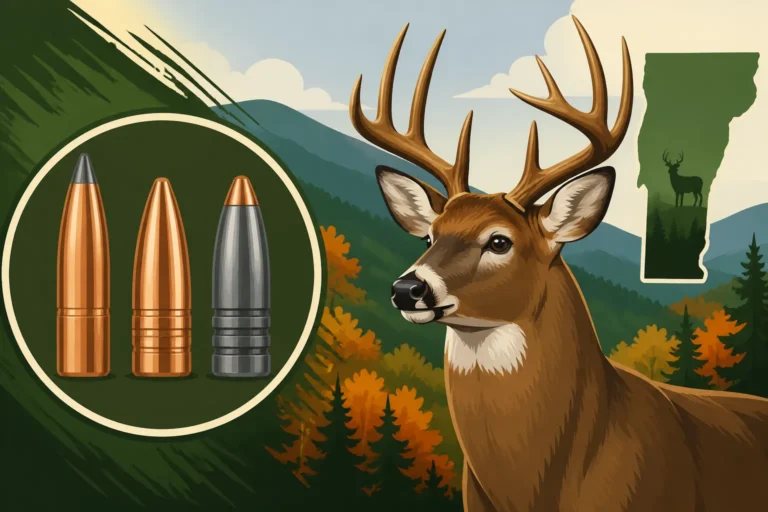
When you're gearing up for a Vermont whitetail hunt, especially with a bow, the sheer number of broadhead options out there can feel overwhelming. It’s not just about what looks cool or what your buddy swears by; it's about what's going to perform reliably when that mature buck steps out of the thick hardwoods into a shooting lane you’ve spent months perfecting. Many hunters get frustrated trying to sort through the marketing hype versus real-world performance, knowing that a poor choice can lead to a lost animal and a heavy heart. This guide aims to cut through that noise, helping you understand the critical factors for selecting the best broadhead for a clean, ethical harvest of a Vermont whitetail.
The Unique Challenges of Hunting Vermont Whitetails
Hunting deer in Vermont isn't like hunting in some wide-open, agricultural states. We've got a lot of thick cover, rolling hills, steep terrain, and often, less-than-ideal weather conditions. These environmental factors, combined with the characteristics of our whitetail deer, mean your broadhead choice is more critical than ever.
Understanding Vermont Deer Anatomy and Habitat
Vermont whitetails, while generally not as large-bodied as their cousins in the Midwest, are still incredibly resilient animals. They've adapted to navigating dense mixed forests, from the cedars of the Champlain Valley to the beeches and maples of the Green Mountains. This means that a clean pass-through is paramount, especially if a deer bolts into a tangle of blowdowns or a deep ravine. Their bone structure is robust, particularly the shoulder and rib cage. A broadhead needs to be able to punch through hide, muscle, and potentially bone to reach the vitals effectively.
Think about the places you hunt here in Vermont. Are you sitting a field edge, where shots might be longer and deer could be moving quickly? Or are you nestled deep in a cedar swamp, anticipating a close-quarters shot through a small window? These scenarios directly impact the type of penetration and cutting diameter you might prioritize. A whitetail that takes an arrow and immediately dives into a spruce thicket presents a much tougher tracking job if your broadhead didn't do its job thoroughly. For more on how deer move in these areas, check out Where Vermont Bucks Bed in Thick Cover.
Variable Shot Angles in Mountainous Terrain
One of the biggest realities of hunting Vermont's landscape is the variable shot angle you'll encounter. Whether you're in a treestand overlooking a logging road or still-hunting a steep ridge, you might find yourself with opportunities for quartering-away, quartering-to, or even sharply downward shots. This isn't always the perfect broadside you dream about on the range. A broadhead must perform consistently, regardless of the angle of impact. It needs to maintain structural integrity and deliver maximum damage through differing tissue densities.
Consider a scenario where a buck is feeding below you on a steep hillside. Your arrow's trajectory will be sharply downward, and the broadhead will need to penetrate through the top of the lung and potentially exit low on the opposite side. This demands a broadhead that tracks straight and doesn't deflect easily, ensuring a lethal hit even when the shot isn't perfectly flat. For strategies on navigating this challenging terrain, consider reading Wind and Thermals in Steep Green Mountain Terrain.
Fixed-Blade Versus Mechanical Broadheads for Vermont Deer
This is the age-old debate in bowhunting, and for good reason. Both fixed-blade and mechanical (or expandable) broadheads have their fervent supporters and their detractors. Understanding the core differences and how they relate to the conditions here in Vermont is key to making an informed choice.
Fixed-Blade Broadheads: Reliability in the Woods
Fixed-blade broadheads are, by design, simple and robust. They consist of a solid ferrule with blades that are rigidly attached and do not move. This simplicity is their greatest strength. Because there are no moving parts, there's less to go wrong. They are generally known for exceptional penetration, especially on bone, as all the force of the arrow is directed into pushing the fixed blades through.
Many seasoned Vermont hunters swear by fixed blades for their reliability in dense cover and for their ability to punch through the shoulder blade of a deer that might be slightly quartered to them. You don't have to worry about blades deploying prematurely or failing to open upon impact. However, some fixed blades can be less forgiving of tuning issues with your bow, and if your bow isn't perfectly tuned, they might plane or fly inconsistently, especially at longer distances. For hunting those thick, brushy areas where a clean pass-through is crucial for tracking, a well-chosen fixed blade is often the go-to. If you're Hunting a Funnel Between Two Woodlots, for example, you'll want maximum penetration in case a deer gets hit a bit forward and into the shoulder.
Here's a quick comparison of general types:
| Broadhead Type | Pros | Cons | Best Use Cases in Vermont |
|---|---|---|---|
| Fixed-Blade | Excellent penetration, robust, reliable. | Can be less forgiving of bow tuning issues. | Dense cover, potential for bone hits, any angle. |
| Mechanical | Excellent flight, large cutting diameter. | Can have deployment issues, less penetration. | Open field edges, perfect broadside shots. |
Mechanical Broadheads: Accuracy and Larger Cutting Diameter
Mechanical broadheads were designed to address the flight characteristics of fixed blades. With their blades folded back during flight, mechanicals typically fly much more like a field point, making them incredibly accurate, especially for hunters who struggle to get fixed blades to tune perfectly with their setup. Upon impact, the blades deploy, often resulting in a significantly larger cutting diameter than most fixed blades. This larger cutting diameter theoretically creates a bigger wound channel, leading to a quicker blood trail and a faster recovery.
The allure of a massive cutting diameter is strong, particularly for those hunting open areas where shots might be a little longer, like when you're Hunting a Champlain Valley Dairy Farm Edge. However, the trade-off can be penetration. Mechanicals use some of the arrow's kinetic energy to deploy their blades, and the deployed blades themselves create more resistance during penetration. This means they might not perform as well on bone or get full pass-throughs on larger-bodied deer, especially if your bow's kinetic energy is on the lower side. Hunters must ensure their bow setup generates enough kinetic energy to ensure reliable deployment and adequate penetration with a mechanical broadhead. Always check your bow's specific energy output before committing to a mechanical.
Factors to Consider When Choosing Your Broadhead
Beyond the fixed vs. mechanical debate, several other critical factors play a huge role in broadhead performance for Vermont whitetails. Don't overlook these details; they can make or break your hunt.
Bow Setup and Kinetic Energy
Your bow's setup is arguably the most crucial factor influencing broadhead performance. A broadhead, no matter how well-designed, can only perform as well as the energy delivered to it by your arrow. For serious penetration, especially with mechanical broadheads or if you anticipate bone hits, you need sufficient kinetic energy (KE) and momentum. Draw weight, arrow weight, and draw length all contribute to your bow's KE. Generally, hunters aiming for reliable performance on whitetails should strive for at least 50-60 ft-lbs of kinetic energy, though more is always better for maximizing penetration and ensuring pass-throughs.
For instance, if you're shooting a lighter draw weight or lighter arrows, a more efficient fixed-blade design might be a better choice to conserve that precious energy for penetration. Conversely, a hunter with a high-performance bow pushing heavy arrows might have more leeway to choose a mechanical broadhead with a larger cutting diameter. Knowing your setup's capabilities, perhaps by using online calculators or resources like those found on GoHunt, can guide your decision-making. Don't just assume your bow is "fast enough"; do the math and understand your setup.
Arrow Tuning and Flight Characteristics
Achieving perfect arrow flight is non-negotiable for broadhead accuracy. A broadhead acts like a rudder on your arrow, and if your arrow isn't leaving the bow perfectly straight, that broadhead will amplify any wobble or inconsistency, causing erratic flight. This is where the term "broadhead tuning" comes in. With fixed-blade broadheads, tuning is often more critical, as the larger surface area of the fixed blades can catch air and cause planning if the arrow isn't perfectly tuned to your bow.
Mechanical broadheads, due to their smaller profile in flight, tend to be more forgiving of slight tuning imperfections and often fly more like a field point. However, more forgiving doesn't mean perfect. You should always broadhead tune your bow, regardless of the broadhead type, to ensure that your broadheads are hitting the same spot as your field points at all hunting distances. Spend time at the practice range, shooting your actual broadheads, not just field points. This practice ensures confidence when that trophy buck steps out. Consistent arrow flight is especially important when you're trying to make a precise shot after a long climb up to a Green Mountain Ridgeline Public Access.
Blade Material and Construction
The quality of the broadhead's construction and the material of its blades are vital. You want blades that are razor-sharp out of the package and will stay sharp through hide and bone. Stainless steel is common, but the specific alloy and heat treatment can vary, affecting edge retention and strength. Some broadheads feature replaceable blades, which is a cost-effective way to refresh sharpness after practice or if a blade gets nicked.
Look for a broadhead with a sturdy ferrule that won't bend or break on impact. The connection of the blades to the ferrule is also critical; you don't want blades to fold or break off when they encounter resistance. For fixed blades, a one-piece construction or a very robustly designed multiple-piece construction typically offers the most durability. For mechanicals, examine the deployment mechanism and ensure it's simple and reliable. A broadhead that fails structurally upon impact is a failed broadhead, regardless of its flight characteristics.
Ethical Considerations and Field Performance
Ultimately, the goal of any bowhunter is a quick, humane, and ethical harvest. Your broadhead choice plays a monumental role in achieving this. It's not just about killing the deer, but about ensuring it happens as swiftly and cleanly as possible.
Achieving a Quick, Humane Harvest
A quick, humane harvest means delivering a broadhead that creates sufficient tissue damage to cause rapid blood loss and organ failure. This translates to effective cutting diameter and excellent penetration. While mechanicals offer a larger cutting diameter, penetration is still key to getting through both sides of the animal, maximizing blood loss, and creating an exit wound for a better blood trail. A pass-through is always ideal, as it allows blood to escape from both sides of the animal, making tracking significantly easier.
Consider the potential for hitting a rib or, less ideally, a shoulder blade. A robust broadhead, whether fixed or mechanical (if designed for higher kinetic energy bows), needs to be able to sever arteries, veins, and damage vital organs without failing structurally. The goal is to incapacitate the animal quickly, reducing suffering and making recovery straightforward. This commitment to ethical hunting is a core part of being a responsible hunter in Vermont. For more on the reporting aspect of this, you'll find The Vermont Deer Reporting Deadline an important read.
Testing and Practice
You wouldn't head into the woods with a rifle you haven't sighted in, and the same principle applies to broadheads. Testing and practice are absolutely essential. Shoot your chosen broadheads at various distances you expect to encounter in the field. This not only confirms your bow's tuning and the broadhead's flight but also builds your confidence. Many hunters keep a separate set of broadheads for practice and then outfit their hunting arrows with fresh, sharp blades for the season.
When practicing, don't just shoot at a flat target. If possible, shoot at an old foam block or a specific broadhead target designed to simulate animal tissue. Observe how the broadhead penetrates, how it exits, and whether it maintains its integrity. If you're using mechanicals, verify that the blades are deploying reliably. Don't be afraid to experiment with a few different brands or types of broadheads to find what flies best out of your specific bow and what you have the most confidence in. This is part of the preparation process that GoHunt and similar platforms advocate for, helping hunters refine their gear choices. Every bit of practice ensures you're ready when the moment of truth arrives.
Maintaining Your Broadheads for Peak Performance
Even the best broadhead is only as good as its condition. Proper maintenance is often overlooked but is absolutely vital for ensuring your broadheads perform as intended in the field.
Sharpness: The Key to Success
A dull broadhead is an unethical broadhead. Period. Sharpness is paramount for quick, clean penetration and maximum cutting efficiency. A razor-sharp edge slices through hide and tissue with minimal resistance, whereas a dull edge pushes and tears, requiring more energy to penetrate and causing less damage. Think about how easily a sharp knife cuts through a tomato versus a dull one that just squishes it. The same principle applies here.
Before every hunt, and certainly before inserting a broadhead into your quiver, inspect the blades. Are they factory sharp? If not, sharpen them or replace them. Many fixed-blade broadheads can be sharpened with a fine diamond stone or ceramic sharpener. For mechanicals with replaceable blades, simply swapping in a new set of blades ensures maximum sharpness. This small step can make a huge difference in the field, contributing to that swift, ethical kill we all strive for. This diligence is especially important if you're hunting during Vermont's New Archery-During-Rifle Overlap Rule, where every advantage counts.
Inspection for Damage and Wear
Broadheads can take a beating, even from just riding in a quiver or being handled during practice. Always inspect your broadheads for any signs of damage or wear before a hunt. Look for bent ferrules, cracked blades, loose components (on mechanicals), or dull spots on the cutting edges. Even a minor imperfection can compromise performance.
If a fixed-blade broadhead has been shot into a hard target or impacted something tough, check for any deformation of the tip or slight bends in the blades. For mechanical broadheads, ensure that the deployment mechanism is free of debris and that the O-rings or retention clips are in good condition. If you find any significant damage, it's best to replace the broadhead. You've invested time and effort into your hunt; don't let a compromised broadhead be the weak link in your setup. Sometimes, a practice broadhead might look okay after a few shots, but a detailed inspection might reveal tiny stress fractures that you wouldn't want to risk on a live animal.
Final Thoughts on Broadhead Selection
Choosing the best broadhead for a Vermont whitetail is a deeply personal decision, influenced by your bow setup, hunting style, and confidence in your gear. There isn't one "magic" broadhead that works for everyone. The most important thing is to select a broadhead you trust, one that you've practiced with extensively, and one that aligns with your commitment to an ethical hunt.
Whether you lean towards the tried-and-true reliability of a fixed blade or the forgiveness and cutting diameter of a mechanical, ensure your choice is backed by rigorous testing and a thorough understanding of its performance characteristics. Vermont's deer and terrain demand nothing less. Take the time to research, practice, and prepare, and you'll be well on your way to a successful and rewarding season in the Green Mountains. For more comprehensive gear guidance, consider exploring resources on Gear for a Vermont Moose Hunt or Broadheads and Arrows for Vermont Archery, as many principles overlap.
Disclaimer
This article is for general informational purposes only and does not constitute professional advice. Laws, prices and regulations vary by location and change over time. Consult a qualified professional for guidance on your specific situation.