Best Water Filter for a Backcountry Moose Camp
Venturing deep into Vermont's wilder corners for a moose hunt can be an incredible experience, but the physical demands, especially packing out a massive animal, are intense. The last thing you need is to be sidelined by stomach issues from bad water, or worse, run completely dry far from civilization. This guide will walk you through the critical importance of reliable water filtration for your backcountry moose camp and help you choose the best system to keep you hydrated and healthy.
The Absolute Necessity of Reliable Water Filtration in Vermont's Backcountry
When you’re deep in the Northeast Kingdom, miles from the nearest road, your well-being hinges on a few critical factors: your gear, your navigation skills, and your access to safe drinking water. It’s easy to assume that crystal-clear mountain streams are safe, but that's a gamble no serious hunter should take. The consequences of poor water hygiene in the backcountry can swiftly turn an epic hunt into a miserable, even dangerous, ordeal.
Think about the sheer effort involved in a moose hunt – the scouting, the heavy pack, the tracking through thick timber, and the monumental task of Packing Out a Vermont Moose. Every one of these activities demands peak physical condition, and dehydration or illness from contaminated water can sap your strength faster than anything. A simple stomach bug, far from any medical help, isn’t just uncomfortable; it’s a genuine threat to your safety and the success of your hunt.
The Hidden Dangers of Untreated Backcountry Water
Even the most pristine-looking water sources in Vermont's backcountry can harbor microscopic threats. We're talking about bacteria like E. coli, protozoa such as Giardia and Cryptosporidium, and even viruses in some cases. These aren't visible to the naked eye, and they don't necessarily make the water look or taste bad. They are silent, invisible enemies that can wreak havoc on your digestive system.
Imagine being several days into your hunt, finally having that bull moose in your sights, only to be hit with severe cramping, diarrhea, and vomiting. Not only would you be unable to focus on the hunt, but the rapid fluid loss could lead to serious dehydration, making it difficult to even walk out of the woods. It’s a scenario that's entirely preventable with the right precautions. Many experienced hunters in Vermont have a story about a time they got complacent with water, and they’ll all tell you the same thing: never again.
Why a Moose Camp Demands Robust Hydration
A moose hunt isn't just a day trip; it often involves setting up a backcountry camp for several days, pushing deep into remote areas like those found in the Green Mountain National Forest's Two Districts or the sprawling timberlands of the Northeast Kingdom. This means you're not just needing water for drinking on the go; you need it for cooking, cleaning small items, and replenishing your body after long, strenuous days. A quick sip from a squeeze filter won't cut it when you need to rehydrate after packing out quarters of meat.
The sheer volume of water required adds another layer of complexity. An average person needs at least a gallon of water per day for drinking, cooking, and hygiene in camp, and that need only escalates with heavy exertion. For a multi-day hunt, carrying enough water from the trailhead is simply not feasible. That's where a reliable, high-capacity water filtration system becomes an indispensable piece of your Gear for a Vermont Moose Hunt. It allows you to tap into local water sources safely, turning what could be a critical vulnerability into a sustainable resource.
Deciphering Water Filter Types for Your Vermont Moose Hunt
When it comes to filtering water in the backcountry, there's no one-size-fits-all solution. Each type of filter has its own strengths and weaknesses, making some more suitable for a static moose camp, while others shine for mobile, spot-and-stalk hunting. Understanding these differences is key to making an informed choice that matches your hunting style and the demands of a Moose Hunting Vermont's Northeast Kingdom adventure.
You’ll find a range of technologies, from mechanical filters that physically strain out contaminants to chemical treatments that kill them. Often, a combination of methods offers the most robust defense, especially when dealing with potentially murky water or unexpected situations.
Pump Filters: Tried, True, and Tough
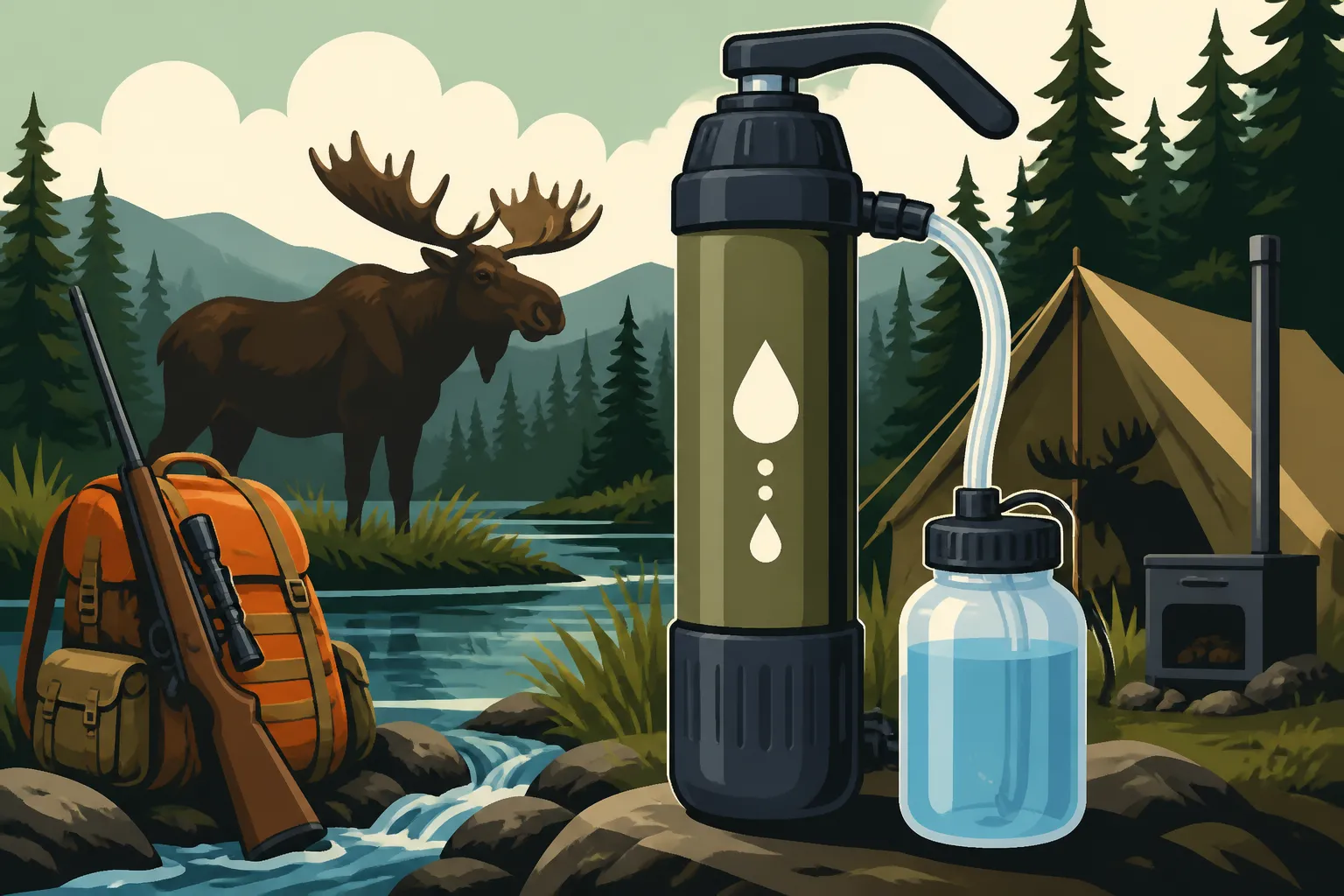
Pump filters are the workhorses of backcountry water purification. They consist of a ceramic or fiber filter element housed within a pump mechanism. You drop one hose into the water source, and with a few pumps, clean water flows out into your bottle, reservoir, or pot. They're generally very durable, capable of handling dirty water without immediately clogging, and many allow for field cleaning of the filter element.
One of the biggest advantages of pump filters is their versatility. You can use them to filter water directly into almost any container, and they offer a good flow rate, making them suitable for filling up multiple water bottles or a cooking pot relatively quickly. Brands like MSR and Katadyn have been making reliable pump filters for decades, trusted by hunters and backpackers worldwide. The downside can be the physical effort required for pumping a large volume of water, which can become tiring after a long day in the woods, but for consistent, reliable filtration at a base camp, they are hard to beat.
Gravity Filters: Effortless Volume for Camp
If your moose camp is relatively stationary for a few days, a gravity filter might be your best friend. These systems typically involve two bags: a dirty water bag and a clean water bag, connected by a filter. You fill the dirty bag from your water source, hang it higher than the clean bag, and let gravity do the work. Water slowly drips through the filter and collects in the clean bag.
The beauty of gravity filters is their hands-free operation and high volume. You can fill the dirty bag, hang it up, and go about other camp chores while your water filters. This is invaluable when you need to process several liters for cooking, drinking, and perhaps even some personal hygiene over the course of an evening or morning. While they may not be ideal for quick fills on the move, their capacity and ease of use make them perfect for a base camp scenario, especially when you need to Packing for a Northeast Kingdom Moose Hunt where sustained hydration is paramount.
Squeeze Filters: Lightweight and Versatile Solutions
Squeeze filters have revolutionized lightweight backcountry travel. These compact, often pocket-sized filters typically screw onto a water bottle or a hydration bladder hose. You fill a soft-sided pouch with dirty water, attach the filter, and then squeeze the pouch to force water through the filter directly into your mouth or another container. Many also allow for inline filtration with a hydration bladder.
Their primary advantages are their minimal weight, compact size, and speed for on-the-go hydration. They're perfect for day hunts from a base camp, quick refills while tracking, or as a personal filter for each hunter in a group. However, their flow rate can slow down significantly with dirty water, and they don't typically offer the high-volume output of gravity or even some pump filters for camp needs. Still, for personal hydration and a quick, reliable sip while Hunting a Drawn Moose Zone in the Northeast Kingdom, they are an excellent choice. Sawyer and Katadyn offer popular models in this category.
Chemical Treatments and UV Purifiers: Backups or Niche Uses
Beyond mechanical filters, chemical treatments (like iodine tablets or chlorine dioxide drops) and UV purifiers (like the SteriPEN) offer alternative methods. Chemical treatments work by killing bacteria, viruses, and protozoa over a set period, usually 30 minutes to a few hours. They are incredibly lightweight and compact, making them ideal as emergency backups or for ultra-light trips where every ounce counts. The downside is the wait time, and some people dislike the taste that iodine can impart.
UV purifiers use ultraviolet light to neutralize pathogens, again killing bacteria, viruses, and protozoa. They are fast, requiring only about 60-90 seconds per liter, and don't affect the water's taste. However, they require batteries and are less effective in murky or heavily sedimented water, as the UV light needs to penetrate the water clearly. Neither chemical treatments nor UV purifiers remove particulates or improve the aesthetic quality of very dirty water, which is a key consideration when drawing from puddles or silty streams. For a backcountry moose camp, these are generally best used as a backup to a primary filter, or in conjunction with a pre-filter cloth if the water source is questionable.
Here's a quick comparison of the main filter types:
| Filter Type | Ideal Use Case | Pros | Cons | Typical Flow Rate | Best for Moose Camp? |
|---|---|---|---|---|---|
| Pump | Base camp, filling multiple containers | Durable, handles dirty water, field cleanable | Manual effort, can be slower for very large volumes | Moderate | Yes, excellent |
| Gravity | Static base camp, high volume needs | Hands-free, high volume, effortless | Slower initially, requires hanging space, not for on-the-go | Slow to Fast | Yes, excellent |
| Squeeze | On-the-go, personal hydration, day hunts | Lightweight, compact, fast for small volumes | Flow rate decreases with dirty water, lower volume for camp | Fast (small vol) | Good (personal use) |
| Chemical | Emergency backup, ultra-light, clear water | Very lightweight, no mechanical parts | Wait time, can affect taste, doesn't remove particulates | N/A (wait time) | Good (backup) |
| UV Purifier | Clear water, emergency backup | Fast, no taste alteration, kills viruses | Requires batteries, ineffective in murky water | Fast | Good (backup/clear) |
Selecting and Caring for Your Backcountry Water Filter
Choosing the right water filter is about more than just picking a brand off the shelf; it's about understanding your specific needs for a challenging hunt like chasing moose in Vermont. Once you have your system, knowing how to properly maintain it in the field and planning your overall water strategy will ensure you stay hydrated and healthy throughout your adventure. This thoughtful approach extends to all aspects of your backcountry planning, from your Best Backpack Frame for a Quartered Moose to your emergency communication.
Matching a Filter to Your Moose Hunting Style
Consider how you hunt. Are you establishing a main camp and making day forays? A gravity filter or a robust pump filter would be ideal for your primary camp needs, providing plenty of water for cooking and refilling larger bladders. You might then carry a smaller squeeze filter for quick hydration when you're actively tracking or still-hunting through the timber. This dual approach offers flexibility and redundancy, which is always wise in the backcountry.
If your hunt is more mobile, perhaps a two-person operation constantly on the move, a high-quality pump filter that's relatively quick to deploy might be better, supplemented by individual squeeze filters. Evaluate the terrain you expect to encounter. The Northeast Kingdom can have everything from clear mountain springs to beaver bogs and slower-moving streams, which might be silty. A filter capable of handling dirtier water without instantly clogging, and that can be easily backflushed or cleaned in the field, will be a lifesaver. Using tools like GoHunt to scout potential water sources on aerial maps before you ever set foot in the woods can also significantly streamline your planning and help you choose the right filter.
Essential Maintenance for Longevity in the Field
A water filter is only as good as its maintenance. The most critical step is regular backflushing or cleaning of the filter element. Most pump and squeeze filters come with a syringe or specific instructions for flushing out accumulated sediment and debris. This isn't just about flow rate; it's about extending the life of your filter and ensuring it continues to remove contaminants effectively. Make sure you understand this process before you leave for your hunt.
Freezing is another silent killer of water filters. If water freezes inside the filter element, it can expand and damage the delicate internal structure, rendering the filter ineffective and unsafe. This is a real concern during late-season hunts in Vermont. Always keep your filter in a warm place, such as inside your sleeping bag at night, or close to your body during the day, especially when temperatures dip towards freezing. If you suspect your filter has frozen, it’s best to err on the side of caution and not trust it for purification. Always carry a backup, even if it's just a small bottle of chemical treatment, for situations like this.
Planning Your Water Strategy Beyond Just the Filter
While a good water filter is paramount, it's part of a larger water strategy. Think about how you'll collect water, transport it, and store it at camp. Carrying a collapsible water bucket or a large-mouthed scoop can make collecting water from shallow streams or puddles much easier than trying to dip a small bottle. Having multiple water bottles or a large hydration reservoir for your pack, along with a dedicated reservoir for camp, allows you to filter a large batch at once and store it for later.
Consider your entire hydration system. Do you prefer a hydration bladder for your main pack? Ensure your chosen filter can either attach directly in-line or easily fill your bladder. For a multi-day hunt, having a Best Water Filter for a Backcountry Moose Camp is crucial, but so is having durable bottles and a way to carry adequate reserves. Remember that cold weather can actually mask your thirst, so make a conscious effort to drink regularly, even when you don't feel parched. Planning your route with potential water sources in mind, perhaps identified through topographical maps or the GoHunt app, can also reduce the amount of water you need to carry initially and optimize your re-supply points. Always assume the unexpected will happen, and prepare your water plan accordingly.
Disclaimer
This article is for general informational purposes only and does not constitute professional advice. Laws, prices and regulations vary by location and change over time. Consult a qualified professional for guidance on your specific situation.