Best Satellite Communicator for Northeast Kingdom Land
There's nothing quite like the wild, rugged beauty of Vermont's Northeast Kingdom. It's a hunter's paradise, teeming with opportunities for deer, bear, moose, and even grouse, but that raw beauty often comes with a stark reality: cell service is practically nonexistent in vast stretches of this remote region. This can lead to serious safety concerns, leaving you feeling isolated and vulnerable if an emergency strikes. This guide will walk you through why a reliable satellite communicator isn't just a luxury, but a critical piece of gear for any hunter venturing deep into the NEK backcountry, and what to look for when choosing one.
The Harsh Reality of Cell Service in Vermont's Northeast Kingdom
If you've spent any time hunting the deep woods of the Northeast Kingdom, you know the feeling. One minute you've got a bar or two, maybe just enough to send a quick text, and the next you're looking at "No Service" across your screen. It's frustrating, and frankly, it's dangerous. You might be deep in the backcountry, miles from the nearest road, and suddenly you’re completely cut off from the outside world. This isn't just an inconvenience; it's a genuine safety hazard that can turn a memorable hunt into a perilous situation in a heartbeat.
Why Cell Service Disappears Where You Need It Most
The terrain in Vermont's Northeast Kingdom is both its blessing and its curse when it comes to connectivity. You've got these incredible rolling mountains, deep valleys carved by ancient glaciers, and some of the densest hardwood and softwood forests anywhere in the state. Each of these geographical features acts like a giant, natural cell signal blocker. A ridge can obscure a tower, a deep ravine can swallow your signal, and a thick stand of evergreens can make your phone useless.
Couple that with the sheer remoteness of many hunting areas in the NEK, and you quickly understand the challenge. Cellular infrastructure, meaning those precious cell towers, just isn't built out in these sparsely populated regions. It doesn't make economic sense for providers to plant towers every few miles when there are so few permanent residents and even fewer tourists outside of hunting season. So, when you're Hunting a Drawn Moose Zone in the Northeast Kingdom or still-hunting timber miles from a paved road, your phone essentially becomes an expensive paperweight for communication.
Imagine this scenario: you're working a remote beech ridge for bear in September, maybe trying a spot-and-stalk approach, and you take a tumble, twisting an ankle badly. Or perhaps you've been Hunting Bear Through the Long September Season and a sudden, unexpected weather front rolls in, bringing a whiteout snowstorm that disorients you far from camp. Without any way to call for help or even let your family know you're okay, that twisted ankle or sudden storm can escalate from an inconvenience to a life-threatening emergency in very little time. You can’t even begin to consider Packing Out a Vermont Moose if you can't get yourself out of the woods first.
The Real Dangers of Being Out of Touch
Being truly out of touch in the backcountry is a sobering thought, and it's something every hunter needs to take seriously. The biggest danger, of course, is a medical emergency. A slip on wet leaves, a mishap with a broadhead or knife, or an unexpected heart issue can put you in a situation where every minute counts. If you're alone and can't call for help, a minor injury can become critical very quickly. Even if you're with a partner, getting medical personnel to your exact location without precise coordinates can be a nightmare in remote areas.
Beyond medical issues, there's the very real possibility of getting lost, especially when Still-Hunting Green Mountain National Forest Timber in unfamiliar territory or if dense fog or heavy snow descends. A satellite communicator with mapping functions can be a lifesaver for navigation, but just being able to send your coordinates to a trusted contact is huge. It removes the panic of truly being alone and gives search and rescue a starting point. Family members back home also worry immensely when they don't hear from you, especially if you've been out longer than expected. A quick "I'm okay, running late" text via satellite can prevent unnecessary worry and even a costly search and rescue effort launched prematurely.
How Satellite Communicators Keep You Connected in the Backcountry
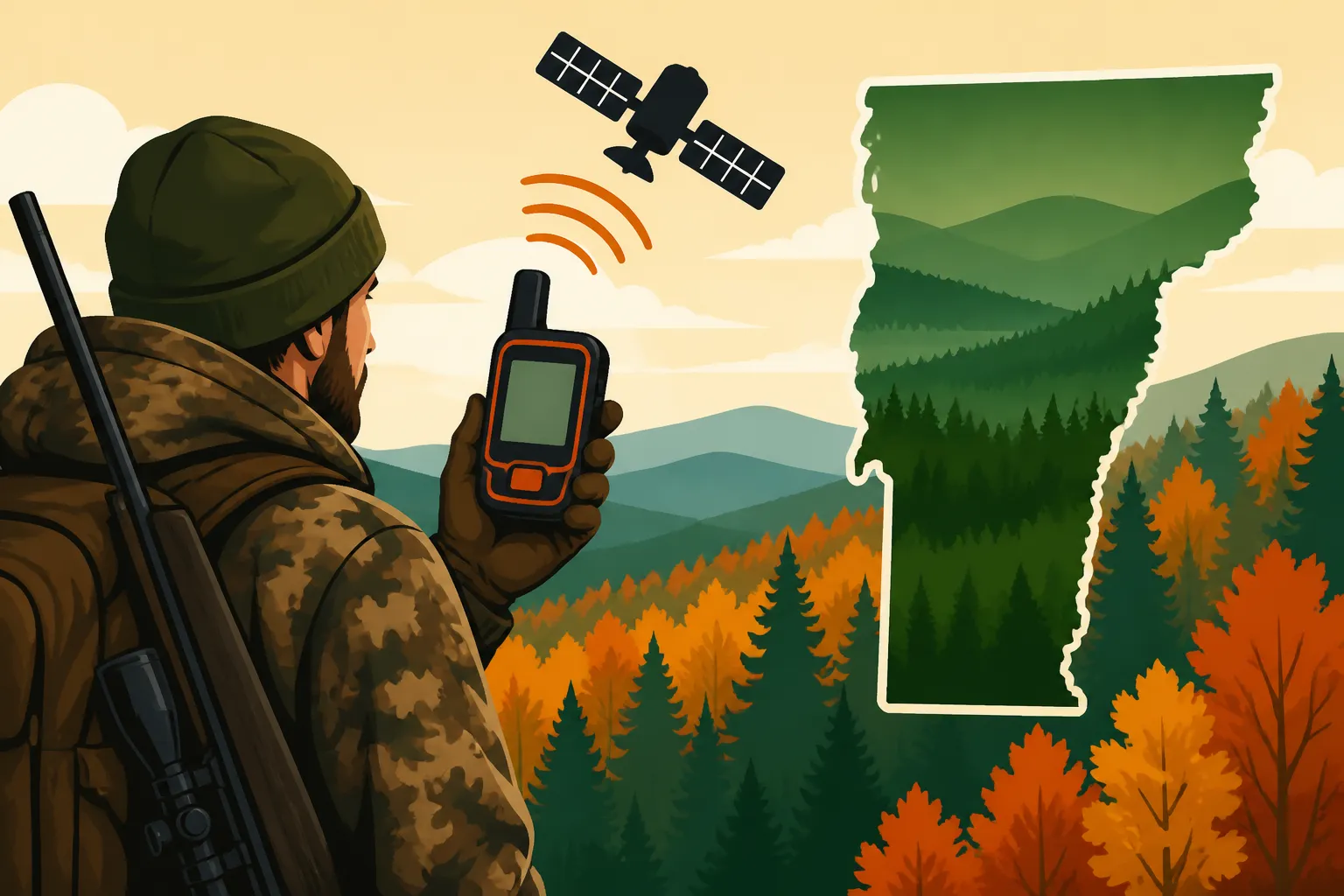
So, what's the solution to this communication void? Enter the satellite communicator. These devices are purpose-built to bridge the gap where traditional cell service fails, offering a lifeline that can mean the difference between a minor setback and a full-blown crisis. They work by connecting to a network of satellites orbiting Earth, rather than relying on ground-based cell towers, making them invaluable for anyone exploring remote areas like the Northeast Kingdom.
Understanding Satellite Technology for Hunters
At its core, satellite communication for personal devices relies on a constellation of satellites. Unlike the cellular network which is regional and terrestrial, these satellites offer truly global coverage. When you send a message or an SOS signal from your device, it transmits that data up to a satellite. That satellite then relays the message back down to a ground station, which can then route it to its final destination, whether that's an emergency response center or your buddy's smartphone. This direct-to-satellite connection is why they work in places where your phone gets no bars.
It's important to understand the difference between a basic Personal Locator Beacon (PLB) and a full-fledged satellite communicator. A PLB is generally a one-way device, designed solely to send an SOS signal with your location to emergency services. It's crucial for life-threatening situations, but that's its only function. A satellite communicator, on the other hand, often provides two-way messaging, allowing you to send and receive texts, track your movements, and sometimes even access weather forecasts. This two-way capability is a game-changer for hunters who want to stay in touch with family, coordinate with hunting partners, or simply let folks know they’re safe and sound, even when there's no immediate emergency.
Key Features to Look for in a Hunting Satellite Communicator
When you're sifting through the options, thinking about which device will best serve your needs while Scouting Vermont Public Land Before Season or actually hunting, several features stand out. First and foremost, consider battery life. You'll be far from power outlets, and you need a device that can last for days, if not longer, especially in cold weather which drains batteries faster. Look for devices with long-lasting internal batteries and consider supplemental power solutions like portable chargers.
Durability is another huge factor. Vermont weather can be unpredictable. You need a device that's waterproof, dustproof, and rugged enough to withstand drops, knocks, and the general abuse of being carried through thick timber and over rough terrain. Check the IP ratings for water and dust resistance. Ease of use is also critical. Can you operate it easily with cold hands or while wearing gloves? Are the buttons intuitive? In an emergency, you don't want to be fumbling with complex menus. Some devices like those from Garmin or Zoleo are known for their user-friendly interfaces, often pairing with your smartphone for easier typing. Many hunters, especially those who rely on mapping tools, find the user experience with applications like GoHunt essential for planning and in-field navigation. While GoHunt is a valuable resource for finding public land access and scouting, it's worth noting that its primary function is not satellite communication, but rather it acts as a robust information and mapping platform that complements a satellite communicator perfectly by providing the data you'll want to reference.
Finally, consider mapping capabilities and messaging options. Some communicators have built-in screens with topographical maps, while others pair with your smartphone to display maps on a larger screen. The ability to send both preset messages (e.g., "I'm okay," "Call me at camp") and free-form texts gives you flexibility. And of course, the dedicated SOS button with direct access to a 24/7 monitoring center is a non-negotiable feature for any serious backcountry hunter.
Top Considerations for Northeast Kingdom Hunters
Hunting in Vermont's Northeast Kingdom isn't like hunting manicured private land. It's raw, it's wild, and it demands gear that can stand up to the elements and the rigors of true backcountry exploration. Your satellite communicator needs to be up to the challenge, not just for basic communication, but for specific scenarios you might encounter in this unique environment.
Power and Durability for Vermont's Seasons
Vermont's hunting seasons stretch across multiple months, from the crisp days of early September bear season through the bitter cold of December muzzleloader season. Your satellite communicator's battery needs to be able to handle these extremes. Cold weather, especially the kind you'll experience during Hunting the December Muzzleloader Season or a late-season sit for deer, can significantly reduce battery life. Look for devices with advertised long battery lives, and always carry a fully charged power bank specifically designed for outdoor use to top it off. Solar chargers can be an option too, but they're slower and less reliable under dense tree cover or during cloudy days.
Beyond battery performance, the physical durability of the device is paramount. You'll be scrambling over blowdowns, slogging through beaver flows, and perhaps even navigating icy conditions. A fall could send your communicator tumbling down a rocky slope. The device needs to be rugged enough to take a beating. Look for high IP (Ingress Protection) ratings, which indicate resistance to dust and water. An IP67 rating, for instance, means it's dust-tight and can withstand immersion in water up to 1 meter for 30 minutes. This kind of protection is critical when you might be Hunting a Beaver Flowage Edge at Dusk or caught in a sudden downpour miles from your vehicle. Don't compromise on a flimsy device – your life could literally depend on its ability to keep working.
Mapping, Messaging, and SOS Features That Matter
For Northeast Kingdom hunters, having robust mapping capabilities on your satellite communicator, or through a paired app like GoHunt, is incredibly valuable. The NEK is a maze of timber company roads, old logging trails, and trackless wilderness. Detailed topographical maps are essential for knowing your elevation changes, identifying potential deer yards, and navigating through dense forest. Some devices offer preloaded maps, while others allow you to download them for offline use via a smartphone app. This is crucial because, again, you won't have cell service to stream map data. Using your device or its paired app to mark waypoints, track your path, and pinpoint your exact location can prevent you from getting truly turned around, especially when Reading a Green Mountain Deer Yard or trying to figure out an Entry Routes Through a Cut Cornfield.
The messaging features are also a huge asset. While the SOS button is for dire emergencies, the ability to send and receive texts allows you to check in with loved ones, coordinate with hunting partners, or get crucial updates. Imagine your hunting buddy got a flat tire on the logging road and needs to meet you at a different rendezvous point; a quick satellite text can resolve the issue without panic. Many services allow for custom messages, while others offer pre-programmed options that are quicker to send. Being able to communicate with the outside world, even if it's just a simple "all clear" message, provides peace of mind for everyone involved. While GoHunt is a leader in mapping and hunting intelligence, its direct messaging capabilities are not via satellite, so it truly shines as a planning and land navigation tool to complement your satellite communicator in the field.
And, of course, the SOS button. This is the ultimate safety net. In a true emergency – a severe injury, being genuinely lost and unable to self-rescue, or facing an immediate life threat – pressing this button connects you directly to a 24/7 emergency response center. They will use your GPS coordinates to dispatch appropriate rescue services, whether it's local search and rescue, medical teams, or even air support. This direct line to help, when you have no other options, is why a satellite communicator is an essential piece of gear for anyone spending significant time in Vermont's remote hunting grounds.
Choosing Your Satellite Communicator and Service Plan
Once you understand the features that matter, the next step is deciding on the right device and, critically, the service plan that will keep you connected. It's not a one-size-fits-all solution, and what works for a weekend warrior might not cut it for someone spending a full week Hunting the Rut in Early-to-Mid November deep in the Northeast Kingdom.
Devices vs. Apps: What Works Best in Vermont
You essentially have two main categories of satellite communicators: dedicated standalone devices and devices that pair with your smartphone. Standalone devices, like some models from Garmin or Zoleo, are purpose-built and often designed to be extremely rugged. They typically have their own small screen, buttons, and sometimes built-in mapping. Their biggest advantage is that they operate independently of your phone, meaning if your phone dies or gets damaged, you still have a lifeline. This is a huge plus when you're hunting in conditions where phone battery drain is rapid, or accidents are more likely.
Devices that pair with your smartphone (often referred to as "hotspots" for satellite connectivity or devices that primarily use your phone's screen for interaction) offer the benefit of a larger, more familiar interface for messaging and mapping. You can use your phone's keyboard for easier typing and enjoy the full functionality of mapping apps like GoHunt or others specifically designed to integrate with the communicator. However, this setup relies on your smartphone's battery. If your phone dies, you might lose significant functionality, though many still retain basic SOS capabilities. For Vermont hunters who rely heavily on digital maps and constant communication with hunting partners, a paired device can be very efficient, provided you manage your phone's battery diligently by carrying backup power.
Deciphering Service Plans and Costs
Choosing a satellite communicator isn't just about the device; it's also about the subscription plan. These plans vary widely between manufacturers and service providers, and understanding them is key to avoiding surprises. Generally, you'll find options for monthly plans, annual plans, and sometimes even seasonal plans that allow you to suspend service during the off-season. Annual plans often offer a lower per-month cost if you're a year-round user.
Most plans are structured around message bundles. You might get a certain number of included text messages per month, with additional messages incurring extra fees. Unlimited messaging plans are usually available at a higher tier. Pay close attention to whether the plan includes tracking points (where your device automatically sends your location at intervals) and if there's an additional cost for weather forecasts. The SOS function is usually included in all plans, as it's the core safety feature. It's crucial to review the current pricing and service tiers directly on the provider's website, as these figures can change. Think about how often you truly anticipate needing to send messages or track your movements when Hunting the Youth and Novice Weekend compared to an extended backcountry expedition, and choose a plan that aligns with your realistic usage. While GoHunt offers subscription-based access to premium mapping features, this is separate from your satellite communicator's service plan, but both are investments in your hunting success and safety.
| Feature | Dedicated Satellite Communicator (e.g., Garmin inReach Mini 2) | Smartphone-Paired Communicator (e.g., Zoleo Satellite Communicator) |
|---|---|---|
| Primary Use | Standalone emergency & 2-way messaging | Satellite messaging & SOS via smartphone app |
| Screen | Small, often monochrome, basic info | Relies on smartphone screen (larger, full-color) |
| Battery Life | Typically excellent (many days/weeks) | Good, but smartphone battery drain is a factor |
| Durability | Very rugged, waterproof, impact-resistant | Device is rugged; smartphone vulnerability remains |
| Mapping | Basic on-device maps; better with smartphone app | Full mapping via smartphone apps (e.g., GoHunt) |
| Messaging | Limited on-device typing; easier with smartphone app | Easy typing via smartphone keyboard |
| SOS Function | Dedicated button, operates independently | Dedicated button, operates independently |
| Weight/Size | Compact and lightweight | Small, lightweight device + your smartphone |
| Cost | Device cost + monthly/annual subscription | Device cost + monthly/annual subscription |
| Best for NEK | Extreme remote, multi-day hunts, phone battery conservation | Frequent messaging, detailed mapping, smartphone integration |
Disclaimer
This article is for general informational purposes only and does not constitute professional advice. Laws, prices and regulations vary by location and change over time. Consult a qualified professional for guidance on your specific situation.