Best Shooting Sticks for Open Farmland
There's nothing quite like the expansive beauty of Vermont's open farmland, whether it's a freshly cut hayfield stretching towards a distant woodline or a stubble cornfield waiting for a late-season whitetail. But that wide-open beauty often comes with a significant challenge for hunters: longer shot distances than you might typically encounter in the tight timber of the Green Mountains. Without a solid rest, these shots can feel daunting, leading to missed opportunities or, worse, an unethical hit. This guide is all about helping you conquer those open-country shots by exploring the best shooting sticks for Vermont's farmlands, ensuring you have the stability and confidence needed to make every shot count.
The Challenge of Long Shots on Vermont Farmland
When you picture deer hunting in Vermont, many folks immediately envision dense forests, thick brush, and shots that are often measured in yards, not hundreds of yards. And that's often true! Much of our state is heavily wooded. However, a significant portion of prime deer habitat, especially in areas like the Champlain Valley or parts of the Connecticut River Valley, consists of agricultural fields, pastures, and sprawling hayfields. These open areas can hold tremendous numbers of deer, drawing them out for feeding, but they also expose you to entirely different shooting scenarios.
Why Farmland Shots Demand Stability
Imagine you're tucked into a fencerow, watching a majestic buck step out into a vast cornfield at last light. He's at 150 yards, a distance that feels comfortable on a rifle range with a bench rest. But now you're standing, or perhaps kneeling, with no natural support in sight. The adrenaline is pumping, the wind is subtly tugging at your rifle, and your heart is pounding a rhythm against your ribs. This is where the difference between a clean shot and a regrettable miss often hinges on your ability to stabilize your firearm.
Hunting in these open environments means you're frequently presented with shots that extend beyond what's easily manageable with an unsupported standing or kneeling position. A small wobble at the muzzle translates to feet of deviation downrange. For ethical hunting, we owe it to the animal to make the cleanest, most accurate shot possible. Trying to freehand a rifle at 100+ yards, especially after a long walk or in cold weather, can be a recipe for disaster. This is the core pain point that shooting sticks are designed to alleviate. They bridge that gap between the stability of a bench rest and the reality of a dynamic hunting environment.
The Problem with Improvised Rests
Of course, we've all been there: trying to use a tree limb, a fence post, or even a backpack as an improvised rest. Sometimes it works, but often, these "rests" are less than ideal. A tree branch might be at the wrong height, forcing an awkward body position. A fence post might transmit vibrations, or be too rough on your rifle's stock. Your backpack, while perhaps offering some padding, is usually soft and squishy, allowing for unwanted movement. And what if there's no suitable natural rest within reach?
Relying on improvised rests introduces an element of unpredictability, which is the last thing you want when a buck of a lifetime steps into view. You spend precious seconds trying to get comfortable, adjusting, and hoping for the best, rather than focusing on the shot itself. Dedicated shooting sticks, on the other hand, offer consistent, reliable stability that you can count on, shot after shot, season after season. They're designed for quick deployment and solid support, transforming an unstable freehand shot into a precise, confident one, whether you're Hunting a Champlain Valley Dairy Farm Edge or trying to get a bead on a deer in a Standing Corn Field for Deer.
Choosing the Right Shooting Sticks for Your Style
Just like there isn't one perfect rifle for every hunting scenario, there isn't one universal shooting stick that fits all hunters and situations perfectly. The key is understanding the different types available and how they cater to various hunting styles and preferences, especially when you're spending time in Vermont's open farmlands.
Monopods: Lightweight and Quick
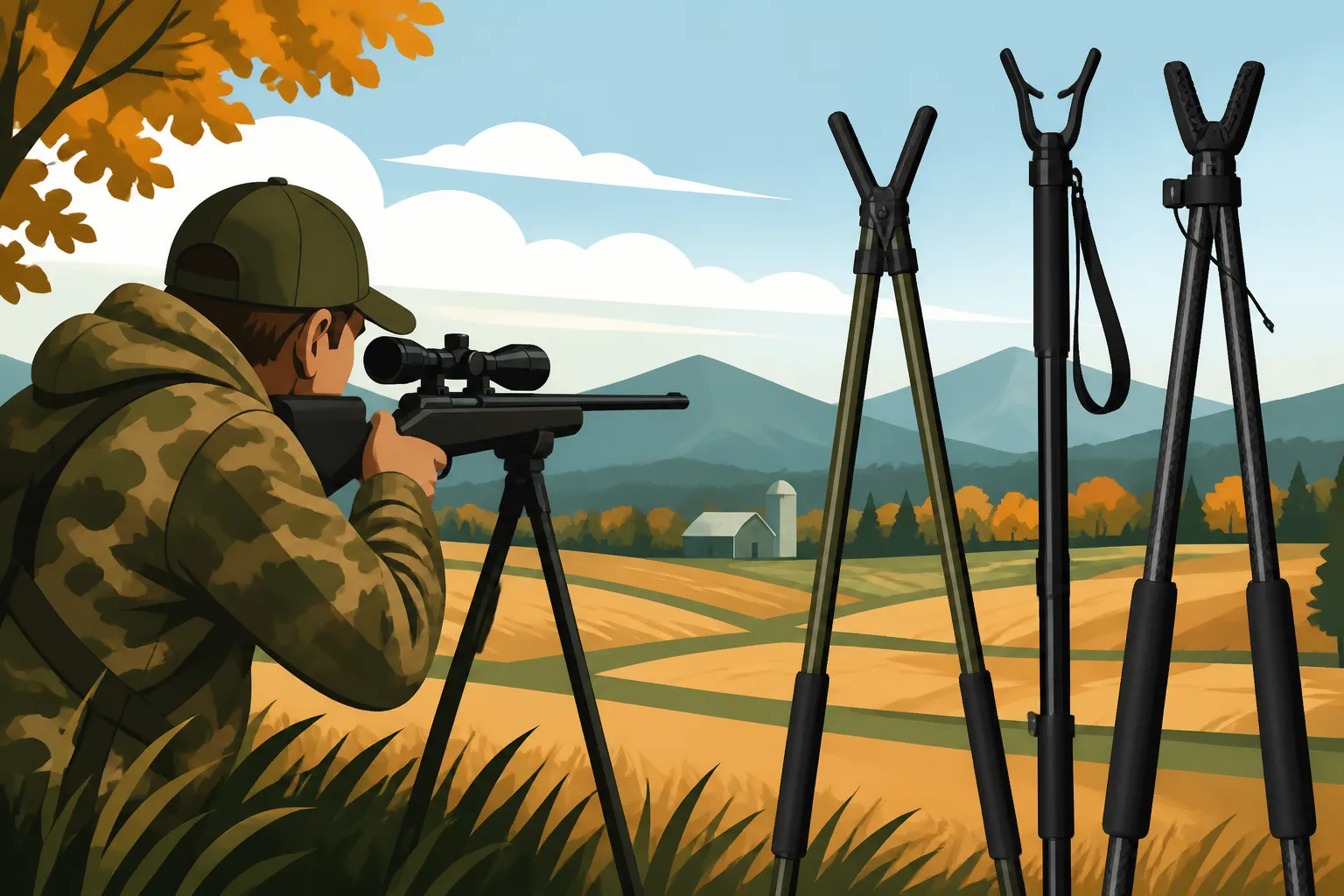
Monopods are, as the name suggests, single-legged shooting sticks. Their biggest advantage lies in their incredible portability and quick deployment. If you're a hunter who covers a lot of ground, perhaps still-hunting along a field edge or moving quickly between pockets of cover, a monopod is an excellent choice. They are exceptionally lightweight and easy to carry, often collapsing down to a very compact size.
However, the trade-off for this agility is less stability compared to multi-legged options. A monopod essentially acts as a third point of contact, reducing vertical movement but still allowing for some horizontal sway. While far superior to a freehand shot, they require more user input to maintain a steady aim. They're fantastic for taking quick, standing shots at closer to moderate distances where you just need a bit of extra help to steady your hold, but perhaps not ideal if you need absolute rock-solid stability for a very long shot across a wide-open valley. Think of them as a useful tool for those moments when you're Working a Fencerow for Late-Season Deer and a buck pops up unexpectedly.
Bipods: Stable and Versatile
Bipods are probably the most popular choice for hunters seeking a balance of stability and portability. With two points of contact on the ground, they offer significantly more stability than a monopod, largely eliminating horizontal wobble. They come in various forms, from attached bipods that clamp onto your rifle's sling swivel stud or rail, to freestanding models that operate much like shooting sticks. The attached versions are especially popular for situations where you anticipate prone or seated shots, as they deploy instantly with a flick of a lever.
For Vermont's open farmland, a freestanding bipod shooting stick often strikes an ideal balance. They are generally lightweight enough to carry comfortably, deploy quickly, and provide a very solid rest for shots from kneeling, sitting, or standing positions. If you know you'll be Sitting a Field Edge in Late Season for extended periods, waiting for deer to move, a bipod can be an invaluable asset. They offer the stability needed for those longer shots, allowing you to settle in and make a precise placement. Many hunters find reviewing different bipod designs on platforms like GoHunt helpful to compare features and user experiences. For a deep dive, you might also look into Best Bipod for a Long-Range Rifle Shot.
Tripods: Maximum Stability for Long-Range Precision
When absolute stability is your priority, especially for very long shots or when you're calling coyotes in wide-open farm country, a tripod is your best friend. With three points of contact, a tripod provides rock-solid support, virtually eliminating all movement. This allows you to truly settle into your scope, manage your breathing, and make extremely precise shots even at extended ranges. They are often adjustable to accommodate standing, kneeling, or sitting positions with ease.
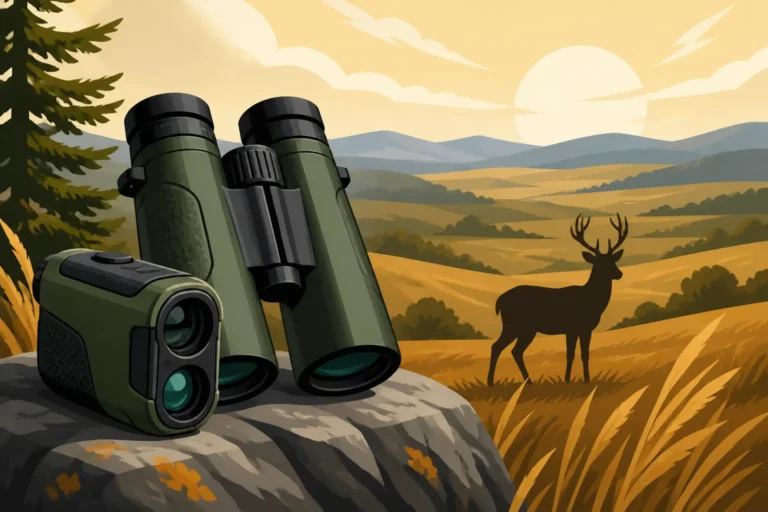
The trade-off for this supreme stability is usually weight and sometimes a slightly slower deployment, though modern designs have made significant strides in both areas. If your hunting involves minimal movement and long periods of glassing, waiting for game to appear across vast fields, a tripod is an investment you won't regret. They are perfect for situations where you might be using a Best Rangefinder Binocular Combo for Open Country to spot deer at considerable distance and need the confidence to stretch your shot. When considering a tripod, especially for its height and adjustability, consulting resources like GoHunt can provide insights into top models and their suitability for different hunting applications.
Here's a quick comparison of the three primary types:
| Feature | Monopod | Bipod | Tripod |
|---|---|---|---|
| Stability | Good (reduces vertical wobble) | Very Good (reduces horizontal & vertical) | Excellent (rock-solid, minimal movement) |
| Portability | Excellent (very lightweight, compact) | Very Good (light to moderate weight) | Good (can be heavier, bulkier) |
| Deployment | Fastest | Fast | Moderate (more legs to adjust) |
| Ideal Use | Quick, moderate-range shots | Moderate to long-range, versatile | Long-range precision, stationary hunting |
| Positions | Standing, kneeling, sitting | Prone, kneeling, sitting, standing | Prone, kneeling, sitting, standing |
Essential Features for Farmland Success
Once you've decided on the type of shooting stick that best suits your hunting style on Vermont's open farmlands, it's time to dive into the nitty-gritty of features. Not all shooting sticks are created equal, and some design elements will make a huge difference in their performance and ease of use in the field.
Height Adjustment and Versatility
This is arguably the most critical feature. Farmland hunting can present shots from a variety of positions: standing over a corn stubble field, kneeling in a low spot, or sitting against a fencerow. Your shooting sticks need to be quickly and easily adjustable to accommodate all these positions. Look for models that offer a wide range of height adjustment, ideally allowing you to go from a sitting position all the way up to a comfortable standing height.
Quick-release levers or twist locks are usually the most efficient mechanisms for height adjustment. Screw-in adjustments, while sometimes more secure, can be slow and cumbersome, especially with cold fingers or when a deer is actively moving. The ability to smoothly and silently adjust your stick to the perfect height can be the difference between getting a shot off and spooking game. Consider how fast you can adjust it from standing to kneeling if a deer drops into a dip in the field, for example.
Weight and Material
When you're hiking across sprawling farm fields, possibly navigating ditches or marshy areas, every ounce counts. Lighter shooting sticks made from aluminum or carbon fiber will be much appreciated over a long day. Carbon fiber is generally the lightest and strongest but also comes with a higher price tag. Aluminum is a great middle-ground, offering a good balance of durability and reasonable weight.
Beyond just the stick material, consider the construction of the joints and clamps. Are they robust enough to withstand being tossed in a truck bed or enduring harsh Vermont weather? You want materials that won't corrode or seize up after exposure to rain, snow, or mud. The quality of materials also impacts how much vibration is absorbed, which directly relates to accuracy. For example, a quality carbon fiber stick will dampen more recoil and hand shake than a cheap plastic model.
V-Rests and Grips
The V-rest at the top of the shooting stick is where your rifle rests, and its design matters. A good V-rest should securely cradle your rifle's forearm without scratching it. Many V-rests are made of durable, non-slip rubber or plastic, providing a stable platform. Some are designed to swivel, allowing you to track moving game without repositioning the entire stick – a huge advantage when a deer is walking parallel to you across a large field.
Beyond the rest, consider the grip on the stick itself. Will it be easy to hold with gloves on? Does it offer a non-slip surface? Some sticks even have integrated foam grips for comfort and to reduce noise when carrying. The feet of the sticks are also important; rubber feet provide good traction on hard ground, while spiked feet can offer better grip in soft soil or ice, which can be critical when you’re hunting in Vermont's late-season conditions.
Mastering the Art of the Supported Shot
Having the best shooting sticks in the world won't do you much good if you don't know how to use them effectively. Making consistently accurate shots, especially at longer distances common in Vermont's open farmland, requires practice, proper technique, and a good understanding of your gear.
Proper Setup and Body Position
The first step to a successful supported shot is a stable setup. Once you've spotted your game, deploy your shooting sticks to the appropriate height for your chosen shooting position (standing, kneeling, or sitting). Position the V-rest so that your rifle's forearm rests comfortably and securely within it. Avoid resting the barrel directly on the V-rest, as this can negatively impact accuracy.
Your body position is just as important as the sticks themselves. Square your shoulders to the target as much as possible, using your body as a stable platform. If standing, keep your feet shoulder-width apart, distributing your weight evenly. If kneeling or sitting, try to use your elbows to brace against your knees or chest to create additional points of contact. The goal is to eliminate as much human movement as possible, letting the shooting sticks do their job. Remember the principles of a solid shooting stance you learned in hunter education – they apply here, but now with added support. This solid foundation is especially important when you consider factors like wind drift over a wide-open field, which can significantly affect your shot, even with a Best Rifle Caliber for Vermont Whitetails or the ideal Best Bullet Weight for Vermont Whitetails.
The Importance of Practice
Just like any other piece of hunting gear, shooting sticks require practice to master. Don't wait until opening day to try them out for the first time. Take your shooting sticks to the range and practice shooting from various positions – standing, kneeling, sitting – at different distances. Simulate field conditions as much as possible. Practice quick deployment and adjustment. How fast can you get into a stable shooting position when the clock is ticking?
A great drill is to set up a target at an unknown distance, walk away, and then approach as if you're hunting. When you "spot" the target, time yourself as you deploy your sticks, range the target, and get a stable sight picture. The more you practice, the more intuitive using your shooting sticks will become, allowing you to react quickly and confidently when the moment of truth arrives. Many hunters find that incorporating their shooting sticks into their regular range sessions is just as important as practicing with a Best Scope for a Treestand Setup or fine-tuning their rifle.
Field Use and Scenario Training
Beyond the range, consider scenario training in a safe, open area that mimics Vermont's farmlands. Set up targets at varying distances, perhaps simulating deer moving through Entry Routes Through a Cut Cornfield. Practice taking shots at different angles and from different shooting positions. How do you adjust your sticks if the ground slopes away? What if you need to quickly pivot to track a moving animal?
Pay attention to your breathing and trigger control, even with the added stability. The sticks remove much of the physical strain, allowing you to focus more intently on these fundamental shooting skills. By integrating shooting sticks into your hunting routine and practicing consistently, you'll build the muscle memory and confidence necessary to make those challenging open-country shots confidently and ethically, ensuring you're ready for whatever Vermont's diverse hunting landscape throws your way. Always be mindful of the rules for Scouting Vermont Public Land Before Season when practicing on public ground.
Care and Maintenance for Longevity
Investing in a good set of shooting sticks is just the first step. To ensure they serve you faithfully for many seasons of Vermont hunting, proper care and maintenance are crucial. These tools are often exposed to the elements, mud, and dust, and a little attention goes a long way in preserving their functionality.
Cleaning After Each Outing
After each hunting trip, especially if your sticks have been exposed to rain, mud, or snow, take a few minutes to clean them. Dirt and grit can get into the locking mechanisms and adjustment points, causing them to seize up or operate sluggishly. Use a damp cloth to wipe down all surfaces, paying close attention to the leg sections and the V-rest. For stubborn dirt, a soft brush might be helpful.
Make sure to fully extend all sections during cleaning to expose any hidden grime. Once clean, allow them to air dry completely before collapsing and storing them. Storing wet sticks can lead to corrosion, especially in aluminum models, and can cause parts to stick. This simple step prevents a lot of headaches down the road and ensures your sticks are ready for your next hunt, whether it's Hunting a Green Field Planted for Deer or pursuing another species.
Lubrication and Inspection
Periodically, and especially before and after the hunting season, inspect your shooting sticks for any signs of wear or damage. Check all nuts, bolts, and screws to ensure they are tight. Examine the V-rest for cracks or excessive wear. Pay close attention to the locking mechanisms – are they still holding securely?
For components that slide or twist, a very light application of silicone lubricant or a dry film lubricant can keep them operating smoothly. Avoid heavy oils or grease, as these can attract dirt and dust, creating more problems than they solve. Apply sparingly and wipe off any excess. This routine inspection and minor lubrication will extend the life of your shooting sticks and ensure they perform reliably when you need them most, helping you stay prepared for any scenario on the open fields.
Disclaimer
This article is for general informational purposes only and does not constitute professional advice. Laws, prices and regulations vary by location and change over time. Consult a qualified professional for guidance on your specific situation.