Best Bullet Weight for Vermont Whitetails
One of the most common dilemmas for any deer hunter, especially here in Vermont where conditions can vary wildly, is figuring out the best bullet weight for their whitetail rifle. You spend all that time scouting, tracking, and waiting, and the last thing you want is to question if your bullet will perform when that moment of truth arrives. This guide is here to demystify bullet weight, helping you choose the perfect projectile to ensure a clean, ethical harvest on our Green Mountain whitetails.
Understanding Bullet Weight and Its Impact on Whitetail Hunting
Let's be honest, hunting isn't just about pulling a trigger; it's about making thoughtful, ethical decisions that respect the animal and the hunt. And a big part of that preparation involves understanding your ammunition, particularly bullet weight. It's not just a number on the box; it's a critical factor that influences everything from trajectory to terminal performance.
The Fundamentals of Bullet Weight and Energy
When we talk about bullet weight, we're usually referring to grains (gr). One grain is a very small unit of mass, but for a bullet, these small differences can have a huge impact downrange. Generally, a heavier bullet will retain more kinetic energy at longer distances and be less affected by wind. This means it often delivers more "punch" when it hits the target, increasing the chances of a clean pass-through and a quick, ethical kill. However, heavier bullets also tend to have a more arcing trajectory, meaning you'll need to know your distances even more precisely if you're taking longer shots across a field or down a powerline. For a whitetail in Vermont, especially in thicker cover where shots might be shorter and through brush, that retained energy and potential for pass-through can be incredibly valuable.
Conversely, lighter bullets usually travel at higher velocities initially, resulting in a flatter trajectory over shorter to medium distances. This can be great for hunters who are less confident in estimating yardage or who anticipate shots across larger openings. The trade-off is that lighter bullets can shed energy faster and may be more susceptible to wind drift, which is a real consideration when hunting in exposed areas or on those blustery November days. What’s truly essential is that the bullet delivers enough energy to penetrate deeply and damage vital organs, regardless of its initial weight.
Bullet Construction Versus Weight
Here's where things get really interesting, and frankly, a bit more complex than just picking a heavy or light slug. Bullet construction is arguably just as, if not more, important than its weight. A well-constructed lighter bullet can often outperform a poorly constructed heavier one. Think about it: a flimsy, frangible bullet, even if it's heavy, might just blow up on the shoulder bone of a big Vermont buck, failing to reach the vitals. On the other hand, a bonded or monolithic bullet, even if slightly lighter, is designed to hold together, penetrate deeply, and expand reliably.
We've seen huge advancements in bullet technology over the years. Modern bullets come in all sorts of designs:
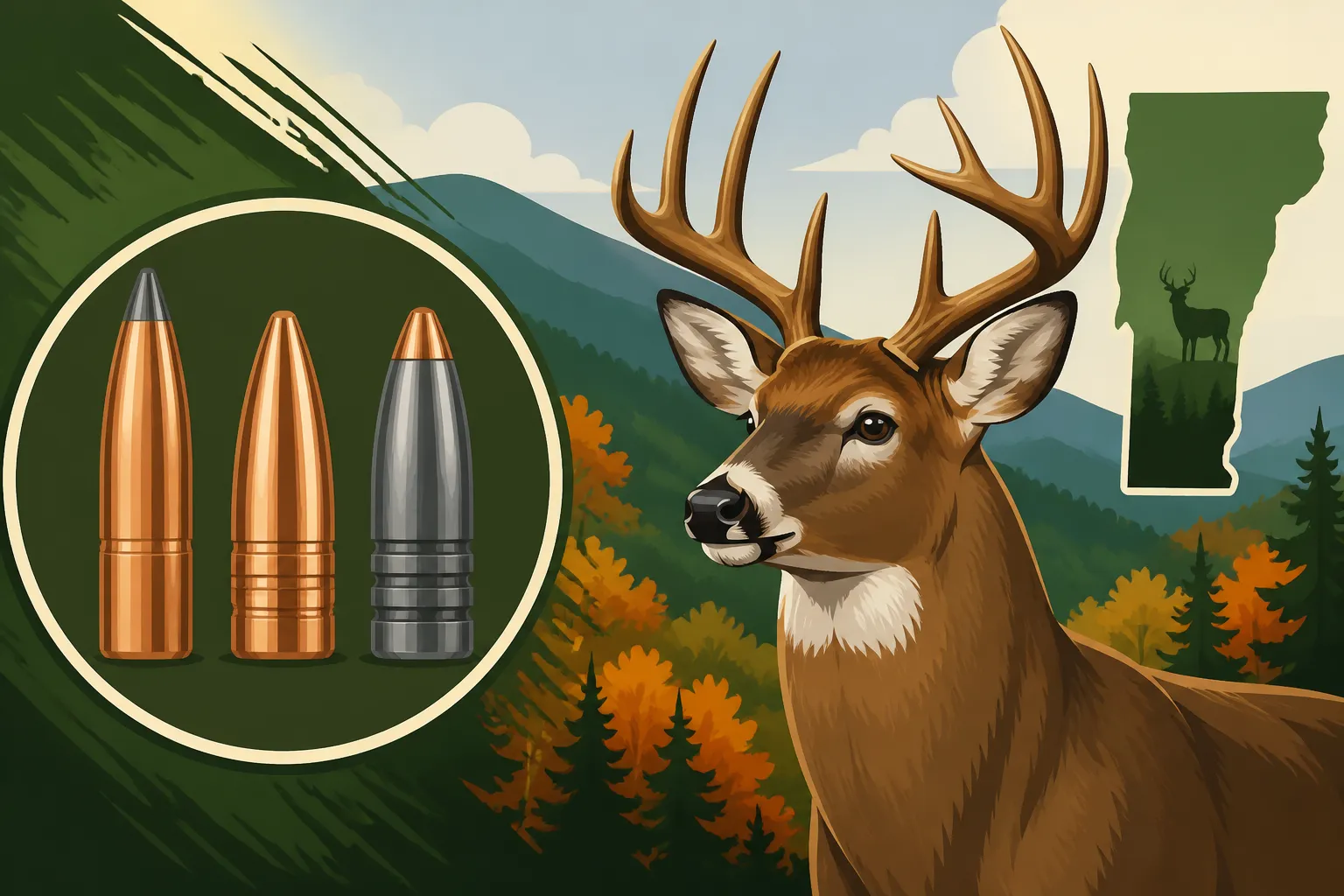
- Cup-and-core: Traditional lead core with a copper jacket. These are generally more affordable and perform well for deer at moderate velocities, but expansion can be inconsistent or excessive if velocities are too high.
- Bonded: The lead core is chemically bonded to the copper jacket, preventing separation. These offer excellent weight retention and deep penetration, ideal for breaking through bone and reaching vitals.
- Monolithic/Solid copper: Made entirely of copper or other alloy, these bullets retain virtually all their weight and provide superb penetration, often expanding into a mushroom shape. They are great for maintaining integrity on impact.
- Partitioned: Feature a barrier that separates the front and rear lead cores, allowing the front to expand rapidly while the rear maintains integrity for deep penetration.
So, while a particular bullet weight range might be generally recommended for whitetails, always consider the bullet's construction. For instance, a 130-grain monolithic copper bullet might penetrate more reliably than a 150-grain cup-and-core bullet, depending on shot placement and range. It’s a bit of a rabbit hole, but one worth exploring for confident hunting.
Factors Influencing Your Bullet Weight Choice in Vermont
Vermont isn't a "one-size-fits-all" hunting state. Our diverse landscapes, from the thick softwood swamps of the Northeast Kingdom to the rolling farmlands of the Champlain Valley and the steep, rugged slopes of the Green Mountains, present a variety of hunting scenarios. Your bullet weight choice should reflect these realities.
Terrain and Shot Distance Considerations
When you're still-hunting through dense hemlock stands or Reading a Green Mountain Deer Yard, chances are your shot opportunities will be close-range, quick, and potentially through light brush. In these situations, a heavier, tougher bullet that can punch through a small twig without significant deflection and still have enough mass to penetrate deeply upon impact with a deer might be advantageous. A heavier bullet tends to maintain its path better than a lighter, faster projectile when encountering minor obstacles.
However, if you're hunting an open powerline cut or Glassing a Clear-Cut for a Bull Moose (even if it's deer you're after today!) or sitting over a sprawling agricultural field in the Champlain Valley, you might have shots stretching out to 200 yards or more. Here, a flatter-shooting, lighter bullet might seem appealing for its reduced drop, but you still need that terminal energy. This is where a slightly heavier, yet still aerodynamic, bullet with good ballistic coefficients might be a better compromise, as it will buck the wind better and retain more energy at those longer ranges. Hunting a Funnel Between Two Woodlots could present either scenario, so understanding your specific stand location and typical shot distances is crucial.
Caliber and Rifle Twist Rate
The bullet weight you choose isn't an isolated decision; it's intricately linked to your rifle's caliber and, critically, its barrel twist rate. Every rifle barrel has rifling – grooves that impart a spin to the bullet, stabilizing it in flight. The twist rate (e.g., 1:10" or 1 turn in 10 inches) determines how quickly the bullet spins.
- Faster twist rates (e.g., 1:8" or 1:9") are generally designed to stabilize longer, heavier bullets. If you try to shoot a very light, short bullet through a fast-twist barrel, it might be over-stabilized, leading to reduced accuracy or even disintegration at extreme velocities.
- Slower twist rates (e.g., 1:12" or 1:14") are better suited for shorter, lighter bullets. Trying to stabilize a long, heavy bullet with a slow twist rate will likely result in poor accuracy, as the bullet "yawns" or tumbles in flight.
Before you even consider a specific bullet weight, know your rifle's twist rate. This information is usually stamped on the barrel or can be found in your rifle's manual or on the manufacturer's website. If you're using a common caliber like .30-06 or .308, most modern hunting rifles will have twist rates that handle a broad range of typical hunting bullet weights very well. However, for specialized cartridges or if you're pushing the extremes of bullet weight for your caliber, checking the twist rate is essential. Tools like the GoHunt app often provide ballistic calculators that consider twist rate, helping you dial in optimal performance.
Legal Requirements and Practical Ethics
While Vermont doesn't legislate specific bullet weights for deer hunting, common sense and ethical hunting practices dictate that you select a bullet capable of a quick, humane kill. This means a bullet that can consistently reach and damage the vitals (heart, lungs) of a whitetail deer. Overly light, frangible bullets in high-velocity cartridges might not provide the necessary penetration, especially on larger-bodied deer common in some parts of Vermont, such as the Champlain Valley.
Always aim for a clean pass-through if possible. This creates two wound channels (entrance and exit) and increases the likelihood of a good blood trail, which is absolutely vital for recovering deer, especially when Blood Trailing After Dark in Vermont becomes a necessity. A bullet that fragments excessively or fails to exit can make recovery much harder. The ethical hunter prioritizes a clean kill and efficient recovery above all else.
Recommended Bullet Weight Ranges for Common Vermont Whitetail Calibers
Let's break down some of the most popular deer hunting calibers here in Vermont and discuss suitable bullet weight ranges. Remember, these are general guidelines, and individual rifles can have preferences.
.30-06 Springfield and .308 Winchester
These are two of the most ubiquitous and effective deer cartridges ever developed, and for good reason. They offer a fantastic blend of power and versatility.
-
For the .30-06 Springfield: You'll typically find bullets ranging from 150-180 grains.
- 150 grains: These are fast and flat-shooting. They work exceptionally well for shots out to moderate distances (say, 250-300 yards) and are excellent for broadside shots on average-sized Vermont deer. If you're hunting more open terrain and prioritize a flatter trajectory, a quality 150-grain bonded or monolithic bullet is a superb choice.
- 165-168 grains: Often considered the "sweet spot" for the .30-06, these bullets offer an excellent balance of velocity, energy retention, and penetration. They're a fantastic all-around choice for everything from close-quarters timber hunting to longer shots across clearings. Many rifles will stabilize these weights superbly.
- 180 grains: These heavier bullets shine when penetration is paramount, like on quartering-away shots or when you anticipate hitting heavier bone on a larger buck. They retain energy very well at longer ranges and are less affected by wind, though their trajectory is more pronounced. If you're targeting big-bodied deer in areas like the Champlain Valley or expect to be Hunting a Ridge-Top Saddle for Rutting Bucks where a large animal might present, these are a strong contender.
-
For the .308 Winchester: Similar to the .30-06 but in a shorter case, the .308 excels with bullets from 150-180 grains.
- 150 grains: These are a common and effective choice for the .308. They provide ample velocity and energy for whitetails, especially on broadside shots. Many hunters find 150-grain bullets to be very accurate in their .308s.
- 165-168 grains: Much like the .30-06, this range offers a great compromise for the .308. They'll penetrate well and retain good energy without sacrificing too much trajectory. This is often an ideal choice for varied Vermont terrain.
- 180 grains: While the .308 can certainly handle 180-grain bullets, the increased weight will come with a noticeable drop in velocity compared to the .30-06. However, if your rifle groups them well, they still deliver excellent terminal performance and penetration for close-to-medium range hunting in heavy cover.
.270 Winchester and 7mm-08 Remington
These are two fantastic medium-bore cartridges that are incredibly efficient and capable for whitetails.
-
For the .270 Winchester: Bullet weights typically range from 130-150 grains.
- 130 grains: Renowned for its flat trajectory, the .270 with a 130-grain bullet is a deer-dropping machine. These bullets fly like lasers and deliver significant energy. With modern bonded or monolithic construction, they offer excellent penetration for broadside and even some quartering shots. Ideal for open country and situations requiring precise shot placement.
- 140-150 grains: These provide a bit more mass for deeper penetration, especially valuable if you're hunting larger bucks or expect shots that might encounter more resistance. They still shoot relatively flat and buck the wind well, making them a superb choice for Vermont's varied terrain. Many hunters find these weights to be exceptionally accurate in their .270s, offering a slightly more forgiving performance on less-than-perfect angles.
-
For the 7mm-08 Remington: This short-action gem performs beautifully with bullets from 120-150 grains.
- 120-139 grains: These lighter bullets for the 7mm-08 are incredibly efficient, offering high velocity and a flat trajectory with mild recoil. They are more than capable of taking down any Vermont whitetail with proper shot placement, especially with modern bullet designs. A great option if you prioritize less recoil and flatter shooting for medium range.
- 140-150 grains: This weight range is where the 7mm-08 truly shines for deer hunting. It offers excellent balance, deep penetration, and good energy transfer without excessive recoil. These bullets are robust enough for quartering shots and deliver reliable performance in various conditions, making them a favorite for many Vermont hunters who appreciate a potent, yet comfortable, cartridge.
.243 Winchester and 6.5 Creedmoor
While often considered smaller calibers, with the right bullet choice, these can be highly effective for whitetails.
-
For the .243 Winchester: Bullet weights for deer typically fall between 90-100 grains.
- 90-100 grains: For the .243, it's absolutely crucial to use premium, well-constructed bullets in this weight range. Lighter varmint bullets are not suitable for deer. Look for bonded, monolithic, or partition-style bullets specifically designed for deer hunting. These heavier, tougher bullets ensure adequate penetration and expansion on whitetails, making the .243 a viable choice for those who appreciate its flat trajectory and mild recoil. It's especially important to ensure precise shot placement with this caliber.
-
For the 6.5 Creedmoor: This increasingly popular cartridge works best with bullets from 120-147 grains for deer.
- 120-130 grains: These lighter 6.5mm bullets offer blistering speed and a very flat trajectory, making them excellent for open country hunting. With solid construction, they're highly effective on whitetails.
- 140-147 grains: Many hunters consider these heavier bullets to be the sweet spot for the 6.5 Creedmoor on deer. They offer excellent ballistic coefficients, meaning they retain energy and resist wind drift exceptionally well at longer ranges. Their slightly lower velocity compared to lighter bullets often results in superb terminal performance, providing a good balance of penetration and expansion. The GoHunt platform often features detailed ballistic data for various 6.5 Creedmoor loads, which can be immensely helpful for comparing different bullet weights.
Other Popular Calibers (e.g., .350 Legend, .450 Bushmaster)
With the rise of straight-wall cartridge legality in some areas or preferences for brush guns, these calibers have gained traction.
- For the .350 Legend: Bullet weights typically range from 150-180 grains. This cartridge is designed for moderate ranges, and its bullets are often optimized for rapid expansion. A 160-180 grain bullet with good construction will provide robust performance on whitetails out to 150-200 yards.
- For the .450 Bushmaster: Expect heavy bullets from 250-300 grains. This cartridge delivers massive energy at close to moderate ranges. These heavy bullets are designed for deep penetration and significant knockdown power, making them a powerful choice for larger deer or situations where you need to anchor an animal quickly.
Practical Tips for Selecting and Testing Your Bullet Weight
Choosing a bullet weight isn't just about reading a chart; it's about what performs best in your rifle and your hands. The knowledge you gain from research on sites like GoHunt or by talking to experienced hunters is just the starting point.
Matching Bullet to Your Rifle
Every rifle is a bit different. What one .30-06 loves, another might tolerate. The only way to truly know what bullet weight and brand your specific rifle prefers is to take it to the range and test it.
- Start with a few options: Based on the recommendations above for your caliber and understanding of bullet construction, pick up two or three different boxes of ammunition with varying bullet weights or constructions within the recommended range.
- Shoot for groups: Set up targets at 100 yards (or 50 for straight-wall cartridges) and shoot several 3-shot groups with each type of ammunition. Pay attention to group size and consistency. The bullet that consistently produces the tightest groups is often the best choice for your rifle.
- Check point of impact: Sometimes, different bullet weights will hit at different points on the target. This is normal. What matters is consistency. Once you find your accurate load, then you can sight in your rifle for that specific bullet.
- Consider ethical performance: While accuracy is paramount, don't forget the terminal performance aspect. Research reviews or ballistics gel tests of your chosen bullet to ensure it's designed to expand reliably and penetrate sufficiently for whitetails.
Practice, Practice, Practice
Having the "best" bullet weight is meaningless if you can't place it accurately. Practice is not just about sighting in your rifle; it's about becoming proficient with it under various conditions.
- Practice at different distances: If you anticipate shots from 50 to 200 yards, practice at all those distances. Understand your bullet's drop at various ranges. Knowing your Best Bullet Weight for Vermont Whitetails is only half the battle; knowing its trajectory is the other.
- Practice from different positions: While most deer shots are taken from a solid rest (treestand, prone, shooting sticks), you might find yourself needing to shoot offhand or from a kneeling position. Practice these.
- Simulate hunting conditions: Dress in your hunting clothes. Practice quickly shouldering your rifle. If you use a bipod or shooting sticks, practice deploying them smoothly. The more comfortable and practiced you are with your rifle and chosen ammunition, the more confident and ethical you'll be in the field. This confidence, combined with data from resources like GoHunt, will make all the difference.
Bullet Weight Comparison for Vermont Whitetails
Here's a quick overview of common calibers and their effective bullet weight ranges for Vermont whitetail hunting:
| Caliber | Typical Whitetail Bullet Weight Range (grains) | Key Considerations |
|---|---|---|
| .243 Winchester | 90-100 | Must use premium, well-constructed hunting bullets; precise shot placement. |
| 6.5 Creedmoor | 120-147 | Excellent ballistics, good energy retention at range; 140-147gr often preferred for deer. |
| .270 Winchester | 130-150 | Flat trajectory, powerful. 140-150gr offers good balance of trajectory and penetration. |
| 7mm-08 Remington | 120-150 | Mild recoil, efficient. 140-150gr often a superb all-around choice for penetration and energy. |
| .308 Winchester | 150-180 | Versatile, great for varied terrain. 165-168gr provides excellent balance for most scenarios. |
| .30-06 Springfield | 150-180 | Classic deer round, plenty of power. 165-168gr is often the sweet spot, 180gr for maximum penetration. |
| .350 Legend | 150-180 | Straight-wall cartridge, effective at moderate ranges. Good for dense woods. |
| .450 Bushmaster | 250-300 | Straight-wall, heavy hitting for close to moderate ranges; excellent knockdown power. |
Ultimately, the best bullet weight for Vermont whitetails isn't just about the number on the box. It's about how that bullet performs in your rifle, how it's constructed, and how you can place it accurately under hunting conditions. Take the time to research, test, and practice, and you'll be well-prepared for your next Green Mountain deer hunt.
Disclaimer
This article is for general informational purposes only and does not constitute professional advice. Laws, prices and regulations vary by location and change over time. Consult a qualified professional for guidance on your specific situation.