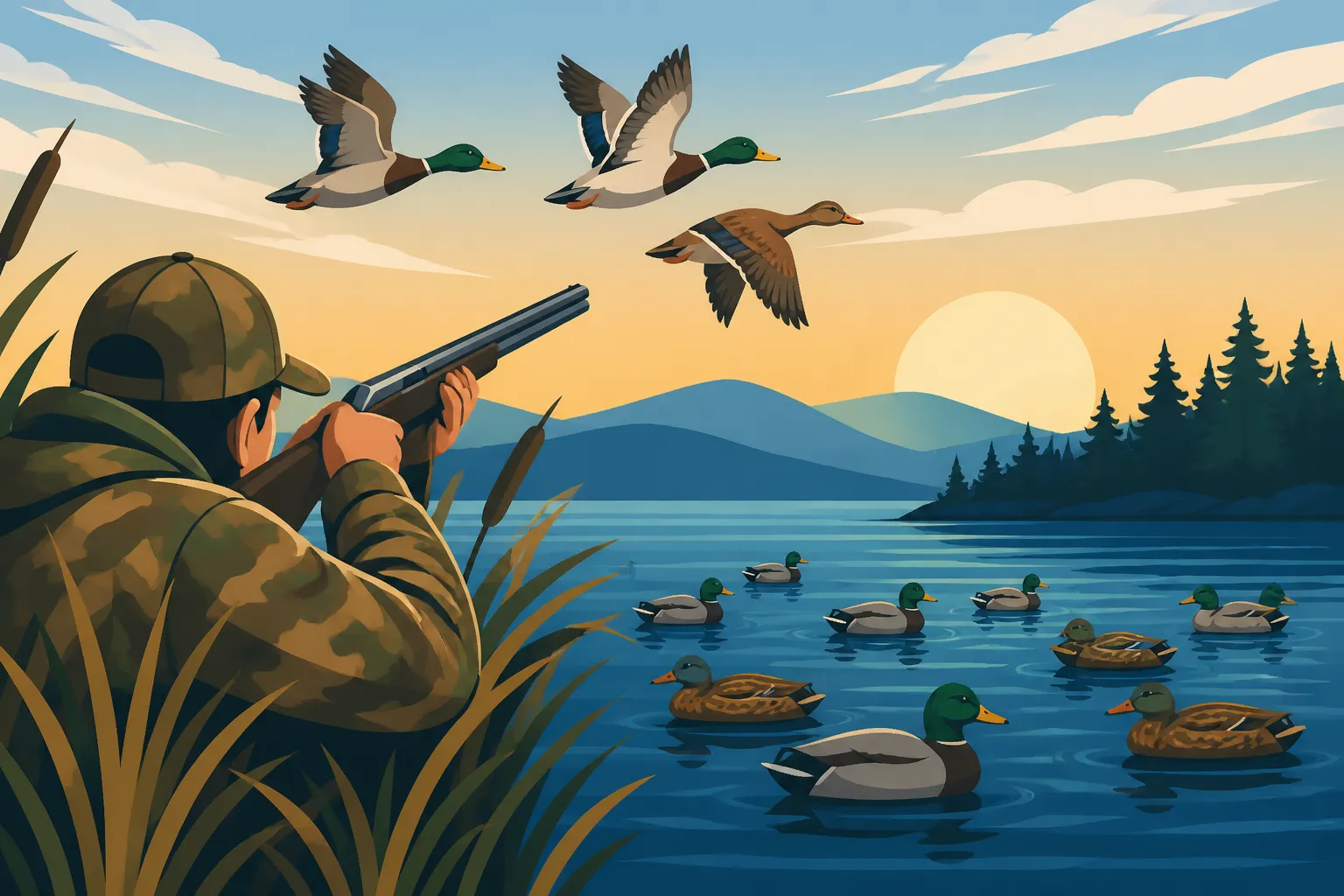
Best Duck Decoy Spread for Lake Champlain
For many of us who chase waterfowl, there’s nothing quite as frustrating as watching a flock of ducks circle your spread, only to veer off at the last moment. Lake Champlain, with its vast, diverse waters and often pressured birds, presents a unique challenge for duck hunters. Crafting the right decoy spread isn't just about throwing out a bunch of plastic; it's an art and a science that can make or break your hunt. This guide will walk you through the nuances of setting up effective decoy spreads specifically designed for the varied conditions you'll encounter on Lake Champlain, helping you draw those wary birds into range.
Understanding Lake Champlain's Unique Challenges for Duck Hunting
Lake Champlain isn't your average duck pond. It's a massive body of water, stretching over 120 miles long, with a multitude of different habitats, from expansive open water to intricate marsh systems and river deltas. This vastness means hunters face a range of conditions and bird behaviors that require a strategic approach to decoy placement. You can't just use a one-size-fits-all setup; what works in a sheltered bay might completely fail on an exposed point.
Diverse Water Conditions and Habitat Types
One of the biggest hurdles on Lake Champlain is its sheer diversity. You might be hunting a calm, shallow marsh in the morning, battling strong winds and waves on an open-water flat by midday, or tucked into a river mouth where currents are a factor. Each of these environments demands a different decoy strategy. In calm, clear water, realism and subtle motion are paramount. When the wind howls and waves crash, visibility and bold movement become more important. Understanding where the ducks want to be on any given day, and what that specific water looks like, is your first step. It's about blending in and looking natural, no matter the chaos Mother Nature throws at you.
For example, a typical marsh edge hunt might involve only a dozen or two decoys, mostly dabblers, tightly packed to mimic a contented feeding flock. But if you're out on a big, open bay, trying to attract diver ducks, that small spread will be practically invisible. You'll need a much larger, more diverse spread, potentially with several dozen decoys, to create the visual impact necessary to pull birds from a distance. The wind and current play significant roles here too, dictating how your decoys move and how you anchor them. Decoying Ducks on Lake Champlain is a topic that really emphasizes these considerations.
Pressured Birds and Species Variety
Another factor is the hunting pressure, particularly on popular public access areas. Ducks on Lake Champlain, especially later in the season, have seen it all. They've been called, shot at, and flown over countless decoy spreads. This means they're often wary and quick to spot anything that looks unnatural. Your spread needs to convey a sense of safety and natural behavior to overcome this inherent distrust. This is where subtle details, realism, and dynamic movement really shine.
Beyond pressure, Lake Champlain hosts a fantastic variety of waterfowl. You'll find everything from mallards, black ducks, and wood ducks in the marshes and sheltered coves, to redheads, bluebills, canvasbacks, and goldeneyes out on the deeper, open water. Sometimes, you'll even encounter good numbers of geese. Your decoy spread needs to reflect the species you're targeting or, if you're hoping for a mixed bag, present a believable representation of multiple species coexisting peacefully. A spread heavy on mallards might not appeal to a passing flock of divers, and vice versa. Knowing which ducks are in the area and where they tend to feed and rest is crucial for success. You can often get a good sense of Vermont Duck and Goose Numbers by keeping an eye on local reports.
Key Elements of an Effective Decoy Spread on Lake Champlain
Building a successful decoy spread isn't just about quantity; it's about quality, realism, and a well-thought-out arrangement. Think of yourself as an artist, painting a picture that screams "safe haven" to passing birds. Every element, from the type of decoy to its placement and movement, contributes to this illusion.
Choosing the Right Decoy Types and Quantities
The types of decoys you deploy should generally match the species you expect to encounter, or at least be a good representation of common local birds. Mallards are almost always a safe bet as a base, being a dominant species across many habitats. Adding a few black duck decoys can add realism, especially if you're hunting darker, sheltered water or during colder weather when they're more prevalent. For open-water hunts, you'll definitely want diver decoys – canvasbacks, bluebills, and redheads are excellent choices. Don't forget confidence decoys like geese or even a few coot decoys, which can signal safety to wary ducks.
Quantity matters, too, but it's relative to the conditions. On vast open water, a large spread (3-5 dozen or more) creates the necessary visibility to pull birds from a distance. For smaller marsh pockets or tight river bends, a more intimate spread of 1-2 dozen can be more effective and look less overwhelming to birds already close by. A common mistake is using too many decoys in a small area, making it look crowded and unnatural. Remember, you're trying to create an inviting landing zone, not a crowded parking lot.
Incorporating Motion for Lifelike Realism
Still decoys can work, especially on foggy days or when birds are very active, but motion is truly what brings a spread to life, especially on Lake Champlain where ducks are often pressured. Nothing says "alive" quite like ripples on the water, subtle head bobs, or splashing. There are several ways to add motion:
- Jerk Rigs: Simple, effective, and relatively inexpensive, a jerk rig allows you to create splashes and movement with a pull of a cord from your blind. This mimics feeding or preening ducks and can be incredibly enticing.
- Motorized Decoys: Battery-operated spinning-wing decoys (like a Mojo duck) or swimming decoys can add significant visual attraction, especially from a distance. However, some hunters find that overusing them or placing them incorrectly can sometimes flare pressured birds. Use them judiciously, perhaps as a focal point rather than scattered throughout the spread.
- Keel-weighted Decoys: Even basic decoys with properly weighted keels will move naturally in the wind and current, creating subtle, realistic movement. Ensure your anchor lines are long enough to allow this natural sway.
- Wind-driven Decoys: Certain decoy designs incorporate wind-driven elements that cause heads to bob or wings to flutter, mimicking natural movement without batteries. These can be particularly effective on breezy days on the big lake.
The key is balance. You want enough motion to attract attention and convey vitality, but not so much that it looks frantic or artificial. A few well-placed motion decoys, coupled with the natural movement of your standard blocks, often creates the most convincing illusion.
Strategic Placement Principles: The Landing Zone
Every effective decoy spread has an inviting landing zone – a clear, calm area where ducks feel safe to set down. This is the "sweet spot" you want to guide birds into, ideally within easy shooting range of your blind. Think about the wind, which ducks almost always land into, just like an airplane. Your landing zone should be upwind of your blind, allowing the birds to approach, cup their wings, and descend right into your shooting lane.
Consider the classic "J" or "U" shape for your spread. The main body of decoys forms the long arm of the J or one side of the U, with a distinct open pocket in the middle or at the bend. Your blind should be positioned at the short end of the J or the closed end of the U, downwind of the landing zone. This forces approaching birds to fly past or over the decoys to land, bringing them closer to your position. For example, if the wind is blowing from your left to right, you'd want your decoys extending out to your right, with the open pocket upwind and directly in front of your blind. Understanding how to create these natural-looking gaps is crucial. Decoying Mallards on Lake Champlain is really about mastering this precise placement.
Specific Decoy Spreads for Different Lake Champlain Scenarios
Given the varied environments of Lake Champlain, adapting your decoy spread to the specific location and conditions is paramount. What works in a shallow bay will likely fail in the depths, and vice versa.
Open Water and Exposed Points
When you're hunting wide-open expanses or exposed points on Lake Champlain, you're typically targeting diver ducks like bluebills, redheads, and goldeneyes, though dabblers will also use these areas for resting. Here, visibility is key, and you'll often need larger spreads to get noticed.
For divers, a common and effective setup is a long "string" or "gang" rig of decoys. These are lines of decoys spaced out, often 5-10 feet apart, anchored at each end. You might run several of these strings parallel to each other, creating a large, visible raft of birds. The advantage of gang rigs is that they are relatively quick to deploy and retrieve, and they create a very natural-looking movement in the waves. Place these strings perpendicular to the wind, with a wide landing zone upwind, usually down a few yards from your blind. This allows divers to bank and set their wings right into the sweet spot. Sometimes, hunters will use a "V" shape, with the point of the V aimed downwind, creating two arms for birds to funnel between. Hunting Waterfowl Vermont's Three Zones discusses the broader context of these hunting areas.
Marsh Edges and Sheltered Coves
Hunting marsh edges and sheltered coves usually means you're after dabbling ducks such as mallards, black ducks, and wood ducks. These areas tend to be shallower, with more emergent vegetation, and often offer more protection from strong winds. Realism and a sense of calm are more important here than sheer numbers.
A classic setup for marsh edges is a loose "loafing" or "feeding" spread. This means scattering your decoys somewhat randomly, but with purpose, to mimic ducks feeding or resting comfortably. Create several small family groups of 3-5 decoys each, leaving plenty of open water between them to act as your landing zone. Place some decoys right up against the vegetation line, almost tucked into it, to show birds seeking shelter. A few active feeding decoys, perhaps with a jerk rig, can add realism. If you have a few goose decoys, placing them slightly apart from the ducks can add a layer of confidence, suggesting a predator-free zone. Remember, these birds are often already close, so avoid making your spread look too aggressive or unnatural. Reading a Marsh for a Morning Flight will give you more insights into these types of locations.
River Mouths and Creek Intersections
River mouths and the intersections of creeks with Lake Champlain can be incredibly productive, as they offer unique current dynamics and often concentrate food sources. Ducks will often travel these waterways and feed in the calmer waters where the currents meet.
Here, the current is your biggest factor. You can use it to your advantage by setting your decoys to naturally drift and move. A popular tactic is a "river spread" where you have a main line of decoys extending upstream, and then a few smaller groups spread out downstream, allowing the current to carry them slightly. Your landing zone should be a calm eddy or pocket where the current slows, usually just downwind of your main decoy line. Place some decoys near banks or obstacles where natural eddies form. If the current is strong, make sure your decoys are well-anchored with heavy weights and longer lines to prevent them from tangling or washing downstream. The natural movement provided by the current can be incredibly realistic, so you might not need as many motion decoys in these spots.
Here's a quick comparison of general spread types for Lake Champlain:
| Spread Type | Target Species | Ideal Location | Key Characteristics | Decoy Count (Approx.) | Motion Emphasis |
|---|---|---|---|---|---|
| Open Water/Raft | Divers, large dabblers | Expansive bays, exposed points | Large, visible groups; long strings/gangs | 3-6+ dozen | Wind/Wave |
| Loafing/Feeding | Dabblers | Marsh edges, sheltered coves | Loose, scattered groups; natural feeding posture | 1-3 dozen | Jerk rig, subtle |
| River/Current | Dabblers, mixed | River mouths, creek intersections | Upstream line, downstream pockets; uses current | 1-3 dozen | Current, natural |
| Fringe/Confidence | Mixed | Transition zones, adjacent fields | Small groups, often with geese/coots; "safe" vibe | 0.5-1 dozen + conf. | Minimal |
Advanced Decoy Strategies and Tips for Success
Once you've mastered the basics, there are always ways to fine-tune your approach and give yourself an edge, especially against those cagey Lake Champlain birds. These advanced strategies involve more than just where you place your blocks; they delve into realism, adaptation, and keen observation.
Enhancing Realism with Decoy Quality and Variety
Top-tier realism goes beyond just painting your decoys to look like ducks. It's about their shape, their posture, and how they interact with the water. High-quality decoys with realistic feather detail, natural body postures (feeders, resters, sentinels), and correct sizing can make a significant difference. While they might be an investment, they blend in more seamlessly and instill confidence in approaching birds.
Don't be afraid to mix brands and types, either. A spread of all identical decoys can sometimes look too uniform and unnatural. Introduce a few different postures – preeners, sleepers, active feeders – to create a more dynamic and believable scene. Even adding a few fully flocked decoys can dramatically reduce unnatural shine on sunny days, making your spread look incredibly lifelike. If you're targeting a specific species like canvasbacks on a certain day, having a few extra-large, dominant drake decoys can also help attract their attention.
Adapting to Changing Conditions on the Fly
Lake Champlain's weather can be fickle, and what worked an hour ago might not work now. Being able to adapt your spread quickly is a hallmark of a successful waterfowler. This means paying attention to:
- Wind Shifts: Always be ready to adjust your spread if the wind changes direction. Ducks will land into the wind, so your landing zone needs to remain upwind of your blind. This might involve repositioning anchors or even picking up and redeploying entire lines.
- Bird Behavior: Are ducks flying high and not even looking? Your spread might not be visible enough. Are they circling but flaring? Your landing zone might be too small, or something looks unnatural. Are they working a specific part of the spread? Try to enhance that area. Watch how birds react to your setup and be prepared to make adjustments. Sometimes, just pulling a few decoys to expand the landing hole can make all the difference.
- Light Conditions: On bright, sunny days, shiny decoys can look unnatural. Consider adding flocked decoys or dulling any excessively reflective surfaces. On overcast days, brighter decoys might be needed for visibility.
This constant assessment and willingness to change are what separate consistently successful hunters from those who just hope for the best.
Scouting with Digital Tools and Local Knowledge
While knowing your decoy spreads is key, knowing where to put them is equally important. This is where diligent scouting, both on the water and with modern tools, comes into play. Before you ever pull out a decoy, you need to understand where the ducks are actively feeding, resting, and flying.
Using mapping applications like GoHunt can be a game-changer for scouting Lake Champlain. You can use aerial imagery to identify potential feeding flats, marsh pockets, river channels, and sheltered coves that might hold birds. Look for areas with advantageous windbreaks or natural funnels. You can mark potential blind locations, entry and exit routes, and even optimal decoy deployment zones. Then, physically scout these areas with binoculars, observing flight patterns, feeding activity, and how ducks react to various natural features. A combination of digital scouting and on-the-ground observation will give you the most complete picture.
Talk to local hunters and bait shop owners, too. They often have invaluable insights into current bird movements and hot spots. Combine their anecdotal wisdom with your own observations and the data you gather from apps like GoHunt for a truly informed approach. Understanding the broader Duck Migration Timing Through Vermont can also inform your scouting efforts, helping you anticipate which species might be moving through and when. Ultimately, the best decoy spread in the world is useless if it's not placed where the birds want to be.
Disclaimer
This article is for general informational purposes only and does not constitute professional advice. Laws, prices and regulations vary by location and change over time. Consult a qualified professional for guidance on your specific situation.